
Akash Patel
Full Stack Developer | 2+ Years Experience | Enterprise Apps



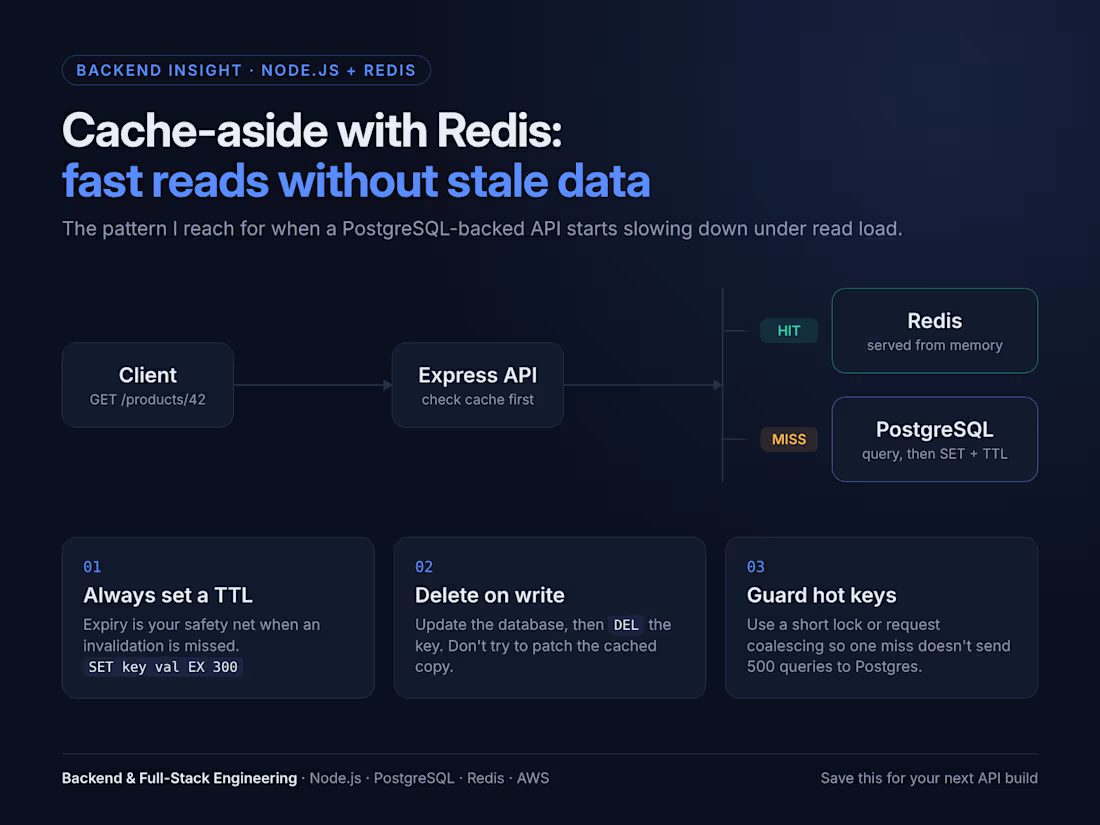
Your API is slow, and the database is doing the same work over and over.
Cache-aside with Redis is usually the first fix I reach for on a read-heavy Node.js + PostgreSQL API:
1. The request comes into Express. Check Redis first.
2. On a hit, return the cached value right away.
3. On a miss, query Postgres, store the result in Redis with a TTL, then return it.
The pattern is simple. The three rules that keep it from serving stale data are the part people skip:
→ Always set a TTL. If an invalidation gets missed, expiry still cleans up.
→ Delete on write. Update the database, then delete the key. Don't patch the cached copy in place.
→ Guard hot keys. When a popular key expires, hundreds of requests can miss at once and hit Postgres together. A short lock or request coalescing prevents that.
Caching is the easy part; invalidation is where the bugs live.
If you're building a SaaS backend and want help with performance, API design or scaling, feel free to reach out.
#NodeJS #Redis #PostgreSQL #BackendDevelopment #SaaS
0
6
A client needed a pitch deck demo that would stop investors mid-scroll.
So I built a real-time ICU heart monitor — fully animated, running live in the browser.
DMs open
0
53
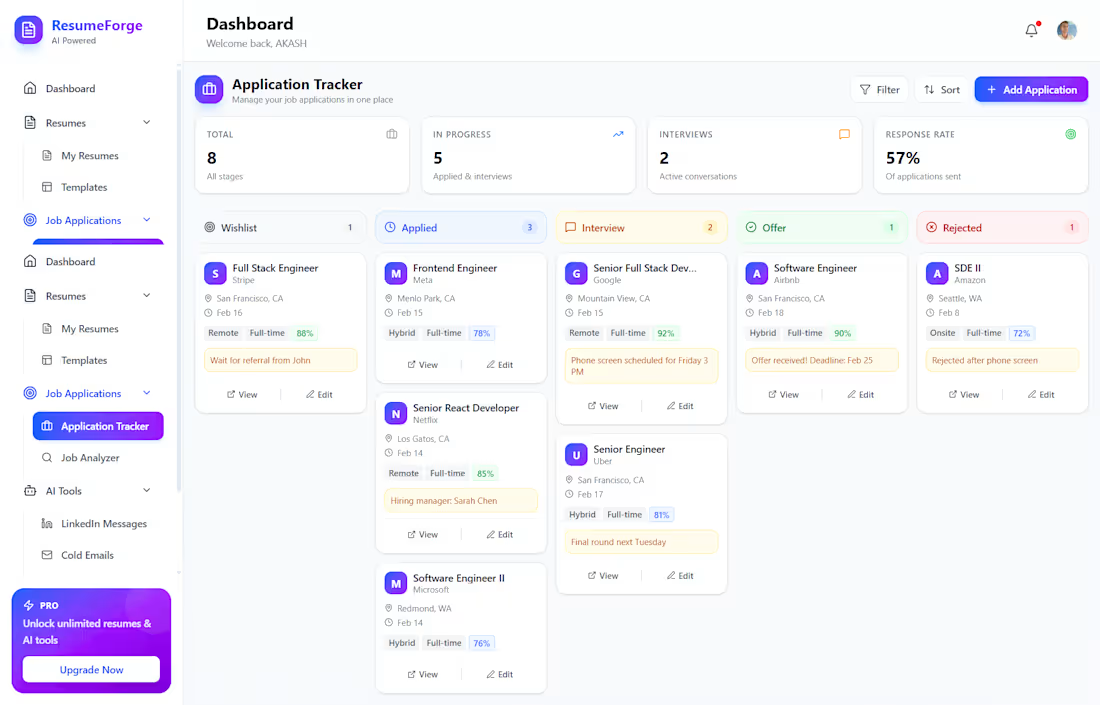
Resume Forge AI
0
28
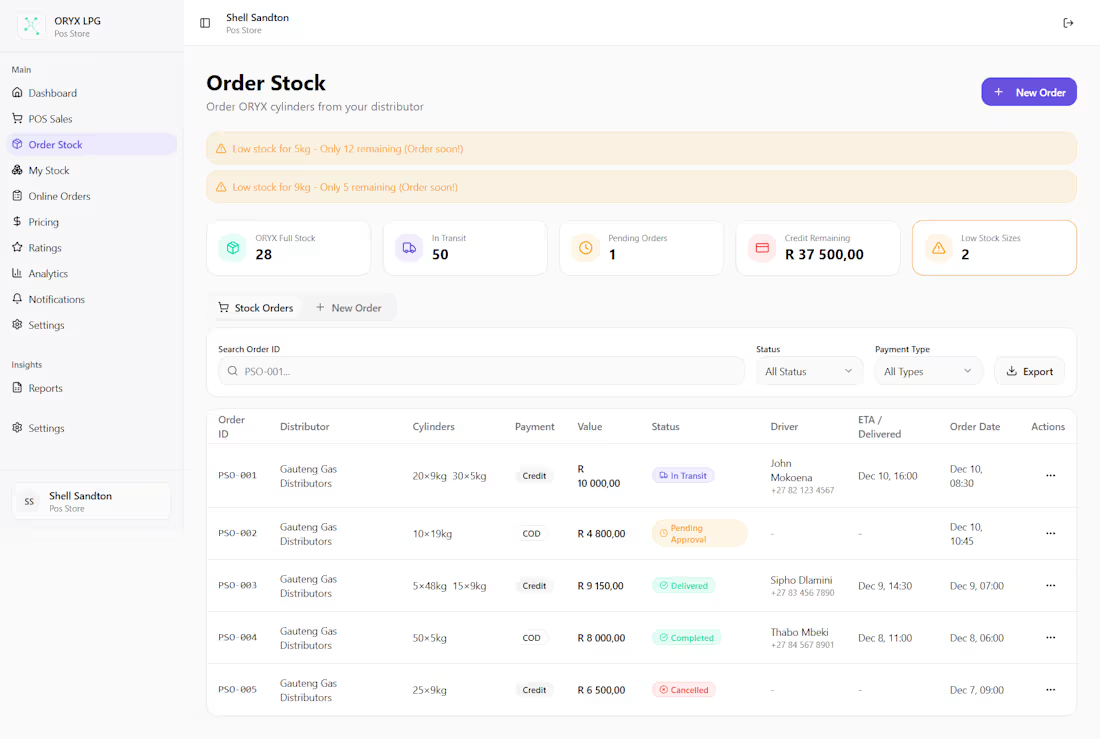
LPG Management System
0
43