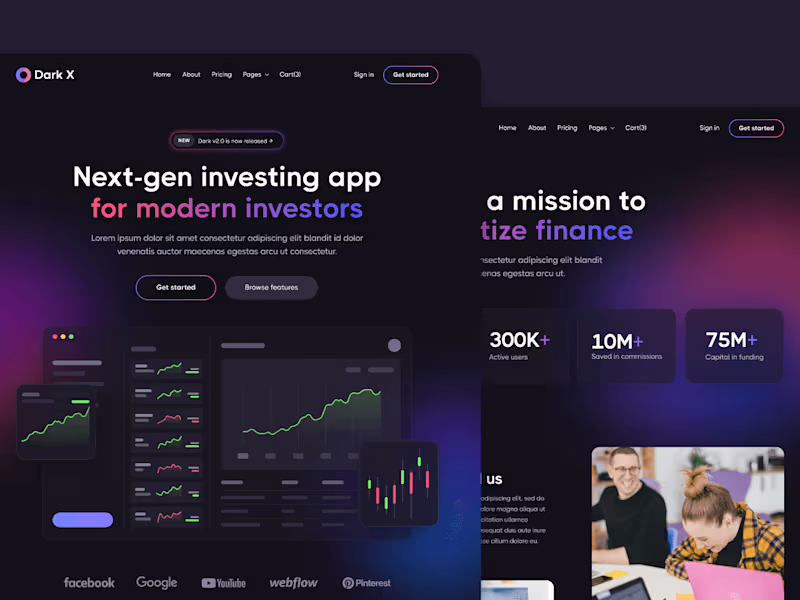
High-Performance Websites with Framer Elevate by Muhmmad Abu Bakkar High-Performance Websites with Framer Elevate by Muhmmad Abu Bakkar
High-Performance Websites with Framer Elevate Muhmmad Abu Bakkar
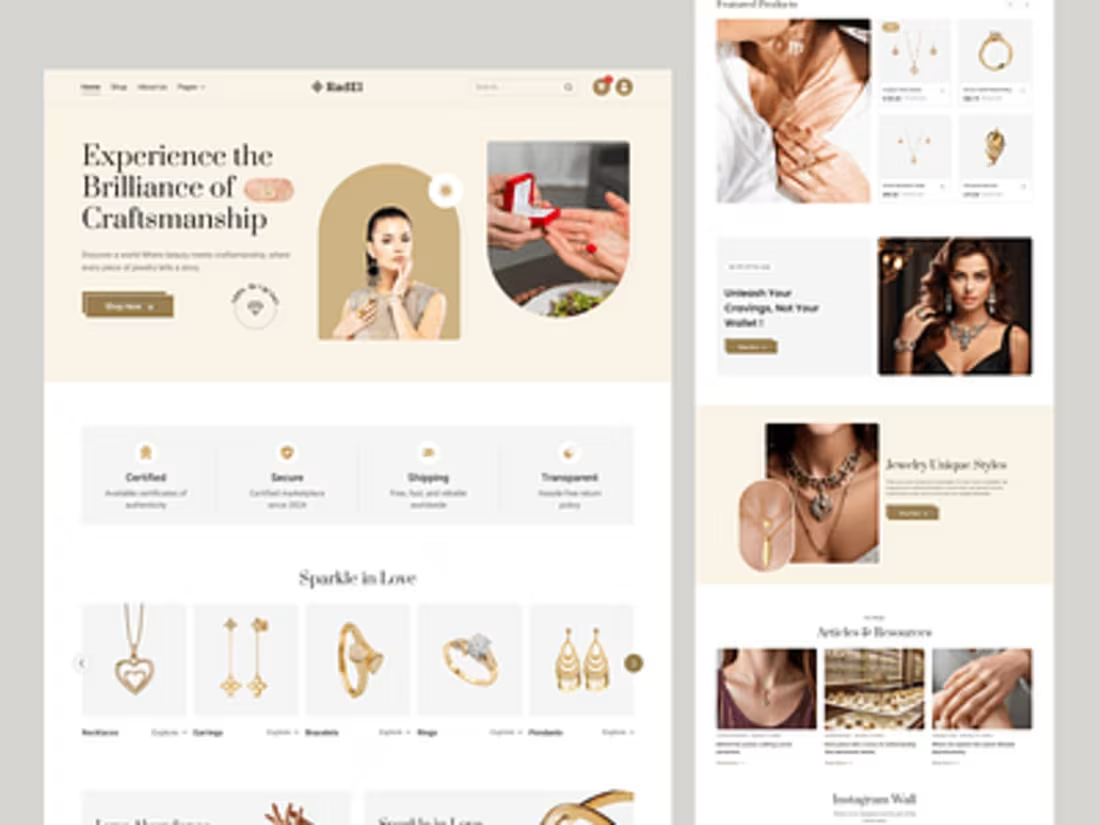
Cover image for  High-Performance Websites with Framer Elevate
I offer custom website design and development using Framer, creating visually stunning, interactive, and responsive websites that elevate your brand's online presence. With a focus on user experience and performance, I build sites that are not only beautiful but also functional and optimized for all devices. My approach combines creative design with seamless animations and practical, reusable components, ensuring a site that's easy to manage and impactful.

What's included

Interactive High-Fidelity Prototypes
Here’s a list of deliverables a client can expect at the end of a Framer website development project: 1. **Fully Responsive Website** - A polished, visually appealing website that adapts seamlessly to desktop, tablet, and mobile devices. 2. **Custom Design and Branding** - Unique, on-brand designs that reflect the client's vision, including custom layouts, typography, color schemes, and imagery. 3. **Interactive Prototypes** - High-fidelity interactive prototypes to showcase design interactions and animations before final implementation. 4. **Optimized User Experience (UX) Design** - Intuitive navigation and user-friendly design flow for an optimal experience, tailored to the target audience. 5. **On-Brand Animations and Microinteractions** - Smooth, eye-catching animations and interactive elements that enhance user engagement without compromising performance. 6. **Responsive, Reusable Components** - Modular components (e.g., buttons, forms, cards) built in Framer that can be easily reused across different sections of the site. 7. **SEO-Ready Structure** - Basic on-page SEO setup, including optimized headings, meta tags, and alt text for images to ensure search engine compatibility. 8. **Performance Optimization** - Fast loading times and optimized assets for enhanced site performance. 9. **Basic Accessibility Compliance** - Ensured that the website meets basic accessibility standards (such as contrast, tab navigation, and alternative text) for an inclusive experience. 10. **Documentation and Training (if required)** - Documentation or a short training session on how to use and manage the website via Framer, so the client can make basic updates on their own. 11. **Final Source Files and Assets** - All final design files, source files, and assets used in the project delivered in an organized format for future reference or updates. 12. **Post-Launch Support (if included)** - A designated period of support for troubleshooting, minor updates, and guidance after launch, if agreed upon. These deliverables provide a comprehensive solution that includes a beautifully designed and functional Framer website, ready for public launch and easy for the client to manage.
FAQs
Framer is a powerful web design tool that allows users to create interactive and visually stunning websites without needing extensive coding knowledge. It combines design and development in a single platform, making it easier to prototype and build websites.
No, you don't need coding skills to use Framer. The platform is designed for both designers and developers, offering an intuitive drag-and-drop interface. However, some advanced features may require basic knowledge of HTML, CSS, or JavaScript.
Yes! Framer provides integrations and features that allow you to set up e-commerce functionalities, including product listings, payment gateways, and shopping carts. You can create a fully functional online store with ease.
Absolutely! Framer is built with responsiveness in mind. You can easily design websites that look great on all devices, from desktops to tablets and smartphones.
You can create a wide range of projects with Framer, including personal portfolios, business websites, landing pages, and e-commerce stores. Its versatility makes it suitable for any web design project.
Once you’ve finished designing your site, you can publish it directly from Framer. You can either use Framer's hosting service or export your project and host it elsewhere.
While Framer is user-friendly, there may be a slight learning curve for those new to design tools. However, Framer offers a wealth of tutorials, documentation, and a supportive community to help you get started.
Yes, Framer allows for collaboration. You can invite team members to edit and review your projects in real time, making it easy to work together on designs.
Framer provides built-in SEO features, allowing you to customize meta tags, titles, and descriptions for each page. You can also set up alt text for images and manage your site’s URL structure to enhance SEO.
Yes! Framer allows you to easily edit meta tags and descriptions for each page in the settings. This helps you optimize your content for search engines and improve visibility in search results.
Absolutely! Framer sites are designed to be fully responsive, ensuring that your website looks great and functions well on all devices, which is essential for SEO performance.
To improve loading speed in Framer, you can optimize images before uploading them, minimize the use of heavy animations, and utilize Framer’s built-in performance tools. Fast loading times are critical for both user experience and SEO.
Yes, you can add structured data (schema markup) to your Framer site by embedding custom code. This can help search engines better understand your content and enhance your listings in search results.
Yes! Framer allows you to integrate various analytics tools like Google Analytics or Facebook Pixel easily. Tracking your site's performance can help you refine your SEO strategies based on user behavior.
Identify what you want to test. Common objectives include: Improving click-through rates (CTR) for a call-to-action (CTA) button. Increasing form submissions. Enhancing user engagement with specific content.
In Framer, create a duplicate of the page or element you want to test. This will be your variant (e.g., Version A and Version B).
Change only one variable between the two versions to ensure accurate results. For example: Different text on a button (e.g., “Sign Up” vs. “Join Now”). Altering the color or size of a button. Using different images or headlines.
Contact for pricing
Schedule a call
Tags
Adobe XD
Figma
Framer
Notion
Framer Developer
Marketing Director
UI Designer
Service provided by
Muhmmad Abu Bakkar Naogaon, Bangladesh
2
Paid projects
2
Followers
High-Performance Websites with Framer Elevate Muhmmad Abu Bakkar
Contact for pricing
Schedule a call
Tags
Adobe XD
Figma
Framer
Notion
Framer Developer
Marketing Director
UI Designer
Cover image for  High-Performance Websites with Framer Elevate
I offer custom website design and development using Framer, creating visually stunning, interactive, and responsive websites that elevate your brand's online presence. With a focus on user experience and performance, I build sites that are not only beautiful but also functional and optimized for all devices. My approach combines creative design with seamless animations and practical, reusable components, ensuring a site that's easy to manage and impactful.

What's included

Interactive High-Fidelity Prototypes
Here’s a list of deliverables a client can expect at the end of a Framer website development project: 1. **Fully Responsive Website** - A polished, visually appealing website that adapts seamlessly to desktop, tablet, and mobile devices. 2. **Custom Design and Branding** - Unique, on-brand designs that reflect the client's vision, including custom layouts, typography, color schemes, and imagery. 3. **Interactive Prototypes** - High-fidelity interactive prototypes to showcase design interactions and animations before final implementation. 4. **Optimized User Experience (UX) Design** - Intuitive navigation and user-friendly design flow for an optimal experience, tailored to the target audience. 5. **On-Brand Animations and Microinteractions** - Smooth, eye-catching animations and interactive elements that enhance user engagement without compromising performance. 6. **Responsive, Reusable Components** - Modular components (e.g., buttons, forms, cards) built in Framer that can be easily reused across different sections of the site. 7. **SEO-Ready Structure** - Basic on-page SEO setup, including optimized headings, meta tags, and alt text for images to ensure search engine compatibility. 8. **Performance Optimization** - Fast loading times and optimized assets for enhanced site performance. 9. **Basic Accessibility Compliance** - Ensured that the website meets basic accessibility standards (such as contrast, tab navigation, and alternative text) for an inclusive experience. 10. **Documentation and Training (if required)** - Documentation or a short training session on how to use and manage the website via Framer, so the client can make basic updates on their own. 11. **Final Source Files and Assets** - All final design files, source files, and assets used in the project delivered in an organized format for future reference or updates. 12. **Post-Launch Support (if included)** - A designated period of support for troubleshooting, minor updates, and guidance after launch, if agreed upon. These deliverables provide a comprehensive solution that includes a beautifully designed and functional Framer website, ready for public launch and easy for the client to manage.
FAQs
Framer is a powerful web design tool that allows users to create interactive and visually stunning websites without needing extensive coding knowledge. It combines design and development in a single platform, making it easier to prototype and build websites.
No, you don't need coding skills to use Framer. The platform is designed for both designers and developers, offering an intuitive drag-and-drop interface. However, some advanced features may require basic knowledge of HTML, CSS, or JavaScript.
Yes! Framer provides integrations and features that allow you to set up e-commerce functionalities, including product listings, payment gateways, and shopping carts. You can create a fully functional online store with ease.
Absolutely! Framer is built with responsiveness in mind. You can easily design websites that look great on all devices, from desktops to tablets and smartphones.
You can create a wide range of projects with Framer, including personal portfolios, business websites, landing pages, and e-commerce stores. Its versatility makes it suitable for any web design project.
Once you’ve finished designing your site, you can publish it directly from Framer. You can either use Framer's hosting service or export your project and host it elsewhere.
While Framer is user-friendly, there may be a slight learning curve for those new to design tools. However, Framer offers a wealth of tutorials, documentation, and a supportive community to help you get started.
Yes, Framer allows for collaboration. You can invite team members to edit and review your projects in real time, making it easy to work together on designs.
Framer provides built-in SEO features, allowing you to customize meta tags, titles, and descriptions for each page. You can also set up alt text for images and manage your site’s URL structure to enhance SEO.
Yes! Framer allows you to easily edit meta tags and descriptions for each page in the settings. This helps you optimize your content for search engines and improve visibility in search results.
Absolutely! Framer sites are designed to be fully responsive, ensuring that your website looks great and functions well on all devices, which is essential for SEO performance.
To improve loading speed in Framer, you can optimize images before uploading them, minimize the use of heavy animations, and utilize Framer’s built-in performance tools. Fast loading times are critical for both user experience and SEO.
Yes, you can add structured data (schema markup) to your Framer site by embedding custom code. This can help search engines better understand your content and enhance your listings in search results.
Yes! Framer allows you to integrate various analytics tools like Google Analytics or Facebook Pixel easily. Tracking your site's performance can help you refine your SEO strategies based on user behavior.
Identify what you want to test. Common objectives include: Improving click-through rates (CTR) for a call-to-action (CTA) button. Increasing form submissions. Enhancing user engagement with specific content.
In Framer, create a duplicate of the page or element you want to test. This will be your variant (e.g., Version A and Version B).
Change only one variable between the two versions to ensure accurate results. For example: Different text on a button (e.g., “Sign Up” vs. “Join Now”). Altering the color or size of a button. Using different images or headlines.
Contact for pricing