
Figma to Framer — Multi-Page Website BuildRoman Avshalumov
I build Figma / Claude designs in Framer, including the parts Framer wasn't built to do.
What you get
The site. Every page in your file, built responsive and checked against the design at each breakpoint it shows.
The parts people edit. CMS collections set up around how your team publishes, components and variants for repeated sections, and text and images anyone on the team can change in Framer.
The parts that move or connect. Interactions and animation as designed, forms wired to your CRM, analytics, and code components where Framer stops.
The parts nobody sees. Fast load times, clean metadata and social previews, alt text, a sitemap, and redirects from the old site.
After launch. Two weeks where I fix anything that turns up, and a walkthrough for whoever edits the site next.
Three recent Framer sites
Scailium. An AI infrastructure company that has raised $160M. I moved its site from WordPress to Framer ahead of a new investment round, with non-standard grids and animated visuals.
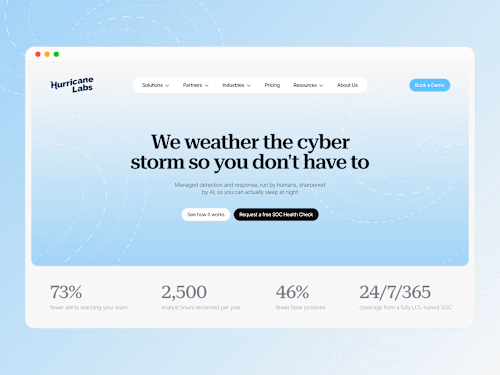
Hurricane Labs. A cybersecurity company whose many services look alike at first glance. I designed and built 15 distinct pages, three of them templates for larger groups of content, so no service page reads like a copy of the next.
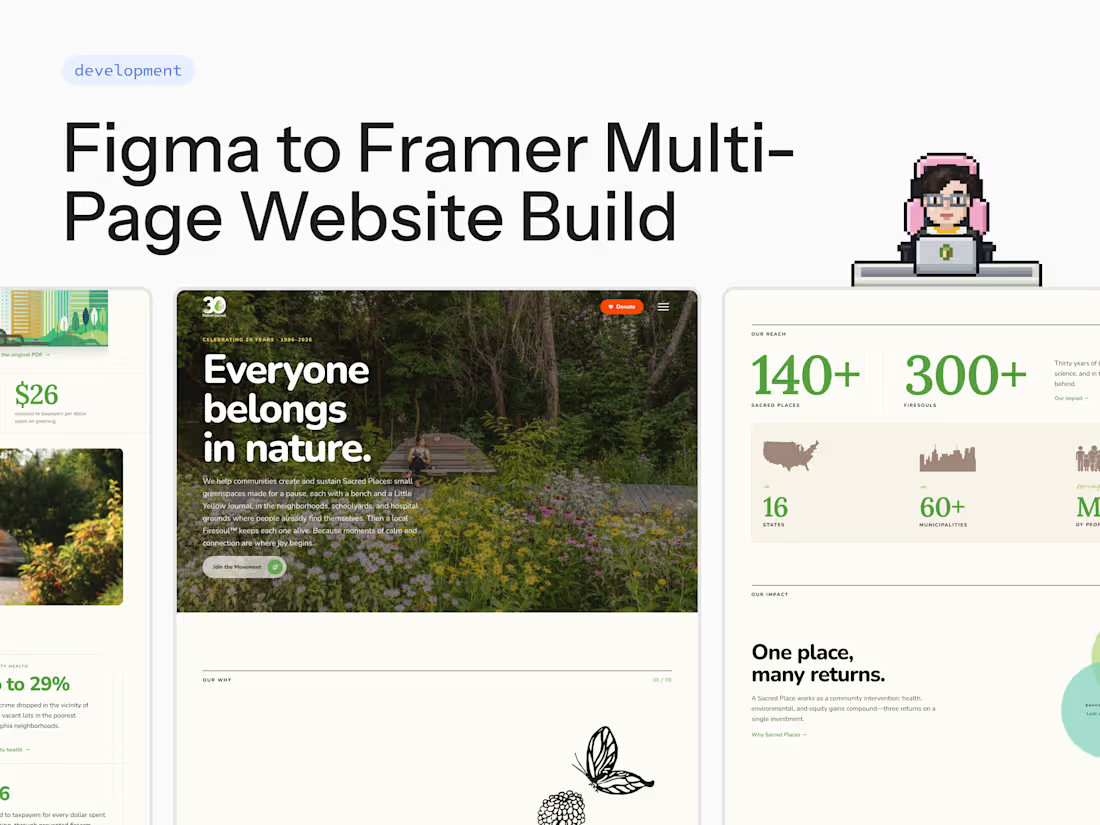
Nature Sacred. A foundation behind 200 healing green spaces, moved from WordPress to Framer. Its donor CRM's forms weren't built for Framer, so I built components that match the design and drive the CRM's real forms underneath, and every gift still lands where it should.
I designed and built all three, so I know how a file has to be set up for Framer from both sides.
"Roman was communicative, efficient, and agile. He was able to adjust our site according to evolving needs, and met deadlines along the way." — Haley Regan, Hurricane Labs
How I work with designers
The design is yours. Before I build anything, I go through the file and send back a short list: states it doesn't show, breakpoints it skips, anything that will behave differently in a browser. You decide, then I build.
If something won't work well on the web, I say so early, while it's cheap to change. I'll send you a staging link so you can follow the progress live, so there are no surprises at the end. I'm easy to reach and quick to reply.
A typical build takes about three weeks: the first days go to reading the file and setting up components, two weeks to building and connecting, the last few days to quality control and handing over.
I have a computer science degree and I'm a certified Framer Expert, so the parts that need real code get real code. I lead the build; my team helps with production.
"Another awesome experience with Roman. Still have never had to ask for any edits or revisions, his work comes out so impressively every time. If you need high-quality work done fast, you need to use Roman." — Brandon Barbash
What I need from you
The Figma or Claude Design file with desktop and mobile frames. Web licenses for any paid fonts. Access to your Framer workspace, or I build in mine and transfer it. A Framer site plan when you're ready to launch.
If this isn't quite it
Need the design as well? See Framer Website — Design + Build. Only one page? See Figma to Framer — Landing Page Build.
Send the Figma link and your launch date. I'll come back with my questions about the file.
FAQs
Example work



Starting at$3,000
Duration3 weeks
Tags
Claude

Figma

Framer

Framer Designer
Framer Developer
UI Designer
UX Designer
Web Designer
Web Developer
Service provided by
Roman Avshalumov maxGeorgiana, USA
- $50k+
- Earned
- 15
- Paid projects
- 5.00
- Rating
- 146
- Followers
Figma to Framer — Multi-Page Website BuildRoman Avshalumov
Starting at$3,000
Duration3 weeks
Tags
Claude
Figma
Framer
Framer Designer
Framer Developer
UI Designer
UX Designer
Web Designer
Web Developer
I build Figma / Claude designs in Framer, including the parts Framer wasn't built to do.
What you get
The site. Every page in your file, built responsive and checked against the design at each breakpoint it shows.
The parts people edit. CMS collections set up around how your team publishes, components and variants for repeated sections, and text and images anyone on the team can change in Framer.
The parts that move or connect. Interactions and animation as designed, forms wired to your CRM, analytics, and code components where Framer stops.
The parts nobody sees. Fast load times, clean metadata and social previews, alt text, a sitemap, and redirects from the old site.
After launch. Two weeks where I fix anything that turns up, and a walkthrough for whoever edits the site next.
Three recent Framer sites
Scailium. An AI infrastructure company that has raised $160M. I moved its site from WordPress to Framer ahead of a new investment round, with non-standard grids and animated visuals.
Hurricane Labs. A cybersecurity company whose many services look alike at first glance. I designed and built 15 distinct pages, three of them templates for larger groups of content, so no service page reads like a copy of the next.
Nature Sacred. A foundation behind 200 healing green spaces, moved from WordPress to Framer. Its donor CRM's forms weren't built for Framer, so I built components that match the design and drive the CRM's real forms underneath, and every gift still lands where it should.
I designed and built all three, so I know how a file has to be set up for Framer from both sides.
"Roman was communicative, efficient, and agile. He was able to adjust our site according to evolving needs, and met deadlines along the way." — Haley Regan, Hurricane Labs
How I work with designers
The design is yours. Before I build anything, I go through the file and send back a short list: states it doesn't show, breakpoints it skips, anything that will behave differently in a browser. You decide, then I build.
If something won't work well on the web, I say so early, while it's cheap to change. I'll send you a staging link so you can follow the progress live, so there are no surprises at the end. I'm easy to reach and quick to reply.
A typical build takes about three weeks: the first days go to reading the file and setting up components, two weeks to building and connecting, the last few days to quality control and handing over.
I have a computer science degree and I'm a certified Framer Expert, so the parts that need real code get real code. I lead the build; my team helps with production.
"Another awesome experience with Roman. Still have never had to ask for any edits or revisions, his work comes out so impressively every time. If you need high-quality work done fast, you need to use Roman." — Brandon Barbash
What I need from you
The Figma or Claude Design file with desktop and mobile frames. Web licenses for any paid fonts. Access to your Framer workspace, or I build in mine and transfer it. A Framer site plan when you're ready to launch.
If this isn't quite it
Need the design as well? See Framer Website — Design + Build. Only one page? See Figma to Framer — Landing Page Build.
Send the Figma link and your launch date. I'll come back with my questions about the file.
FAQs
Example work
$3,000