
Membership Programs: Turn a Free Audience Into Paying MembersVeronica Head
The hard part isn't the paywall
You have an audience that already shows up — a following, an email list, a free community, a course that sold well. Charging them is the obvious next move and the one most likely to go badly, because the instinct is to put a price on what they already get for free. Do that and you get a revolt instead of revenue.
The work is deciding what sits behind the wall, what it costs, and where the ask happens. The build is the last third.
What I've built
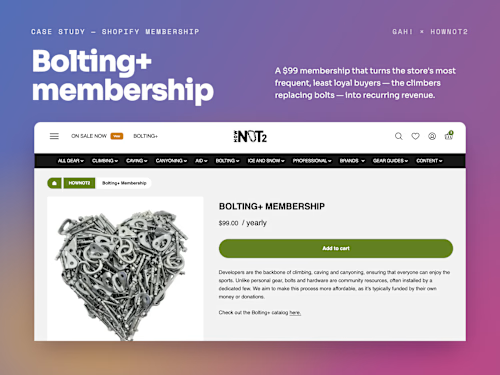
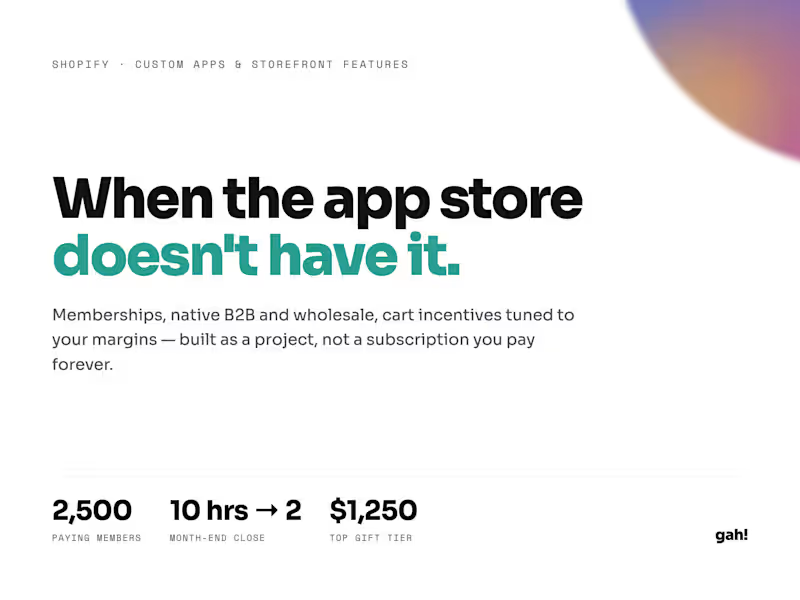
A $99/month membership on a creator store. For HowNOT2 I designed and built Bolting+, which now runs at roughly 2,500 members. Conversion didn't come from a sales page. It came from a savings teaser showing shoppers what their cart would cost as a member, a join prompt triggered by spend, and entitlement logic that applies the discount automatically at checkout — so the ask lands while someone is already getting value.
Recurring billing a small team can actually run. The ROOTS admin portal handles enrollment and Stripe tuition for a forest school across three locations, around 200 students and 15 staff, alongside assessment and compliance.
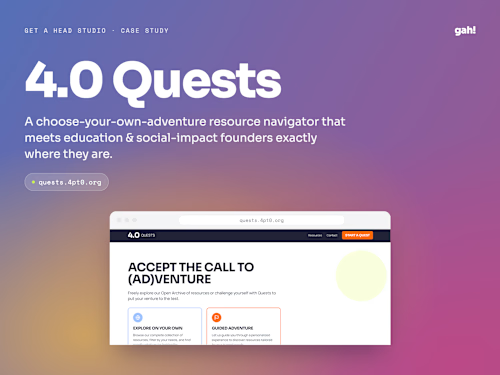
Member content people can find. 4.0 Quests was a library of 50 resources founders weren't using, because you had to already know what to search for. I built a guided path for people who want to be told what's next, plus an open archive for people who'd rather browse. A membership with forty courses inside it has that problem on day one.
An application and profile system. The 4.0 Expert Hub is a directory across 12 service categories with CMS-driven profiles and a separate application path for experts joining — the same machinery a vetted or gated tier needs.
How I work
Price and boundary first. Week one is what goes behind the wall and what it's worth. If the answer is "what they already get," I'll say so.
Sell it before building all of it. One offer, working checkout, a small group rather than your whole list. What that surfaces is far cheaper to fix in week one than in week four.
The join moment is a design problem. Most membership revenue is lost in the gap between someone valuing the thing and someone being asked to pay for it. That surface is where I spend the most time.
You run it afterward. Tiers, pricing, benefits and content should be changeable by your team without calling me.
Where this runs
Shopify if you're already selling products through it, or a custom stack on React and Stripe if you're not. If you're committed to an all-in-one platform I haven't used — Kajabi, Circle, Patreon — the strategy and funnel design still transfer, but hire the build to someone fluent in the tool.
FAQs
Example work


Starting at$3,000
Duration4 weeks
Tags
Liquid

React

Shopify

Stripe

Fullstack Engineer
Product Manager
Shopify Developer
E-Commerce
Membership
Subscriptions
Service provided by
Veronica Head proSeattle, USA
- 3
- Followers
Membership Programs: Turn a Free Audience Into Paying MembersVeronica Head
Starting at$3,000
Duration4 weeks
Tags
Liquid
React
Shopify
Stripe
Fullstack Engineer
Product Manager
Shopify Developer
E-Commerce
Membership
Subscriptions
The hard part isn't the paywall
You have an audience that already shows up — a following, an email list, a free community, a course that sold well. Charging them is the obvious next move and the one most likely to go badly, because the instinct is to put a price on what they already get for free. Do that and you get a revolt instead of revenue.
The work is deciding what sits behind the wall, what it costs, and where the ask happens. The build is the last third.
What I've built
A $99/month membership on a creator store. For HowNOT2 I designed and built Bolting+, which now runs at roughly 2,500 members. Conversion didn't come from a sales page. It came from a savings teaser showing shoppers what their cart would cost as a member, a join prompt triggered by spend, and entitlement logic that applies the discount automatically at checkout — so the ask lands while someone is already getting value.
Recurring billing a small team can actually run. The ROOTS admin portal handles enrollment and Stripe tuition for a forest school across three locations, around 200 students and 15 staff, alongside assessment and compliance.
Member content people can find. 4.0 Quests was a library of 50 resources founders weren't using, because you had to already know what to search for. I built a guided path for people who want to be told what's next, plus an open archive for people who'd rather browse. A membership with forty courses inside it has that problem on day one.
An application and profile system. The 4.0 Expert Hub is a directory across 12 service categories with CMS-driven profiles and a separate application path for experts joining — the same machinery a vetted or gated tier needs.
How I work
Price and boundary first. Week one is what goes behind the wall and what it's worth. If the answer is "what they already get," I'll say so.
Sell it before building all of it. One offer, working checkout, a small group rather than your whole list. What that surfaces is far cheaper to fix in week one than in week four.
The join moment is a design problem. Most membership revenue is lost in the gap between someone valuing the thing and someone being asked to pay for it. That surface is where I spend the most time.
You run it afterward. Tiers, pricing, benefits and content should be changeable by your team without calling me.
Where this runs
Shopify if you're already selling products through it, or a custom stack on React and Stripe if you're not. If you're committed to an all-in-one platform I haven't used — Kajabi, Circle, Patreon — the strategy and funnel design still transfer, but hire the build to someone fluent in the tool.
FAQs
Example work
$3,000