
Solving your toughest business problems with data and analytics.Samuel Momodu
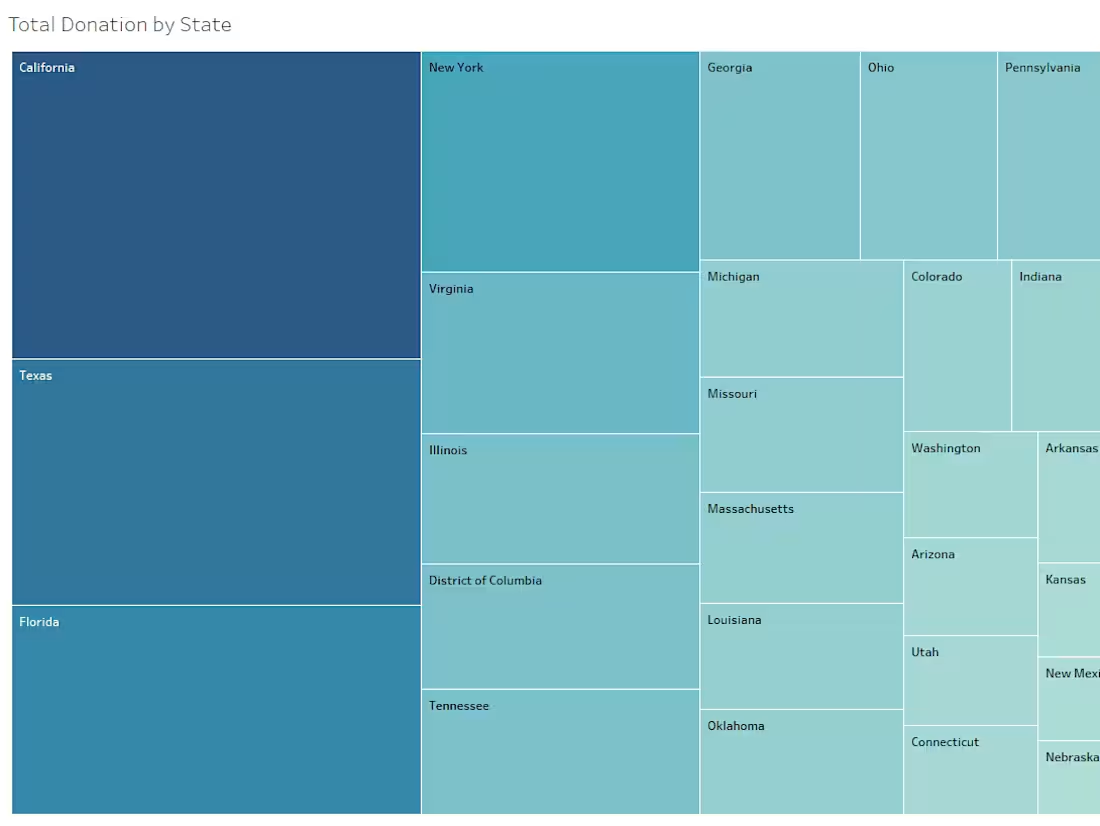
1. Identify the problem or goal: Define the business objectives and the questions to be answered through data. We will do this in our first discovery
call.
I will be solely responsible for steps 2 - 6 & 8 below, you will be responsible for step 7 alone.
2. Collect data: Gather relevant data from various sources, ensuring accuracy and completeness.
3. Clean and preprocess data: Remove errors, duplicates, and inconsistencies, and format the data for analysis.
4. Analyze data: Use statistical methods, algorithms, and tools to uncover trends, patterns, and insights.
5. Interpret results: Translate findings into meaningful insights aligned with the business goals.
6. Present insights: Visualize and communicate key insights clearly to stakeholders.
7. Act on insights: Implement strategies or decisions based on the analysis to achieve business objectives.
8. Evaluate outcomes: Measure the impact of implemented changes and refine the approach as needed.
What's included
Data Analysis
A firm understanding of what drives success for your business. Identify the marketing or operational factors drive or can help drive growth.
Market Analysis
An analytics report on how your customers win and the nexts you can take to gain competitive advantage.
Data Modelling
Develop data modelling to ensure data quality in your organisation. You will always be able to understand your business clearly. Your organisation will be able to fail fast, innovate, learn from the past and male predictions.
Samuel's other services


Starting at$3,500
Duration4 weeks
Tags
Google Analytics

Looker Studio

Microsoft Excel

Tableau

Business Analyst
Data Analyst
Data Modelling Analyst
Service provided by
Samuel Momodu Newcastle upon Tyne, UK
Solving your toughest business problems with data and analytics.Samuel Momodu
Starting at$3,500
Duration4 weeks
Tags
Google Analytics
Looker Studio
Microsoft Excel
Tableau
Business Analyst
Data Analyst
Data Modelling Analyst
1. Identify the problem or goal: Define the business objectives and the questions to be answered through data. We will do this in our first discovery
call.
I will be solely responsible for steps 2 - 6 & 8 below, you will be responsible for step 7 alone.
2. Collect data: Gather relevant data from various sources, ensuring accuracy and completeness.
3. Clean and preprocess data: Remove errors, duplicates, and inconsistencies, and format the data for analysis.
4. Analyze data: Use statistical methods, algorithms, and tools to uncover trends, patterns, and insights.
5. Interpret results: Translate findings into meaningful insights aligned with the business goals.
6. Present insights: Visualize and communicate key insights clearly to stakeholders.
7. Act on insights: Implement strategies or decisions based on the analysis to achieve business objectives.
8. Evaluate outcomes: Measure the impact of implemented changes and refine the approach as needed.
What's included
Data Analysis
A firm understanding of what drives success for your business. Identify the marketing or operational factors drive or can help drive growth.
Market Analysis
An analytics report on how your customers win and the nexts you can take to gain competitive advantage.
Data Modelling
Develop data modelling to ensure data quality in your organisation. You will always be able to understand your business clearly. Your organisation will be able to fail fast, innovate, learn from the past and male predictions.
Samuel's other services
$3,500