
Product de-scoping — cut the bloat without breaking a live buildSebastián Balderas Espinosa
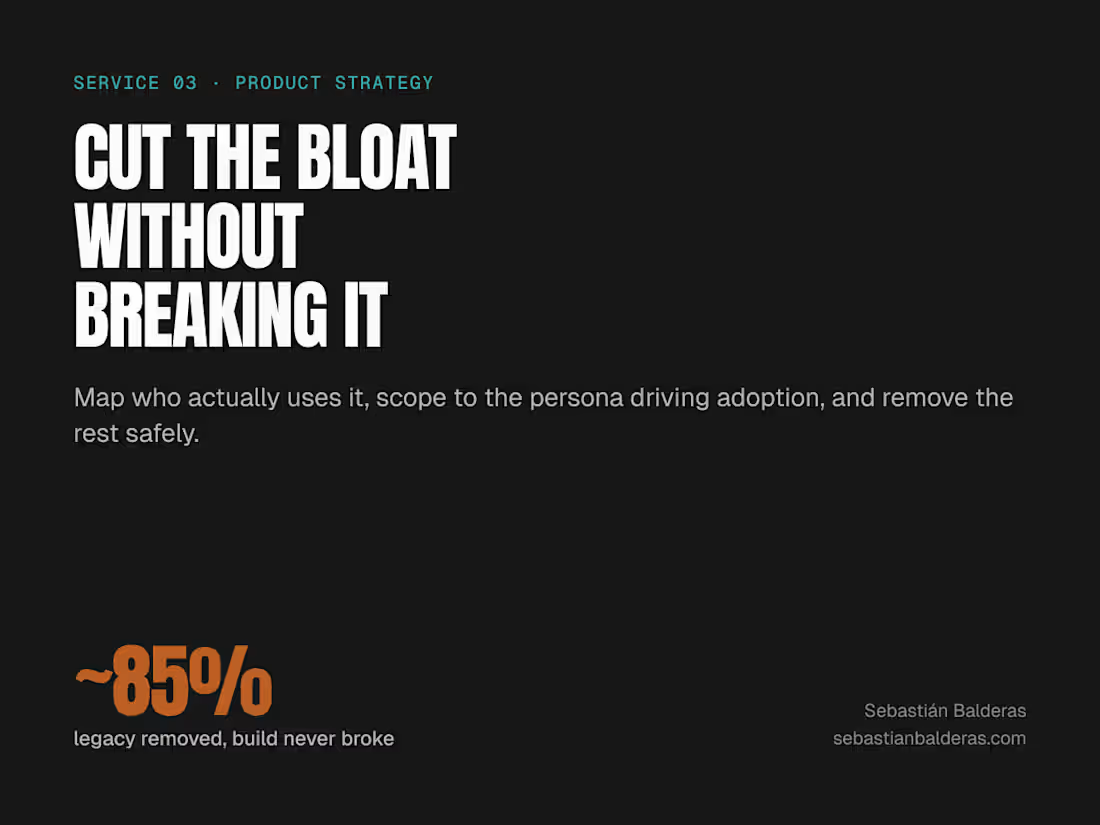
Removing functionality is harder than adding it. Everything looks load-bearing until you map who actually uses it.
Repfabric was a live CRM with 20 roles and 12 modules that nobody was adopting, running on a Salesforce data-sync that had to keep working. I mapped the full multi-role workflow, separated who used the platform from who paid for it, and scoped the entire experience to the one persona driving adoption — removing ~85% of legacy functionality across three iterations, on a build that never broke.
What you get:
· Multi-role workflow map (service blueprint)
· User vs. buyer analysis — who you're actually designing for
· A scoped product definition: what stays, what goes, and the reasoning for each
· A migration path that preserves the underlying data model
· 12 modules consolidated to 4 is what this looked like last time
FAQs
Example work

Starting at$3,200
Duration3 weeks
Tags
Claude

Figma

AI Automation
Product Strategist
UX Engineer
Service provided by
Sebastián Balderas Espinosa Puebla, Mexico
Product de-scoping — cut the bloat without breaking a live buildSebastián Balderas Espinosa
Starting at$3,200
Duration3 weeks
Tags
Claude
Figma
AI Automation
Product Strategist
UX Engineer
Removing functionality is harder than adding it. Everything looks load-bearing until you map who actually uses it.
Repfabric was a live CRM with 20 roles and 12 modules that nobody was adopting, running on a Salesforce data-sync that had to keep working. I mapped the full multi-role workflow, separated who used the platform from who paid for it, and scoped the entire experience to the one persona driving adoption — removing ~85% of legacy functionality across three iterations, on a build that never broke.
What you get:
· Multi-role workflow map (service blueprint)
· User vs. buyer analysis — who you're actually designing for
· A scoped product definition: what stays, what goes, and the reasoning for each
· A migration path that preserves the underlying data model
· 12 modules consolidated to 4 is what this looked like last time
FAQs
Example work
$3,200