
Design system as code — tokens, Storybook, engineering handoffSebastián Balderas Espinosa
Your designers and your frontend are drifting apart, and every release costs a round of "that's not what the mockup said."
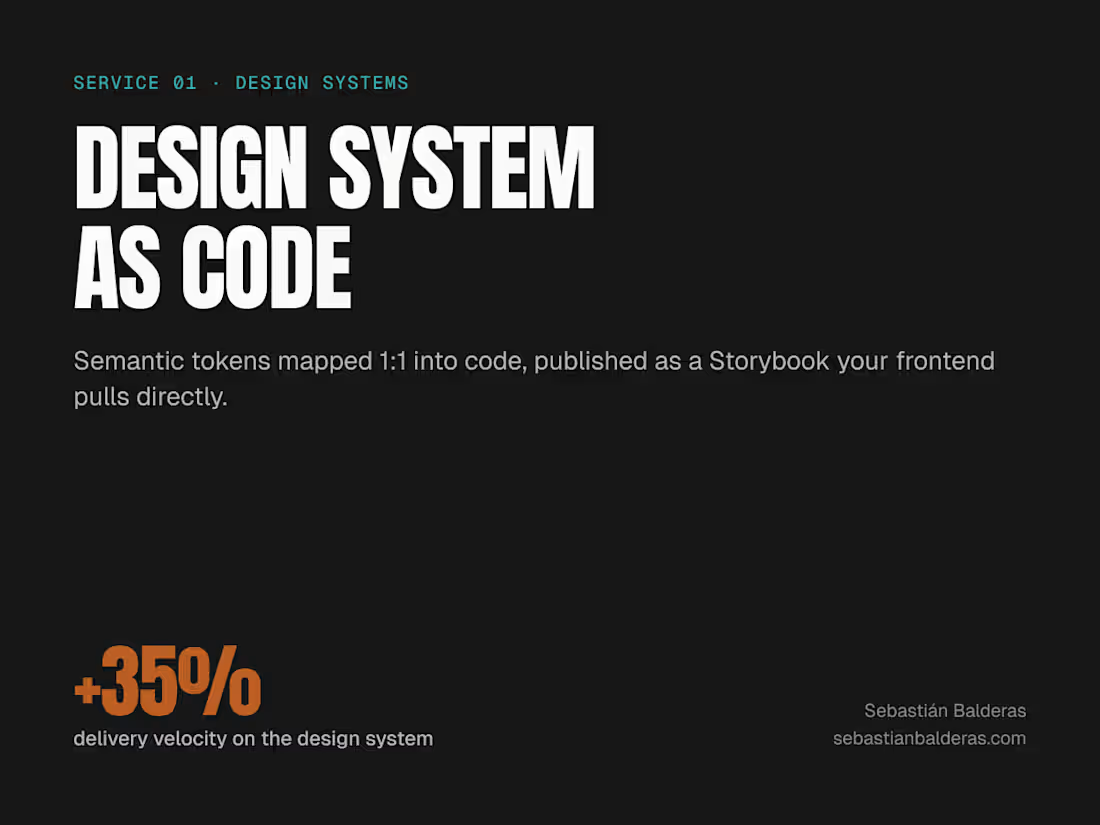
I build the design system as a visual API: Figma remains the design source of truth; semantic tokens map 1:1 into code, and components are published as a Storybook your frontend pulls directly, aligned to Tailwind, ShadCN and Radix. What gets designed is what gets shipped — and a model writing UI against that system produces your product, not its own opinion of good UI.
I did this on Strata, an enterprise platform with multi-role workflows, as the sole designer. Delivery velocity went up +35%.
What you get:
· Token architecture (primitives → semantic → components)
· Published Storybook your frontend consumes directly
· Component states mapped to real backend workflow states
· Accessibility validated with measured contrast ratios, not by eye
Scope: design and design-system delivery. I hand off a Storybook and tokens your engineers consume directly — I don't take over your frontend codebase.
FAQs

Starting at$3,600
Duration3 weeks
Tags
Claude

Figma

React

Design Systems Specialist
UX Engineer
Service provided by
Sebastián Balderas Espinosa Puebla, Mexico
Design system as code — tokens, Storybook, engineering handoffSebastián Balderas Espinosa
Starting at$3,600
Duration3 weeks
Tags
Claude
Figma
React
Design Systems Specialist
UX Engineer
Your designers and your frontend are drifting apart, and every release costs a round of "that's not what the mockup said."
I build the design system as a visual API: Figma remains the design source of truth; semantic tokens map 1:1 into code, and components are published as a Storybook your frontend pulls directly, aligned to Tailwind, ShadCN and Radix. What gets designed is what gets shipped — and a model writing UI against that system produces your product, not its own opinion of good UI.
I did this on Strata, an enterprise platform with multi-role workflows, as the sole designer. Delivery velocity went up +35%.
What you get:
· Token architecture (primitives → semantic → components)
· Published Storybook your frontend consumes directly
· Component states mapped to real backend workflow states
· Accessibility validated with measured contrast ratios, not by eye
Scope: design and design-system delivery. I hand off a Storybook and tokens your engineers consume directly — I don't take over your frontend codebase.
FAQs
$3,600