
AI Integration & LLM Layer for Your StackTaimoor Khan
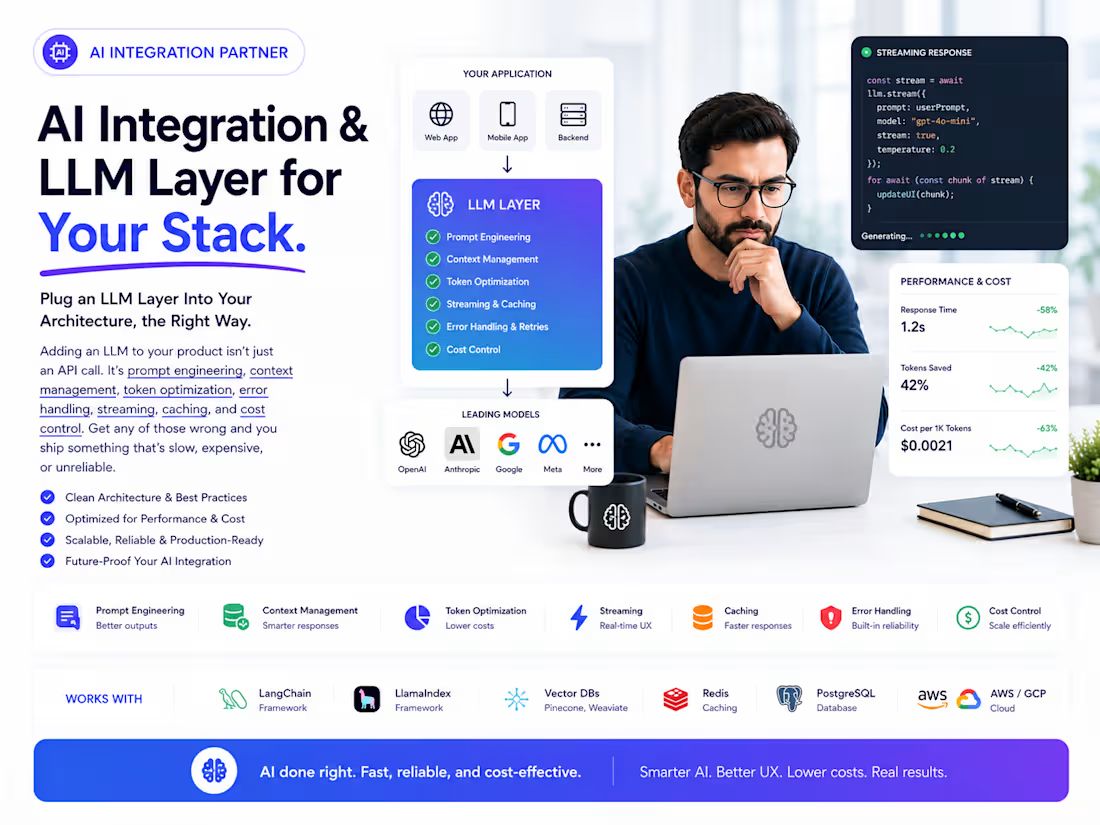
Plug an LLM Layer Into Your Architecture, the Right Way
Adding an LLM to your product isn't just an API call. It's prompt engineering, context management, token optimization, error handling, streaming, caching, and cost control. Get any of those wrong and you ship something that's slow, expensive, or unreliable.
I build the AI/LLM integration layer that sits between your application and the language models. Think of it as the middleware that makes AI actually work in production: structured inputs, validated outputs, graceful failures, and predictable costs.
What I Build
LLM abstraction layer — unified interface across OpenAI, Anthropic, Gemini, or open-source models with automatic failover
Prompt management system — versioned prompts, A/B testing, and structured output parsing
Streaming & real-time responses — server-sent events or WebSocket streaming for chat-style interfaces
Context window management — smart truncation, summarization, and sliding window strategies for long conversations
Token & cost optimization — caching, batching, model routing (use GPT-4o for complex tasks, lighter models for simple ones)
Structured output parsing — JSON mode, function calling, and validation to get reliable structured data from LLMs
Evaluation pipeline — automated testing to measure output quality and catch regressions
Tech Stack
OpenAI API, Anthropic API, Google Gemini, LangChain, LlamaIndex, Vercel AI SDK, Next.js, Node.js, Python, PostgreSQL, Redis.
Who This Is For
Engineering teams adding LLM features who want the integration layer done right from the start
Products that have a basic ChatGPT integration and need it hardened for production scale
CTOs who want a clean AI abstraction layer their team can build on top of
FAQs
Example work

Taimoor's other services
Starting at$4,000
Duration3 weeks
Tags
AI Infrastructure
Anthropic API
LangChain

LLM Integration
OpenAI API
AI Engineer
Fullstack Engineer
Prompt Engineer
AI Middleware
Service provided by
Taimoor Khan proKarachi, Pakistan
- 1
- Paid projects
- 5.00
- Rating
- 14
- Followers
AI Integration & LLM Layer for Your StackTaimoor Khan
Starting at$4,000
Duration3 weeks
Tags
AI Infrastructure
Anthropic API
LangChain
LLM Integration
OpenAI API
AI Engineer
Fullstack Engineer
Prompt Engineer
AI Middleware
Plug an LLM Layer Into Your Architecture, the Right Way
Adding an LLM to your product isn't just an API call. It's prompt engineering, context management, token optimization, error handling, streaming, caching, and cost control. Get any of those wrong and you ship something that's slow, expensive, or unreliable.
I build the AI/LLM integration layer that sits between your application and the language models. Think of it as the middleware that makes AI actually work in production: structured inputs, validated outputs, graceful failures, and predictable costs.
What I Build
LLM abstraction layer — unified interface across OpenAI, Anthropic, Gemini, or open-source models with automatic failover
Prompt management system — versioned prompts, A/B testing, and structured output parsing
Streaming & real-time responses — server-sent events or WebSocket streaming for chat-style interfaces
Context window management — smart truncation, summarization, and sliding window strategies for long conversations
Token & cost optimization — caching, batching, model routing (use GPT-4o for complex tasks, lighter models for simple ones)
Structured output parsing — JSON mode, function calling, and validation to get reliable structured data from LLMs
Evaluation pipeline — automated testing to measure output quality and catch regressions
Tech Stack
OpenAI API, Anthropic API, Google Gemini, LangChain, LlamaIndex, Vercel AI SDK, Next.js, Node.js, Python, PostgreSQL, Redis.
Who This Is For
Engineering teams adding LLM features who want the integration layer done right from the start
Products that have a basic ChatGPT integration and need it hardened for production scale
CTOs who want a clean AI abstraction layer their team can build on top of
FAQs
Example work
Taimoor's other services
$4,000