
Technical Blog Post by Aleksandr ProkudinTechnical Blog Post by Aleksandr Prokudin
Technical Blog PostAleksandr Prokudin
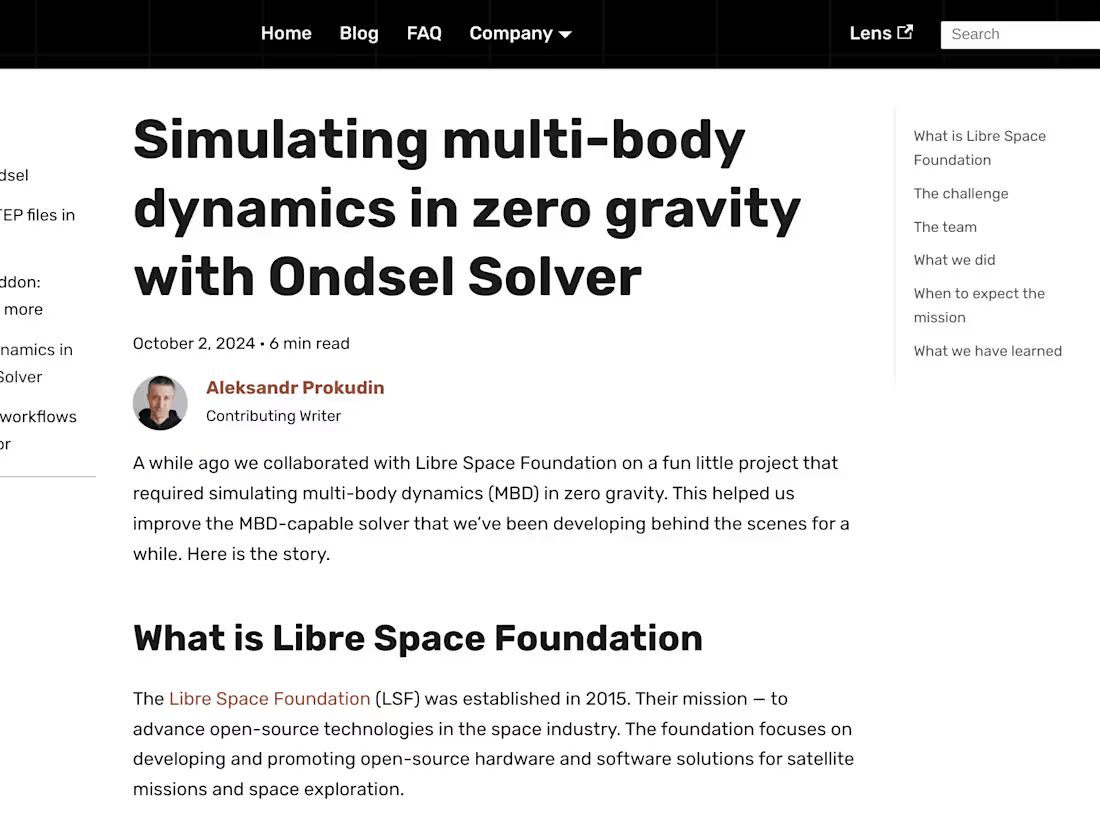
Cover image for Technical Blog Post
A technical blog post can introduce a new feature, explain important concepts your software or SaaS relies on, discuss solutions to common issues that users face, or be something else entirely. I will help you define the purpose and scope of the post, then write it and create illustrations. I will ensure that the post is technically spotless for professionals reading your blog and appealing to the general public.

What's included

Quick delivery
For pieces below 1200 words, I will write the first draft in 2 days. For long-form posts, this will take up to 3-4 days.
Any format
The post can be an introduction to a new feature, an explainer, release notes, or a thought leadership piece.
Few iterations
Once we agree on the scope, style, and level of detail, I will write the copy that exactly matches your requirements.
Well-researched content
I actually use the SaaS or the software I write about, double-check all facts I present, and link back to sources.
FAQs
A regular post is between 700 and 1200 words. Long-form posts, which take more time and effort to craft, are typically above 1200 words.
Yes, let's talk.
I recommend having a minimum of two posts ready at all times to replace the one that bites the dust.
I always do due research and have my posts fact-checked by experts in my client's company. How much linking to sources will be done in the final draft ultimately depends on you. I can be Wikipedia-pedantic if you like.
A typical software release includes new features, improvements, and a number of fixes—some trivial and some critical. The trick is to know what to focus on exactly, what level of detail to stick with, and when to stop and list some things under "Misc changes". Step 1 is to compile the overall list of changes; I can extract that from 'git log'. Step 2 is to categorize and group the changes. Step 3 is to assign importance to each one, then write the copy and make illustrations. The first few times I will need some help setting feature priorities. Once I know my way around the product, I can do that myself.
Starting at$300
Schedule a call
Duration3 days
Tags
Google Docs
Jira
Trello

Copywriter
Technical Writer
Service provided by
Aleksandr Prokudin Novi Sad, Serbia
$1k+
Earned
1
Paid projects
5.00
Rating
8
Followers
Technical Blog PostAleksandr Prokudin
Starting at$300
Schedule a call
Duration3 days
Tags
Google Docs
Jira
Trello
Copywriter
Technical Writer
Cover image for Technical Blog Post
A technical blog post can introduce a new feature, explain important concepts your software or SaaS relies on, discuss solutions to common issues that users face, or be something else entirely. I will help you define the purpose and scope of the post, then write it and create illustrations. I will ensure that the post is technically spotless for professionals reading your blog and appealing to the general public.

What's included

Quick delivery
For pieces below 1200 words, I will write the first draft in 2 days. For long-form posts, this will take up to 3-4 days.
Any format
The post can be an introduction to a new feature, an explainer, release notes, or a thought leadership piece.
Few iterations
Once we agree on the scope, style, and level of detail, I will write the copy that exactly matches your requirements.
Well-researched content
I actually use the SaaS or the software I write about, double-check all facts I present, and link back to sources.
FAQs
A regular post is between 700 and 1200 words. Long-form posts, which take more time and effort to craft, are typically above 1200 words.
Yes, let's talk.
I recommend having a minimum of two posts ready at all times to replace the one that bites the dust.
I always do due research and have my posts fact-checked by experts in my client's company. How much linking to sources will be done in the final draft ultimately depends on you. I can be Wikipedia-pedantic if you like.
A typical software release includes new features, improvements, and a number of fixes—some trivial and some critical. The trick is to know what to focus on exactly, what level of detail to stick with, and when to stop and list some things under "Misc changes". Step 1 is to compile the overall list of changes; I can extract that from 'git log'. Step 2 is to categorize and group the changes. Step 3 is to assign importance to each one, then write the copy and make illustrations. The first few times I will need some help setting feature priorities. Once I know my way around the product, I can do that myself.
$300