

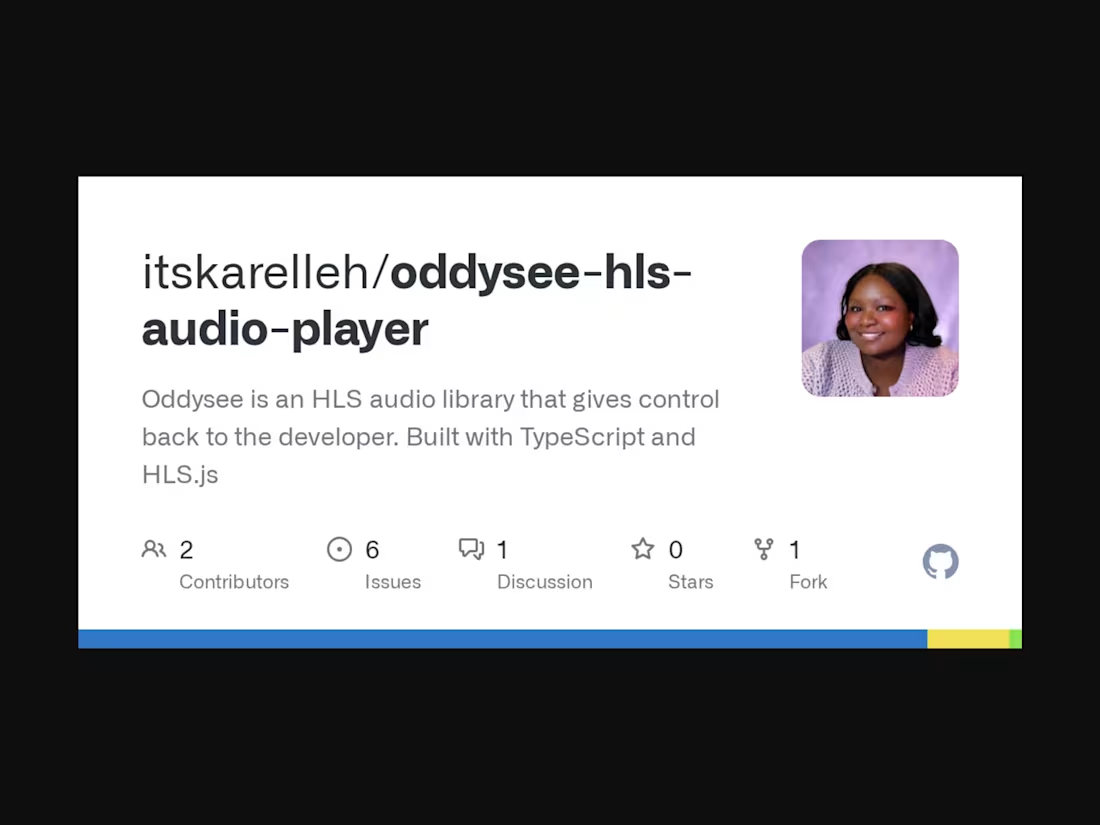
Oddysee - HLS Audio Player
0
10
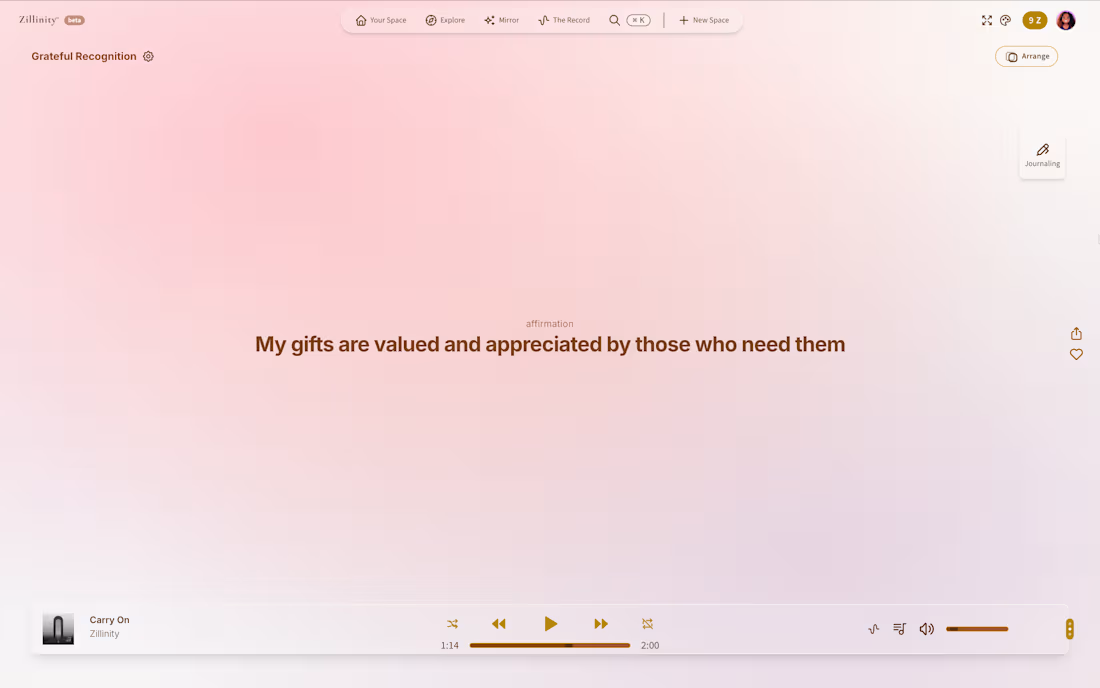
Most wellness apps are built on streaks, badges, and guilt-driven engagement loops. Zillinity is built on the opposite premise: "be and become" — presence over performance, with no gamification mechanics designed to make you feel behind.
I designed and built the entire product solo, end to end. Core features include:
- mood-based ambient spaces
- two distinct journaling modes (Float for free-flow, Swim for guided depth), -- an AI insight layer called The Mirror that synthesizes patterns across spaces, journal entries, moods, and wins tracked
On the technical side, I migrated the app from Next.js to React + Vite for improved performance, architected the backend on Supabase, and built out the marketing site separately on Astro. UI/UX was designed in tandem with the engineering. Every interaction pattern was built to reinforce the product's anti-gamification philosophy rather than work against it.
My role:
Solo founder & full-stack developer — product engineering, system architecture, UI/UX design
Tools/Tech:
React, Vite, Supabase, Astro, Claude
0
61
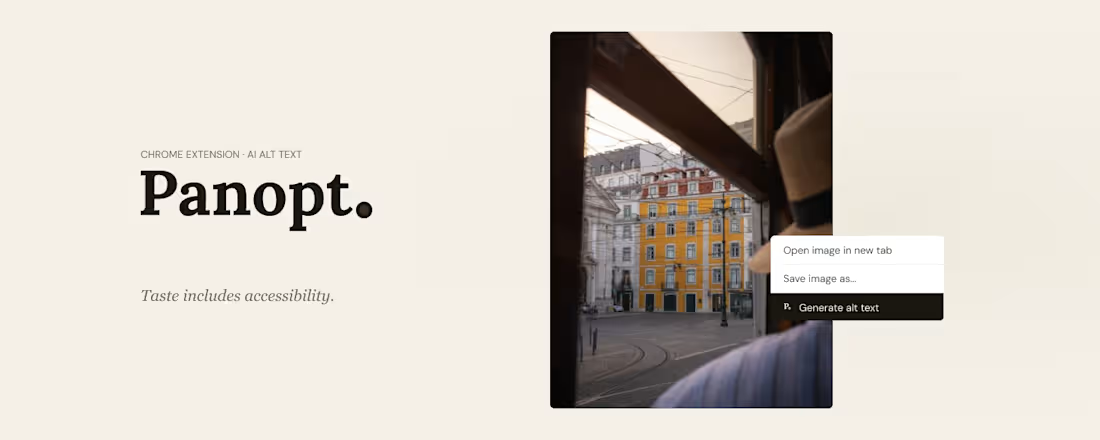
Panopt solves a problem most accessibility tools ignore: writing good alt text is tedious, so most images on the web still don't have it. I designed and built a Chrome extension that lets anyone right-click an image and generate a high-quality, contextual alt text description in seconds.
I handled the full build solo, product design, frontend, backend, API integration, and the pay-as-you-go credit system (no subscription required, since accessibility tooling shouldn't lock people into recurring billing). Since launch, it's picked up organic installs across more than a dozen countries with zero paid promotion.
My role:
Solo founder & full-stack developer: product design, engineering, Claude API integration, Chrome Web Store launch
Tools/Tech:
TypeScript/JavaScript, Plasmo, Chrome Extension APIs, Claude API (Anthropic), Supabase
0
97
Taino Lang App: App Development and CMS Solution Architecture
0
13