TCG OCR Scan & Shopify Integration
Problem:
Listing large Pokémon card inventories manually was slow and error-prone. Each card required manual input for name, set, etc.
Solution:
We developed an OCR-powered system that identifies TCG cards from scans (Document Scanner, Pictures with Smarpthone), matches them to a database. The system uses Tesseract OCR & Azure Computer Vision for image recognition.
Key Features:
• Dual OCR pipeline (Tesseract + Azure Vision)
• Automated card lookup via TCG API
• Review queue for low-confidence scans
• Auto-listing to Shopify with title, rarity, set & price
• Error handling and manual approval interface
Results:
• 97% faster product listing workflow
• Human review ensures 100% data accuracy
• Supports bulk imports for large collections
• Greatly improved speed and consistency in catalog updates
16
566
OCR Receipt Parsing Microservice (AI-Powered Backend System)
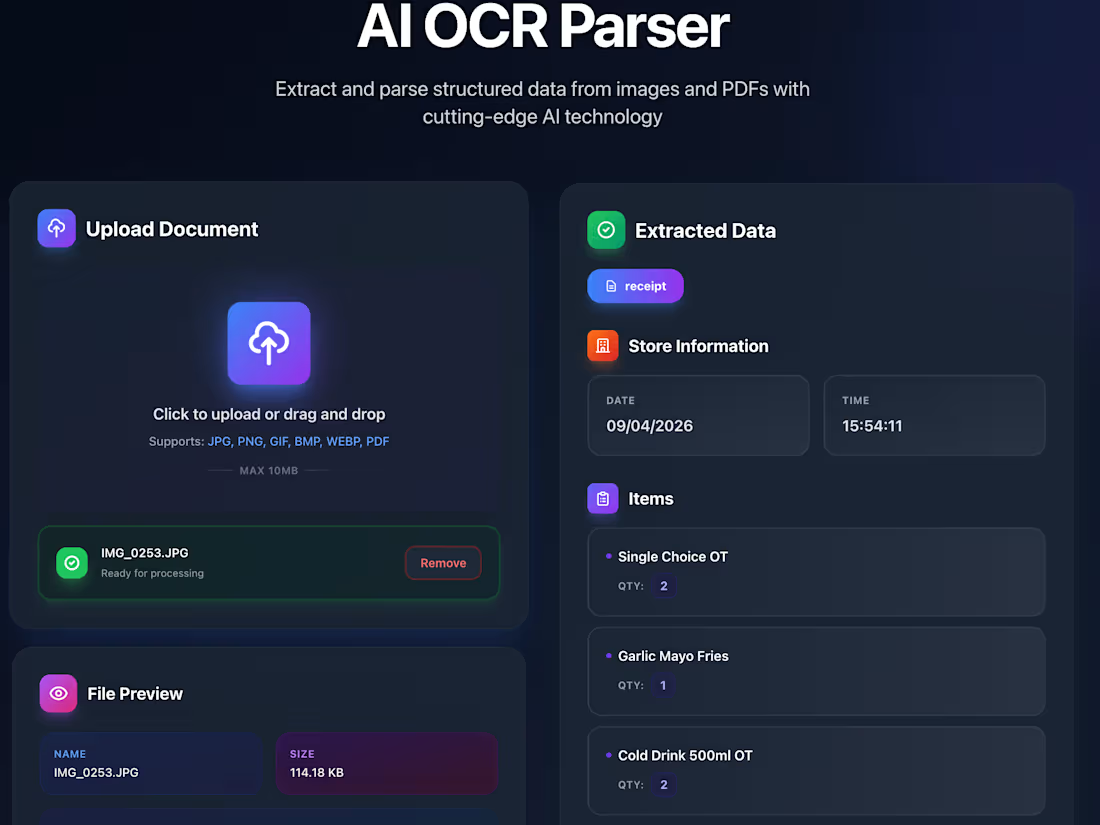
Most receipt-based systems fail because the data is messy, inconsistent, and spread across formats that machines don’t naturally understand. People don’t realise it, but the real problem isn’t capturing receipts, it’s turning them into reliable, structured data that can actually be used.
This system removes that friction entirely. You send a receipt (image or PDF), and it comes back as clean, structured JSON ready to plug into any workflow.
The core problem it solves:
Receipt data is chaotic. Different formats, inconsistent naming, missing structure, and OCR noise make it hard to extract anything usable. Even when OCR works, the output is raw text, not something you can build logic on top of.
This project builds a full processing layer that doesn’t just read receipts, it understands and standardises them.
What was built:
A backend microservice that acts as a structured data engine for receipts. The system accepts images or PDFs via an API, runs OCR, extracts merchant details, dates, totals, and line items, and converts everything into a strict JSON schema.
But the real value sits in what happens after OCR.
A normalization layer cleans and standardises item names so inconsistent inputs like “BANANA”, “Bananas”, or “Banana 1lb” all map to a single canonical item. Quantities and prices are cleaned, structured, and validated so the output becomes consistent across different stores and formats.
The system can also plug directly into Airtable, pushing structured items into a live database, enabling automated workflows like pantry tracking, expense logging, or analytics pipelines without needing a full backend system.
Everything is exposed through a simple /parse-receipt API, making it easy to integrate into mobile apps, SaaS products, or internal tools.
Technical architecture:
FastAPI-based microservice designed for simplicity and performance, with OCR powered by Tesseract or cloud services like AWS Textract and Google Vision depending on accuracy requirements. The parsing layer combines rule-based extraction with AI-assisted cleanup to handle real-world receipt noise.
The system is fully containerized using Docker, deployable on platforms like Render or Heroku, and comes with OpenAPI (Swagger) documentation for quick testing and integration.
Designed as a stateless service, it avoids database complexity and instead integrates with external systems (like Airtable), making it lightweight and easy to scale.
Business value built in:
This isn’t just an OCR tool, it’s a data standardization engine. The same system can power expense tracking apps, inventory systems, meal planning products, or financial analytics platforms.
Because the parsing and normalization layers are modular, the microservice can be exposed as a standalone API, creating opportunities for reuse across multiple products or even external licensing.
0
207


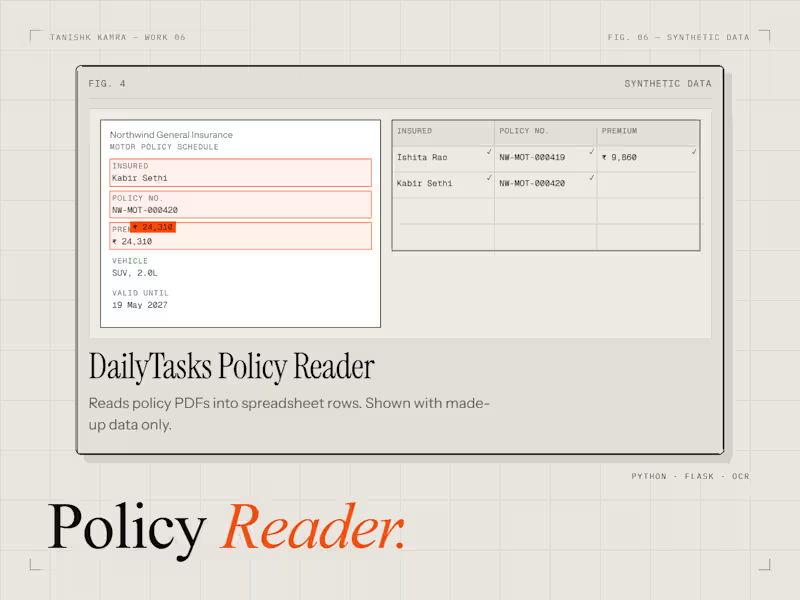
Built during my internship at SMC Insurance Brokers. It reads motor insurance policy PDFs from 5 insurers with OCR and fills the spreadsheet rows the team used to type by hand, about 100 policies a day. The demo shows each field highlighted on the policy as it lands in its row. The screenshot uses synthetic data only.
0
55
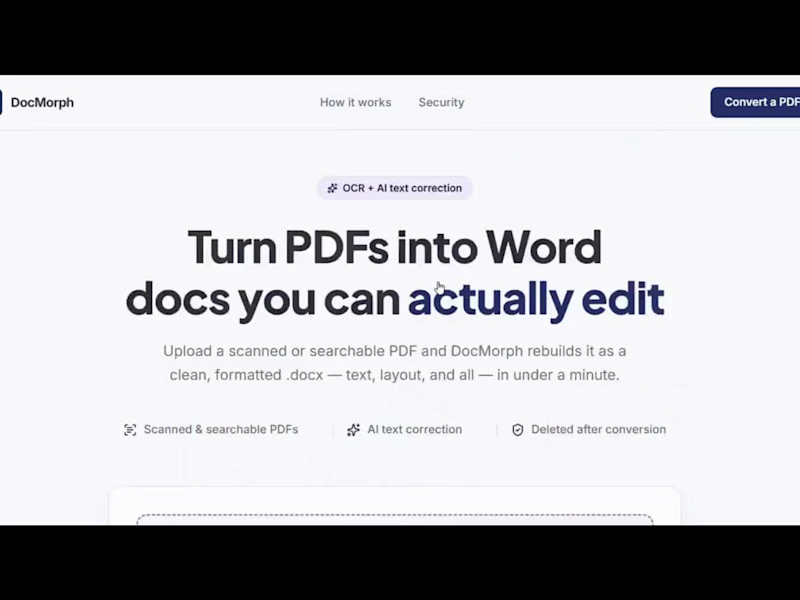
DocMorph AI is a full-stack web application designed to eliminate manual data entry. It ingests locked, scanned PDFs, runs advanced Optical Character Recognition (OCR), and reconstructs the data into clean, editable Microsoft Word documents.
The Challenge:
Standard OCR scripts frequently fail or crash the server when attempting to process large, multi-page PDFs due to massive RAM consumption. The client needed a lightweight, scalable solution that wouldn't time out during heavy workloads.
The Solution:
I architected a decoupled monorepo system. The frontend was built with React for a seamless, drag-and-drop user experience. For the backend, I engineered a custom Node.js/Express.js server utilizing Tesseract.js. To ensure stability, I developed a custom text-chunking algorithm that slices the PDF into manageable data streams, processes them safely, and stitches the final layout together into a downloadable .docx file.
0
105
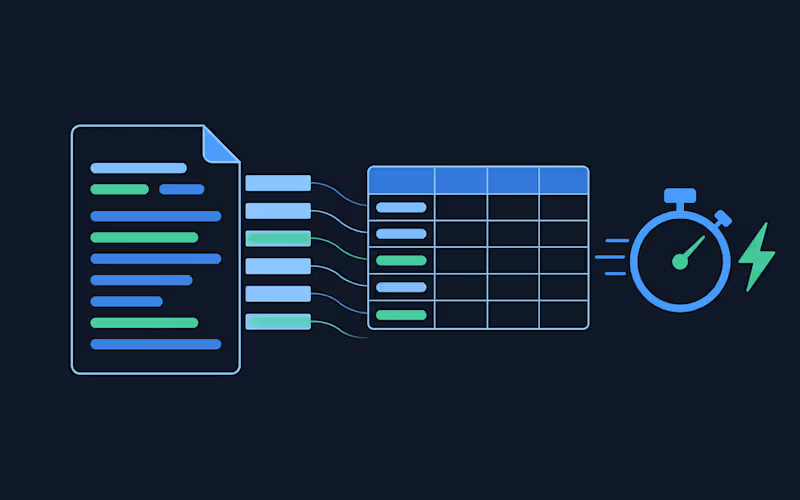
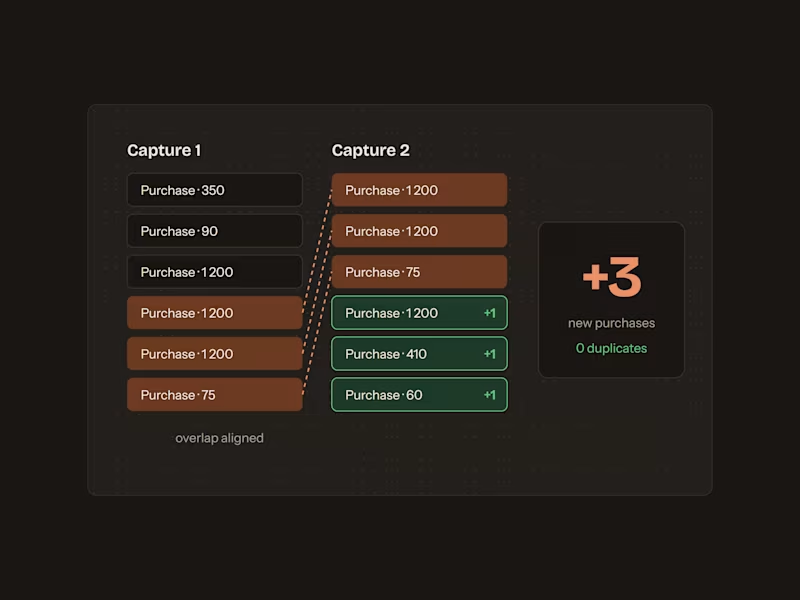
An engine that reads part of the screen in real time and turns it into structured events, each counted exactly once, even when the display scrolls, repeats itself or is misread. For example, it pulls the real cost of a restaurant's dishes out of a wholesaler's ordering software that has no API. Python, Tesseract, 120 tests on real sessions replayed offline.
0
23
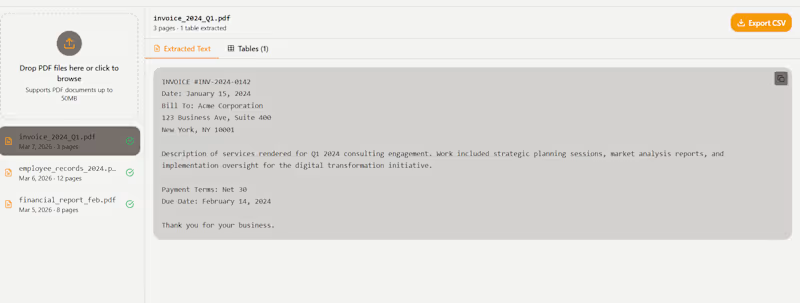
Document Processing with OCR and structured data extraction
Developed a enterprise grade SaaS app for structured data extraction by advanced OCR from docs. HIPAA complaint solution developed. Developed backend using Python FastAPI and frontend with react typescript, OCR using advanced ML/DL techniques and LayoutLM, LLM OCR and more.... Advanced Computer vision techniques applied.
0
40


Developed a system that replaces traditional OCR by using AI to interpret full-page handwritten documents.
Instead of extracting text line-by-line, the system:
Identifies document type
Uses a structured JSON contract to define required fields
Sends full-page images to an AI model
Returns clean, structured data (including multi-record tables)
Supports:
Variable number of records per document
Field validation and normalization
Spreadsheet-ready outputs
This approach significantly improves accuracy compared to OCR-based solutions.
0
93