Projects using SimilarWeb in United KingdomProjects using SimilarWeb in United KingdomCompetitor Analysis Framework for Startup GTM Strategy
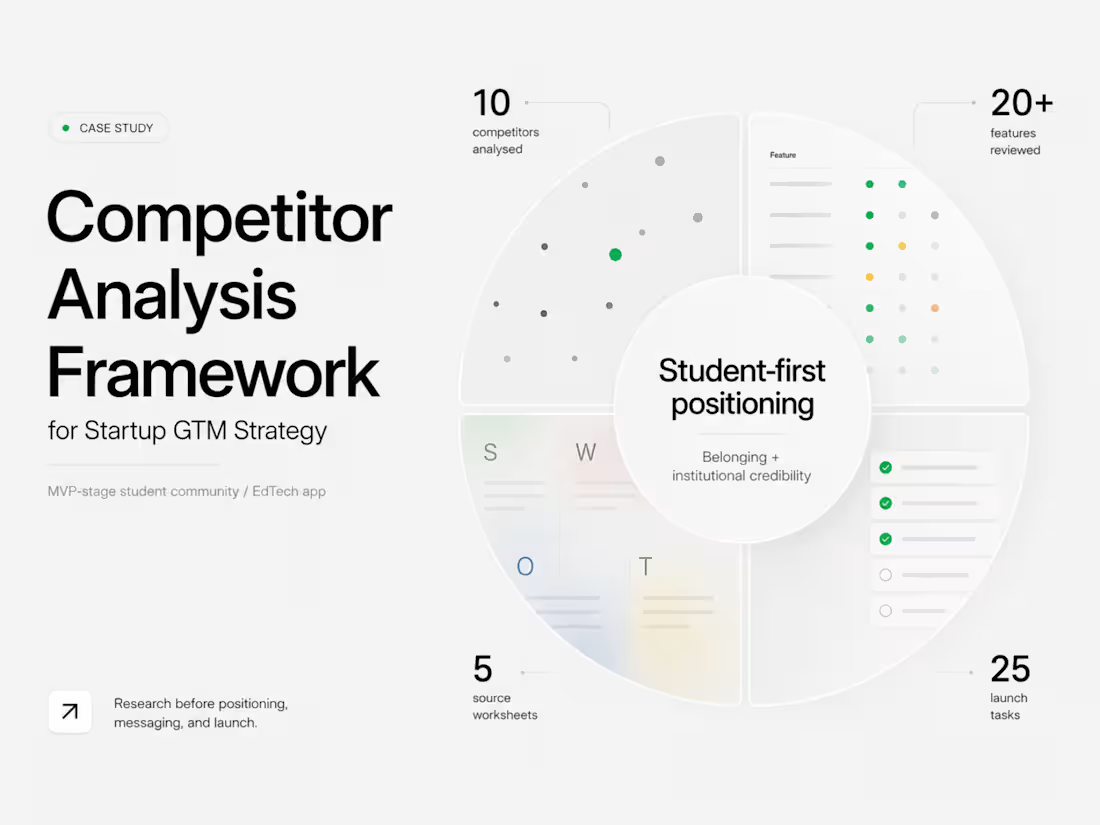
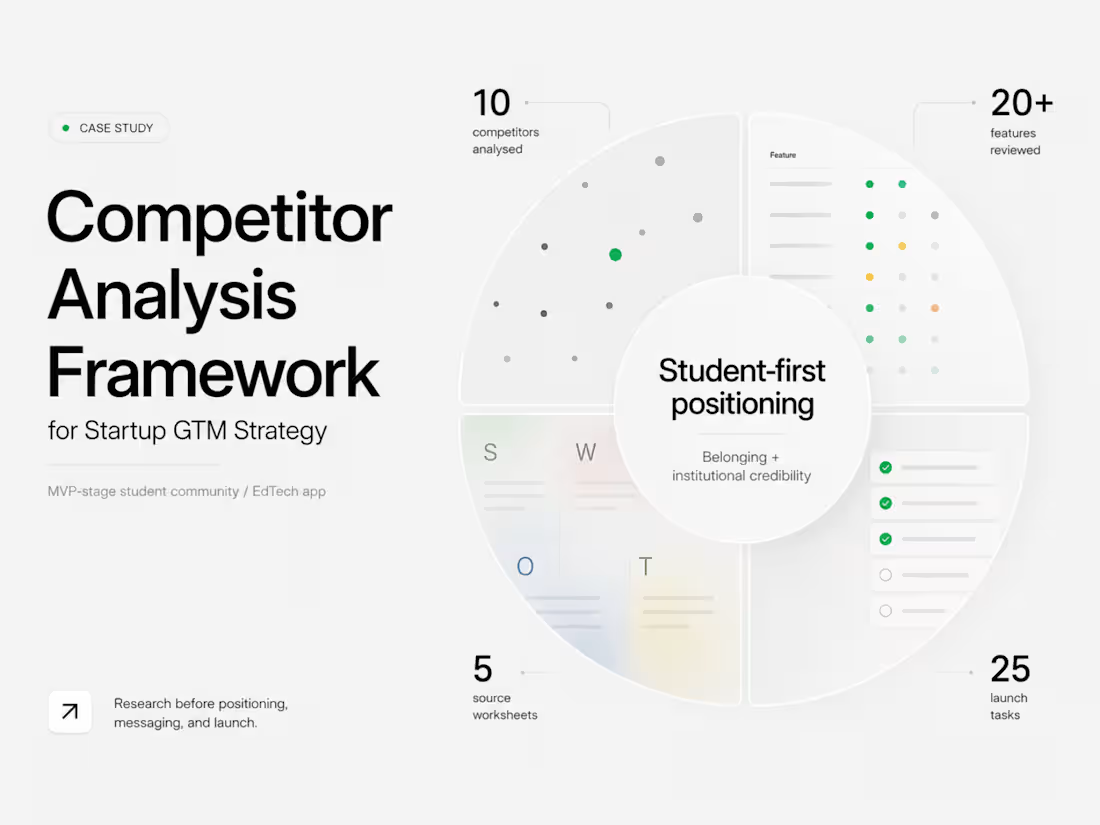
I created a competitor intelligence framework for an MVP-stage edtech app to help define its market position, sharpen its go-to-market direction, and identify where the product could stand apart in a crowded student-tech category.
The project focused on turning scattered competitor data into a clear strategic foundation for positioning, messaging, launch planning, and early-stage growth.
The Challenge
The student-tech market is crowded with platforms focused on engagement, peer connection, study support, university communication, recruitment, and campus communities.
For a new product entering this space, the risk was clear:
Without sharper positioning, the app could easily sound like another student platform.
The goal was to identify a stronger market angle before moving into messaging, campaigns, or launch execution.
I led the strategic research and competitor analysis behind the GTM foundation.
My work covered:
Competitor mapping
Market positioning review
Audience and channel analysis
Feature gap review
SWOT synthesis
Launch checklist planning
Strategic positioning recommendation
This gave the product a clearer direction before execution started.
The Approach
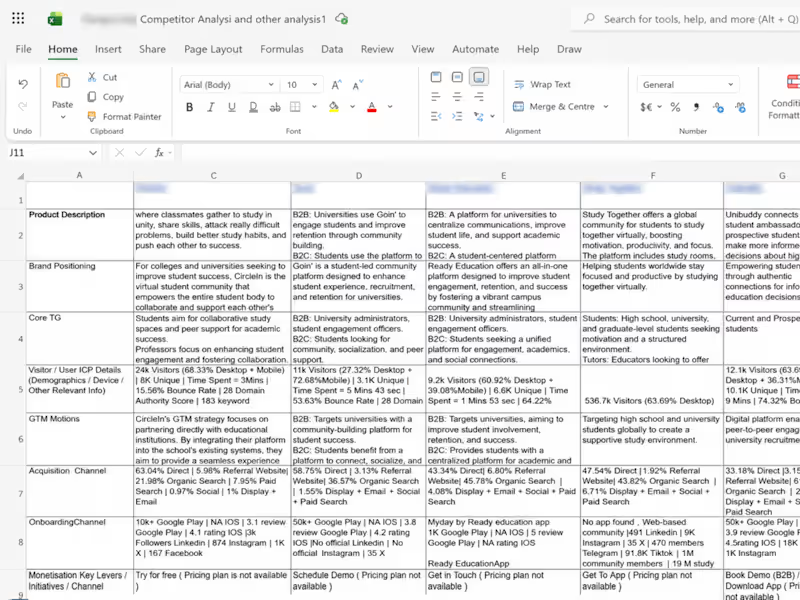
I analysed 10 student engagement, community, and edtech platforms across positioning, target audience, acquisition signals, onboarding, monetisation, feature coverage, market strengths, weaknesses, and GTM patterns.
The purpose was not to copy what competitors were doing.
It was to understand the category clearly enough to find white space.
Key Insight
The research showed that many competitors were strong in one lane but weaker across the full student-life experience.
Some were institution-first.
Some focused mainly on academic support.
Some leaned into student connection.
Others relied heavily on community, search visibility, or university partnerships.
The opportunity was to position the app as a student-first platform that could connect belonging, campus discovery, community, and institutional credibility.
That insight helped move the product away from generic “student engagement app” messaging and toward a more differentiated GTM direction.
Strategic Output
The final framework helped define:
A clearer category position
A stronger student-first narrative
Priority competitor gaps
Core messaging direction
Feature-led differentiation
Launch and acquisition priorities
A practical GTM checklist
This research became part of the strategic foundation behind the product’s early growth approach.
Result
The strategic foundation contributed to a 0-budget growth approach that helped drive:
2,000+ account signups
+1,200% month-over-month install growth
70% referral rate
27% average conversion rate This is my framework for competitor analysis for any brand, startup, or product before I build a marketing strategy.
For The Campus App, this framework became the strategic foundation for positioning, GTM direction, and a 0-budget growth approach. Before building the strategy, I studied the student-tech landscape in detail to understand where the product stood, what competitors were owning, where they were weak, and which opportunities could help the app stand apart.
The analysis looked at competitor positioning, audience, messaging, acquisition channels, onboarding, monetisation, community signals, GTM motion, and visible traction. It helped move the strategy away from assumptions and towards a clearer understanding of the market.
The research revealed a strong gap. Many student platforms were either institution-led, academically focused, or too broad in their community positioning. This created an opportunity for The Campus App to build a more student-first strategy centred on belonging, peer connection, campus discovery, and community-led growth.
The overall strategy was organic, student-native, and built around community behaviour rather than paid acquisition. Competitor intelligence shaped the messaging, launch channels, referral loops, and content direction, helping the product move with more clarity in a crowded market.
The 0-budget growth approach helped drive 2,000+ account signups, +1,200% month-over-month install growth, a 70% referral rate, and a 27% average conversion rate through community-led acquisition and organic marketing