Projects using AnswerThePublic in United KingdomProjects using AnswerThePublic in United KingdomCompetitor Analysis Framework for Startup GTM Strategy
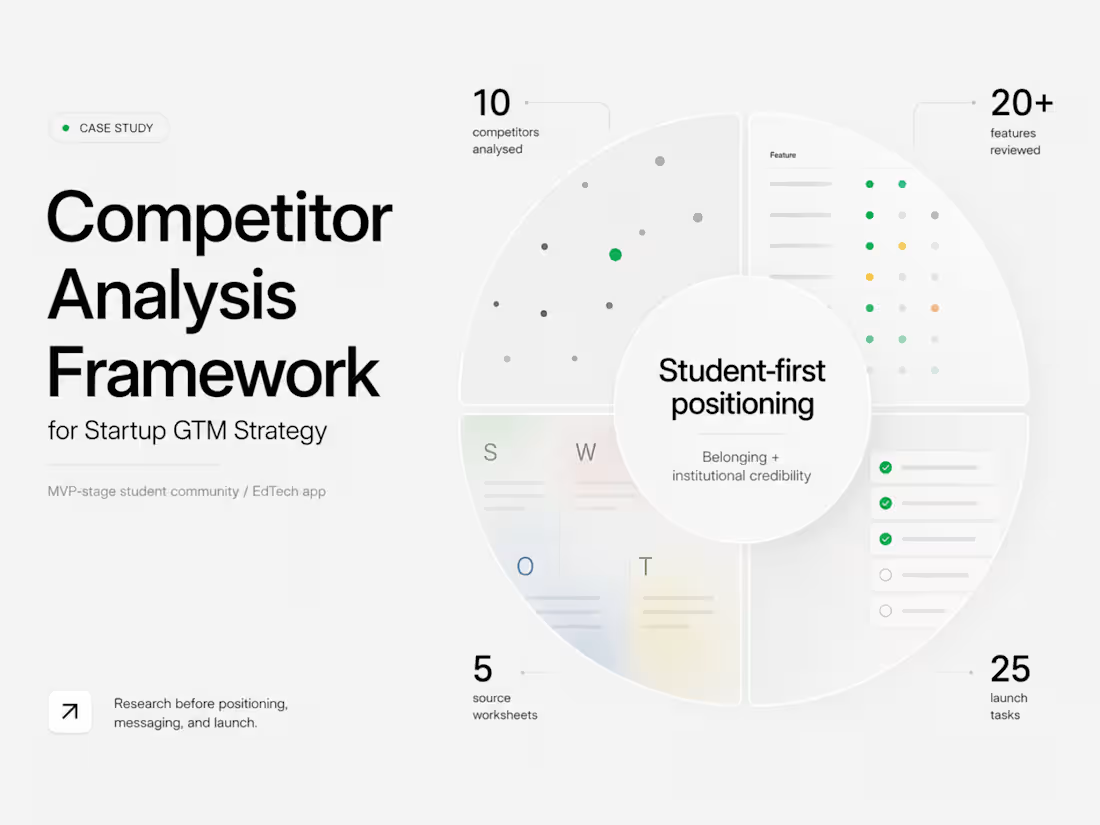
I created a competitor intelligence framework for an MVP-stage edtech app to help define its market position, sharpen its go-to-market direction, and identify where the product could stand apart in a crowded student-tech category.
The project focused on turning scattered competitor data into a clear strategic foundation for positioning, messaging, launch planning, and early-stage growth.
The Challenge
The student-tech market is crowded with platforms focused on engagement, peer connection, study support, university communication, recruitment, and campus communities.
For a new product entering this space, the risk was clear:
Without sharper positioning, the app could easily sound like another student platform.
The goal was to identify a stronger market angle before moving into messaging, campaigns, or launch execution.
I led the strategic research and competitor analysis behind the GTM foundation.
My work covered:
Competitor mapping
Market positioning review
Audience and channel analysis
Feature gap review
SWOT synthesis
Launch checklist planning
Strategic positioning recommendation
This gave the product a clearer direction before execution started.
The Approach
I analysed 10 student engagement, community, and edtech platforms across positioning, target audience, acquisition signals, onboarding, monetisation, feature coverage, market strengths, weaknesses, and GTM patterns.
The purpose was not to copy what competitors were doing.
It was to understand the category clearly enough to find white space.
Key Insight
The research showed that many competitors were strong in one lane but weaker across the full student-life experience.
Some were institution-first.
Some focused mainly on academic support.
Some leaned into student connection.
Others relied heavily on community, search visibility, or university partnerships.
The opportunity was to position the app as a student-first platform that could connect belonging, campus discovery, community, and institutional credibility.
That insight helped move the product away from generic “student engagement app” messaging and toward a more differentiated GTM direction.
Strategic Output
The final framework helped define:
A clearer category position
A stronger student-first narrative
Priority competitor gaps
Core messaging direction
Feature-led differentiation
Launch and acquisition priorities
A practical GTM checklist
This research became part of the strategic foundation behind the product’s early growth approach.
Result
The strategic foundation contributed to a 0-budget growth approach that helped drive:
2,000+ account signups
+1,200% month-over-month install growth
70% referral rate
27% average conversion rate Twimbit Sign-Up Campaign
Be More
Context
Twimbit wanted to drive sign-ups by helping the audience understand the platform’s benefits in a simple, emotionally engaging way.
The product was a research and intelligence platform, but the challenge was that research often feels heavy, corporate, and distant. The campaign needed to make Twimbit feel more approachable while still communicating clear business value.
Instead of using a serious B2B campaign style, the idea was built around children’s natural curiosity, ambition, and eagerness to learn.
The campaign used the thought:
Everyone starts with the desire to be more.
More informed.
More confident.
More prepared.
More connected.
More capable of making better decisions.
Strategic insight
Adults often treat learning and research as tasks. Children treat learning as discovery.
The campaign used this contrast to make research feel less like a burden and more like an opportunity.
The key insight was:
People do not sign up for research platforms because they want more information. They sign up because they want to become better at what they do.
Twimbit was positioned not just as a platform for consuming research, but as a tool that helps users grow, decide faster, discover better insights, and create more impact.
Creative idea
The creative idea was to use childlike imagination as a metaphor for professional growth.
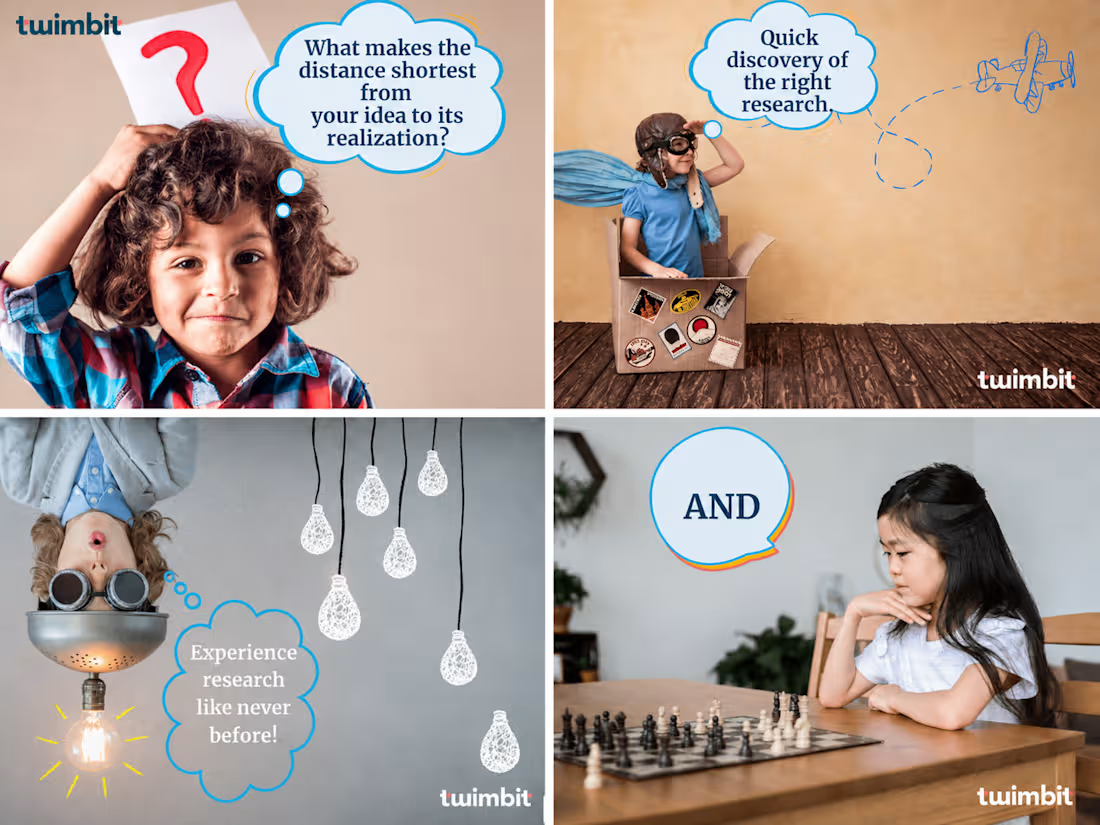
Each visual showed children in playful, aspirational situations, paired with benefit-led messages that connected back to Twimbit’s value proposition.
The campaign line was:
twimbit — be more
Each creative translated “be more” into a specific user benefit:
Elevate sales conversions
Supercharge your career
Make impactful decisions
Boost your community with meaningful interactions
Experience research like never before
Quick discovery of the right research
Move faster from idea to realisation
The campaign made B2B benefits feel simpler, warmer, and more human.
Campaign copy
twimbit — be more
Be more than informed.
Be more prepared.
Be more confident in your decisions.
Be more connected to the right insights.
Be more capable of turning ideas into action.
Twimbit helps professionals discover research faster, access the right insights, build meaningful communities, and make sharper business decisions.
Result
The campaign helped communicate Twimbit’s product benefits in a more accessible way and supported the brand’s sign-up efforts across social channels.
It also connected with Twimbit’s wider growth performance. Your resume notes that Twimbit drove a 50% increase in sign-ups through Facebook ads, a 200% increase in website traffic through Google Search Ads, and significant LinkedIn brand reach growth through brand awareness campaigns.
What this campaign proved
Ability to simplify a B2B research platform into clear audience benefits
Ability to turn product features into emotionally engaging messaging
Strong understanding of storytelling-led acquisition campaigns
Ability to make a serious B2B category feel approachable and human
Ability to connect brand awareness with sign-up intent
Creative ability to use metaphor, visuals, and benefit-led copy together
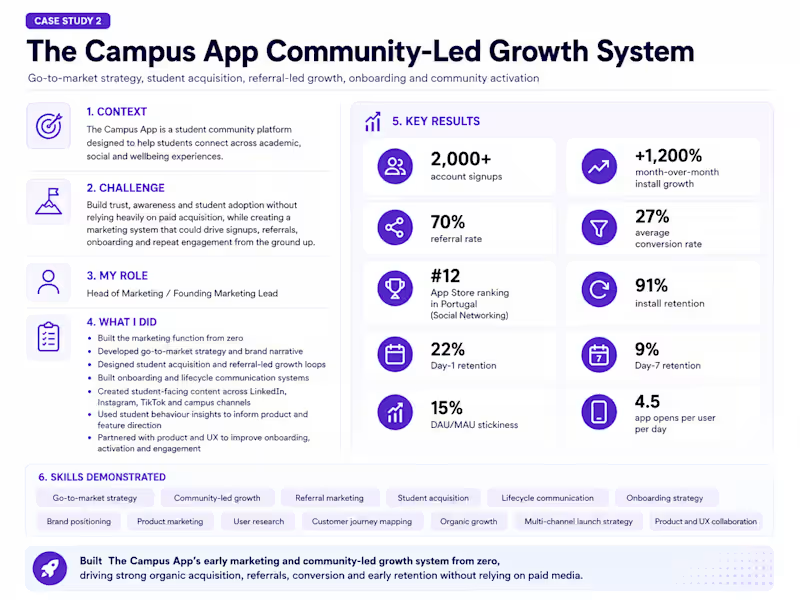
Understanding of multi-channel campaign communication across social and paid channels The Campus App started as an MVP-stage student platform with a clear challenge: build early awareness, trust, and student adoption without relying on paid media.
As the founding marketing lead, I built the marketing function from zero — including positioning, messaging, onboarding communication, student acquisition, referral-led growth, and multi-channel launch planning. The work focused on understanding student behaviour, identifying community gaps, shaping the product narrative, and creating a low-budget GTM system that could generate early traction through relevance, peer sharing, and campus-led storytelling.
The 0-budget growth approach helped drive 2,000+ account signups, +1,200% month-over-month install growth, a 70% referral rate, and a 27% average conversion rate through community-led acquisition and organic marketing.