Full Stack Development Projects in Tamil Nadu
Full Stack Development Projects in Tamil Nadu
Sign Up
Post a job
Sign Up
Log In
Filters
2
Projects
People
Message
1
Nagaraj M
pro
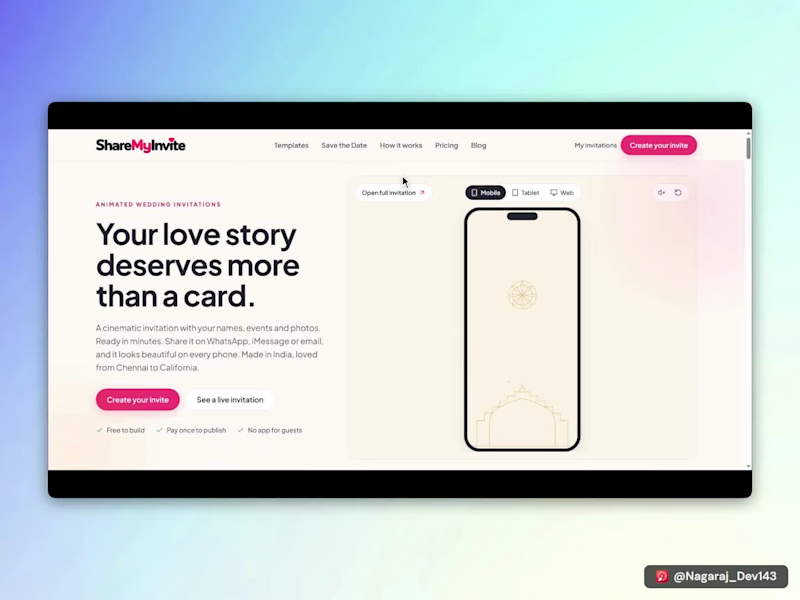
ShareMyInvite - Digital Wedding Invitation Platform Development
1
2
Message
0
Boopathi Raja
pro
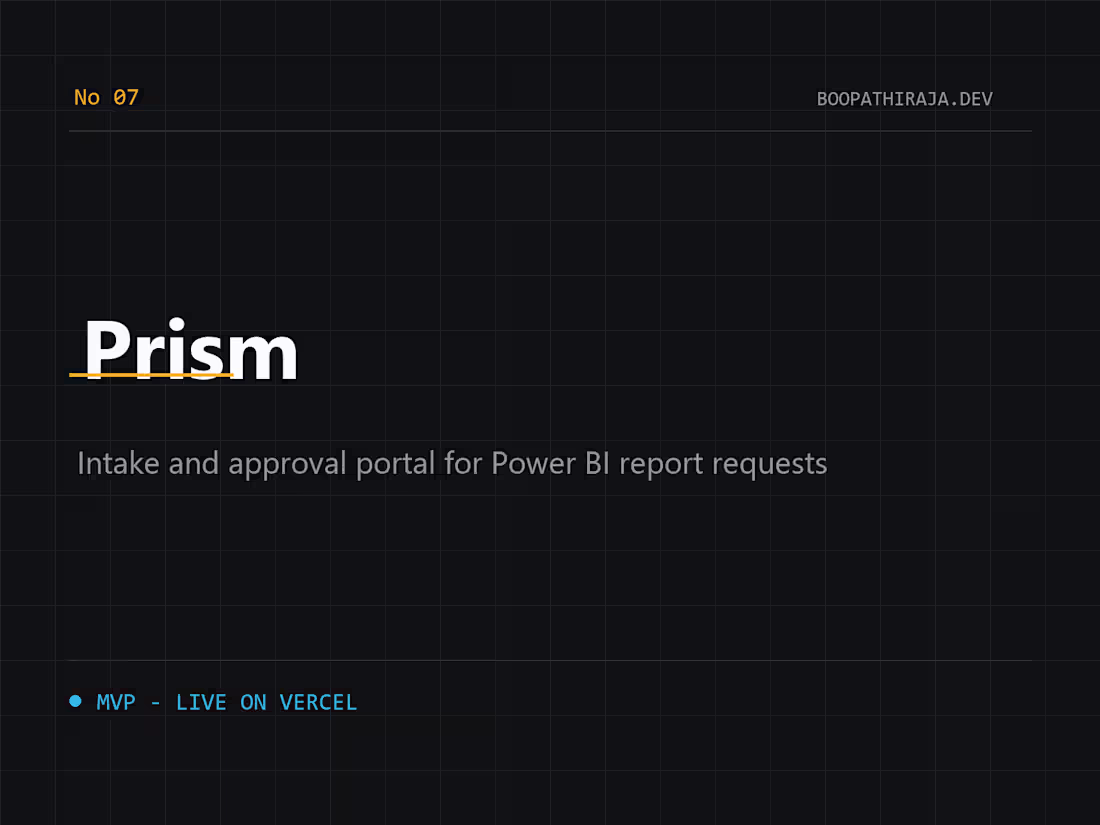
Intake and approval portal for Power BI report requests. MVP, deployed on Vercel with a live Power BI API integration. Teams were requesting dashboards over email and spreadsheets, which lost the thread between the business ask, the BI team's interview notes and the developer's build. Prism turns that into one tracked record with sequential sign-off. What it does: • Ten-stage, role-gated approval workflow • Row-level security per role (about 20 Postgres policies) • Change requests against already-published reports • File attachments via signed URLs from private storage • Power BI Service integration over Azure AD OAuth • Notifications to email and Microsoft Teams A Playwright end-to-end test runs in GitHub Actions on every PR and nightly against production. Stack: Next.js, React, TypeScript, Tailwind CSS, Supabase, PostgreSQL, Resend, Power BI REST API, Playwright Live: tcmplanner.vercel.app (http://tcmplanner.vercel.app)
0
46
Message
0
Vipin Varatharajan
pro
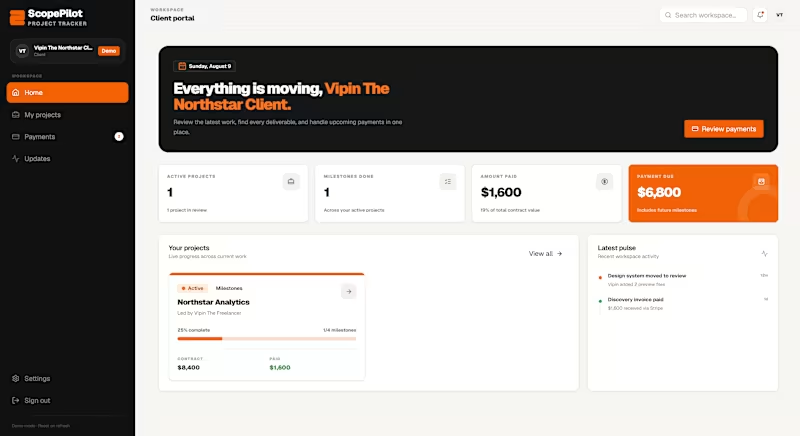
ScopePilot - Freelance Project Tracker is a dual-role client portal that brings project scope, delivery and payments into one polished workspace. Freelancers can create fixed-price or milestone/feature-based projects, assign clients, set budgets and due dates, reorder milestones, manage statuses and deliverables, monitor activity, generate invoices and track overall progress. Clients receive a focused portal where they can review assigned work, see itemized pricing and payment status, view receipts and pay outstanding project or milestone invoices through Stripe Checkout.
0
23
Message
3
Deepak Raja R A
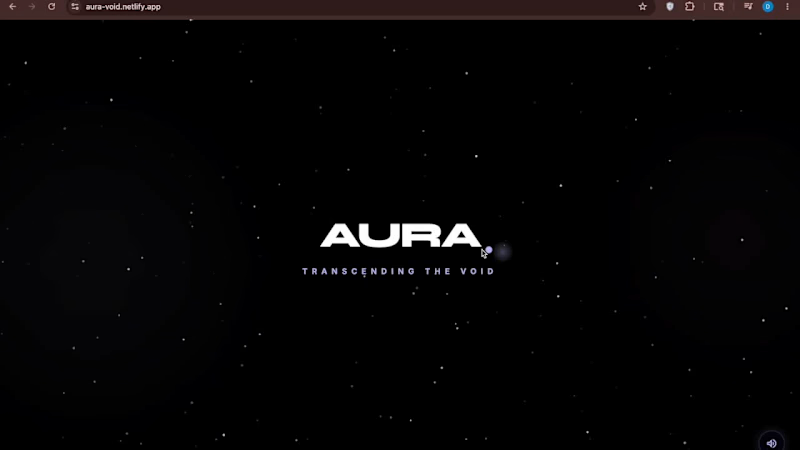
AURA is a sci-fi city exploration platform where every city you've visited becomes a living world you can orbit. Your travel history, reimagined as a personal solar system. Built entirely with Google Stitch — starting from a Figma wireframe import, Stitch generated the full design system: Deep Space color tokens, glassmorphic components, Syne typography. From there, five city worlds came alive — Tokyo, Paris, Mumbai, Nairobi, Cairo — each with its own visual identity, personality, and energy. The experience: a solar system where your explored cities orbit around you. Click a planet → warp zoom transition → enter that city's Void. Discover hidden gems through the Orbit feed. Feel the city breathing through live Pulse data. Track your journey on your Zenith profile. Stitch handled everything — streaming generation, in-place AI edits with point-and-click prompts, prototype testing, GitHub codebase sync, and one-click Netlify deployment. The entire frontend — warp transitions, orbital physics, sonar animations — lives in a single index.html. Live: https://aura-void.netlify.app (https://aura-void.netlify.app/)
1
3
144
Message
0
ADHITHYA A
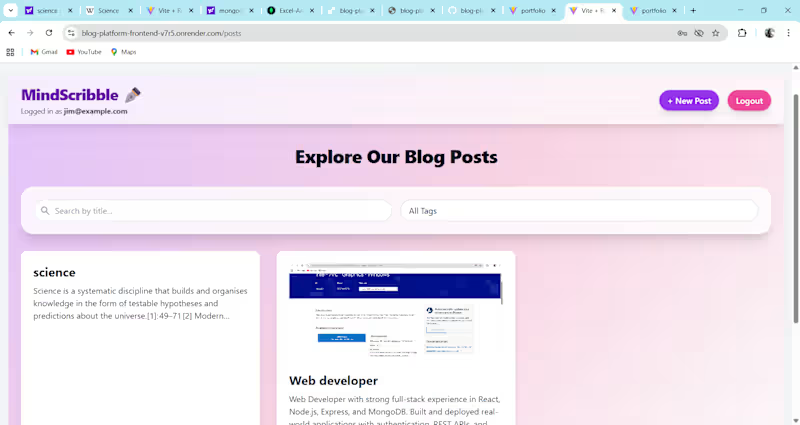
The Blog Platform is a full-stack web application that allows users to create, manage, and publish blog posts through a modern and user-friendly interface. It provides a structured content management system where writers can publish articles, organize posts, and allow readers to explore content easily.
0
41
Message
0
Venkatesan Loganathan
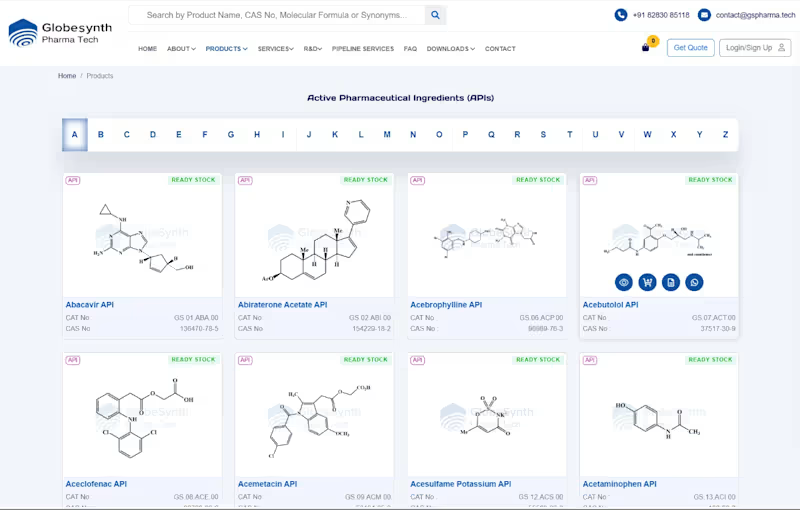
Developed a pharmaceutical product and research platform for Globesynth Pharma Tech. The website features a large searchable catalogue of pharmaceutical impurities, reference standards, APIs, and intermediates, along with product enquiries, quotation requests, technical documents, and company service information. The platform was designed to make complex pharmaceutical product information easy to search, browse, and access.
0
22
Message
1
Magesh Sundar
Awesome macOS Open Source Applications
1
10
Message
0
Rajajayaruban T
Dynamic Portfolio CMS
0
9
Message
1
SANJAI MK
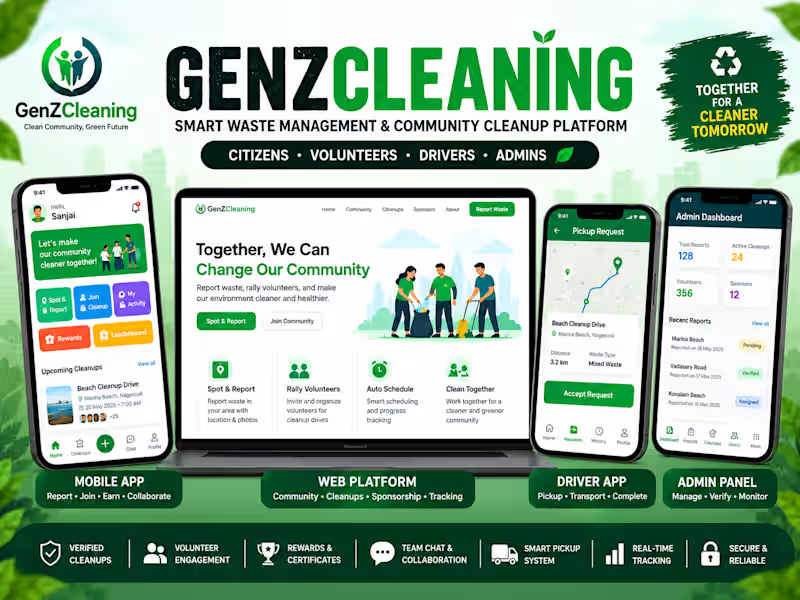
🚀 Project title - :GenZCleaning – Smart Waste Collection Platform 💡 Short description - A full-stack waste management platform connecting citizens, volunteers, drivers, and admins through automated pickup and cleanup workflows. ♻️📱 📝 Project description - GenZCleaning is a smart waste collection and community cleanup platform designed to connect citizens, volunteers, pickup drivers, and administrators. ♻️ Key features: 📍 Waste reporting and location-based tracking 🧹 Volunteer cleanup management 🚚 Pickup assignment and driver workflows 🗺️ GPS-based navigation and tracking 📸 Proof-of-completion verification ♻️ Disposal management 🔔 Automated notifications 💰 Driver earnings and rewards ⚙️ Admin management and platform monitoring The system automates the workflow from waste reporting → pickup assignment → collection → verification → disposal → completion. 🚀 My role: Full-Stack Developer Tech: Flutter • React • Firebase • Cloudinary🎉🧠
6
1
309
Message
1
Navaneetha Krishnan Kamalakannan
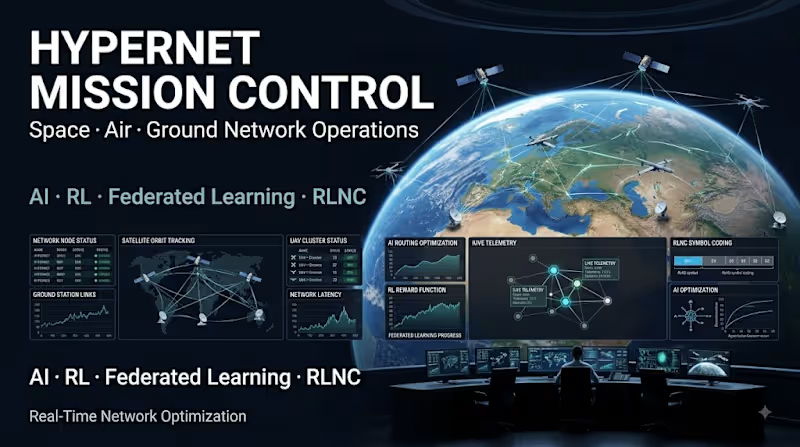
HYPERNET Mission Control — Space–Air–Ground Network Operations: Built a 3D real-time mission-control interface integrating satellite, UAV, and ground-network layers for space–air–ground communications. The platform combines live telemetry visualization with reinforcement learning, federated learning, and Random Linear Network Coding (RLNC) for intelligent network monitoring and optimization. Developed as an interactive software prototype using Replit, with a focus on real-time visualization, network intelligence, and scalable architecture.
1
69
Message
0
A Venkata Suresh
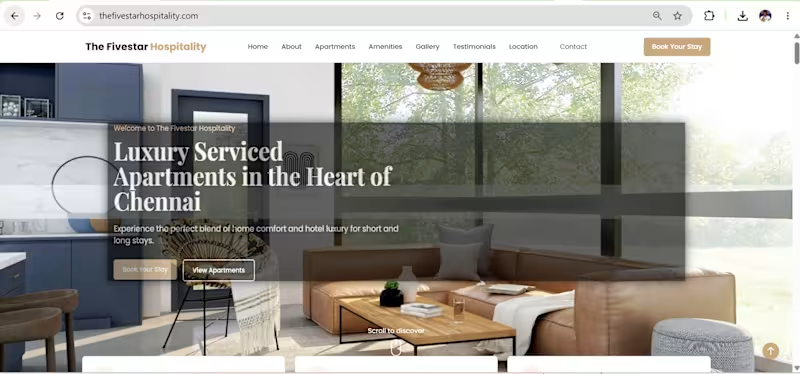
Built a direct booking engine for Five Star Hospitality, a luxury serviced apartment brand in Chennai. Guests book and pay directly — no third-party commissions eating into revenue, and full control over the guest experience from first click to check-in. Live, in production, handling real bookings today.
0
57
Message
1
Venkatesh K
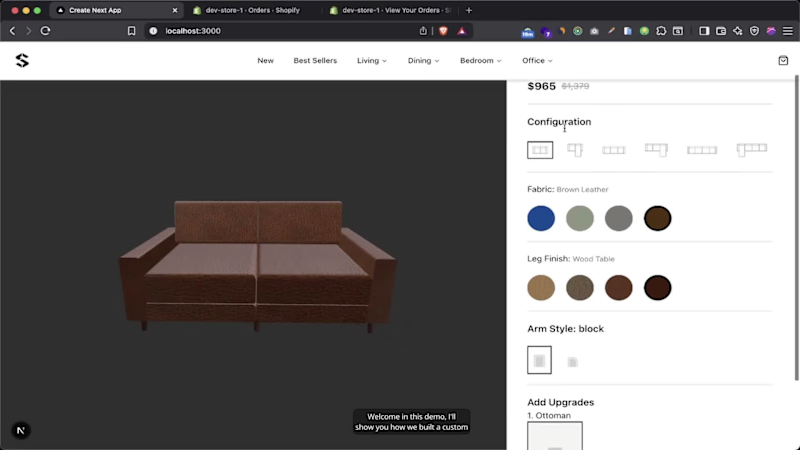
Threejs custom sofa 3d configurator project using threejs and shopify! Most Shopify stores still rely on flat images. But this one lets customers rotate, customize & preview products in 3D before buying. Built with: • Three.js + R3F • Next.js (headless Shopify) • Shopify apps with PostgreSQL
1
66
Message
1
Xenatrix Ai
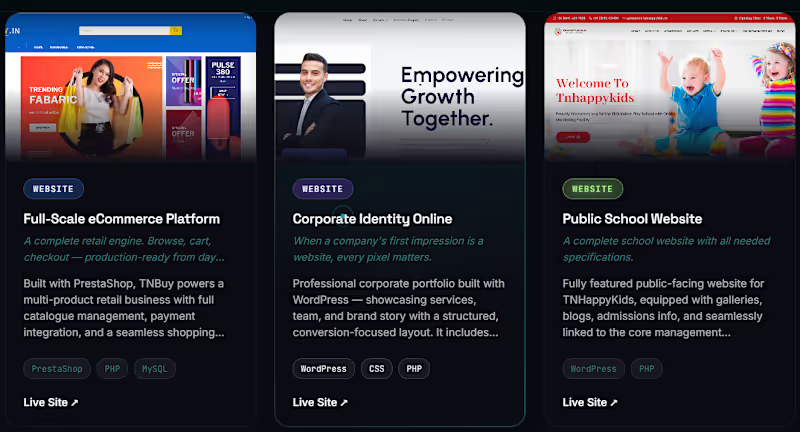
Full-Scale eCommerce Platform Developed a complete multi-product eCommerce platform using PrestaShop with a fully functional retail management system. The platform includes product catalogue management, shopping cart functionality, secure checkout flow, and responsive UI optimized for customer conversions. Built to support scalable online retail operations with smooth product browsing and order management. Because modern customers abandon a site if it loads 0.7 seconds slower than their patience. Tech Stack: PrestaShop, PHP, MySQL Corporate Identity Website Designed and developed a professional corporate website focused on brand presentation, service showcase, and lead generation. The website features a clean modern layout, responsive design, structured service sections, and conversion-focused user experience to strengthen the company’s online presence and credibility. Tech Stack: WordPress, PHP, CSS Public School Website Built a fully featured public-facing school website with dedicated sections for admissions, announcements, galleries, blogs, and institutional information. The platform was designed to improve communication between the school and parents while maintaining a clean and accessible user experience across devices. Also integrated with the institution’s management workflow for streamlined content handling. Tech Stack: WordPress, PHP
1
82
Message
2
DHINESH KUMAR
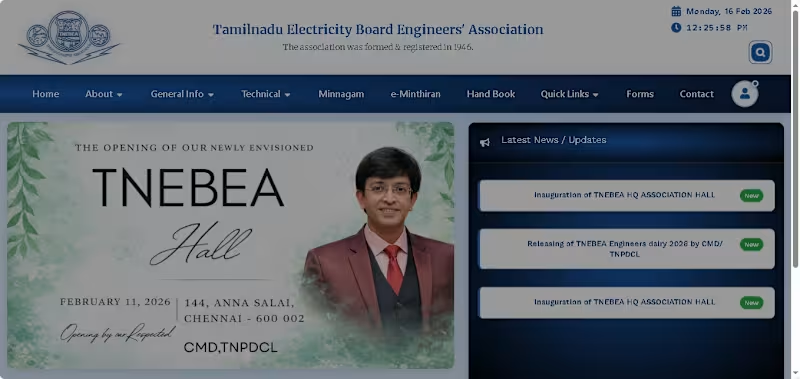
Leading the frontend architecture and API integration for a Government (TNEB) dual-portal system. Successfully managed the design and official launched.
2
54
Message
0
Subash S
VitaCare🚀 1. Immutable Health Records (Blockchain & AES-256 Encryption) I moved beyond standard database storage to build a Tamper-Proof Medical Ledger. I learned how to implement a hybrid storage strategy where sensitive patient data is encrypted via AES-256 at the application layer before being anchored to a blockchain. This taught me how to ensure absolute data integrity, making medical histories immutable while providing a verifiable audit trail for every access request. 2. Privacy-First Consent Logic (Granular Data Sharing) Architecting the "Time-Limited Access" protocol taught me how to handle high-stakes privacy. I engineered a system where patients can issue temporary, scoped decryption keys to doctors via smart contracts. This taught me how to implement a Zero-Trust architecture, ensuring that healthcare providers only see what they need, exactly when they need it, with access automatically revoking after a set TTL (Time-To-Live). 3. Edge-Optimized Backend & Secure Validation By leveraging Supabase Edge Functions, I learned how to move critical business logic closer to the user while maintaining a "Thick-Client, Secure-Server" model. I architected isolated server-side environments for data validation and healthcare-specific compliance checks, which taught me how to drastically reduce latency in high-volume environments without compromising on server-side security. 4. Proactive Health Intelligence (Predictive Monitoring) I leveled up my AI integration skills by building an Advanced Command Center for Disease Surveillance. I learned how to aggregate anonymized, real-time data from disparate sources—including IoT wearable integrations—to generate heatmaps for disease outbreaks. This taught me the complexity of Geospatial Data Engineering and how to turn passive monitoring into proactive healthcare interventions. 5. Multi-Platform Synchronization (Unified Digital Ecosystem) Building a system that bridges Citizens, Doctors, and Government officials taught me the challenges of Cross-Stakeholder State Management. I learned how to maintain a "Single Source of Truth" across a multilingual Next.js web ecosystem and mobile interfaces, ensuring that a life-saving update on a doctor's portal is reflected on a patient's mobile dashboard in near real-time. 6. Inclusive Design & Localized Accessibility To tackle the diversity of the Indian healthcare landscape, I implemented a Multilingual UI Framework. I learned how to architect a scalable localization layer that supports regional languages, ensuring that the platform is accessible to rural citizens. This taught me the importance of Inclusive UX Engineering—where the technical complexity is hidden behind a simple, high-impact interface for non-technical users.
0
48
Message
0
DHANUSSH ADITYA
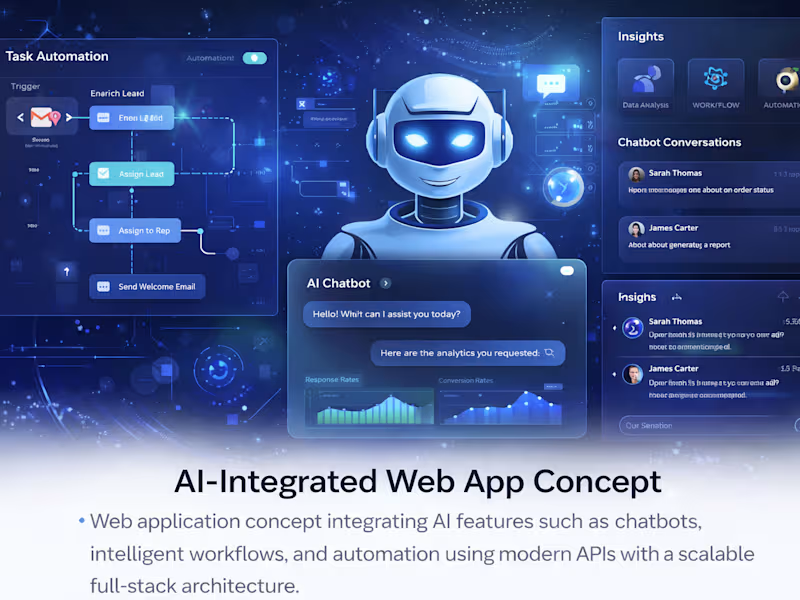
AI-Integrated Web App Concept Web application concept integrating AI features such as chatbots and intelligent workflows using modern APIs.
0
46
Explore projects