Projects using Laravel in SuratProjects using Laravel in Surat🚀 Laravel Modular Development: Internal Modules or Reusable Packages?
As a Laravel application grows, keeping everything inside the default Models, Controllers and Services directories can make the codebase difficult to maintain.
This raises an important question:
Should we create modules inside one Laravel application or develop separate Laravel packages?
Both approaches are useful—but at different stages.
1️⃣ Start Simple
During early development, requirements frequently change. A conventional Laravel structure helps us build faster without prematurely defining package boundaries.
⚠️ However, starting simple should not mean placing all business logic inside controllers. Services, actions, events, contracts and policies should still separate responsibilities.
2️⃣ Modularize as the Application Grows
Once domain boundaries become clear, related code can be moved into internal modules such as:
✔️ Identity and Access Control
✔️ Catalog
✔️ Listings and Moderation
✔️ CMS and Form Builder
✔️ Monetization
✔️ Search, Analytics and SEO
Each module can own its models, migrations, routes, controllers, services, requests, policies, events, enums, seeders and tests.
Modules should communicate through ✅ services, contracts or events instead of ❌ accessing one another’s internal implementation.
This creates a modular monolith: strong separation while retaining the simplicity of developing and deploying one application.
3️⃣ Let the First Application Reveal Patterns
While building the first application, it is difficult to predict which components will be reusable.
Something that appears generic may eventually depend heavily on product-specific rules, workflows or database structures. Completing the first application reveals the real module boundaries.
4️⃣ Confirm Reuse in Another Application
When building a second application, repeated patterns become visible. A module may be suitable for extraction when:
♻️ Multiple applications require it.
🔁 Its core behaviour remains similar.
⚙️ Differences can be configured.
🔌 It provides a stable public API.
🧩 It has few application-specific dependencies.
📦 Independent versioning provides value.
A Form Builder, Media Manager, Audit Log or Payment Gateway abstraction may become a reusable package.
However, marketplace-specific Listings, Dealers or Moderation modules may remain internal because their rules are closely connected to that product.
🛠️ Practical Progression
Conventional Laravel Application
➡️ Internal Domain Modules
➡️ Modular Monolith
➡️ Reuse Confirmed
➡️ Reusable Laravel Package
💡 My preferred principle:
“Start simple, modularize when boundaries become clear, and extract packages only when reuse is proven.”
The first application reveals the boundaries. The second proves what is genuinely reusable.
🎯 Reuse should be observed—not predicted.
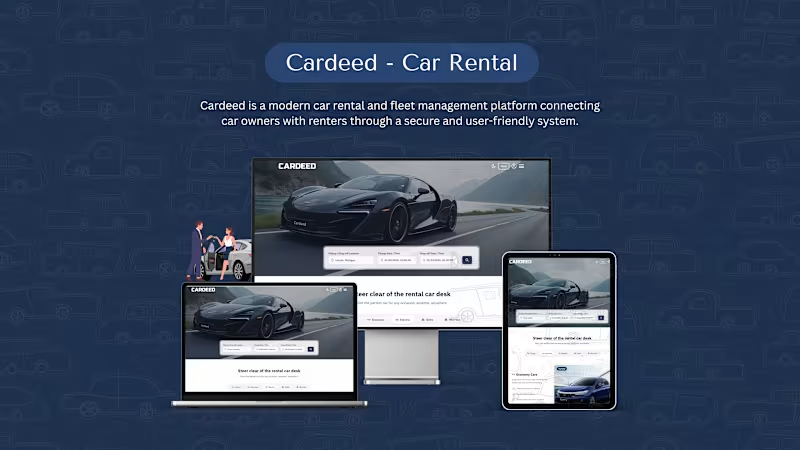
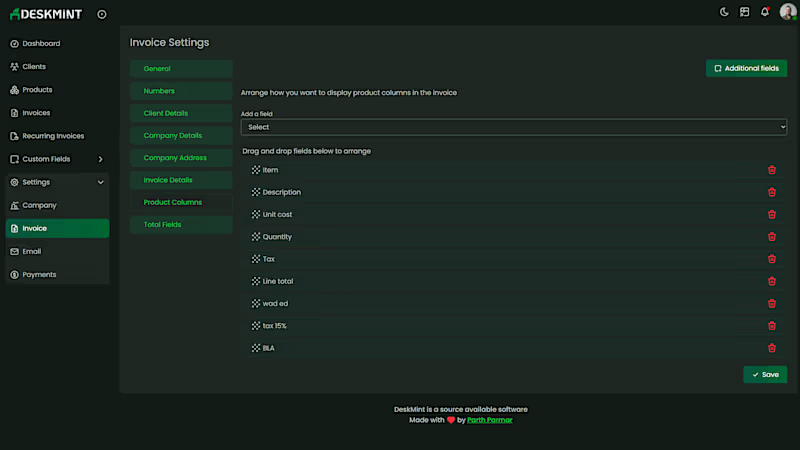
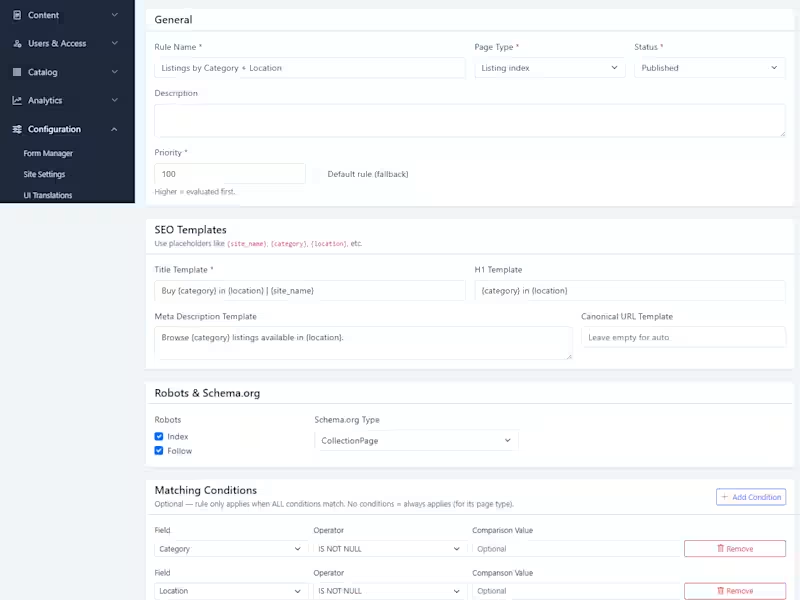
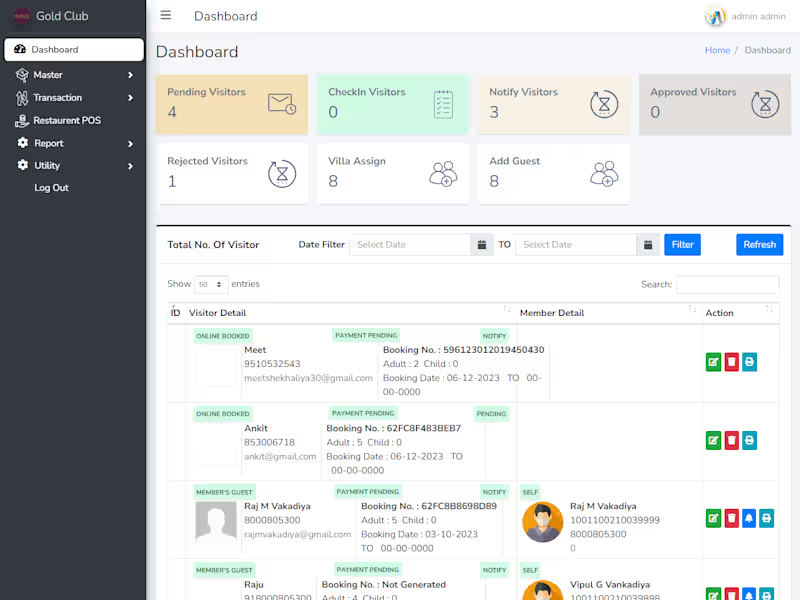
How do you structure large Laravel applications: internal modules, packages or both? Cardeed is a modern car rental and fleet management platform connecting car owners with renters through a secure and user-friendly system. The platform enables vehicle listing, advanced search, booking management, document verification, secure online payments, reviews, and real-time notifications. It supports both individual hosts and fleet managers with tools for pricing, availability, and vehicle tracking. Built as a high-performance SPA using Laravel and React (Inertia.js), Cardeed ensures scalability, security, and smooth user experience. DeskMint is being developed to centralize client communication, manage invoices, and securely store documents in an encrypted vault, helping companies keep interactions and data organized and transparent.
Notable features
Dynamic custom fields with user-defined data models (structure + data, not just values)
Bank-grade auth with token system and device fingerprinting
Custom DataTable handling static and dynamic datasets
Modular architecture using dependency injection and traits
Granular field visibility, universal field ordering across modules
Advanced querying with configurable search/sort, inc. custom fields
Flexible invoicing with custom taxes, fields, and variable-based numbering
In-house Vue component library (tabs, autocompletes, inputs, etc.)
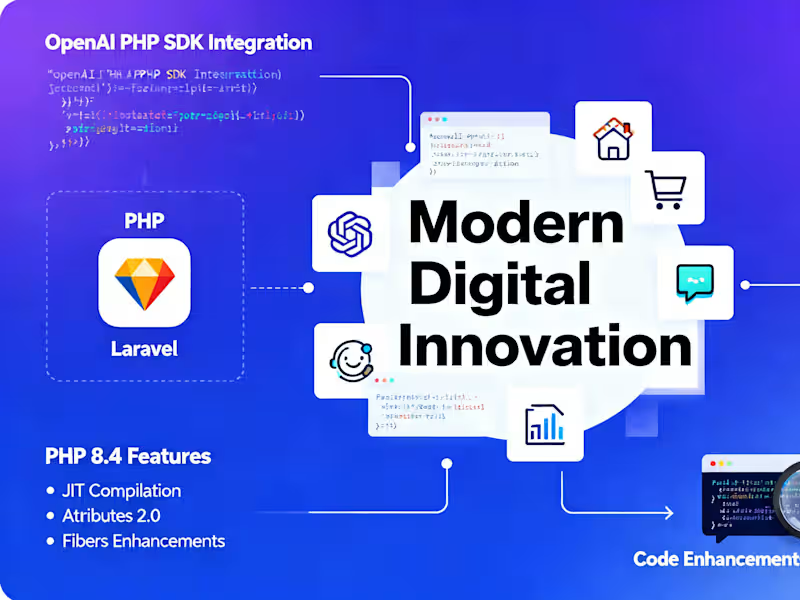
Find everything about this at https://parthparmar.dev/portfolio/deskmint Developers in the PHP and Laravel ecosystem are witnessing significant advancements, particularly for SaaS, e-commerce, IoT, and real-time web applications. Key updates include the new OpenAI PHP SDK, which enables seamless integration of AI functionalities like chatbots and smart analytics into Laravel apps. Additionally, PHP 8.4 introduces features such as property hooks and array_any(), enhancing code readability and efficiency. These innovations are crucial for adapting to a fast-evolving development landscape, impacting analytics, debugging, and intelligent systems across various platforms.