Blockchain Development Projects in Pakistan
Blockchain Development Projects in Pakistan
Sign Up
Post a job
Sign Up
Log In
Filters
2
Projects
People
Message
0
Cuboid Inc.
pro
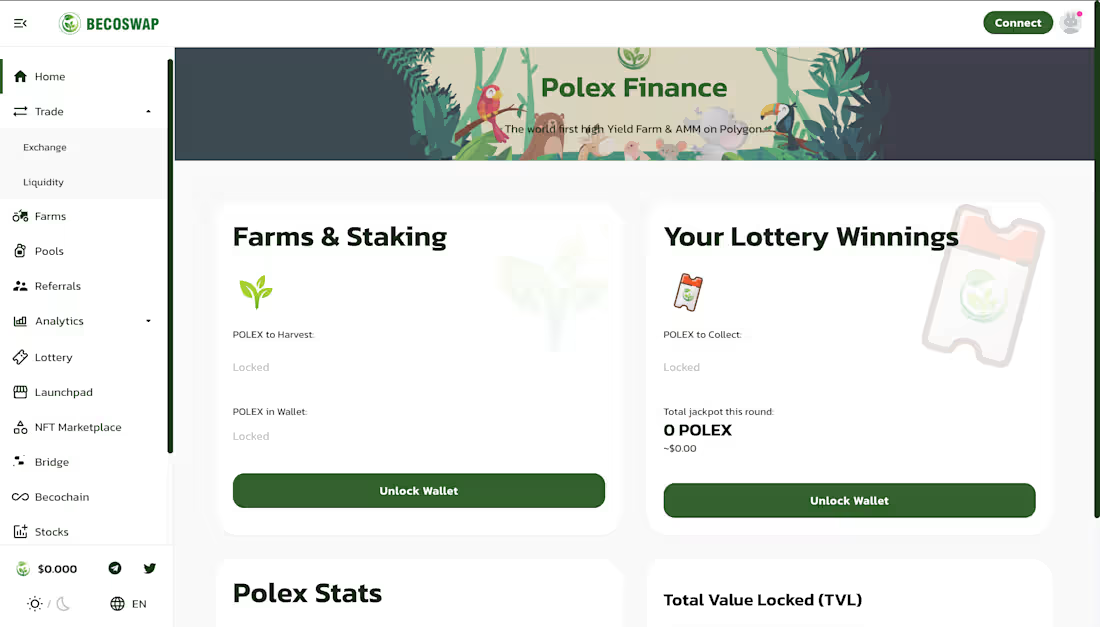
📌 Case Study: PolySwap (PoliexSwap) — Decentralized AMM & Yield Farming on Polygon Category: DeFi · Decentralized Exchange · Web3 Platform: Web (Polygon Network) Project Type: Automated Market Maker (AMM) & Yield Farming Protocol Live: polyswap.netlify.app (http://polyswap.netlify.app) Project Overview PolySwap (https://polyswap.netlify.app) — built as PoliexSwap — is a decentralized exchange and high-yield farming protocol deployed on the Polygon network. It gives users the ability to swap tokens, provide liquidity, and earn yield on their assets directly from a non-custodial Web3 interface, without intermediaries and without leaving their wallets. Built by Cuboid, it sits in the same product category as PancakeSwap on BSC — but positioned specifically for Polygon's faster, lower-cost infrastructure. The Problem Ethereum's gas fees made DeFi participation prohibitively expensive for smaller investors. Binance Smart Chain addressed the cost problem but introduced centralization trade-offs many users weren't comfortable with. Polygon emerged as a legitimate Layer 2 alternative — fast, cheap, and EVM-compatible — but lacked a native, fully-featured AMM and yield farming platform at the time. The opportunity was clear: a first-mover DEX on Polygon that combined token swapping, liquidity provision, and high-yield farming in a single, clean interface built for the Polygon-native user. Our Solution Cuboid designed and developed the full PolySwap platform — smart contract integration, liquidity pool architecture, yield farming interface, and wallet connectivity — on Polygon's EVM-compatible chain. The interface was modeled on the established DEX UX patterns users already knew from Uniswap and PancakeSwap, lowering the barrier to entry while delivering Polygon's speed and cost advantages underneath. The platform was built to be genuinely non-custodial throughout — users connect their own wallets, execute swaps and deposits directly on-chain, and retain full control of their assets at every step. Key Features & Capabilities Token Swapping (AMM) — An automated market maker enabling direct token-to-token swaps on Polygon without order books, central servers, or custodial risk. Pricing is determined algorithmically by liquidity pool ratios, ensuring continuous liquidity at all times. Liquidity Provision — Users deposit token pairs into liquidity pools and earn a share of all swap fees generated by that pool — passive yield tied directly to platform trading volume rather than speculative token price. High-Yield Farming — Liquidity providers receive LP tokens representing their pool share, which can be staked in farming contracts to earn additional protocol rewards on top of swap fees. The dual-layer yield model — fees plus farming rewards — was positioned as the platform's primary value proposition for capital deployment on Polygon. Non-Custodial & Permissionless — No sign-up, no KYC, no custody. Users connect a compatible Web3 wallet and interact with smart contracts directly. Any Polygon-compatible token pair can be added as a liquidity pool without platform approval. Polygon-Native Performance — Transactions settle in seconds at a fraction of Ethereum mainnet gas costs, making frequent farming interactions and compounding strategies economically viable for users of any portfolio size. Why Polygon The decision to build on Polygon rather than Ethereum mainnet or BSC was deliberate. Polygon's EVM compatibility meant existing Ethereum tooling, wallets, and token standards worked without modification. Its transaction costs and speed made high-frequency DeFi interactions — swaps, deposits, harvest cycles — practical for retail users, not just whales. Positioning PolySwap as the first high-yield AMM on Polygon was a first-mover bet on a network that has since grown into one of the most active EVM chains in DeFi. Final Outcome PolySwap demonstrates Cuboid's capability across the full DeFi product stack — AMM smart contract integration, liquidity pool architecture, yield farming mechanics, and a consumer-grade Web3 interface built for a specific chain's competitive advantage. It's a project that required both technical precision and an understanding of how DeFi users think about capital, risk, and yield.
0
413
Message
1
Salman Inayat
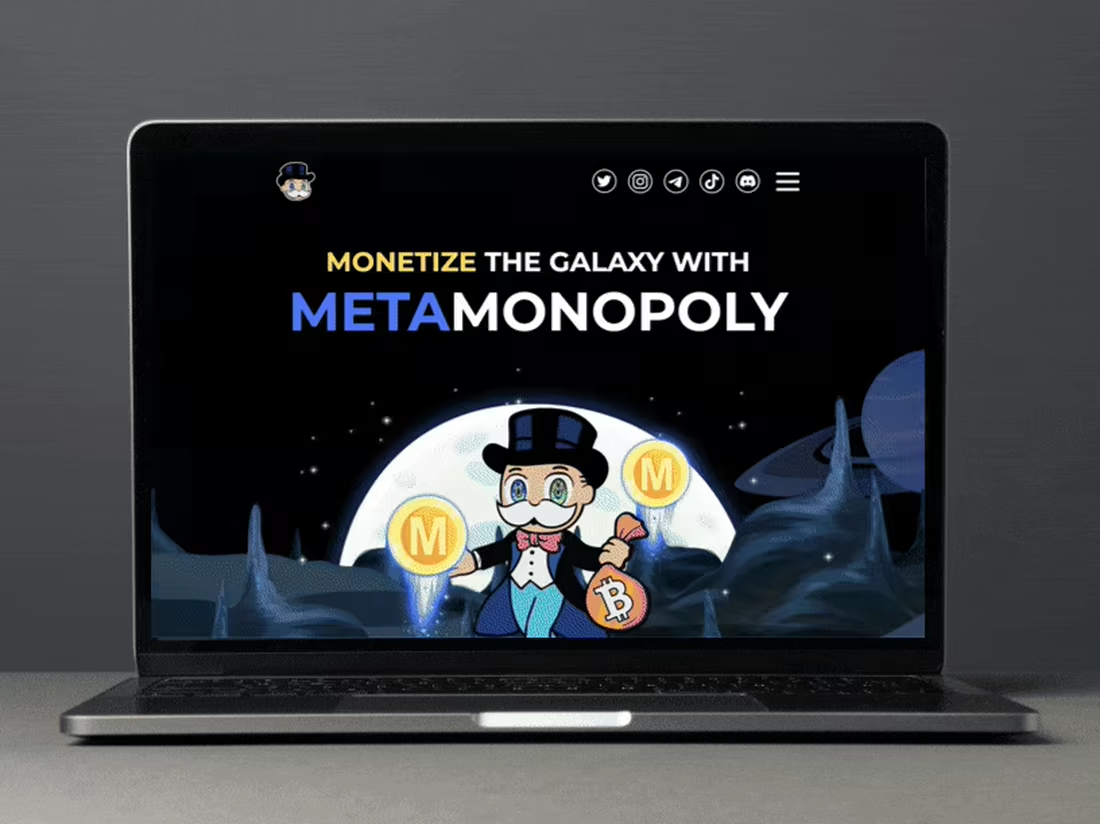
Galaxy Metamonopoly
1
11
Message
1
Abdul Moiz Memon
pro
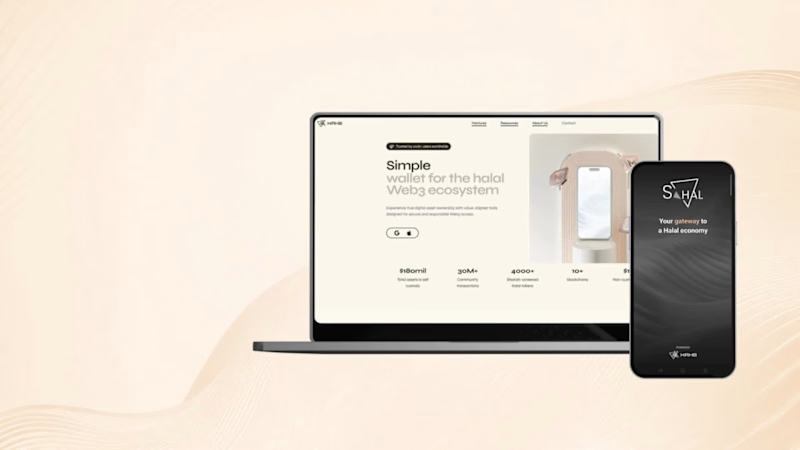
Sahal Wallet — Cosmos Staking & Wallet Integrations
1
12
Message
0
Muhammad Usman
pro
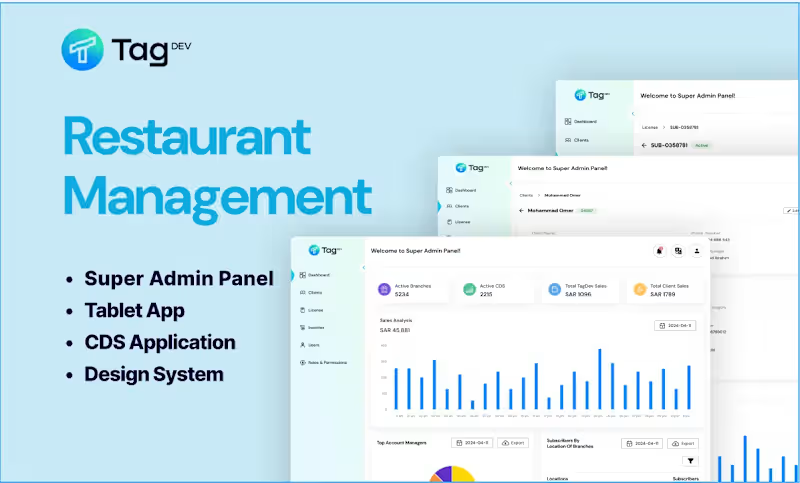
Tag Dev | Blockchain Restaurant Management System
0
15
Message
2
Mughira Ahmed
pro
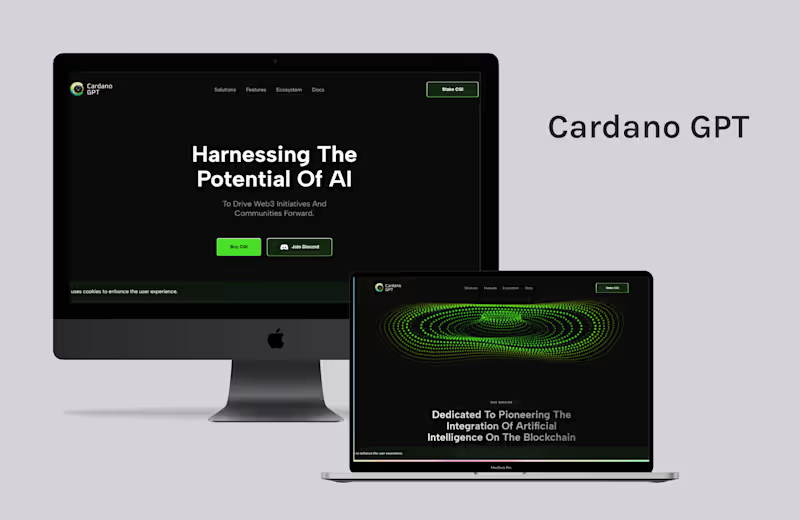
CardanoGPT - Web3 AI Platform on Cardano Blockchain
2
9
Message
0
Nauman Khan
pro
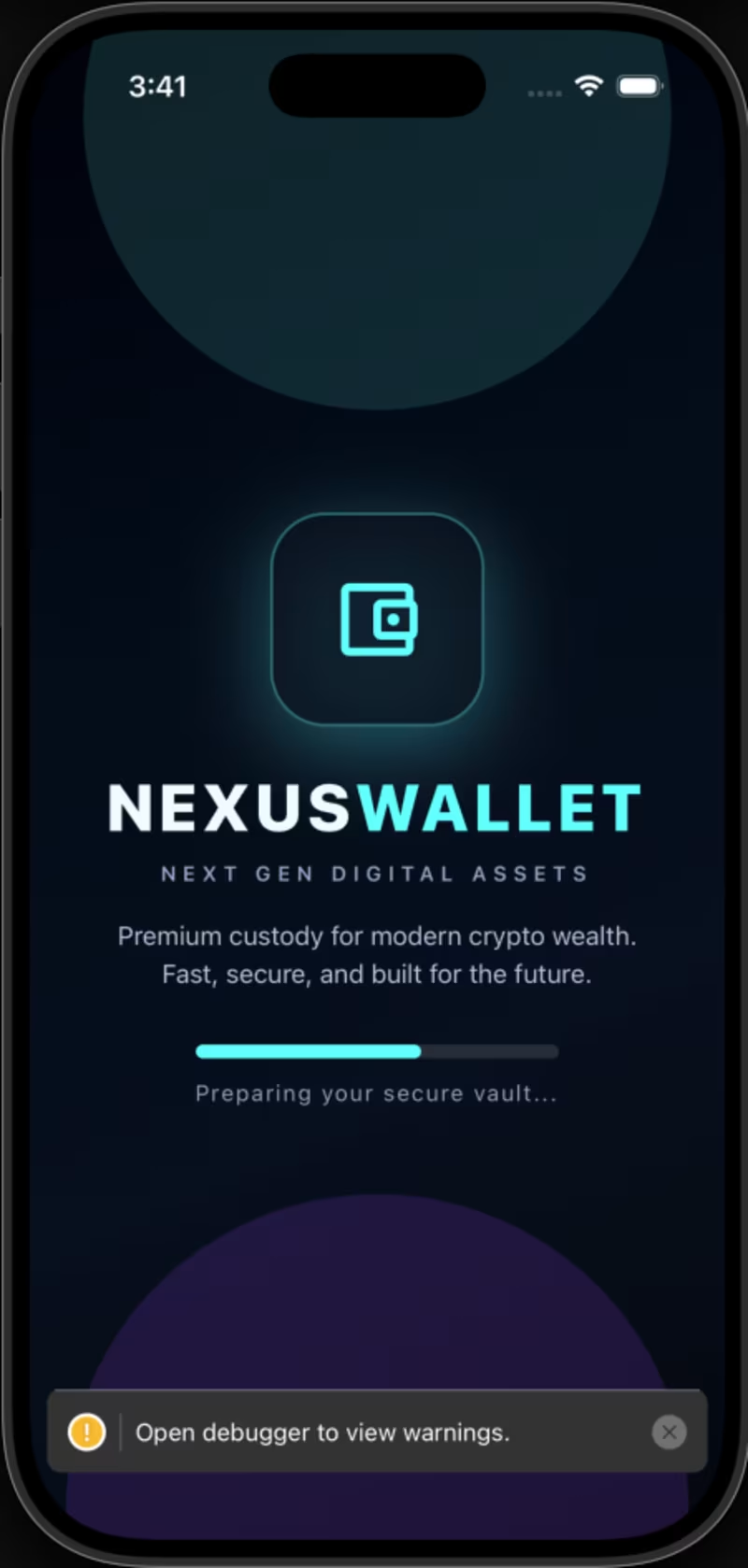
Web3 DeFi Wallet App | React Native · Token Send & Swap
0
8
Message
0
Shehzada Ammad Ali
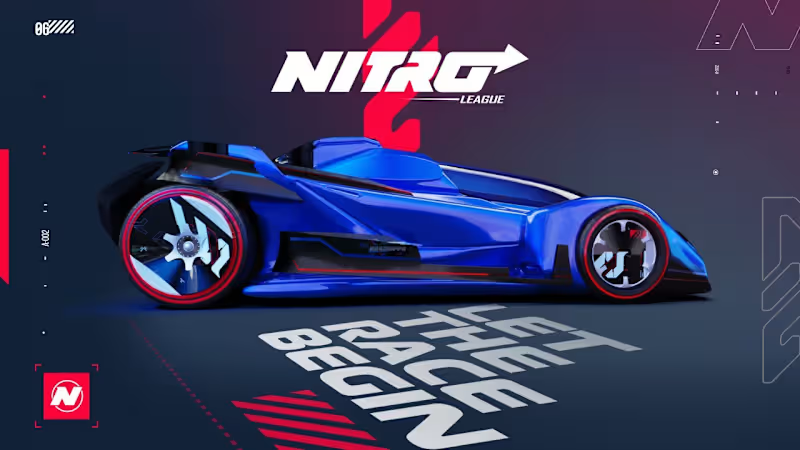
Nitro Nitro is a metaverse game project integrating blockchain technology. It features a Node.js backend with TypeScript and DynamoDB for data storage. The frontend is developed using React.js, and deployment is managed using Docker containers on AWS EC2 instances and Lambda functions.
0
112
Message
0
Faizan Dawood
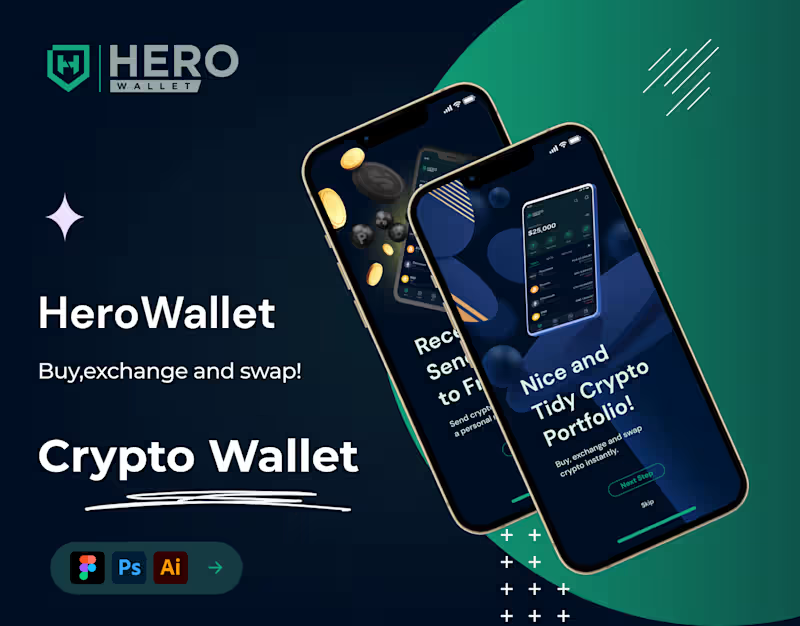
HeroWallet Crypto Mobile Application UI Design
0
1
Message
0
Muhammad Hassan
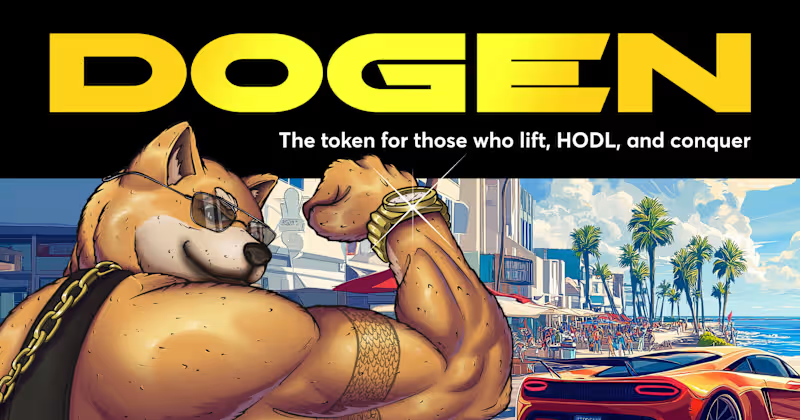
Dogen Meme Token – Decentralized Community Meme Coin Ecosystem
0
9
Message
0
Ali Asghar
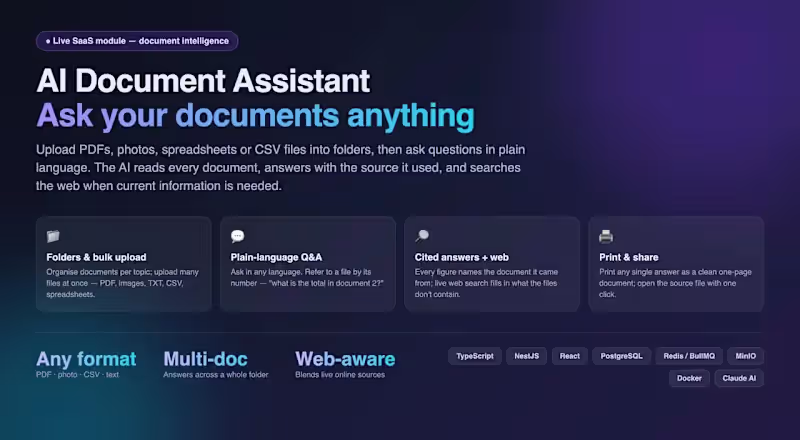
AI Document Assistant — ask your documents anything A document-intelligence module that turns a pile of files into something you can simply ask questions about. How it works * Folders — organise documents by topic and upload many files at once: PDFs, phone photos, scans, text, CSV and spreadsheets. * Reading — each file is processed in the background and its full text extracted, so the AI can work across the entire folder, not just one file at a time. * Q&A in plain language — ask in any language, and refer to a file by its number ("what is the total in document 2?"). The AI answers from the documents and names the document each figure came from. * Live web search — when a question needs current information that isn't in the files, the AI searches the web and clearly separates online findings from document findings. * Print & open — print any single answer as a clean one-page document, and open the original file in one click.
0
81
Message
1
Adnan Akhtar
TOMI – Web3 Ecosystem Platform TOMI is a Web3 ecosystem platform built to support blockchain-powered products, decentralized services, and digital ownership experiences. The website acts as the main entry point for users to understand the TOMI ecosystem, explore its products, and interact with Web3-focused services through a modern, scalable, and performance-driven web experience. My role focused on developing and improving the frontend architecture of the platform using modern web technologies. I worked on creating reusable components, responsive layouts, and smooth user flows that could support a premium Web3 product experience across desktop and mobile devices. The goal was to make the platform visually polished while keeping it fast, reliable, and easy to use. From a technical perspective, I contributed to Web3-related integrations, dynamic data handling, API connectivity, and blockchain-focused user flows. The platform required careful handling of asynchronous data, wallet-related states, transaction-driven interactions, and real-time updates from external services. I focused on making these flows stable, user-friendly, and scalable for production use. Performance and scalability were also key priorities. I worked on optimizing page load speed, improving rendering behavior, managing reusable UI structures, and ensuring the website performed consistently across browsers and screen sizes. The implementation was designed to support future ecosystem expansion without making the codebase difficult to maintain. The project involved technologies such as Next.js, React.js, TypeScript, REST APIs, Web3 integrations, blockchain data services, Git, and modern deployment workflows. The final result was a scalable and production-ready Web3 platform experience that helped present the TOMI ecosystem in a clear, technical, and user-focused way.
1
59
Message
0
Murtaza Asghar
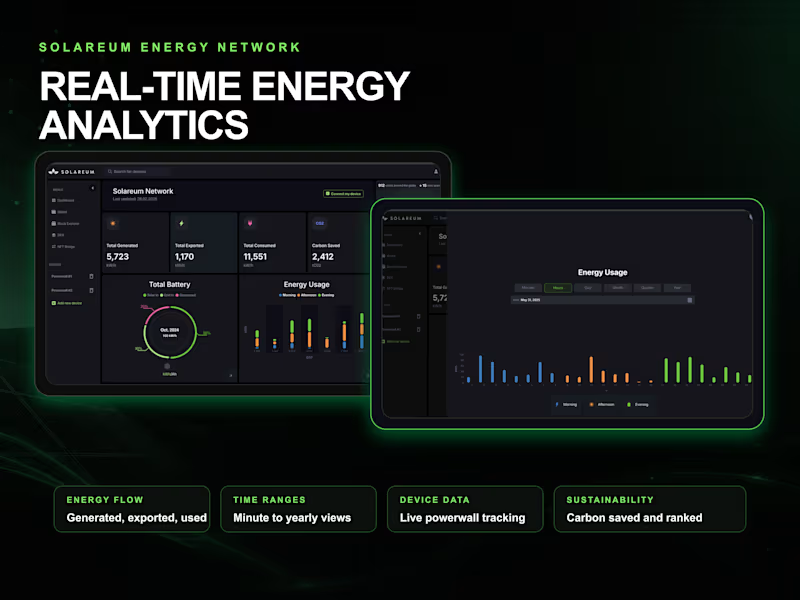
I worked as the Full Stack Engineer on Solareum https://solareuml1.io/ , a Layer 1 blockchain platform that connects renewable-energy generation data with on-chain records through its patent-pending Proof of Generation® mechanism. Solareum is a Layer 1 blockchain platform that records renewable-energy generation data through its Proof of Generation® mechanism. I worked as the Full Stack Engineer, developing dashboard workflows for energy production, consumption, export, battery storage, carbon savings, connected devices, wallet activity, and blockchain tools. My work covered the dashboard, application services, serverless infrastructure, database integration, Web3 functionality, and deployment workflows. I can help you build: - Responsive Next.js dashboards - Real-time energy and IoT analytics - Device connection and management workflows - Web3 wallets and transaction history - Token funding, transfers, and exchange features - Blockchain explorer integrations - DEX and NFT bridge interfaces - Serverless Node.js APIs with AWS Lambda - MongoDB data models and integrations - Automated CI/CD pipelines I have the shipped the following features: - Renewable-energy generation tracking - Energy exported and consumed metrics - Battery storage analytics - Carbon savings reporting - Three-second dashboard data updates - Minute, hourly, daily, monthly, quarterly, and yearly views - Global network map and energy leaderboard - Powerwall and IoT device management - Wallet funding, transfers, and exchange - Transaction history - Block explorer - Decentralized exchange - NFT bridge - Proof of Generation records - On-chain energy data retention - Dual-token and reward ecosystem - ESG and environmental impact reporting Skills used - Full-stack web development - Next.js development - Node.js backend development - Serverless architecture - Web3 application development - Blockchain dashboard development - REST API integration - MongoDB database development - Data visualization - IoT device integration - Responsive UI development - CI/CD implementation Tools and technologies - Next.js - Node.js - AWS Lambda - MongoDB - CI/CD - JavaScript - Web3 - Blockchain APIs - Data visualization libraries
0
90
Message
0
Zain Hassan
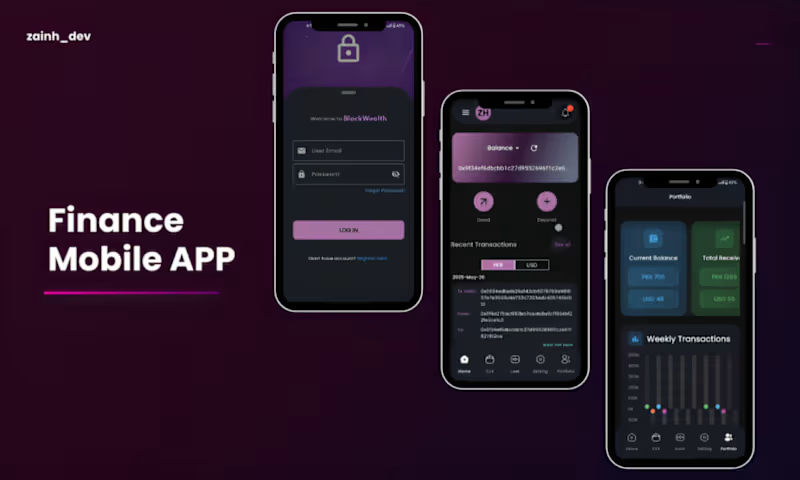
Cross-Platform Decentralized Finance App Development
0
11
Message
2
Zeeshan Gardezi
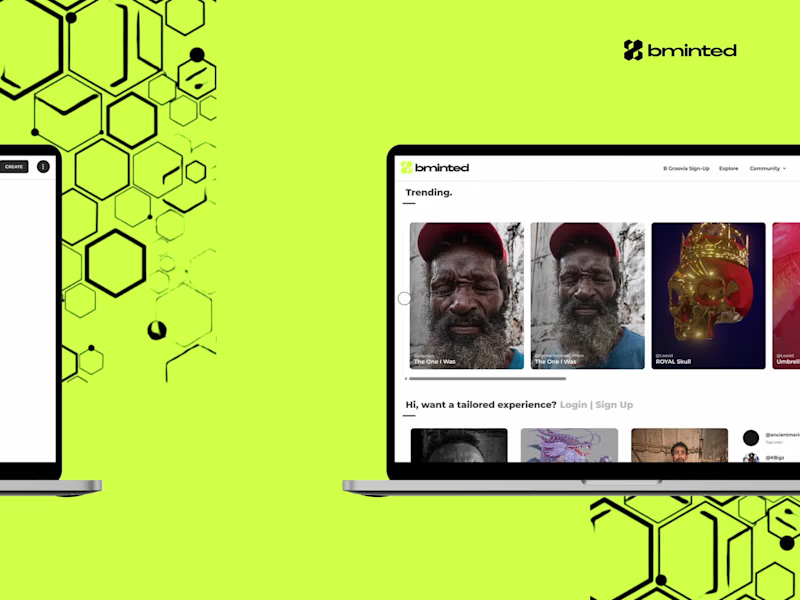
BMinted | NFT Marketplace Development & Web3 Platform
2
212
Message
0
Syed Tasaduq Hussain Bukhari
NFT Wallpaper app
0
22
Message
1
Hammad Ehsan Ullah
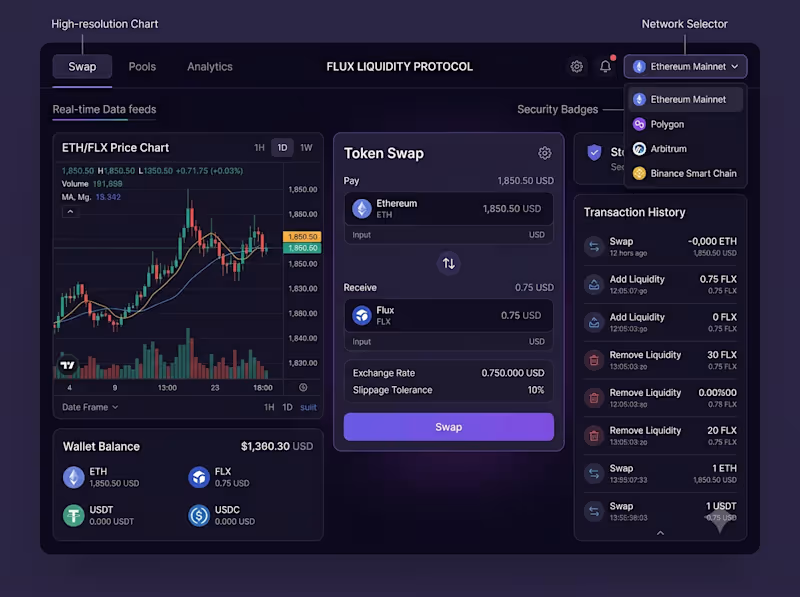
DeFi Liquidity Protocol — Smart Contract Development A decentralized finance (DeFi) protocol enabling seamless token swaps, liquidity provision, and yield farming with secure smart contracts and intuitive user experience. Platform Features: Automated Market Maker (AMM) with dynamic pricing Multi-chain support (Ethereum, Polygon, Arbitrum, BSC) Liquidity pools with concentrated liquidity (Uniswap V3 style) Yield farming with reward distribution Governance token staking Advanced charting and price feeds Wallet integration (MetaMask, WalletConnect, Rainbow) Smart Contracts: Solidity development with ERC-20, ERC-721 standards Uniswap V2/V3 compatible architecture Gas-optimized code (~40% reduction) Comprehensive security testing & audits OpenZeppelin standard library integration Frontend & Backend: React/Next.js frontend with Wagmi & RainbowKit Node.js backend for indexing & analytics Real-time price feeds & market data PostgreSQL for transaction history TheGraph subgraph for on-chain data queries WebSocket connections for live updates Infrastructure: Docker containerization AWS deployment with auto-scaling CI/CD pipelines (GitHub Actions) Monitoring & alerting systems Tech Stack: Solidity, Web3.js, Ethers.js, React, Next.js, Node.js, TypeScript, PostgreSQL, Docker, AWS This project demonstrates expertise in DeFi protocols, secure smart contract development, blockchain integration, and scalable architecture.
1
94
Explore projects