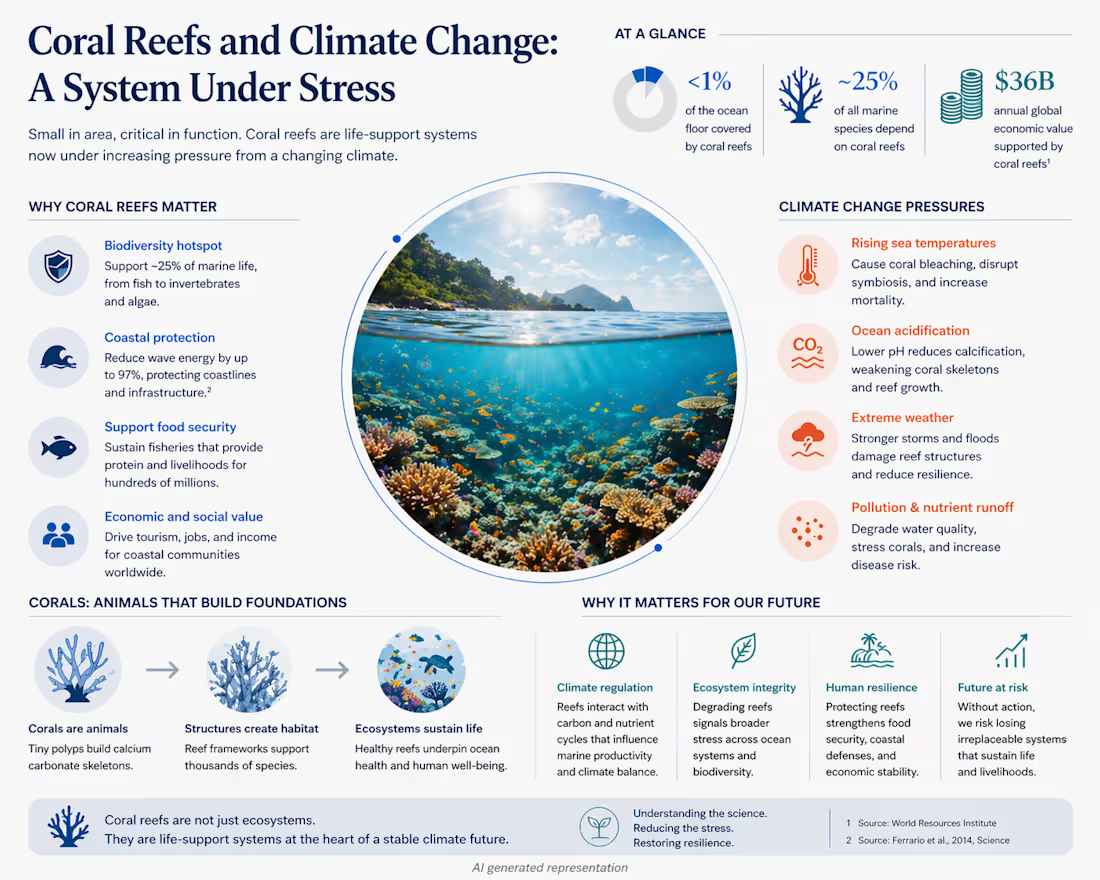
YouTube Creation Projects in New DelhiYouTube Creation Projects in New DelhiA young woman sits at a home desk, a soft-lit living room visible behind her. In front of her is a pink gift box branded "VEXA." She looks directly into camera, excited, warm, completely natural, as she talks about the product before reaching out to pick up the box. She holds it up, turns it, opens it slowly, her expression shifting from anticipation to genuine delight as she reveals the contents. The whole scene feels like a real person's organic unboxing video: the home environment, the natural light, the loose white shirt, the casual jewellery, the unscripted-feeling gestures. This is the format that converts on Instagram Reels and TikTok because it doesn't look like an ad. It looks like a person who genuinely loves what they just received. 15 seconds. Shot entirely with AI. Coral reefs occupy less than 1% of the ocean floor, yet they support nearly 25% of all marine life. Their ecological significance far exceeds their physical scale, positioning them as critical components of the Earth’s life-support systems.
These ecosystems operate at the intersection of ocean chemistry, climate regulation, and biological productivity. However, climate change is now disrupting this balance. Rising sea temperatures trigger coral bleaching by destabilizing the symbiotic relationship between corals and algae. Simultaneously, increased atmospheric CO₂ is driving ocean acidification, reducing the ability of corals to build and maintain their calcium carbonate structures.
The consequences extend beyond biodiversity loss. Coral reefs underpin fisheries, protect coastlines, and support economic systems globally.
Their decline is therefore not an isolated ecological concern, but a signal of systemic stress within ocean environments.
Understanding and addressing climate change requires recognizing the fragility—and importance—of such interconnected systems.
#ClimateChange #CoralReefs #OceanHealth #Sustainability