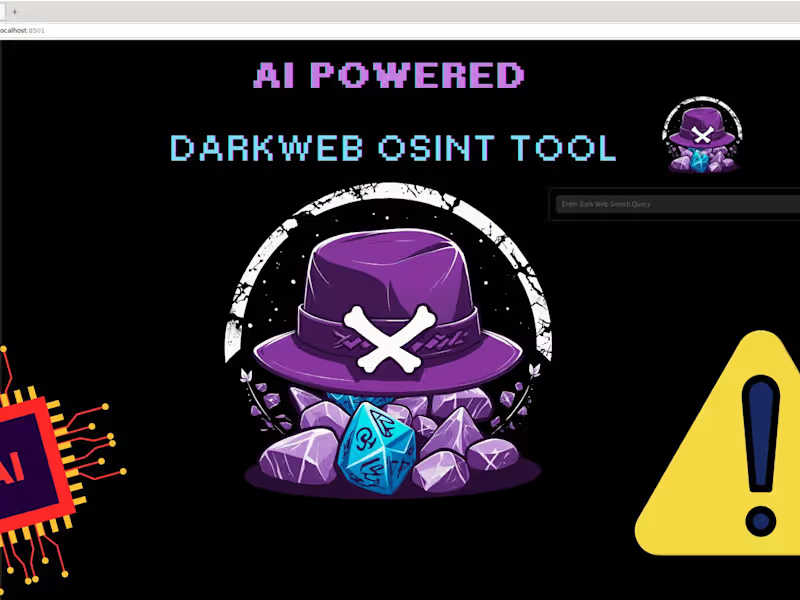
Freelancers using Security Onion in NairobiFreelancers using Security Onion in NairobiDesigned and documented a secure environment for running Robin, an AI-powered dark web OSINT tool, inside a compartmentalized Qubes OS and Qubes-Whonix setup.
The environment was structured to separate research activity, Tor-routed traffic, sensitive credentials, untrusted content, and final reporting. Robin was deployed through Docker inside a dedicated research qube, with traffic routed through sys-whonix and sensitive notes stored separately in an offline vault qube. Disposable qubes were incorporated for opening potentially unsafe links and files.
The setup was built around security by compartmentalization rather than relying on a single tool for protection. Particular attention was given to Docker mount restrictions, credential hygiene, network-boundary verification, lawful research scope, and keeping raw research data isolated from personal or client environments.
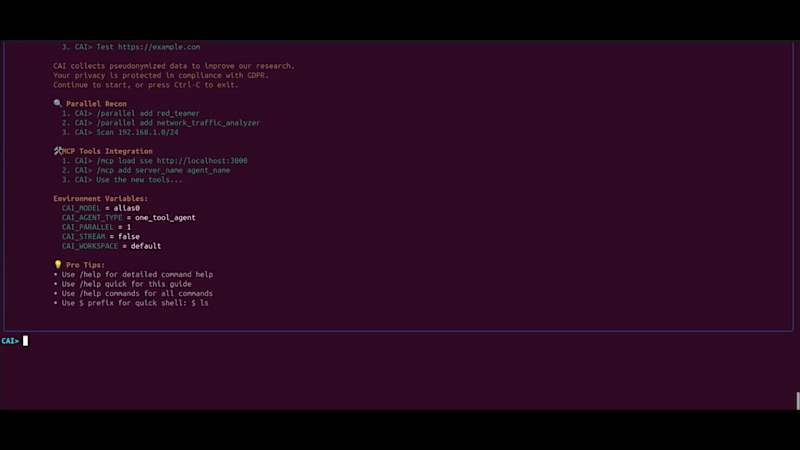
The final result was a repeatable AI-assisted OSINT workflow that supports faster search refinement, result filtering, investigation summarization, and structured reporting while maintaining stronger operational security and clearer separation between collection, analysis, and final output. A hands-on overview of CAI, an AI-assisted cybersecurity agent framework configured and explored in a Linux terminal environment. The demonstration focuses on how AI agents can be organized and used to support different areas of cybersecurity testing, analysis, and research.
The walkthrough covers command-line navigation, available help options, agent selection, model configuration, and the use of specialized security agents. It includes a closer look at DFIR-focused agents for digital forensics and incident response, along with other agent categories designed for bug bounty research, red team activities, network security, reverse engineering, Wi-Fi security, and reporting.
The setup also highlights parallel agent configuration, showing how multiple AI-driven security agents can be prepared for structured analysis and task separation. This makes the environment useful for handling different cybersecurity activities in a more organized and scalable way.
Overall, the work reflects practical experience with AI-powered security tooling, terminal-based security environments, agent configuration, cybersecurity automation, and ethical AI-assisted security research.