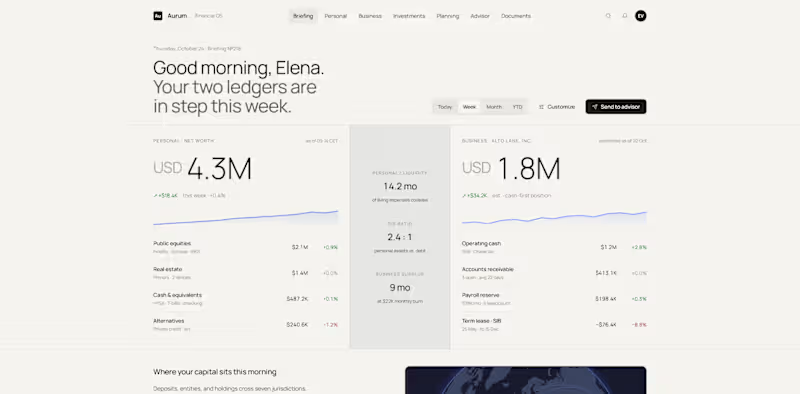
The next billion-dollar fintech product won't look like another dashboard.
It will feel like an operating system for your entire financial life.
Personal finance. Business. Investments. Loans. Insurance. Taxes.
One product. One experience.
This is the concept I've been working on. 👇
#Fintech #ProductDesign #UIDesign #UX #SaaS #Startup #BuildInPublic #WebDesign #Figma #Design
2
191
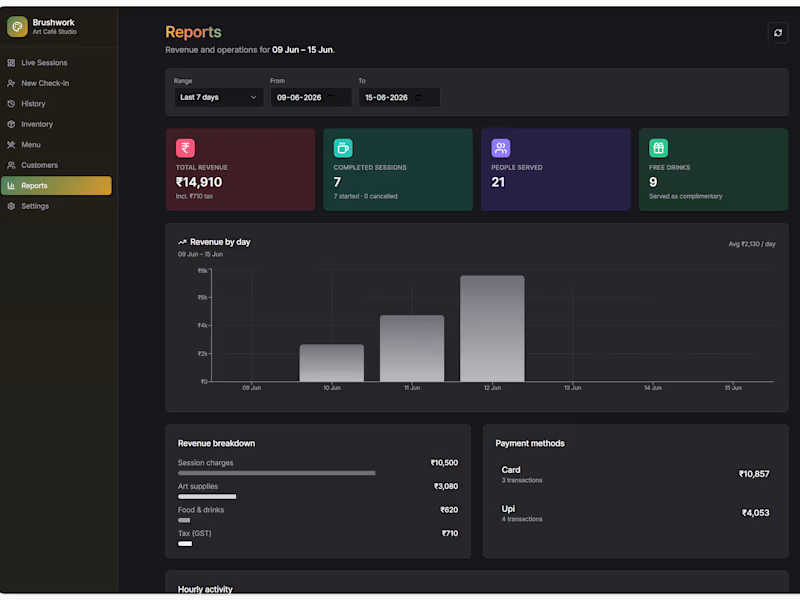
I wanted to share an internal dashboard I just wrapped up using the new Retool App Builder.
The project targets a unique niche: Art Cafes & DIY Craft Studios.
These businesses operate on a "Time-as-a-Service" model where customers book a 2-hour window, get basic supplies and a complimentary drink, but get charged for regular cafe snacks, premium canvases, or extra time.
Standard POS platforms don’t natively track live table occupancy time or handle mixed complimentary/paid item orders smoothly. I built this custom portal to handle the heavy lifting.
Here is a quick video walkthrough of the operational flows, live floor tracking, and dashboard settings:
https://www.loom.com/share/7f8c823309ec4a24a392c5d427f21035
Key features built completely in Retool:
Live Studio Floor/Dashboard:
A clean grid layout displaying currently occupied tables, dynamically tracking group size, and color-coded status pills (Active, Completed, Unpaid).
Contextual Orders (Modals):
Clicking any active card triggers a popup modal form allowing front-desk staff to instantly append food items or premium inventory directly to that specific customer's active session tab.
Back-Office Configuration & Reports:
Dedicated tabs for the store owner to track key metrics (Active Sessions, Total Profits, Unpaid Orders), manage global inventory logs, and edit customer profile records.
I’d love some feedback from the community:
Drop your thoughts below or let me know if you want a breakdown of any specific component setups!
0
174

Handing out your business card shouldn't feel like handing over a list of your competitors. 🛑
If your website is just a link to a shared B2B platform directory, you’re actively sharing your leads. Stop renting space. Own your brand. 📉➡️📈
🚀 Free demo: www.yogiwebsites.com
(http://www.yogiwebsites.com)📲 WhatsApp: +91-98333-398688
#B2B #WebDesign
0
48

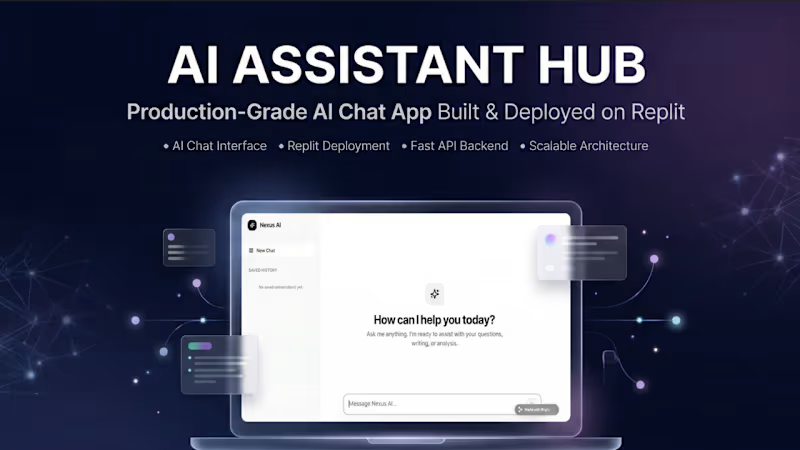
Built AI Assistant Hub — a production-grade AI chat application deployed on Replit.
The project demonstrates how quickly you can build and ship AI-powered tools using Replit as the development and deployment environment.
Key highlights:
• Custom AI chat interface
• Fast API backend architecture
• Scalable deployment on Replit
• Clean UI designed for productivity
🔗 Try the live app: https://ai-assistant-hub--abhiram678.replit.app/
Replit continues to be one of my favorite platforms for rapidly building and deploying AI applications.
1
8
595
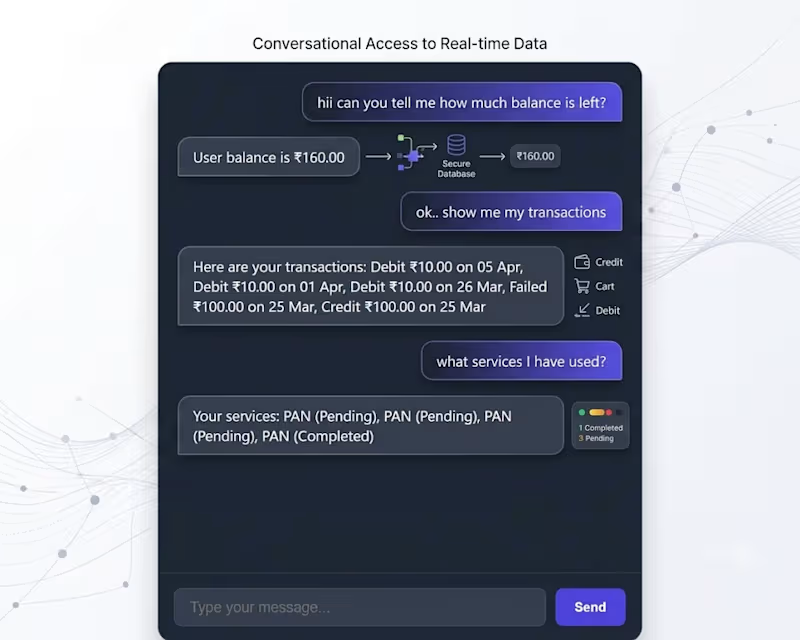
QuickServe — AI Natural Language Business Portal & Automated Service Hub
The Problem:
Traditional business portals require navigating multi-level menus just to check account metrics or raise a support ticket. QuickServe replaces that complexity with conversational actions backed by secure backend execution.
Key Deliverables & Architecture:
Natural Language Data Access: Queries live balances and recent transaction records directly from SQL Server using structured OpenAI tool calls.
Conversational Service Actions: Triggers backend service tickets and workflows straight from the chat interface.
Fault-Tolerant Fallback Layer: Rule-based fallback logic ensures critical business queries remain functional even if third-party AI APIs experience downtime.
Tech Stack: .NET Core, React, SQL Server, OpenAI API.
0
108
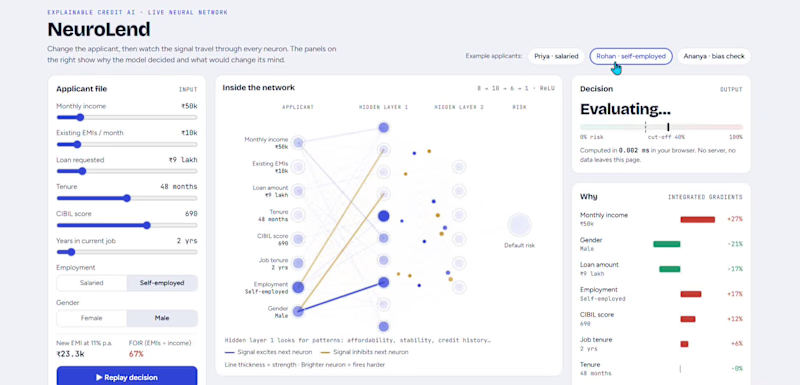
Neuro Lend
My credit model scored 0.92 AUC. Then I changed one field on one applicant, female to male, and she went from approved to rejected. A lot of lending AI works like this: it says no in milliseconds, and nobody, not the customer and often not the bank, can say why. So I built NeuroLend. You fill in a loan application and watch the signal travel through every neuron until the output turns green or red. Then it shows why it decided, and the smallest change that would flip the answer. Rohan is rejected at 54% risk. If he cuts his other EMIs to ₹5,500 a month, or asks for ₹7.5 lakh instead of ₹9 lakh, he's approved.
Here's what's happening underneath. It's a small 8 → 10 → 6 → 1 network trained on 40,000 synthetic Indian loan applications, where I deliberately gave gender zero effect on the outcome. The "why" uses Integrated Gradients against an average applicant instead of raw activations, because glowing neurons look great but explain nothing to a human. Counterfactuals come from a binary search on each input the applicant can actually change, and a fairness check re-scores every applicant with only gender flipped. That check caught the bias that accuracy missed. Retraining with gender cut out of the network dropped the effect to exactly zero, and AUC stayed at 0.92. It all runs in plain JavaScript in the browser, about 0.005 ms per decision, with no server. Code is in the comments. How does your team test lending models for bias today?
Medium - https://medium.com/@anuragnagare77/neuro-lend-99cddd19faad
GitHub - https://github.com/AnuragNagare/Neuro-Lend.git
0
40
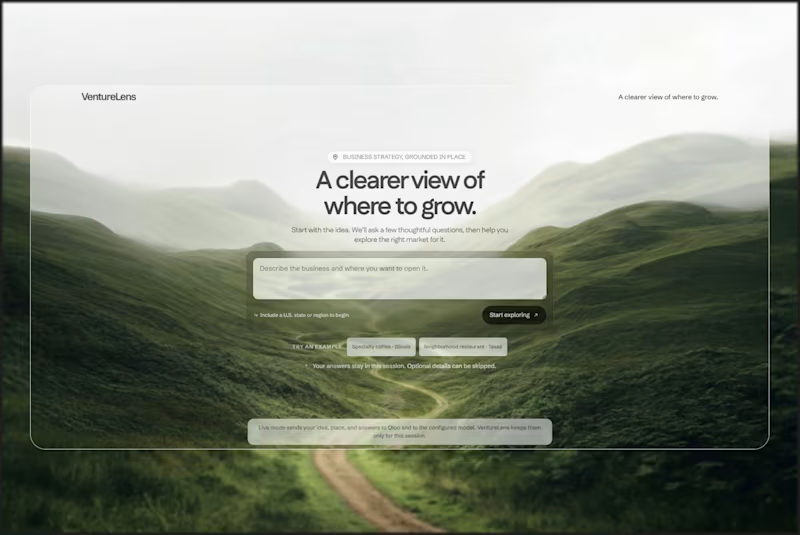
VentureLens — Venture Lens is an AI agent that turns your raw idea into a good investment using evidence-based sparring.
Instead of putting you through a stale 20-questions test, it asks the one question until it gets your usual answer, makes a short list of recommendations, then combines your data with Qloo’s taste intel and place profiles to create a full, top-to-bottom business brief you can read and download right away as markdown.
Check it here- https://devpost.com/software/venturelens-ne53u4
2
3
651




I wanted to build something that could make the boring parts of healthcare a little less boring.
That idea turned into Aarogyo, a healthcare management system where doctors, staff, and admins can manage appointments, patient records, billing, diagnoses, and prescriptions from one place.
Then I thought, why should someone manually read every uploaded medical report and type everything again?
So I added Google Gemini and Tesseract OCR to let Aarogyo read uploaded reports, extract the useful information, and turn it into structured diagnoses and prescriptions.
Started with an idea to simplify healthcare management. Ended up building a system that can actually read the paperwork too.
https://aarogyo.com/
1
237