Freelance Flutter Developers in LondonFreelance Flutter Developers in London🚀 A BEAUTIFUL APP IS GOOD. A BEAUTIFUL APP THAT NEVER FEELS SLOW? EVEN BETTER. 📱🔥
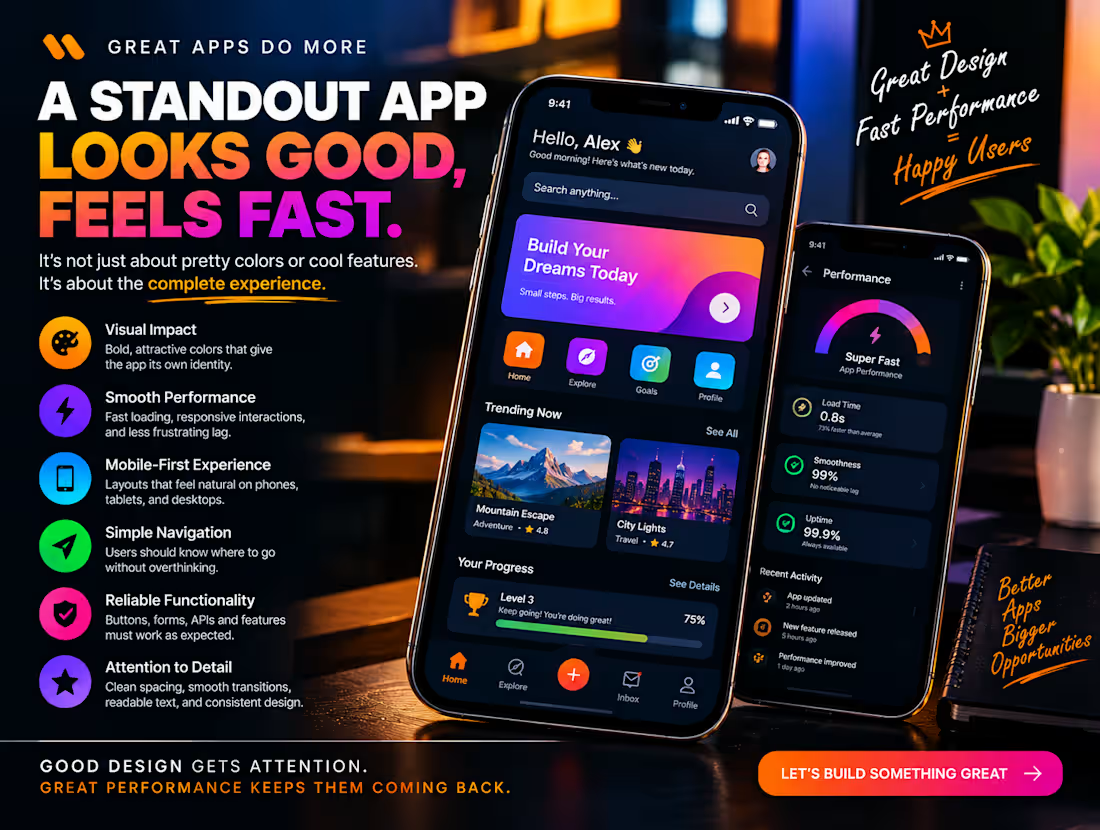
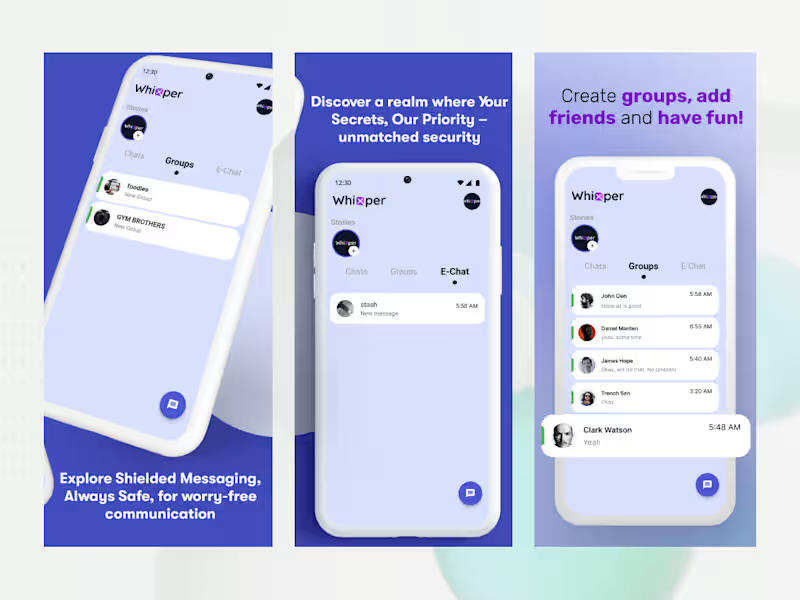
Some apps catch your attention with their colors. Others impress you with their features. But the apps that truly stand out bring everything together.
When I think about building a great app, I focus on more than just making the interface look attractive.
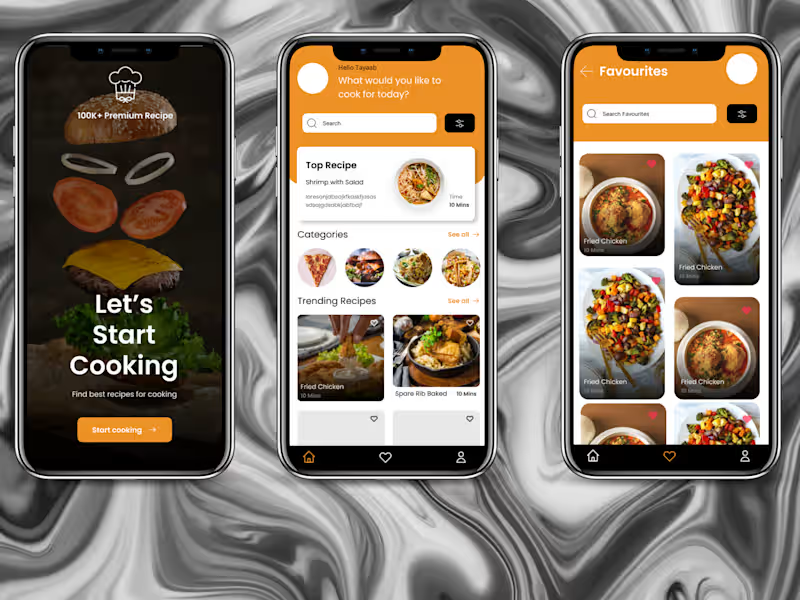
🎨 Visual impact — bold, attractive colors that give the app its own identity.
⚡ Smooth performance — fast loading, responsive interactions, and less frustrating lag.
📱 Mobile-first experience — layouts that feel natural on phones, tablets, and desktops.
🧭 Simple navigation users should know where to go without having to think too hard.
🛠️ Reliable functionality — buttons, forms, APIs, and features must work as expected.
✨ Attention to detail — clean spacing, smooth transitions, readable text, and consistent design.
Here’s the real lesson: great design gets attention, but great performance and usability keep people coming back.
An app shouldn't force users to choose between looking good and working well. It should deliver both.
That’s the standard I want to bring to every product I build: attractive on the outside, reliable on the inside. 🚀
👇 What makes you fall in love with an app first: its design, its speed, or its features?
#AppDevelopment #UIUX #WebDevelopment #SoftwareEngineering #ProductDesign #FrontendDevelopment #BuildInPublic 📱 A Website Should Feel Just as Good on a Phone as It Does on a Laptop.
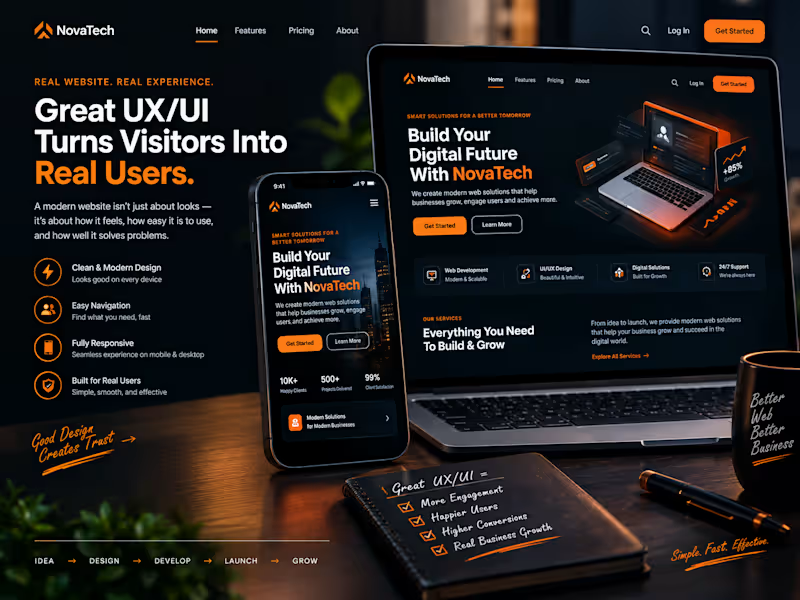
A website can look impressive, but if visitors struggle to find what they need, the experience is already falling short.
That’s why good UI/UX design goes beyond colors, animations, and beautiful layouts.
It’s about making every interaction feel natural.
When I approach website development, I focus on:
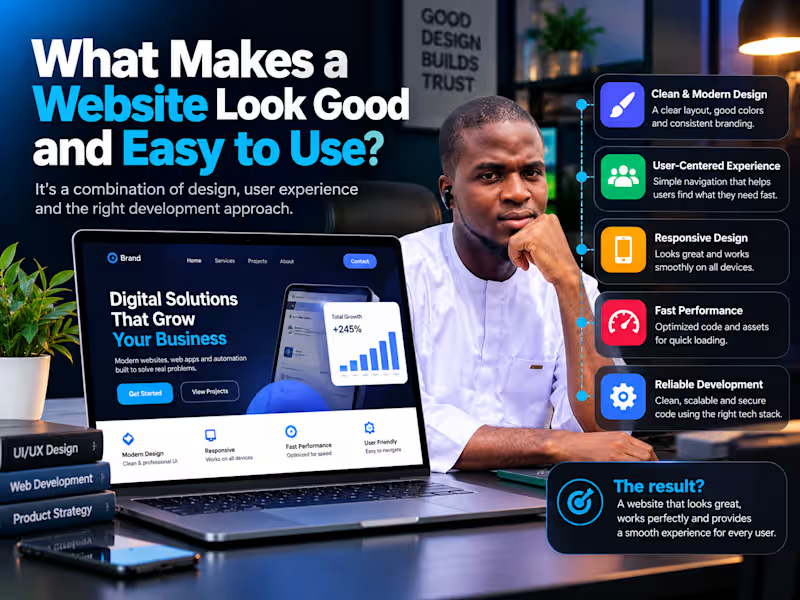
📍 Clear Navigation — Visitors should know where to go without guessing.
📱 Responsive Design — The experience should adapt smoothly to mobile, tablet, and desktop.
⚡ Simple User Flow — Important information and actions should be easy to find.
🎨 Consistent UI — Typography, spacing, buttons, and layouts should work together.
🧭 User-Centered UX — Design decisions should make the website easier to understand and use.
Think about someone opening your website on their phone while on the move. They shouldn't have to zoom in, search endlessly, or struggle with tiny buttons.
The best website experience isn't the one that makes users think about the design. It's the one that makes it easy for them to get things done.
My development mindset:
Understand → Structure → Design → Build → Test on Mobile → Refine → Launch.
A website should not only look professional. It should feel effortless to use.
What makes you leave a website immediately: confusing navigation, slow loading, or poor mobile design? 👇
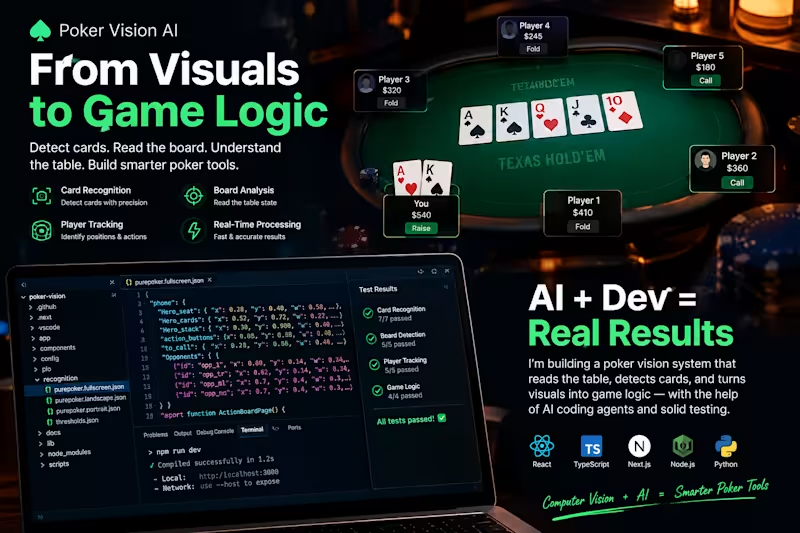
#WebDevelopment #UIUXDesign #ResponsiveDesign #MobileFirst #FrontendDevelopment #WebsiteDesign #UserExperience #BuildInPublic #SoftwareDevelopment I’m not just building a poker UI. I’m building a system that can understand the table.
This project started with a simple idea:
Can software look at a poker table and turn what it sees into structured game logic?
The deeper I get into it, the more interesting the engineering becomes.
The system has to deal with things like:
→ Card recognition — identifying cards from the screen
→ Board detection — understanding the current board state
→ Player positioning — determining where players are located
→ Action recognition — interpreting Fold, Call, and Raise
→ OCR — extracting information from visual elements
→ Coordinate mapping — knowing where important elements exist on different layouts
→ Game-state logic — turning all that visual information into something the application can actually understand
And this is where AI-assisted development becomes powerful.
I can use an AI coding agent to help investigate the codebase, implement changes, run tests, and work through bugs.
But the outcome still depends on how I design the logic, test the edge cases, and verify what the system is actually seeing.
The goal isn't:
“Make AI write a poker application.”
The goal is:
“Build a system that can reliably understand what is happening on the table.”
That's a completely different engineering problem.
Right now I'm focused on making the recognition and game-state pipeline more reliable because one incorrect card, coordinate, or player action can affect everything that comes after it.
Computer vision + AI + software engineering = some seriously interesting problems. 🧠🔥
What would you build with this kind of technology if you had reliable real-time visual recognition?