The network for creativity
Join 1.25M professional creatives like you
Connect with clients, get discovered, and run your business 100% commission-free
Creatives on Contra have earned over $150M and we are just getting started
Back to feedPost

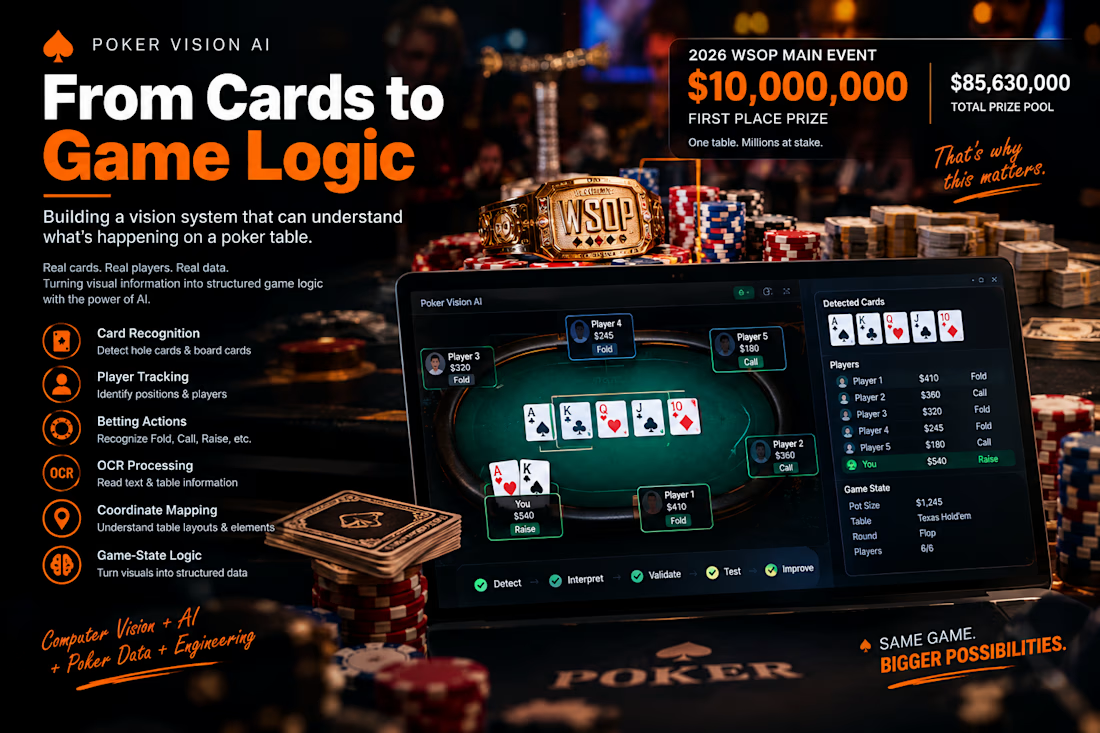
$10,000,000 was sitting at the top of the 2026 WSOP Main Event.
That number is one of the reasons I became interested in building this.
Poker isn't just cards on a screen.
At the highest level, millions of dollars can depend on thousands of individual decisions.
So I'm building something around a question that I find technically fascinating:
Can software understand what is happening on a poker table from visual data?
That's what I'm working on with my Poker Vision project.
The system is being designed to recognize and structure information such as:
→ 🃏 Hole cards
→ 🎴 Board cards
→ 👤 Player positions
→ 💰 Betting actions
→ 🔎 OCR information
→ 📍 Table coordinates
→ 🧠 Game-state changes
Then the challenge becomes turning all of that raw visual information into reliable structured data that another part of the application can understand.
And that's where the engineering gets serious.
A single recognition mistake can completely change the state of the game.
So I'm not interested in building something that simply looks intelligent.
I want to build something that can:
Detect → Interpret → Validate → Test → Learn from errors → Improve.
One important boundary: I'm building this as a research/analysis and development project, not a real-time system that tells someone what action to take during live-money play. Major poker platforms prohibit real-time assistance that influences decisions during play. PokerStars
The bigger idea is what excites me:
Computer vision + AI + poker data + software engineering.
When the stakes can reach millions, even a small technical problem becomes an interesting engineering problem.
And that's exactly the kind of problem I enjoy building. 🔥
If you were building this system, what would you tackle first: card recognition, player tracking, OCR, or game-state detection?


The network for creativity
Join 1.25M professional creatives like you
Connect with clients, get discovered, and run your business 100% commission-free
Creatives on Contra have earned over $150M and we are just getting started






Related posts

Who noticed the hidden detail in OpenHotels? 👀
OpenHotels is a hotel hospitality booking platform featuring AI-powered automated chat and voice-call bookings. But there's a little design detail I added that you might have missed!
The platform dynamically adapts its hotel imagery to your local timezone and time of day, making the visuals blend naturally with your environment.
🌅 A — Day Mode: Displays daytime hotel images between 6:00 AM and 6:00 PM.
🌙 B — Night Mode: Displays nighttime hotel images between 6:00 PM and 6:00 AM.
It's a small detail, but these are the kinds of thoughtful design decisions that make a digital experience feel more natural and immersive.
Did you notice it? What do you think of this little touch?
Which mode do you prefer?
4 voted
57%
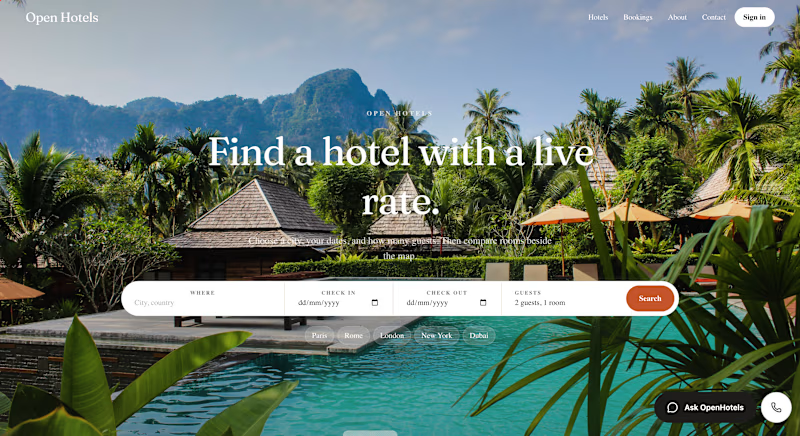
3 voted
43%
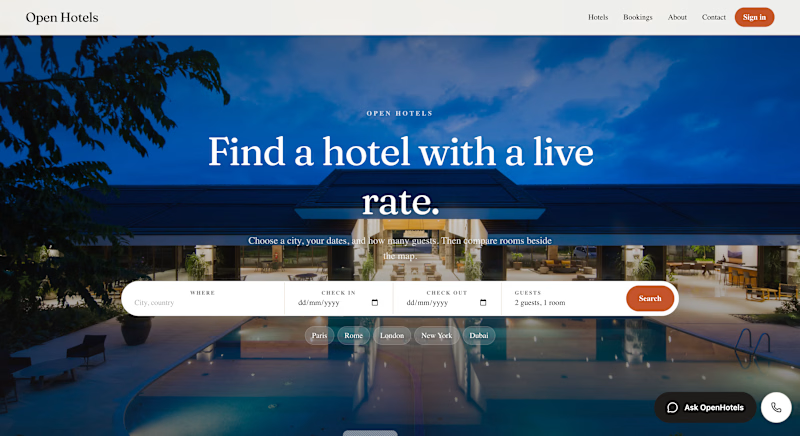
7 votes
Closed

Night mode 🔥

Maya is a client who has been running a one chair nail studio in Toronto. Her problem had always been managing her customers and she needed us to automate that for her to the extent, that customers keep booking and rescheduling on their own without her losing any revenue. So that’s exactly what we did!


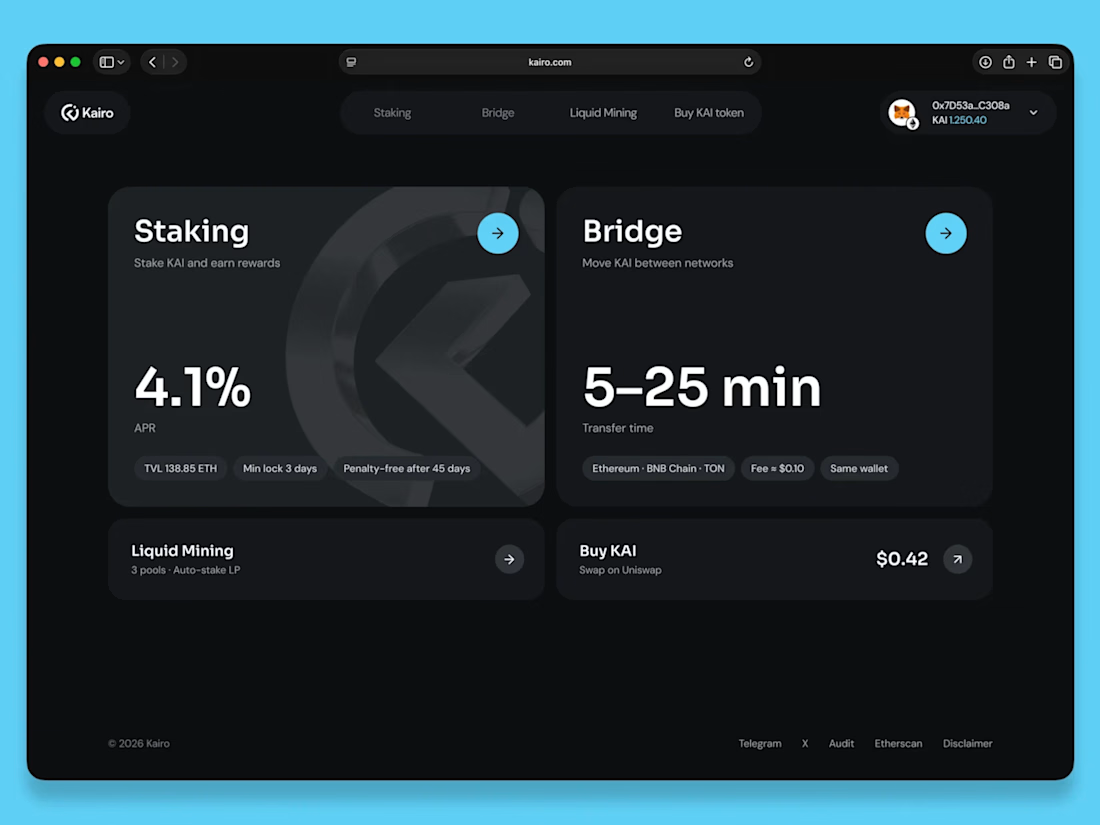
Designed a DeFi app for staking, bridging and providing liquidity, making penalties, fees and arrival times clear across desktop and mobile.