Projects using TypeScript in LondonProjects using TypeScript in LondonI built a working AI recruitment screening demo that shows how a hiring team can use AI without handing over the final decision.
The flow is simple:
A job spec goes in.
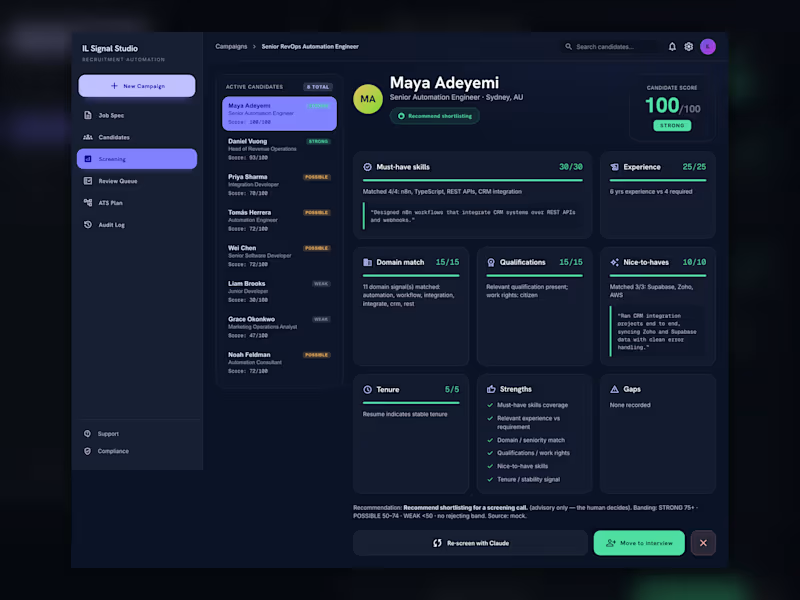
Candidate profiles are screened against a weighted guideline.
Each candidate gets a score, band, evidence quotes, and risk flags.
Then everything stops at a human review queue.
No auto-rejects. No silent ATS updates. No “AI decided this person is out”.
The system includes:
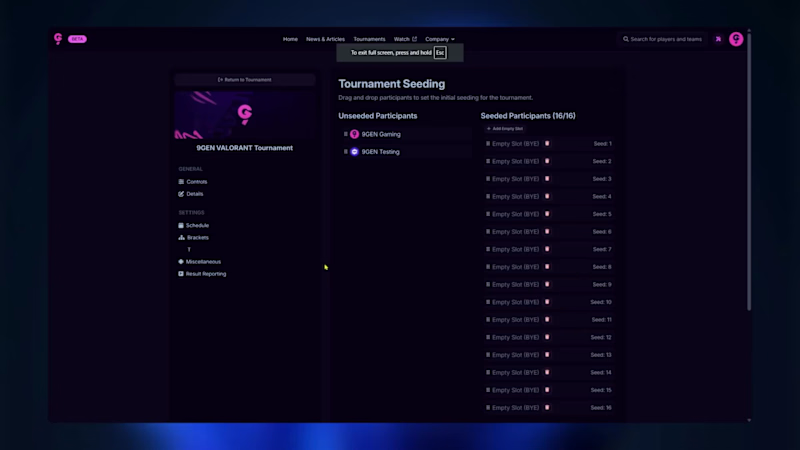
Candidate pipeline table
Evidence-based screening view
Human review queue
Approve / reject / snooze decisions
ATS deployment plan
Audit log for compliance
n8n workflow export with a human-in-the-loop Wait node
Optional live Claude screening path
The important part is the architecture: deterministic logic owns the workflow, gating, state and audit trail. The AI helps with judgement and screening, but the human owns the final decision.
Built with Next.js, TypeScript, Claude API, n8n workflow architecture, and a gated ATS sync pattern.
This is the kind of system I like building: AI that makes the work faster, but still respects the places where people need control.
Shorter Version
I built an AI recruitment screening pipeline with a human approval gate.
It screens candidates against a rubric, shows evidence quotes and risk flags, then routes every candidate into a review queue before anything reaches the ATS.
No auto-rejects. No silent updates. Human-in-the-loop by design.
Built with Next.js, TypeScript, Claude API and n8n workflow architecture. Hunter
Automate anything with a UI · structured actions at scale against no-API platforms
Half the platforms that matter to a business have no public API. Indeed, LinkedIn, Companies House, supplier portals, council planning sites, competitor dashboards. The data is right there on the screen, the action you need to take is a click away, but you can't get to it programmatically without scraping, and scraping breaks every time the platform updates.
Hunter solves that, properly.
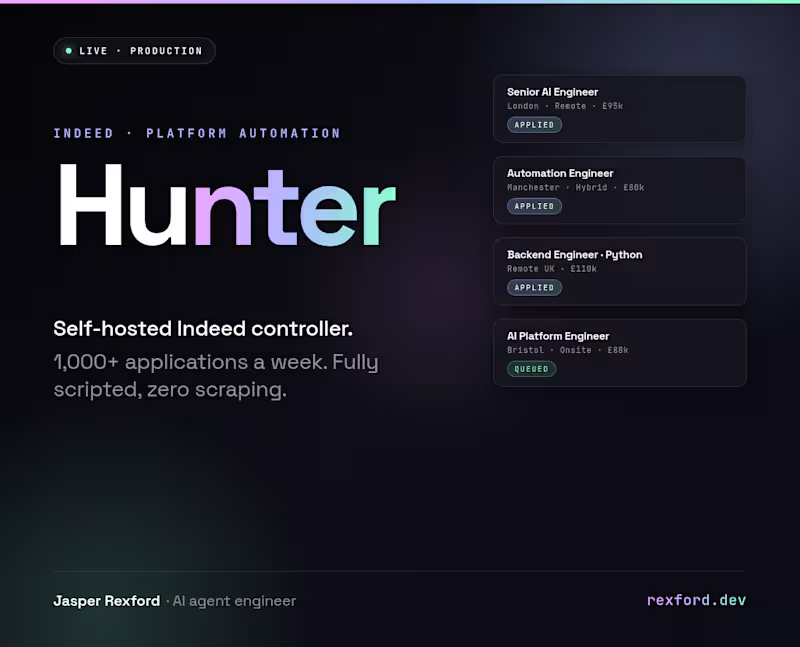
It drives the real browser against the real API behind the UI, using the real session cookies. Same calls the platform's own frontend makes. Drift-resistant by construction. Built originally as a self-hosted Indeed controller running 1,000+ applications a week, the same pattern is live against LinkedIn and Contra, and works against any platform with a JS frontend and a backend API.
What you get
Programmatic access to any web product, including ones with no public API
Drift detection that alerts you before changes upstream break the flow
A pipeline rather than a spreadsheet: every action tracked, retried, audited
Native rate limiting and session handling so the platform doesn't notice
A general capability layer rather than a one-off scraper
Who it's for
Recruitment teams sourcing or applying at scale. Lead-gen teams hitting platforms that won't sell API access. Compliance, planning, or research teams pulling from government and corporate portals. Any operation where "we'd love to automate X but the vendor doesn't support it" is the blocker.
What it replaces
A team of VAs clicking through portals, a brittle scraper that breaks every fortnight, or a project that never got started because "there's no API." Hunter ships the capability and survives the platform's next UI change.
Production reality
The Indeed deployment runs 1,000+ structured applications a week with cover letters generated per posting. Same controller pattern is live against LinkedIn and Contra in parallel. Drift on the backend is detected at the schema layer, not the rendered HTML, so a Contra UI redesign doesn't break the integration.