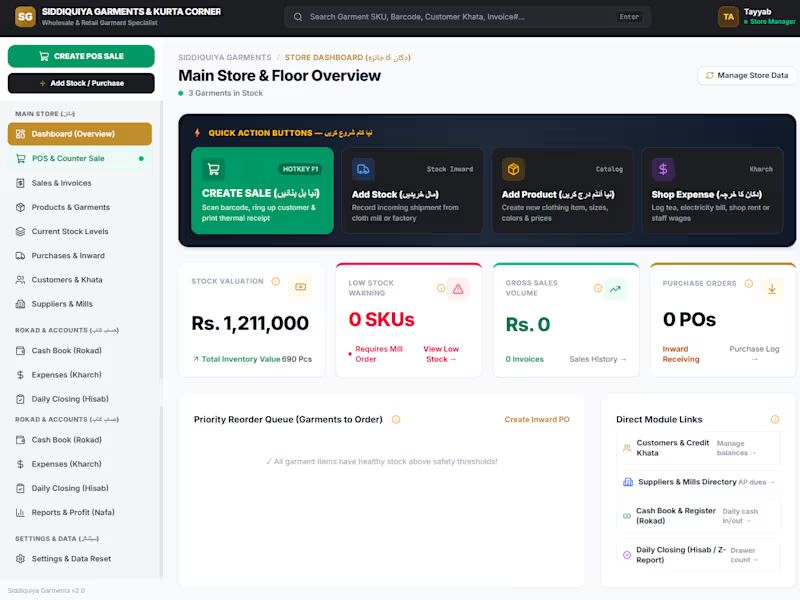
Projects using Stitch in LahoreProjects using Stitch in LahoreSmall garment shops in Pakistan usually run on paper registers and memory. I built a complete inventory and point-of-sale system for a wholesale and retail garment shop that replaces that with one dashboard, in English and Urdu.
Sales: a POS screen where staff scan a barcode, sell to a customer and print a thermal receipt. F1 opens a new sale.
Stock in and out: incoming shipments from mills and factories update stock automatically, and each sale reduces it. Every item has a minimum level. When stock falls below it, the item shows up in a reorder queue, so the owner knows what to order before it runs out.
Products: each item has a barcode, supplier, category, fabric notes, image, cost price and retail price. The system calculates gross margin as you enter prices. Products can be bulk-imported or exported from a spreadsheet template.
The shop’s accounts: customer credit ledgers (khata), supplier dues, a daily cash book (rokad), shop expenses (kharch such as rent, wages and electricity), a daily closing report (hisab), and profit reports (nafa). Labels are in both Urdu and English, so staff use it in the language they already work in.
A bilingual (Urdu/English) inventory and POS system for a garment shop, with barcode sales, stock tracking, low-stock alerts, customer credit ledgers and daily accounts.
Aura — Spatial Soundscape Generator Built with Google Stitch
Aura is a spatial soundscape generator built with Google Stitch for the theme “Build interfaces that feel alive.”
Stitch Project Link: https://stitch.withgoogle.com/projects/18244428936012560793?pli=1
Live Deployment Link: AURA
(https://aura-studio-193182769983.asia-southeast1.run.app/#workflow)Most ambient sound apps rely on static lists, sliders, and presets. I wanted to take a different direction and make sound feel physical, visual, and interactive.
Aura turns each ambient sound into a living glass node inside an immersive canvas. Users drag sounds closer to the central Listener to increase intensity, move them through space to shape presence, and overlap nodes to create blended moods.
The idea behind Aura is simple:
🚀 You don’t adjust sound — you shape it.
👍 The project includes:
A polished landing page
A Begin Session flow into the core experience
A spatial sound canvas
Draggable sound nodes for ambient audio
Real audio playback
Intensity changes based on distance from the Listener
Motion-rich glow, ripple, hover, and drag states
A premium visual style inspired by spatial audio and immersive interfaces
🙌 Google Stitch Usage
Google Stitch was the core part of my creative workflow.
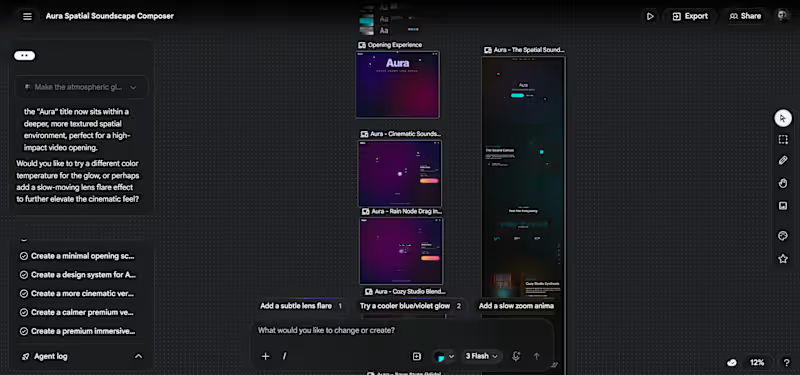
I used Stitch to generate the first version of Aura directly on the canvas, then refined the landing page, Aura Studio, glass sound nodes, motion states, hover states, ripple effects, and shader-style background through prompt-based and in-place edits.
After the design direction was created in Stitch, I continued directly into Google AI Studio to make the prototype functional, including the Begin Session navigation, draggable sound nodes, spatial audio behavior, and real sound playback.
🙌New Stitch Features Used
Streaming generations directly to the canvas
In-place AI edits using prompts and point-and-click interactions
Native motion, animation, shaders, and hover states on HTML canvas
Expanded builder workflow / handoff
(Continued from Stitch into Google AI Studio to make the prototype functional.)
💯 Feedback on Using Stitch
Stitch actually surprised me on many occasions, stitch helped me move quickly from an abstract idea into a polished product experience. The most useful part was being able to generate the interface, then refine specific parts of the design without starting over.
In-place edits were especially helpful for improving the glass sound nodes, motion behavior, and visual atmosphere of Aura Studio. Once I defined the core logic — distance equals intensity, movement shapes presence, and overlap creates blends — Stitch made it easier to turn the idea into a working visual experience.
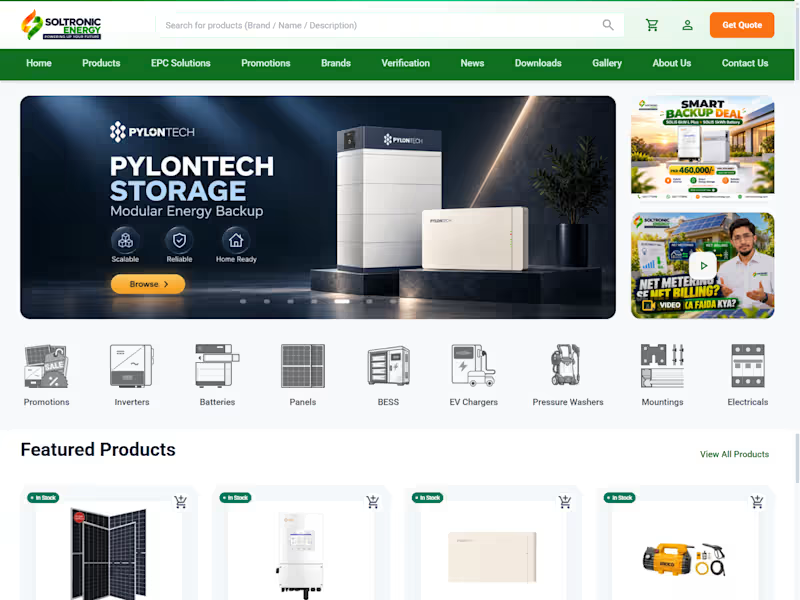
I designed and built the full website for Soltronic Energy Distribution, a solar company in Lahore. It’s an ecommerce store and a content management system in one, and the team runs it themselves without a developer.
For customers: a product catalog for solar panels, inverters, batteries, BESS, EV chargers and mounting hardware, with search, categories, cart, and quote requests. There are also pages for EPC services, promotions, brands, news, downloads and a project gallery. A verification page links each brand’s official serial-number and warranty portal, so buyers can check that their equipment is genuine.
Solar sizing estimator: visitors enter their monthly units or electricity bill and choose hybrid or on-grid. The tool recommends system size, panel count, battery storage and estimated yearly savings under Pakistan’s net billing rules. It then opens a WhatsApp message to the sales team with all the numbers filled in, so every lead arrives with context.
For the team: a full admin panel to add, edit and delete products, upload media, and manage homepage banners, promotions and ads, blog posts, news, events and site settings. Marketing changes go live without touching code.
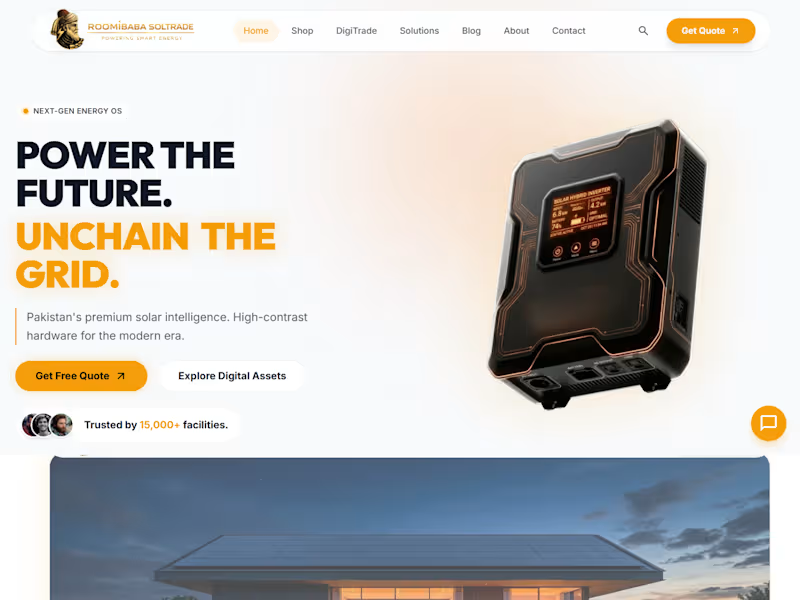
Stack: Next.js, TypeScript, Tailwind CSS, Supabase (database and media storage). I built this ecommerce website for my family’s solar energy business in Pakistan. It started as a catalog for solar hardware like inverters and panels. I then added a second line of digital products (DigiTrade), so the store now sells both physical and digital items.
Customers can browse the shop, search products, read blog articles, and request a free quote for solar systems. The quote button appears on every page because most solar buyers want a price before they order.
Behind the storefront is a full admin panel. The business owner can add and edit products, manage categories, and [update orders / handle quote requests, confirm which], without needing a developer.
I handled everything myself: design, frontend, backend, admin panel and deployment.
Stack: Node.js, React & Supabase