I wish I had it months ago.
(Launching Proult - Desktop App)
I spent 20 minutes looking for a Stripe credential.
I checked my notes.
My browser bookmarks.
Old chats.
Random text files.
Not because I forgot it.
Because I couldn't remember where I had saved it.
That's when I realized the most dangerous phrase in a developer's workflow isn't:
"I forgot."
It's:
"I've saved it somewhere."
As freelancers, students, developers, and builders, we constantly juggle multiple projects simultaneously.
And each project comes with its own ecosystem of information:
• Client details
• Credentials and passwords
• API keys and secrets
• Domains and hosting accounts
• GitHub repositories
• Deployment links
• Meeting notes
• Project requirements
• Time logs and deadlines
The problem isn't that we don't save this information.
The problem is that we save it everywhere.
-A Notepad file for credentials.
-A spreadsheet for clients.
-A project management tool for tasks.
-Bookmarks for links.
-Chat messages for "important" details.
And before long, finding information takes more time than using it.
After one too many "I know I saved this somewhere" moments,
I decided to build something for myself.
A single place where every project has its own secure workspace.
Not just for storing passwords, but for managing everything related to that project: clients, credentials, API keys, notes, services, links, statuses, and time tracking.
That's how "𝐏𝐫𝐨𝐮𝐥𝐭" started.
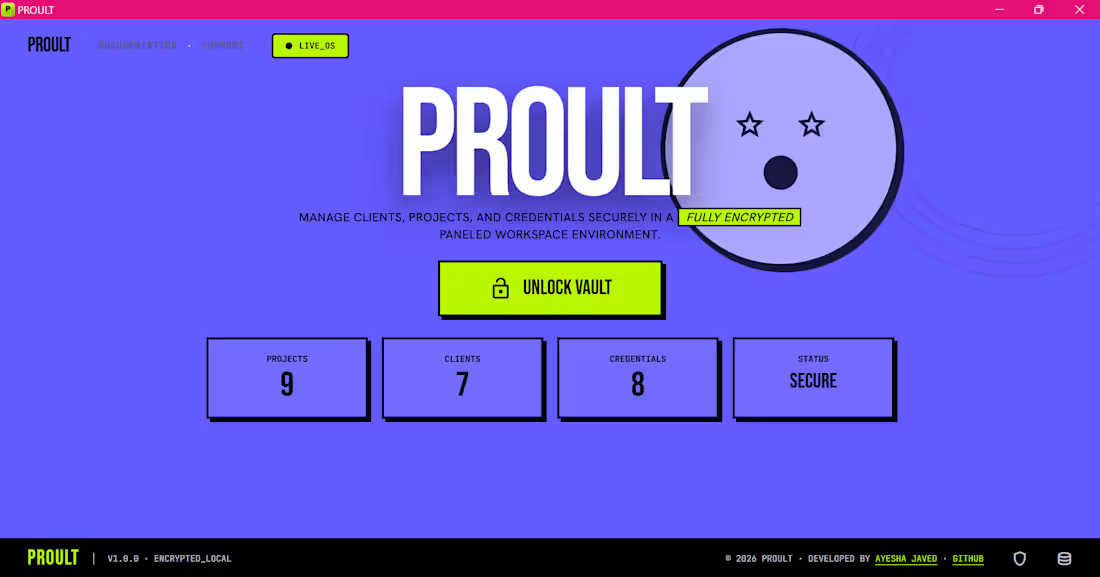
So over the last few days, I've been building Proult,
A local-first desktop application designed to keep everything related to a project in one place.
-AES-encrypted credentials, API keys, and secrets
-Project and client management
-Built-in time tracking
-Organization through project domains (Freelance, Personal, Organization, University)
-Global search across projects, clients, credentials, and services
-Full import/export support so your data always remains yours
-Pinned projects, tags, notes, deployment links, and service management
-Local-first architecture; no cloud dependency, everything stays under your control
Still polishing it, but building it has already improved my own workflow significantly.
Turns out, the best developer tools are often the ones built to solve your own frustrations first.
1
523
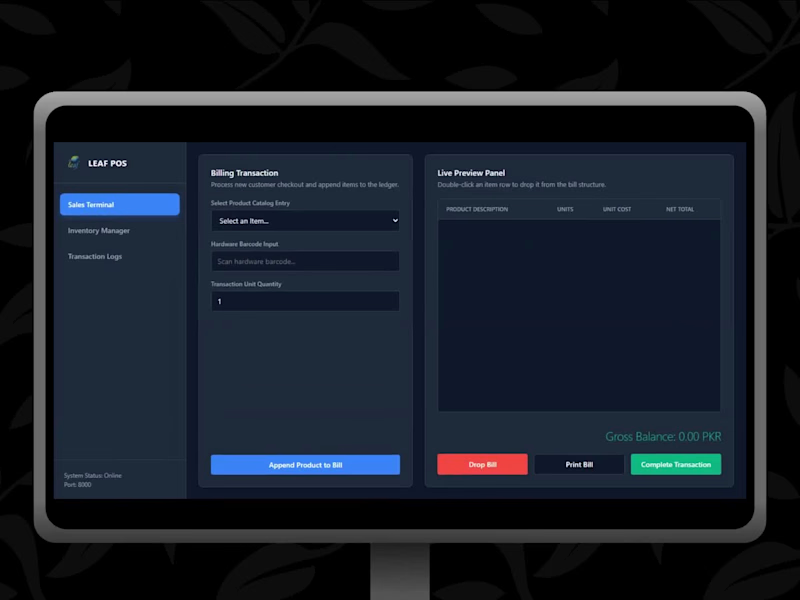
🚀 Take a look at our newly upgraded Enterprise POS architecture in action! We completely re-engineered this system, migrating from a Python CustomTkinter GUI to a lightning-fast Tauri front-end paired with a robust Python FastAPI backend.
🔄 The Architecture Upgrade: CustomTkinter to Tauri
Modern Web UI: We stripped away the rigid CustomTkinter framework and rebuilt the front-end using standard HTML, CSS, and vanilla JavaScript. This shift allows for pixel-perfect styling, fluid animations, and a much cleaner, responsive layout.
Decoupled FastAPI Backend: Instead of weaving the UI and database logic together, Python now acts as a standalone, high-performance API. The FastAPI backend handles all the heavy SQLite database operations, keeping the application incredibly snappy.
Seamless API Communication: The front-end and back-end now communicate flawlessly via local HTTP endpoints, allowing the UI to fetch live inventory and process checkouts asynchronously.
The Tauri Magic: Tauri wraps this entire modern web stack into a highly optimized, low-memory native desktop executable, automatically spawning the Python backend as a silent background sidecar process.
🛒 Live Sales Terminal: Watch how seamlessly the checkout flow operates. Users can quickly select products from a searchable catalog, append them to the live billing ledger, and instantly complete transactions with zero lag.
📦 Master Inventory Manager: Total control over stock is just a few clicks away. We showcase the live adjustment capabilities by selecting an item in the manual correction terminal, inputting an intervention magnitude of 55 units, and securely updating the database through a clean confirmation modal.
📊 Deep Analytics & Logs: Data drives decisions. The walkthrough highlights the comprehensive transaction ledger tracking real-time daily metrics—like total revenue, transaction counts, and top-selling products—alongside a detailed, modal-based Monthly Sales Summary.
⚡ This project proves that robust, localized SQLite databases and powerful Python backends can be perfectly paired with beautifully sleek, modern web-based user interfaces.
1
147
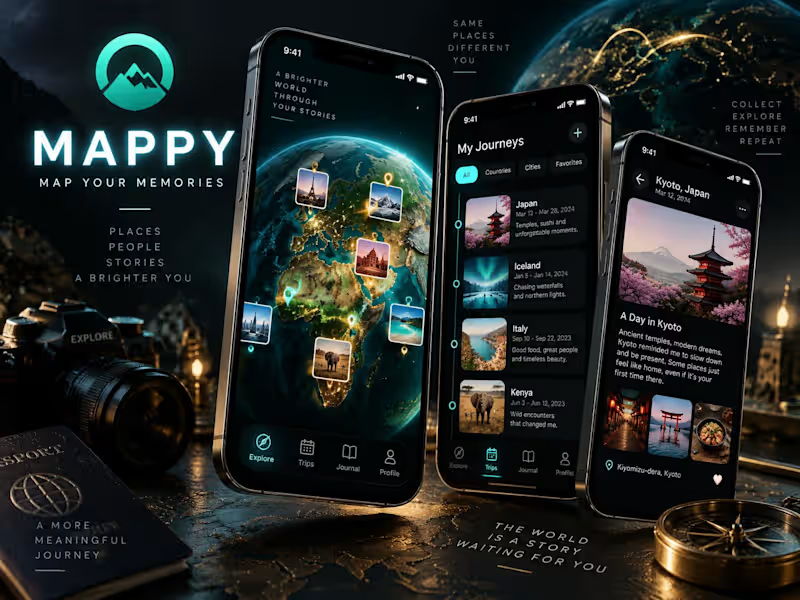
Introducing Mappy 🗺️ — An elegant visual travel journal and memory mapping mobile companion.
Memories are tied to places, but standard photo galleries are organized by dates, losing geographical context. Mappy was built to let travelers and explorers pin their life stories, photo moments, and notes directly onto an interactive world map.
Users can:
→ Pin photos, stories, and thoughts to precise GPS coordinates
→ Navigate an interactive 3D map with custom pin grouping and cluster zoom
→ Capture memories entirely offline with seamless cloud sync upon reconnect
→ Curate personalized trip timelines and revisit past travels geographically
→ Share private journey maps with friends and travel companions
Behind the Scenes:
Developed with React Native, TypeScript, and SQLite for an offline-first architecture. Utilized MapKit with custom cluster rendering for thousands of pins without frame drops. Implemented client-side image compression to ensure rapid cloud uploads while conserving cellular data.
A tranquil, personal digital diary praised by travelers for its clean, map-centric interface.
🔗 iOS App: https://apps.apple.com/pk/app/mappy-map-your-memories/id6749023763
#TravelApp #MobileApp #ReactNative #MapKit #OfflineFirst #iOSDev #SQLite #UIUX #ProductDesign #PhotoJournal
0
24
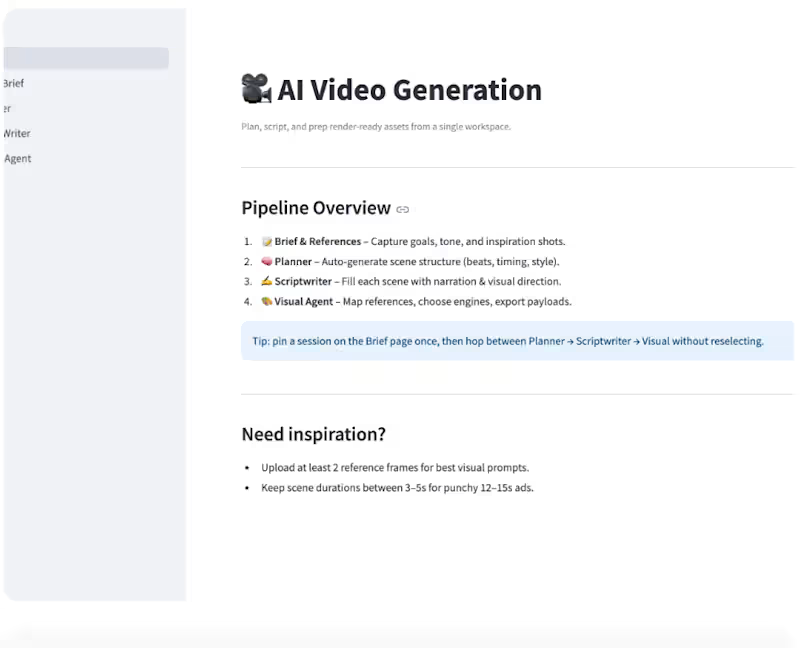
Problem:
Manual video production pipelines don’t scale and break when content length or structure changes.
What I Built:
An agentic workflow where LLMs:
Decompose a brief into structured scenes
Generate per-scene scripts, visuals, and metadata
Maintain consistency across scenes
Output machine-readable payloads for downstream video assembly
Why it matters:
Handles variable-length scripts (10–50+ scenes)
Designed for automation, not prompt hacking
Built for integration into larger systems
0
224

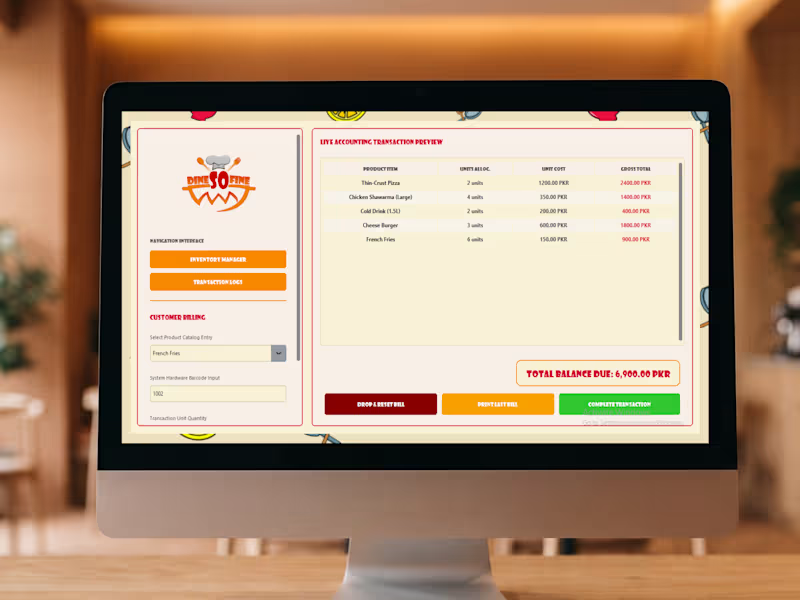
See how we brought the Dine So Fine visual identity straight into their daily operations! 🍔 For this project, we took our robust Enterprise POS architecture and completely reskinned it to match the vibrant, energetic brand we built for this fast-casual restaurant.
🖥️ The Custom UI: We stripped away the standard dark mode and injected the software with Dine So Fine's signature aesthetic. The interface now features a warm, inviting background, bright orange and red navigation buttons, and their custom food-illustration pattern subtly framing the workspace. The brand's chef-hat logo sits proudly at the top of the navigation interface, ensuring the software feels like a true extension of their restaurant.
🛒 Live Restaurant Billing: The screen highlights the live accounting transaction preview in action, effortlessly handling high-volume fast-food orders like pizzas, shawarmas, and burgers with real-time PKR calculations.
⚙️ Under the Hood: While it looks playful and completely bespoke on the outside, it runs on our lightning-fast, localized Python/SQLite architecture on the inside—guaranteeing they can process orders rapidly without ever worrying about internet outages.
This project is a showcase of Team Leaf's capabilities: marrying high-end brand identity design with heavy-duty software engineering to create a seamless, end-to-end business solution.
1
2
249