Projects using Facebook Pixel in Lagos
Projects using Facebook Pixel in Lagos
Sign Up
Post a job
Sign Up
Log In
Filters
2
Projects
People
Message
0
Ola Mike Esan
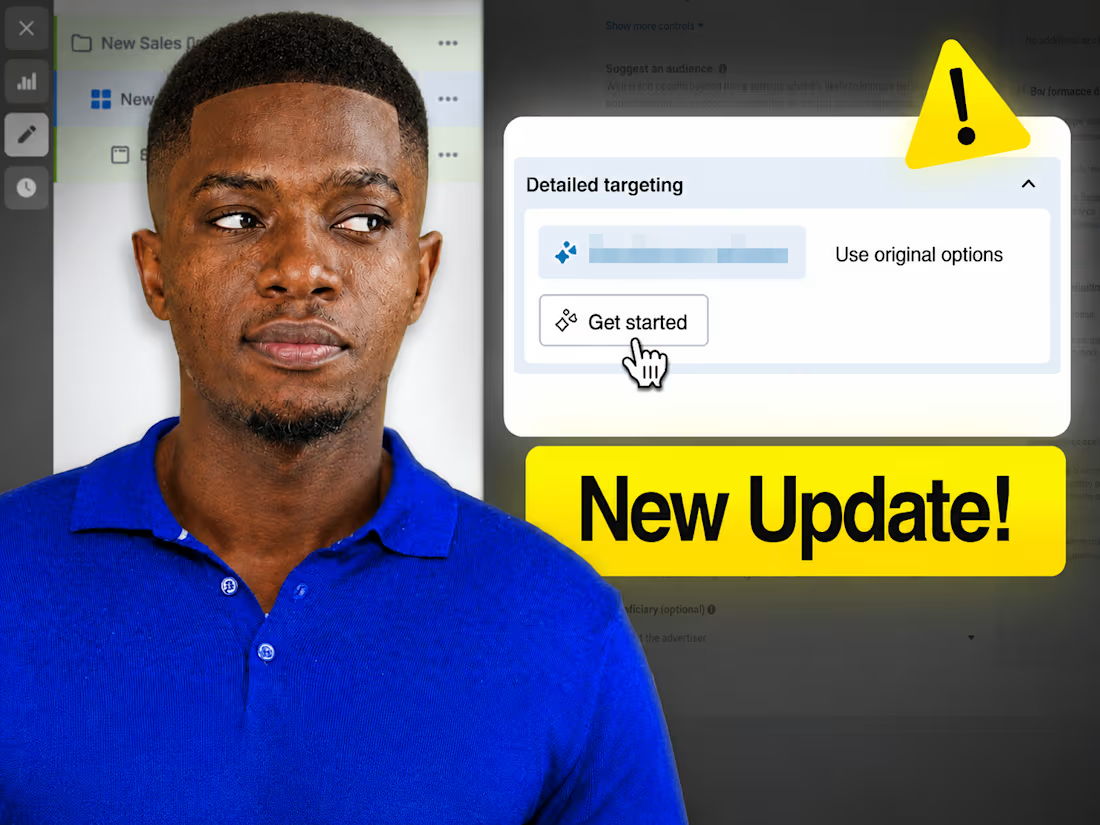
Facebook Ads Targeting Just Changed! Here's What It Means… Meta just quietly rolled out a new AI targeting feature, and I think it's more interesting for where it's heading than what it actually does right now. Let me break it down. Inside Ads Manager, at the ad set level under detailed targeting, some accounts now have a new option: "Describe your audience." Instead of manually scrolling through interest categories trying to guess the right ones, you literally write a description, up to 2,000 characters, of who your ideal customer is, and Meta's AI generates relevant detailed targeting suggestions based on that. For example: "small to medium business owners currently running their own Meta ads" or "in-house performance marketers running ads for large corporations." You paste that in, hit generate, and it spits out targeting categories that match. Full disclosure, when I tested this live, it was buggy and didn't generate anything. Worth flagging because new Meta features often roll out rough before they're stable. But I'd tested it earlier and it worked fine, and honestly the suggestions were solid, it even surfaced targeting options I didn't know existed, despite having run ads on my own business for years. Here's the honest take on where this stands right now: in its current form, it's mostly just a time-saver. It helps you find relevant categories faster and might unearth options you'd missed. But detailed targeting itself has become far less influential in how Meta actually decides who sees your ads compared to a few years ago, everything you select is treated more as a "suggestion" than a hard rule these days. But here's why I think this feature actually matters long-term: I'm confident this evolves into something bigger. Right now, your description gets translated into pre-existing categories. Eventually, I'd expect Meta to skip that translation step entirely and target directly off your description , letting you get incredibly specific instead of being boxed into broad existing categories. Think about the difference between "people interested in marketing" (a huge, vague category) versus "in-house performance marketers running Meta ads for large corporations" (a tiny, precise group that's exactly who you want). If Meta can eventually target that specifically, you could reach far fewer people, spend less overall, and get equal or better results, because you're not paying to reach anyone outside your actual audience. This would likely mean higher cost per impression for that hyper-specific audience (great for Meta's revenue), but potentially much stronger ROI for advertisers who know exactly who they're trying to reach. Worth keeping an eye on. If your account has this feature, it costs nothing to test it and see what it surfaces, even in its current limited form, it might reveal targeting options you've been missing. Follow along, I'll keep you updated as this rolls out further. 👀
0
144
Message
2
AJETOMOBI JAMIU EDDIE GARNER
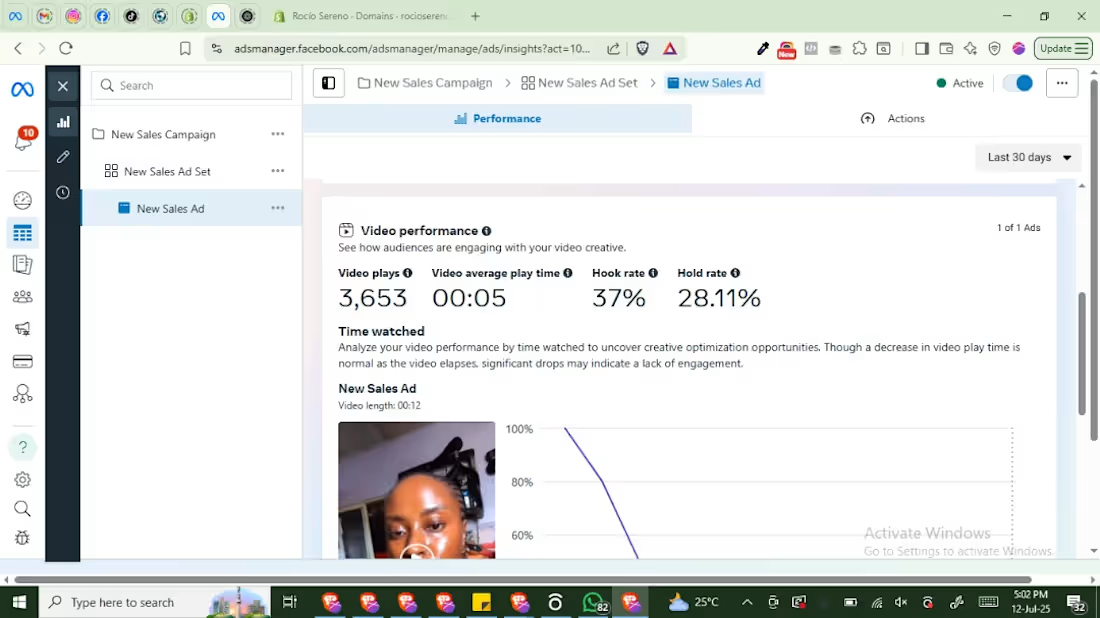
Digital Marketing Campaign for Rocío Sereno
2
15
Message
0
Funmilayo Adewale
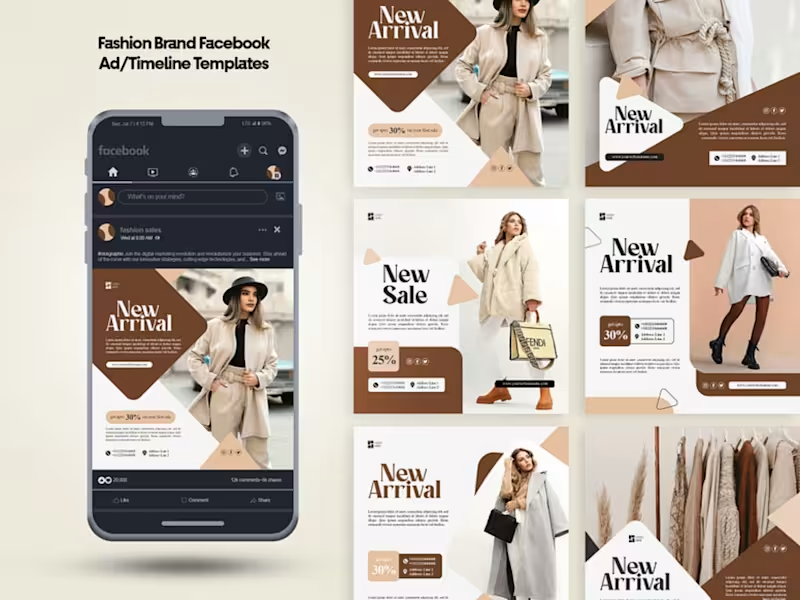
Facebook Ads Campaign for Fashion Brand
0
93
Message
0
Oluwatosin Adeyera
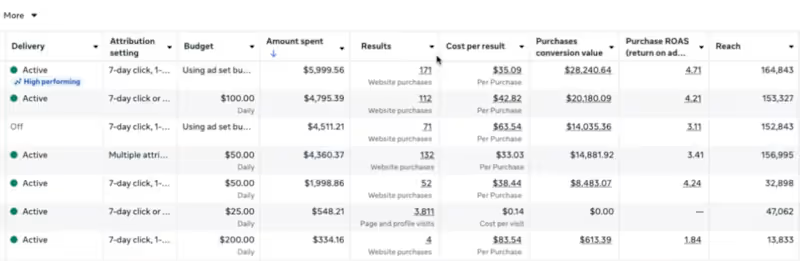
Scaled Fitness Equipment Sales with 4.7x ROAS
0
7
Message
0
Abdulhamid Taofik
facebook ads campaign
0
98
Message
0
HENRY AFOLABI
pro
Meta Ads Sales Result
0
345
Message
0
Azeez Wasiu
Get Facebook Ads Campaign Setup & Management | Meta Ads, FB Ads, Instagram Ads Done!!! Running Facebook ads without the right setup is like throwing money at Meta and hoping something sticks. I make sure that doesn't happen. I specialize in Facebook Ads, Meta Ads, and Instagram Ads building campaigns that are set up right from the first click, tracked properly, and optimized toward real results, not vanity metrics. What you get: I start with proper Facebook advertising foundations a clean Meta Ads Manager account, correct Facebook Pixel setup, and Conversions API tracking so every result you see is actually accurate. A lot of accounts I take over have this part broken, which quietly wastes ad spend for months without anyone noticing. From there, I build your facebook ad campaign around real audience data, custom audiences, lookalike audiences, and interest-based targeting depending on what fits your business. If you're running paid ads for lead generation, I structure the campaign so leads land somewhere you can actually follow up on them. If you're running ecommerce ads, I set up retargeting ads so people who almost bought come back and finish. Every campaign includes: Full facebook ads manager and meta ads manager setup Facebook pixel setup and conversion tracking configured correctly Audience research and targeting strategy tailored to your niche Ad copywriting and creative direction based on what converts for your specific market A/B testing structure so you know exactly which ad, audience, or angle is working Ongoing ad campaign management and optimization as data comes in Retargeting ads setup to recover warm leads and abandoned interest Why this works better than a generic setup: Anyone can turn on a campaign. What actually moves the needle is knowing which audience targeting to use, which conversion event to optimize for, and when to shift budget instead of just leaving it on autopilot. That's the part I focus on, not just launching ads, but managing them like they're spending my own money. Whether you need a single campaign built from scratch or a full paid social funnel across Facebook and Instagram, I'll tell you honestly what your business actually needs before we start, not just sell you the biggest package
0
108
Message
1
Jack Edward
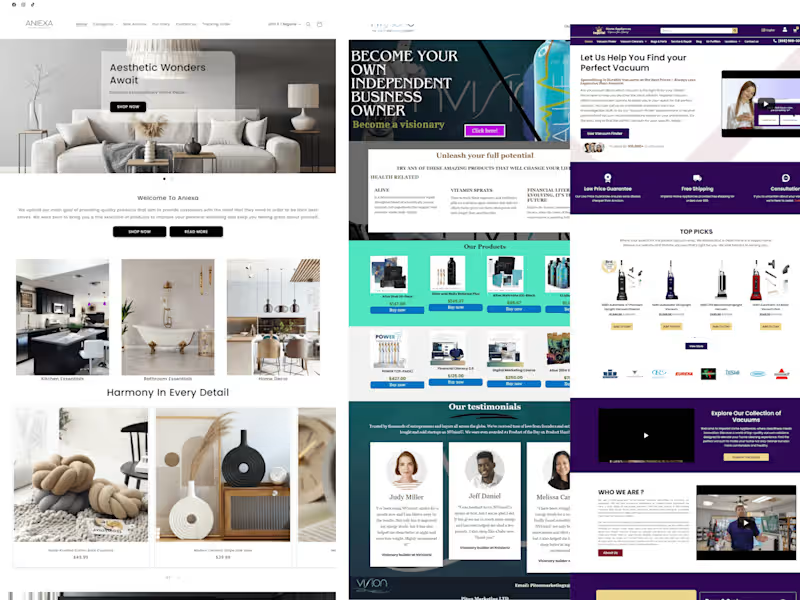
Shopify Store Design and Optimization
1
20
Message
1
Habiquell
Paid Ads
1
74
Message
0
Emmanuel Okpara
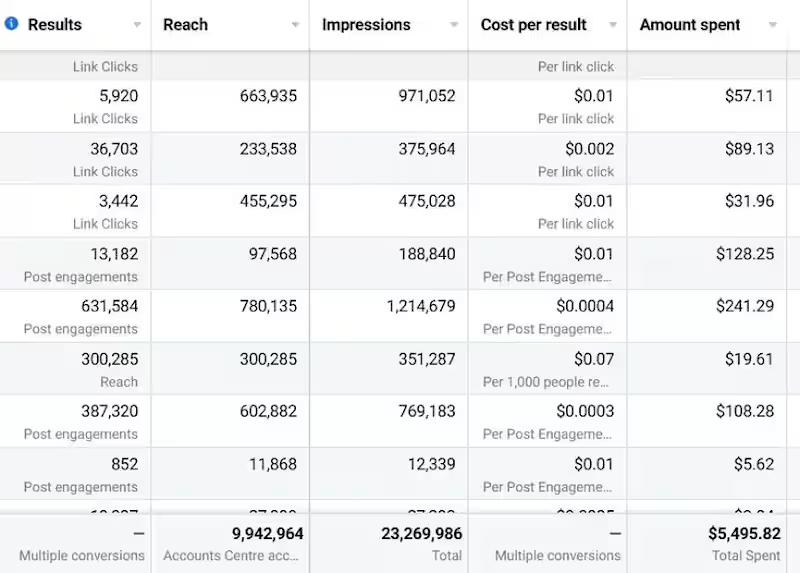
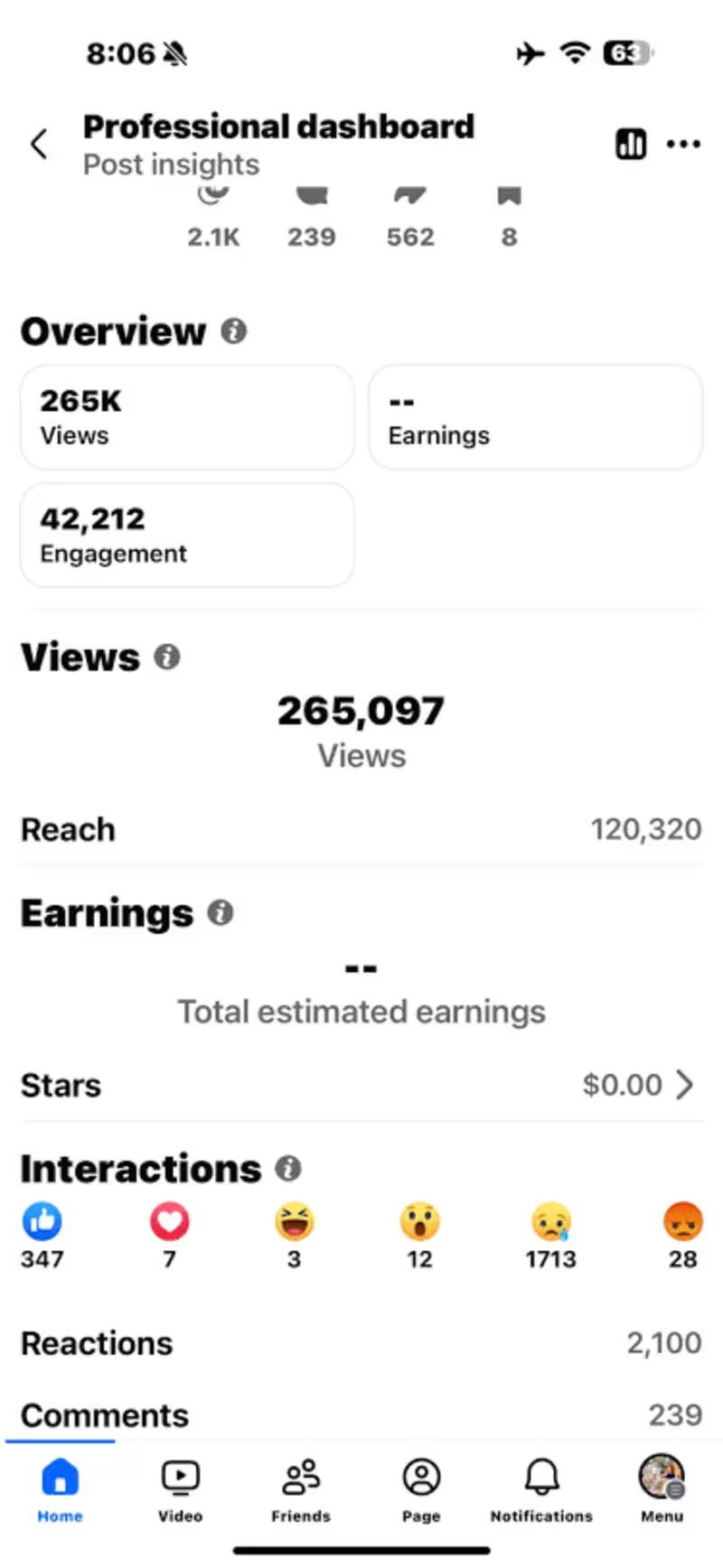
This is not theory—this is execution. Every result shown represents real campaigns managed, optimized, and scaled to generate significant revenue. From testing creatives to building high-converting funnels, the focus remains simple: results, ROI, and growth.
0
25
Message
0
Owolabi Kanyinsola
Get Professional Service from an expert like me
0
4
Message
0
Victor Abolore Fagbamila
Mobile App Design
0
36
Message
0
Daramola Olawale
Meta Mastery: A High Conversion Campaign
0
1
Message
1
Ola Mike Esan
Running Meta Ads is EASY Once You Understand This With everyone's feed getting flooded with obvious AI-generated content, there's one strategy that's actually working better than ever right now, and it's the exact opposite of AI slop: using real creators in your ads. Here's why this matters. Nobody's favorite creator is AI-generated. People trust real humans they already follow, not generic content. So instead of fighting that, you lean into it, you partner with creators who already have your audience's attention and trust, and you use that in your ads. The ad format for this is called Partnership Ads. It's when a creator's profile and your business's profile are both tied to the ad, so you're tapping directly into their audience, the people who are already primed to pay attention because it's coming from someone they follow. And the data backs this up hard: partnership ads see a 13% higher click-through rate and a 71% higher brand lift compared to regular ads. That's not a small bump, that's a meaningfully different result. Here's how to actually find the right creator and make this work: 1. Know your audience first, then match the creator to them Don't just pick whoever has the biggest following. Pick someone your specific target audience already follows and trusts for that topic. A creator can have millions of followers and still be the wrong fit if their audience doesn't overlap with your buyers. Relevance beats reach every time here. 2. Use the Creator Marketplace to shortcut the search It analyzes your business account and suggests relevant creators automatically. Start with the ones already actively doing partnership ads with other brands, they're more likely to respond, and if brands are already spending budget with them, there's a good chance it's working. 3. Send outreach through the platform, not cold DMs Generic "we'd love to work with you" messages get ignored, especially by bigger creators drowning in inbound. Messaging through the Creator Marketplace routes into a separate inbox that creators actually check for business inquiries, way better response rate. 4. Get usage rights, not just a post This is the part people skip. A creator posting once to their own audience gets you a short burst of visibility, most of the value disappears within 24 hours. But if you negotiate permission to run their content as paid ads, you can keep leveraging their trust and face for months, sometimes years. Often costs little to nothing extra to add this in. 5. Work with a few creators, not just one Results can vary creator to creator. Start with 2-4 rather than betting everything on a single partnership. Increases your odds that at least one significantly outperforms your standard ads. 6. Be specific about some things, flexible on others Be crystal clear on the call-to-action and the hook structure (ask for multiple different openings/hooks so you get more usable creative variations). But let the creator write their own script and delivery, they know how to talk to their own audience better than you do. Don't over-direct the creative itself. One more thing worth checking before you partner with anyone do your due diligence. Have they talked about your product category before? Was it positive? Any past controversy that could reflect on your brand? Worth a quick check before committing. Bottom line: in a feed full of obviously-AI content, a real trusted face recommending your product is one of the strongest scroll-stoppers left. Worth testing even with a modest budget. Follow along, more of these breakdowns coming. 👀
1
294
Message
0
Oluwatosin Adeyera
Generating Qualified Leads via Meta Ads
0
8
Message
0
HENRY AFOLABI
pro
Facebook Ads Sales Campaign Result
0
23
Explore projects