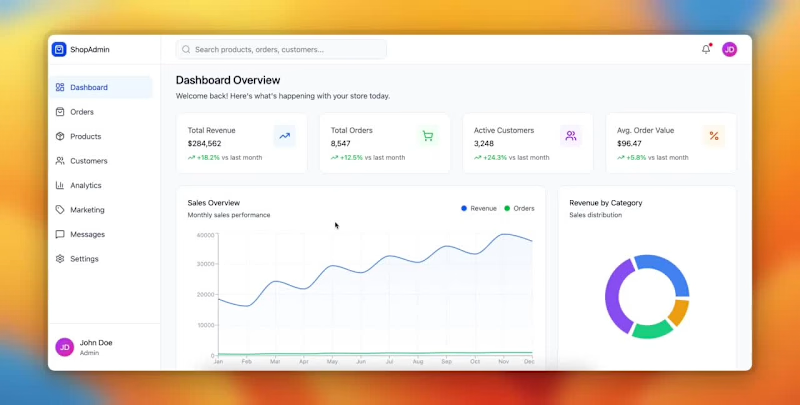
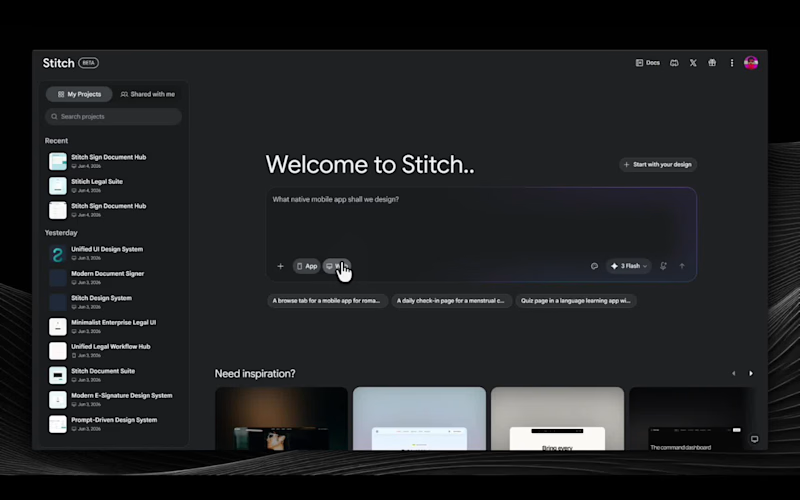
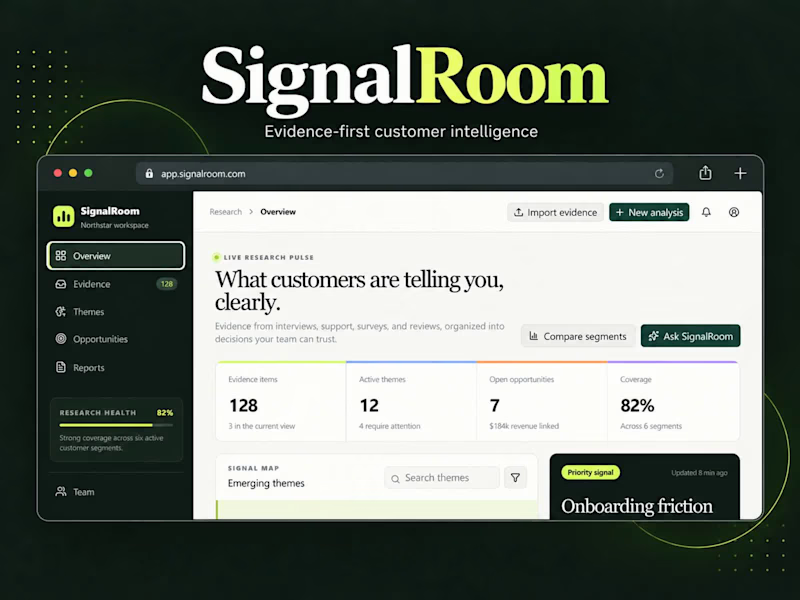
AI Development Projects in KarnatakaAI Development Projects in KarnatakaBuilt a full legal SaaS entirely in Google Stitch, including contracts, e-signatures, audit trails, Drive sync, and Gmail sync.
Live: google-stitch-project.vercel.app (http://google-stitch-project.vercel.app)
The biggest surprise was how well design.md (http://design.md) held the product together. Across 15+ screens, it kept the UI visually consistent without constant manual correction. Once that clicked, the model stopped drifting and the whole build became much more reliable.
Edits & Annotate was the feature that made the biggest difference in practice. Instead of regenerating entire screens, I could click into a component, describe the change, and keep moving without losing work or breaking the rest of the interface.
For deployment, the flow was simple:
Export -> Antigravity -> Vercel.
I gave it one prompt: “read all the files and give me a deploy plan.”
It understood the structure, interactions, and motion well enough that the site was live within minutes.
The most impressive part was the continuity from idea to production without switching contexts.
Live: google-stitch-project.vercel.app (http://google-stitch-project.vercel.app) CrawlX
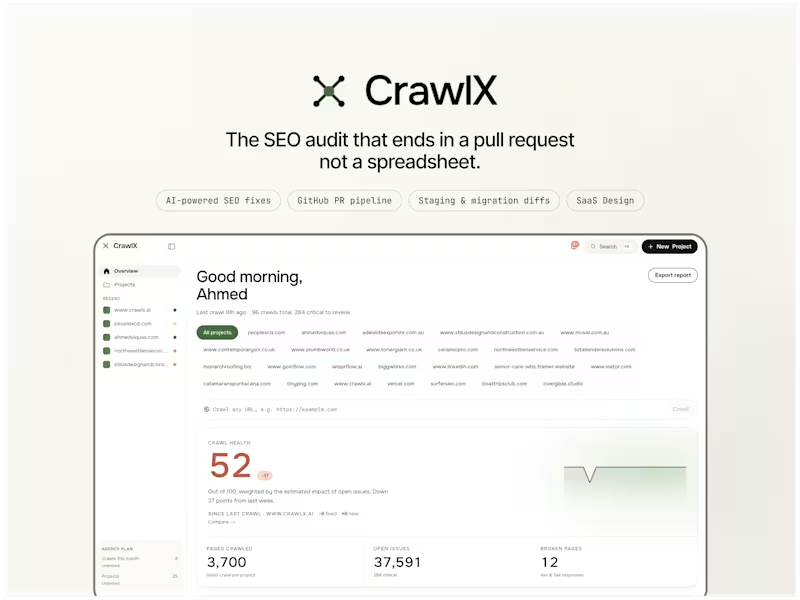
CrawlX crawls a website, surfaces its technical SEO problems, and explains each one in plain language with a suggested fix. Cloud-native, fast, and built for teams. I built it from a blank page: product, brand, and engineering.
The gap
The technical SEO crawler market is led by Screaming Frog, a desktop tool with a dated interface, no AI, and a one-person, one-machine model. No sharing, no assigning issues, no client portals.
At the other end, enterprise crawlers like Lumar are fast but cost $15k to $50k a year.
That left a clear gap: enterprise speed, a modern interface, AI built in, and pricing a small team can actually afford.
Positioning
Linear meets Datadog for SEO. A crawler that does not just hand you a list of errors. It tells you what each one means and how to fix it.
What I built
1. Product, engineering, and brand, end to end.
2. 400+ SEO checks across 12 analysis modules
3. An AI layer on the Claude API: plain-English explanations, auto-generated fix code, and a conversational assistant you can ask about your own crawl
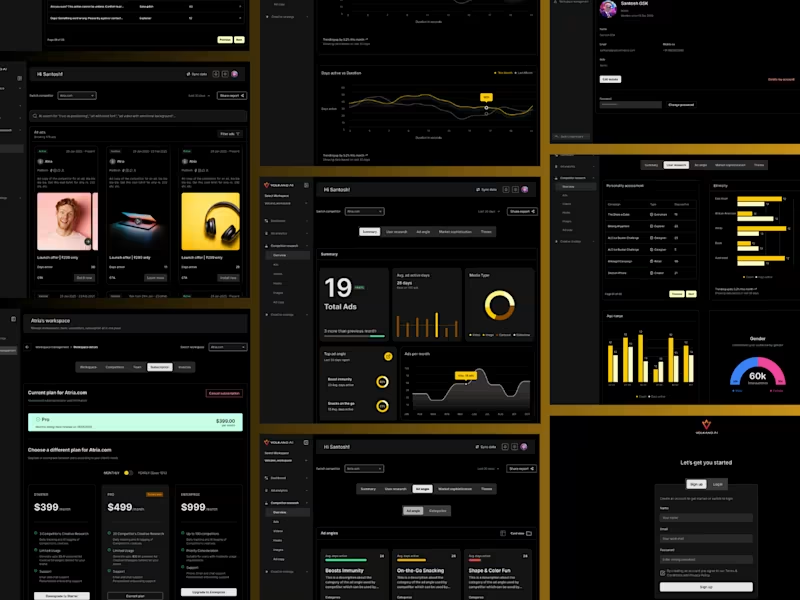
4. Six core screens, including a live crawl view, a Kanban issue explorer, a site-architecture visualizer, and a white-label report builder
5. An AI search-readiness module that checks whether pages are built for AI answer engines, a gap no competitor covers
6. Rust crawl workers hitting 350 to 450 URLs per second, matching enterprise tools, with ClickHouse handling billion-row crawl data
What makes it different
1. AI intelligence no legacy crawler offers: explanations, fix code, and a chat assistant, not static hints
2. Enterprise-class crawl speed at small-team pricing
3. Team-first: assign issues to developers, share client portals, comment in place, instead of one license per machine
4. Built into the pipeline: CI/CD on GitHub Actions and Vercel catches SEO regressions before they ship