Machine Learning Engineering Projects in Johar TownMachine Learning Engineering Projects in Johar TownLakeShield - AI-Powered Video Monitoring and Vessel Intelligence Platform
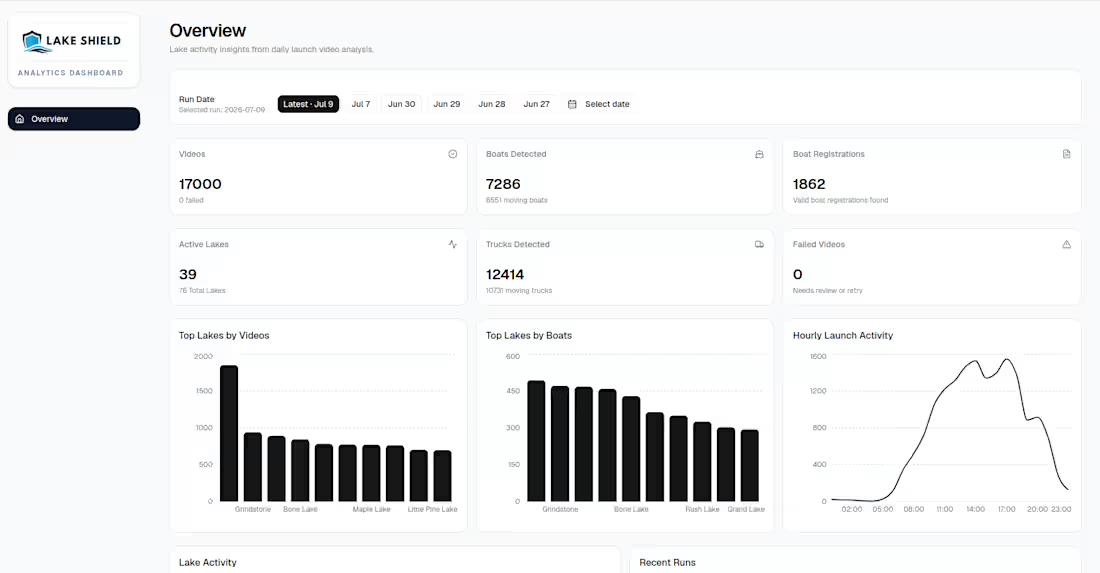
I led the development of LakeShield as the Senior AI/ML Engineer and Lead Developer, taking the platform from initial research and experimentation to a scalable production system.
My responsibilities included:
🔹 Designing the end-to-end AI and video-processing architecture
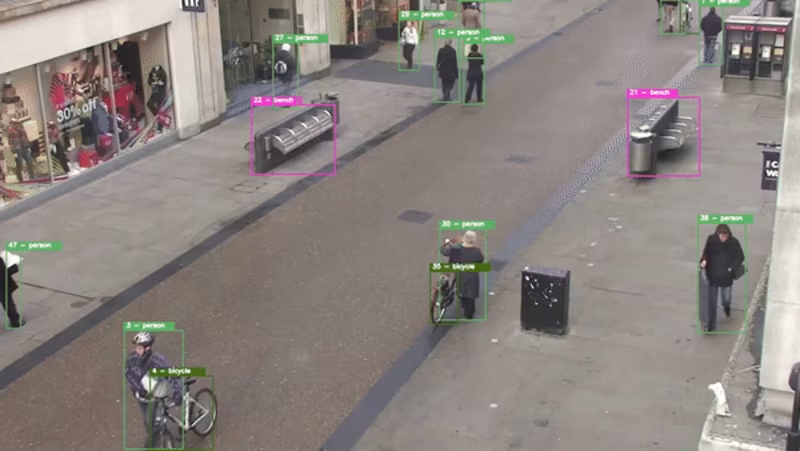
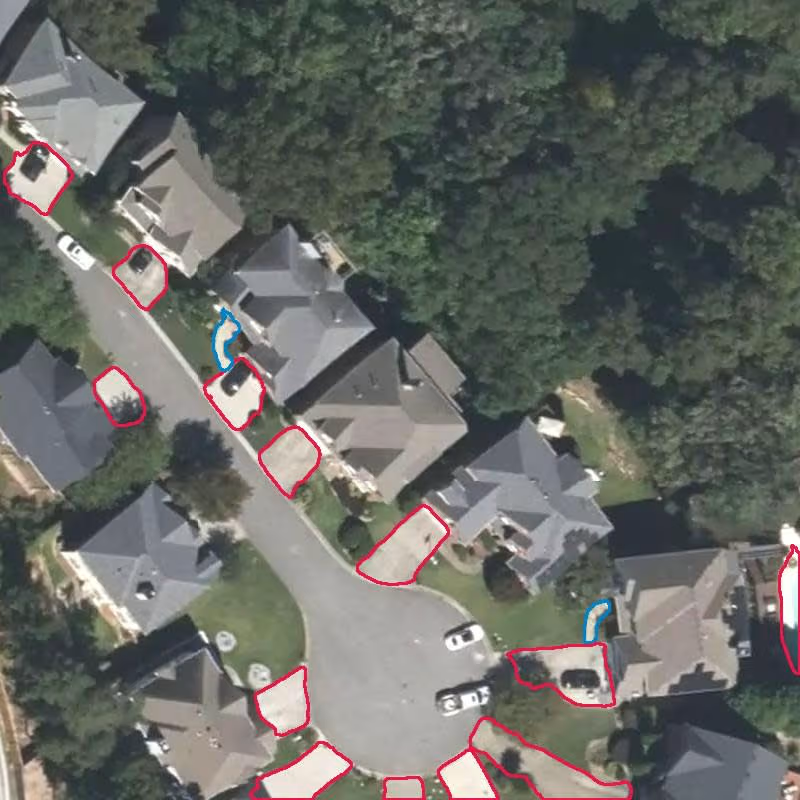
🔹 Building YOLO-based boat and vehicle detection pipelines
🔹 Developing object tracking and movement-analysis workflows
🔹 Implementing OCR for extracting boat registration information
🔹 Creating scalable pipelines for processing thousands of surveillance videos
🔹 Developing FastAPI backend services and automated data workflows
🔹 Building a Next.js analytics dashboard integrated with Supabase
🔹 Deploying and operating the AI pipeline on cloud GPU infrastructure
🔹 Optimizing model accuracy, inference speed, infrastructure costs, and reliability
🔹 Managing production monitoring, troubleshooting, maintenance, and continuous improvements
The platform transforms raw surveillance footage into structured operational insights, enabling automated vessel monitoring, vehicle activity analysis, registration extraction, and reporting.
This project involved complete technical ownership across Computer Vision, AI/ML, backend development, cloud infrastructure, data engineering, MLOps, and production operations.
#ComputerVision #VideoAnalytics #ArtificialIntelligence #ObjectDetection #OCR #MLOps #FastAPI #NextJS #Supabase #CloudEngineering Building an AI-Powered Platform for Conversations Across Languages
What happens when two people need to communicate but don’t speak the same language?
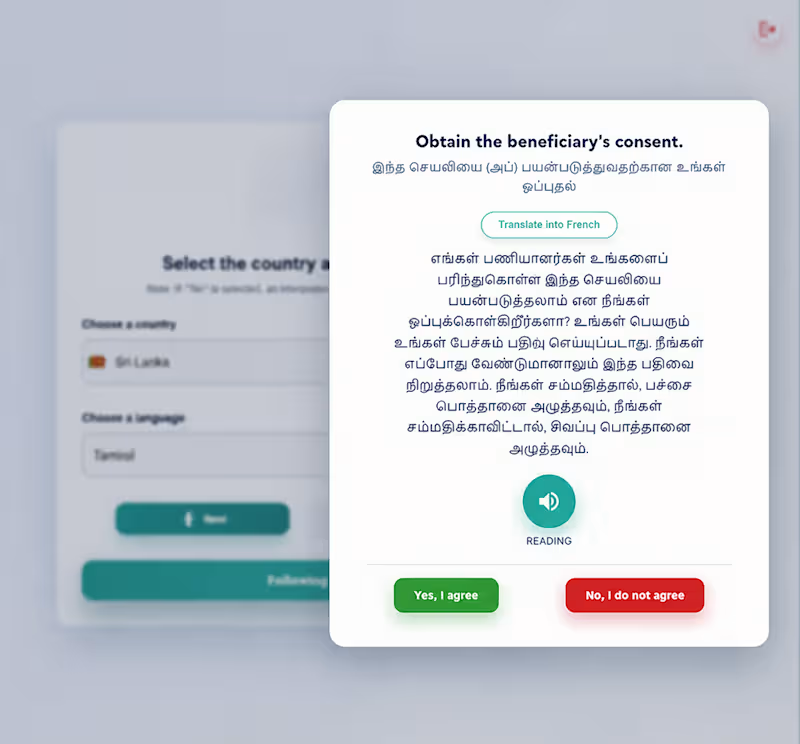
I am working on an AI-powered multilingual communication platform designed to make conversations easier across language barriers.
The platform allows a user to speak or type a message in their preferred language. It processes the input, translates the message, and returns the result as both readable text and generated audio.
When automated translation is not enough for a complex or sensitive conversation, the experience can also provide access to additional human language support.
My contribution focused on strengthening the technical foundation behind this experience, including:
Voice-to-text processing
Multilingual translation
Text-to-speech generation
Native-script transcription
Backend performance
Concurrent request handling
Web and mobile consistency
Testing and feedback workflows
One of the biggest challenges was ensuring that the product did more than simply list multiple languages as “supported.”
It also needed to:
Process different writing systems
Produce understandable native-script output
Maintain translation and transcription quality
Generate consistent audio responses
Handle multiple language-processing tasks efficiently
Provide a reliable experience across web and mobile devices
I approached the platform as a complete communication system rather than a collection of disconnected AI features.
Translation quality, speech processing, backend architecture, accessibility and human support all needed to work together to create a useful experience.
Over the next few weeks, I’ll share more about how I approached multilingual transcription quality, backend scalability and speech integration while protecting client confidentiality.
This case study contains recreated visuals and anonymized technical information. The client identity, product name, original interface, user information and proprietary workflows have been intentionally excluded.
What do you think is the biggest challenge when building a multilingual product: accuracy, response time or accessibility?