Freelancers using Node.js in Federal Capital Territory
Sign Up
Post a job
Sign Up
Log In
Filters
2
Projects
People
Ezra Adamu
Abuja, Nigeria
Full Stack Web Developer | n8n & AI Automation Engineer,PHP
$1k+
Earned
1x
Hired
5.0
Rating
91
Followers
Follow
Message
Full Stack Web Developer | n8n & AI Automation Engineer,PHP
1
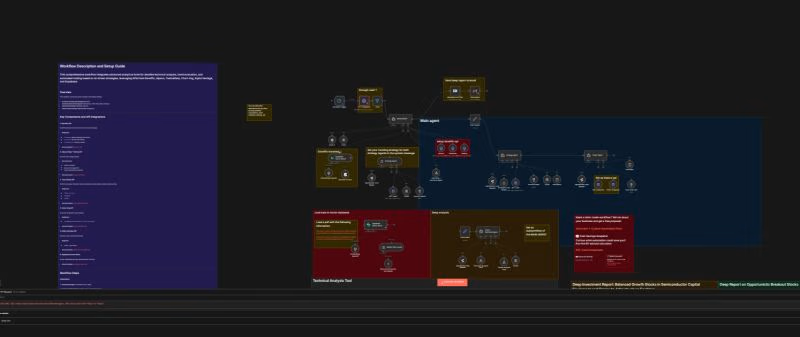
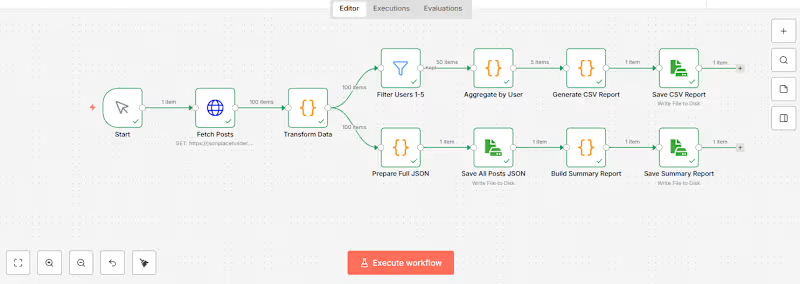
n8n Automated Workflow: Built a production-ready n8n automation workflow that fetches data from a REST API, transforms and processes 100+ items, then splits into two parallel pipelines. The upper branch filters records by user, aggregates data per user, generates a CSV report, and writes it to disk. The lower branch prepares a full JSON export, saves all posts, builds a summary report, and writes it to file. Demonstrates API integration, data transformation, conditional filtering, aggregation, and automated file-based reporting, all orchestrated in n8n with zero manual intervention.
1
195
1
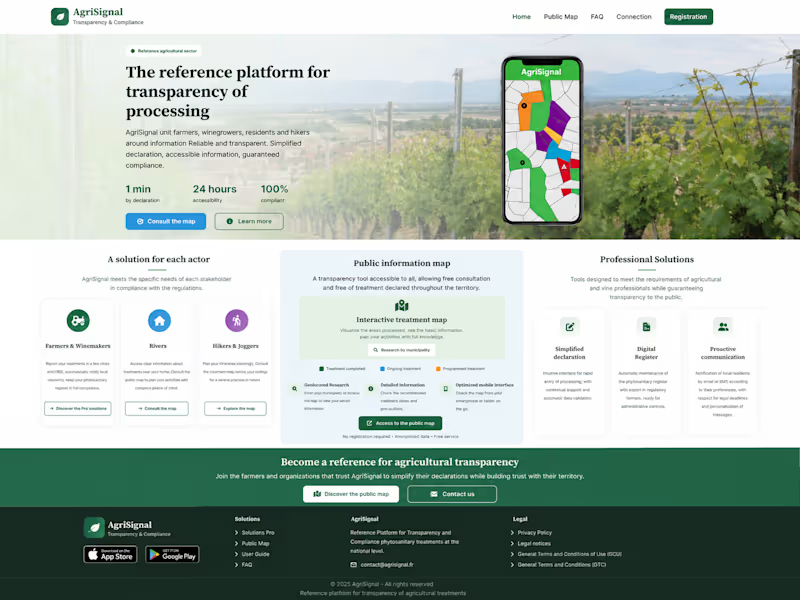
AgriSignal is a digital platform that helps farmers quickly declare crop treatments and automatically notify nearby residents. It ensures legal compliance, improves transparency, and replaces manual reporting with a fast, map-based system connecting farmers and communities. https://agrisignal.fr (https://agrisignal.fr/)
1
78
1
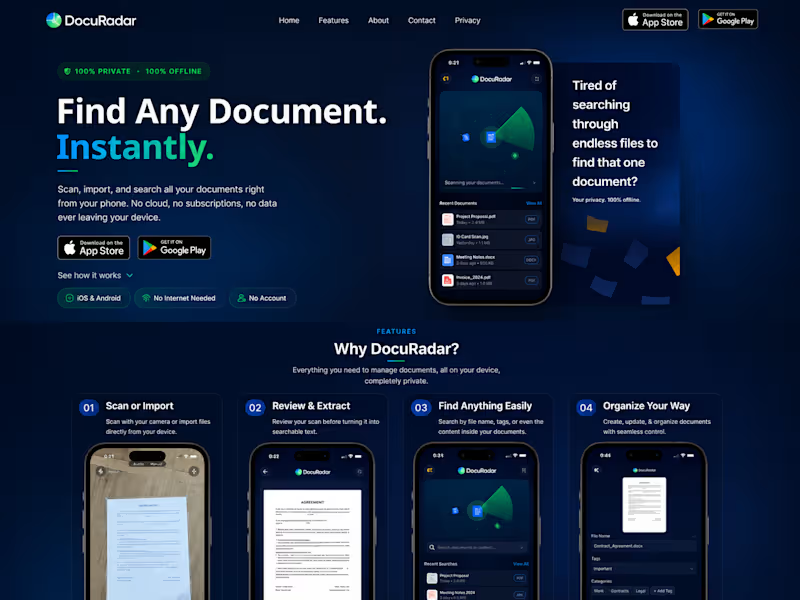
Scan, import, and search all your documents right from your phone. No cloud, no subscriptions, no data ever leaving your device. https://docuradar.com
1
72
3
I've set up automations for dozens of businesses. These three pay for themselves faster than anything else. And most companies are still doing them manually. 1. Speed-to-lead response. A potential customer fills out your form. What happens next? In most businesses: nothing. For hours. Sometimes days. The data sits in a form submission folder. Someone checks it 'when they get a chance.' By then, the lead has already talked to a competitor. 2. The invoice-to-cash pipeline. Most businesses send invoices manually. Then they forget to follow up and wonder why cash flow is tight. 3. The Monday morning report nobody has to build. Someone on your team spends Friday afternoon pulling numbers into a slide deck or spreadsheet. Every single week. Three automations. Maybe 2 weeks of setup total. Months of time saved every year.
1
3
213
Node.js
(1)
Follow
Message
Kezia Creative
Abuja, Nigeria
Replit App Design | Brands, Websites and Full-Stack Web Apps
New to Contra
Follow
Message
Replit App Design | Brands, Websites and Full-Stack Web Apps
4
Startup Networking Platform Development
4
8
4
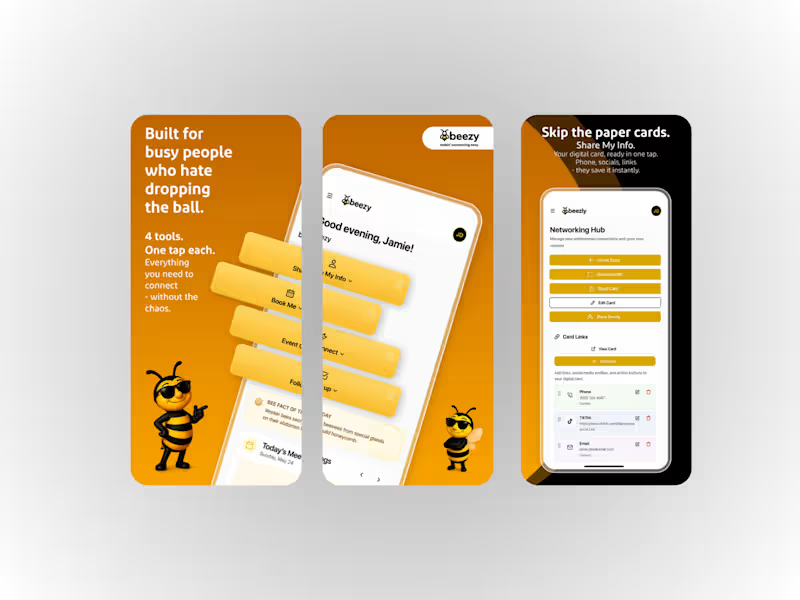
Beezy Mobile Scheduling App Development
4
9
4
TrustedRV Marketplace MVP Enhancement
4
7
4
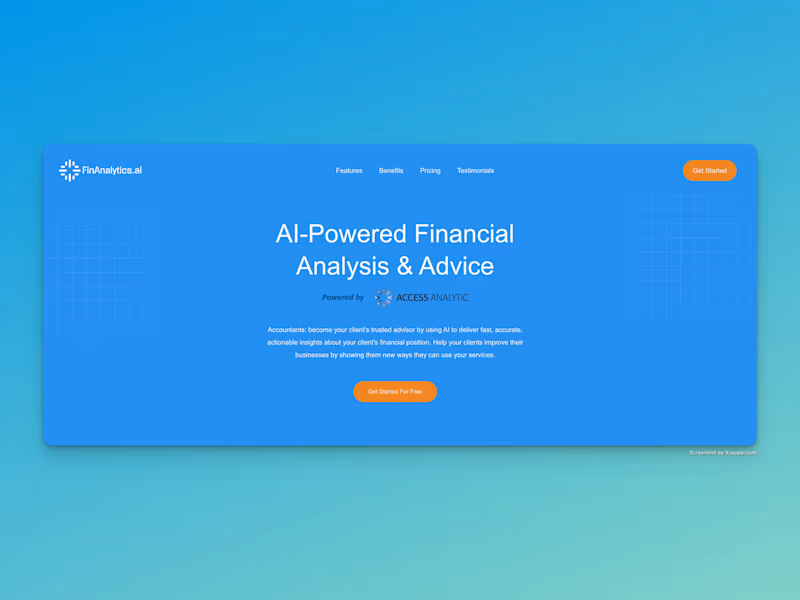
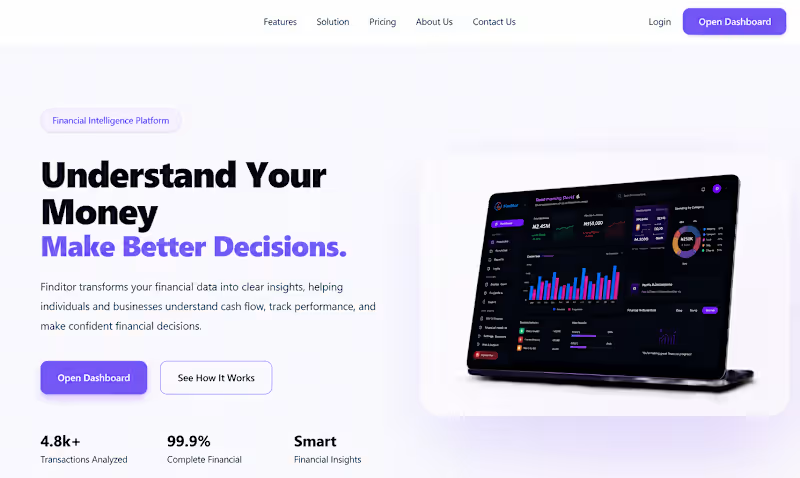
AI-Powered Financial Analysis Platform Development
4
8
Node.js
(1)
Follow
Message
Enoch Akhabue
Abuja, Nigeria
Full-Stack Engineer Delivering Secure and scalable Systems

Follow
Message
Full-Stack Engineer Delivering Secure and scalable Systems
0
Architected and delivered a semi-decentralized USDT β KRW trading platform, balancing centralized compliance controls with decentralized transparency to enable secure, real-world cryptoβfiat exchange in a regulated market. Co-designed a regulation-friendly transaction flow with product and compliance, enabling secure on-/off-ramp operations tailored to Korean financial regulations and reducing manual review overhead. Led multilingual localization (Korean/English), expanding regional adoption and driving a 40% increase in active users within the first year of launch. Optimized frontend performance and API design, cutting page load time by 35% and improving transaction completion rates through reduced latency and error handling. Owned end-to-end development across React, Node.js, and MongoDB, ensuring production-grade scalability and reliability for high-volume financial transactions with sub-second response times.
0
18
1
Finditor β Engineering in Practice Built Finditor to solve a simple but expensive problem: people and businesses have financial data, but often lack the systems to turn that data into clear decisions. As the Full-Stack Systems Engineer, I designed and built the product across the stack from frontend experience and backend architecture to data processing, APIs, database design, security, and infrastructure. The goal isn't just to make software that works. It's to build a system that turns complex financial data into actionable intelligence, while remaining reliable, scalable, and maintainable as usage grows. Finditor is a practical example of how I approach engineering: solve the business problem first, then build the system that can support the solution.
1
47
1
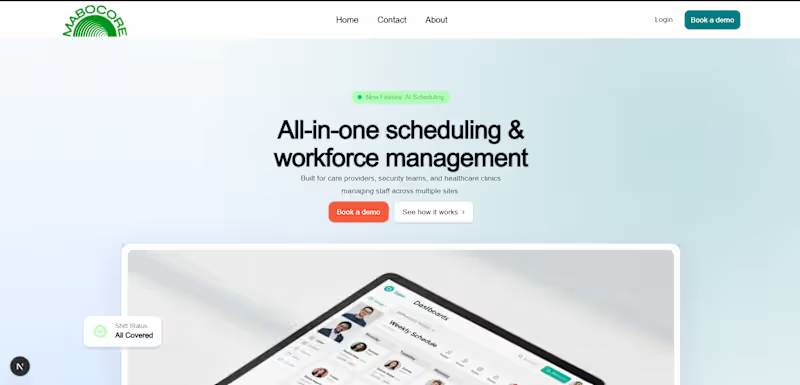
-> Re-engineered the frontend architecture by upgrading Next.js and introducing TypeScript, improving application performance by 30% while strengthening type safety and maintainability. -> Integrated frontend features with backend APIs and authentication services, implementing protected routes, role-based access control, dynamic data flows, and API-driven functionality. -> Engineered 5+ core workforce management workflows covering staff scheduling, employee operations, client management, reporting, and administration for the platform. -> Contributed to the platform's PWA and mobile application experience using Capacitor, extending workforce management workflows from desktop web to mobile devices. -> Collaborated closely with backend engineers and product stakeholders to turn evolving requirements into functional product workflows, resolve integration issues, and continuously refine the user experience.
1
137
1
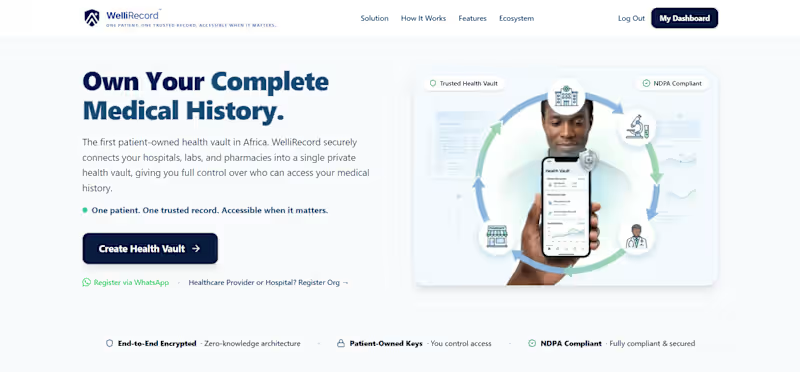
WelliRecord - Co-Founder & Full-Stack Systems Engineer Building patient-owned health data infrastructure designed for Africa. I lead the architecture and engineering of a health record platform that allows patients to securely carry their medical history across hospitals, reducing fragmented care and unnecessary repeated tests. Key systems I engineer: Patient-owned health data vaults Provider workflows for queues, triage, and clinical encounters Multi-organization access control for healthcare providers Secure and interoperable health data infrastructure I design and engineer reliable healthcare systems that keep patient data accessible even in low-connectivity environments, helping providers reduce fragmented records, repeated tests, and delays in care. Through strong system design, scalable architecture, and secure data infrastructure, I build solutions that connect healthcare workflows, improve data accessibility, and give organizations the technology they need to deliver better patient care.
1
47
Node.js
(2)
Follow
Message
Mahdi Abubakar
Abuja, Nigeria
Converting ideas to digital products/solutions π»
1x
Hired
5.0
Rating
2
Followers
Follow
Message
Converting ideas to digital products/solutions π»
0
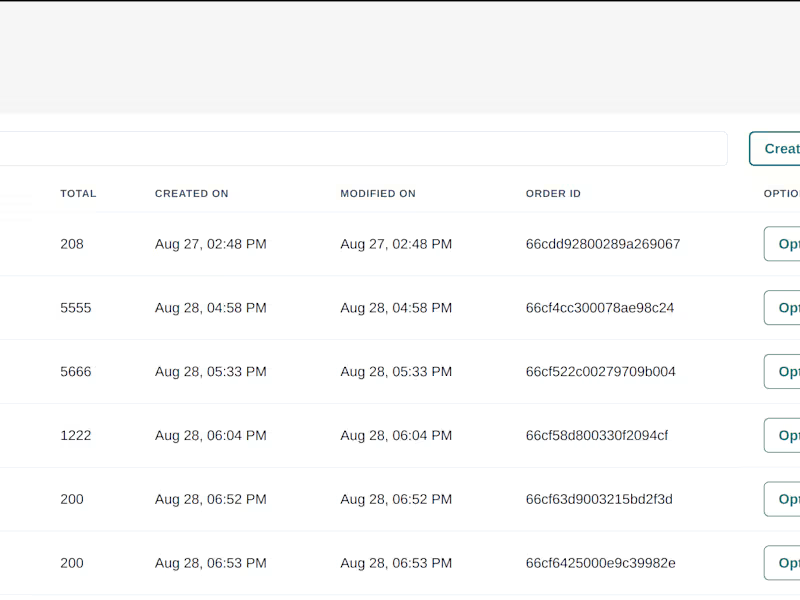
Kantisoft: Multi-Tenant POS Application
0
12
0
Full Functioning E-commerce application
0
12
0
A Cool Drift Landing Page Design
0
14
0
E-Commerce Software
0
6
Node.js
(2)
Follow
Message
Michael Orji
Abuja, Nigeria
Delivering Efficient Fullstack Solutions
Follow
Message
Delivering Efficient Fullstack Solutions
0
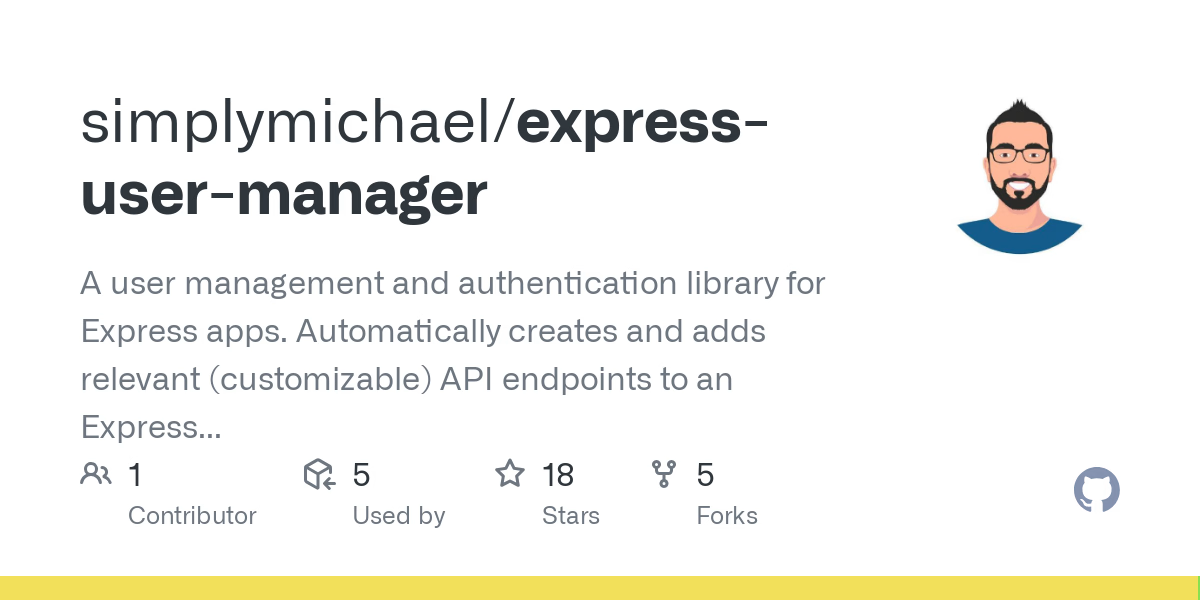
Express User Manager
0
8
0
simplicity-js/simplicity
0
8
0
smart-form-validator
0
9
View more β
Node.js
(2)
Follow
Message
OBI PASCAL BANJUARE
pro
Abuja, Nigeria
CTO - blending AI, product, code, and DevOps to build apps.
Follow
Message
CTO - blending AI, product, code, and DevOps to build apps.
1
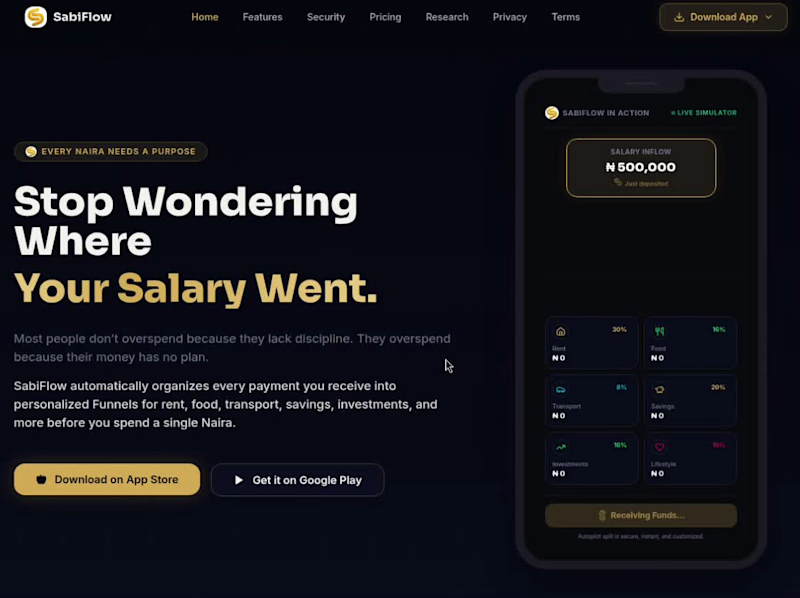
"If money touches your system, a ledger should touch it first." Your backend should be ledger-first by design. If there's even a 0.00001% chance that money, balances, fees, commissions, credits, refunds, rewards, or anything involving an amount will flow through your system, every movement should be recorded in a ledger using double-entry accounting principles. This isn't just for banks, fintechs, or payment processors. Whether you're building: =>A payment rail => An e-commerce platform => A marketplace => A grocery delivery app => A subscription service You need to be able to answer: > Where did this money come from? > Where did it go? > Who owns it right now? > Why did this balance change? > Can we prove it months or years later? A ledger provides an immutable audit trail, complete traceability, and financial correctness. It eliminates balance drift, simplifies reconciliation, and gives your team confidence when investigating disputes or anomalies. You don't need to hold funds to need a ledger. The moment your system represents value, tracks balances, calculates fees, records payouts, or reports financial activity, you're already dealing with accounting. Design for auditability from day one. Retrofitting a ledger later is one of the most expensive engineering decisions you'll make.
1
122
0
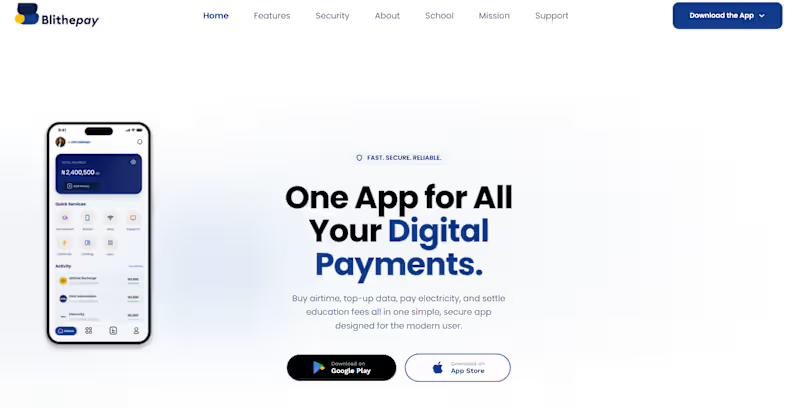
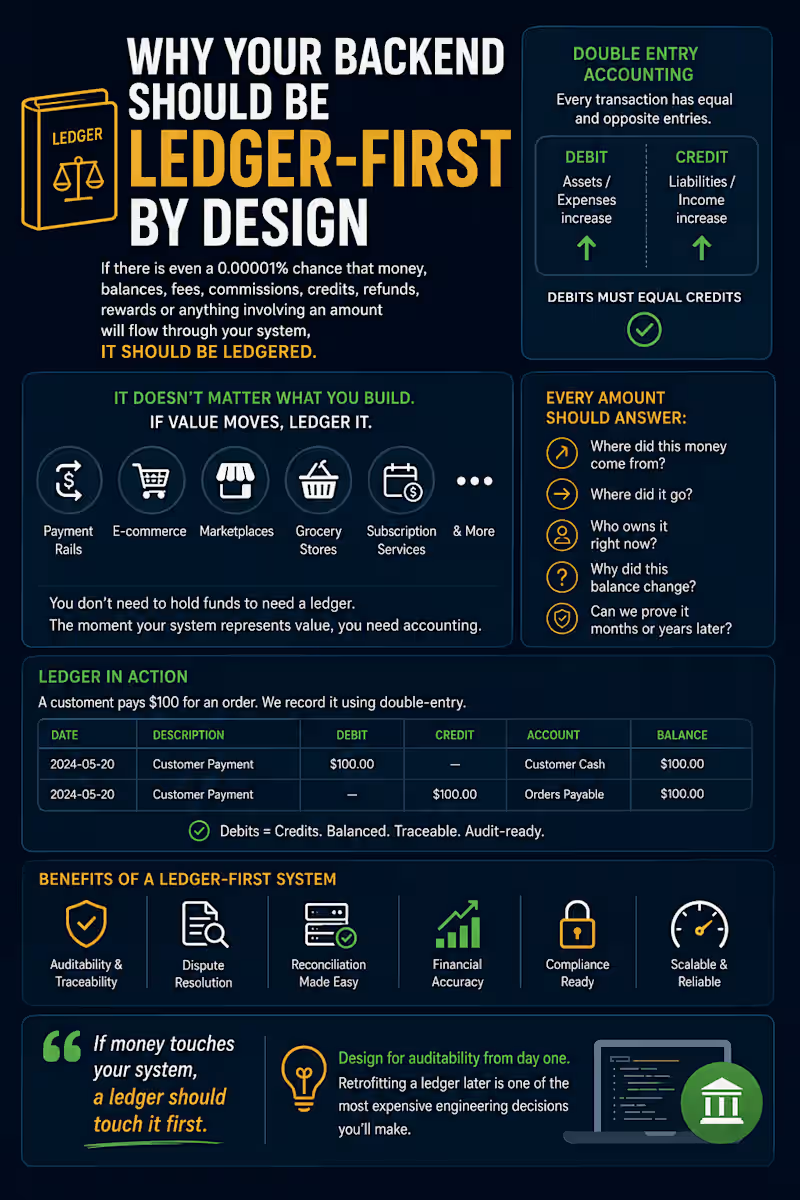
Iβve been building SabiFlow for a while, and honestly, the most interesting part of the project isnβt the code. It's the problem. Because it's personal. I've experienced that thing where money comes in and somehow, without you really noticing, it starts disappearing. Not because you donβt earn enough. Not necessarily because you're irresponsible either. Sometimes money simply has no job when it arrives. And as an engineer, that got me thinking: What if the problem isn't budgeting? What if the problem is that weβre asking people to make too many good decisions at the exact moment they have the most temptation to make bad ones? That question became the foundation for SabiFlow. Instead of telling someone, "You should save 20% of your income," I started thinking about what would happen if the system simply helped assign every inflow a purpose the moment it arrived. That led me down a rabbit hole. Funnels. Automated distribution. Wallet infrastructure. Virtual accounts. User behaviour. Transaction flows. KYC. Compliance. Even the psychology behind notifications. And this is probably my favourite part of being both an engineer and a founder. I donβt just ask: "How do I build this feature?" I ask: "Why does this problem exist, and what kind of system could make dealing with it easier?" Then the engineer in me comes along and asks: "Okayβ¦ but how do we actually make this work reliably?" π That tension between the founder thinking about the problem and the CTO thinking about the system is probably what I enjoy most about building SabiFlow. Iβm still figuring a lot of it out. But I'm curious: Whatβs a problem youβve experienced personally that eventually made you want to build something around it?
0
1
0
One of the most expensive lessons I learned building fintech products wasn't about APIs, infrastructure, or scaling. It was about data types. Years ago, while building a bill payment startup, I discovered we had silently lost over β¦3 million to fractional rounding issues. No hacks. No fraud. Just floating-point arithmetic doing exactly what it was designed to do. The Facts In JavaScript, numbers are stored as floating-point values. That means something as simple as: 0.1 + 0.2 doesn't equal 0.3. It equals: 0.30000000000000004 For a shopping cart, that tiny difference may not matter. For a fintech system processing thousands of transactions daily, those tiny fractions accumulate into real money. What I Initially Did Like many developers, I used decimal currency values directly: It looked clean. But calculations, fee deductions, settlements, and balance updates gradually introduced rounding inconsistencies. Over time, the system started leaking funds through fractions. What Fixed It I switched to storing monetary values in the currency's smallest unit using BigInt. Instead of: Store: Now every operation becomes integer math. No hidden fractions. No rounding surprises. No disappearing money. Pros - Precise calculations - Predictable accounting - Easier reconciliation - Safer ledger systems Cons - Requires conversion when displaying values - Slightly more discipline from developers - BigInt cannot be mixed directly with Number types Do's > Store money in the smallest currency unit (Kobo, Cents, etc.) > Use BigInt or dedicated decimal libraries where appropriate > Convert only at the presentation layer > Build your ledger around integer arithmetic > Never convert BigInt to number on runtime to perform arithmetic operation. Perform the arithmetic operation on the BigInt Type. You can build an api transformer layer to return response in the integer form or leave value in the smallest unit while frontend do the conversion by dividing the value by 100. Don'ts X Store money as floating-point values X Compare currency values using decimal calculations X Round repeatedly during transaction processing X Assume tiny fractions won't matter Fun Fact This is the same principle used by companies like Stripe. Amounts are represented in the smallest currency unit (such as cents) rather than floating-point dollars. Wrap Up In fintech, every fraction belongs to someone. If your system cannot account for every smallest unit of currency, eventually those fractions become real losses. The best time to fix monetary precision is before your first transaction. The second-best time is today.
0
29
0
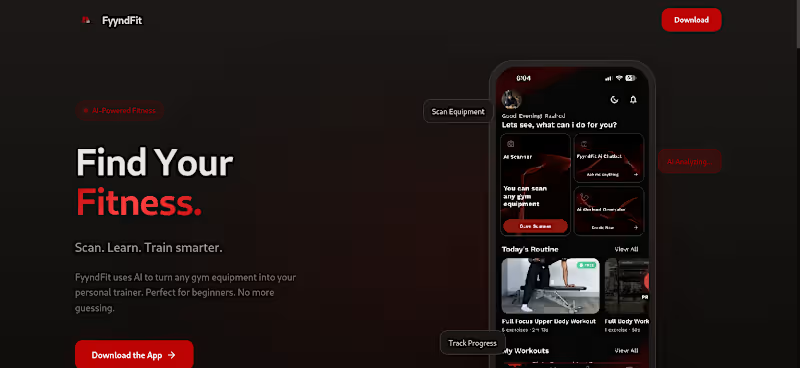
When you're a FinTech Engineer and you're excited about AI. A called around 11pm NGT and said: Friendπ±ββοΈ : Hey Obi, I've got this client from Canada there want an AI Fitness app Its really an exciting project you should add it to your portfolio. At first I was a bit reluctant, but after a lot of persuasion as someone who enjoys working with me, he keeps talking about the project every single opportunity he has for a good friendly conversation. I finally agreed! 4-months down the line - Find Your Fitness was born! As a Sr. Engineer on the team, one of my core responsibility was to coordinate the project from spring planning, task assignment and follow-ups on ticket to make sure the team were on track with schedule. Jira was my home screen π every morning π . The design team where my friends heading did a great job, but I almost got a heart attack at one time π . It was an exciting adventure indeed, am glad I took my friend up on the offer.
0
56
Node.js
(1)
Follow
Message
Opeyemi Aderemi
Abuja, Nigeria
Senior Web Developer | Node JS | React JS | Next JS

Follow
Message
Senior Web Developer | Node JS | React JS | Next JS

1
CaseBeautify
1
4
1
Omnifood - Just Think It!
1
6
1
Trendly
1
5
View more β
Node.js
(1)
Follow
Message
Ojo Philip
Abuja, Nigeria
Fullstack Wizard: React Native & Next.js Expert
Follow
Message
Fullstack Wizard: React Native & Next.js Expert
0
Front-end Developer
0
7
0
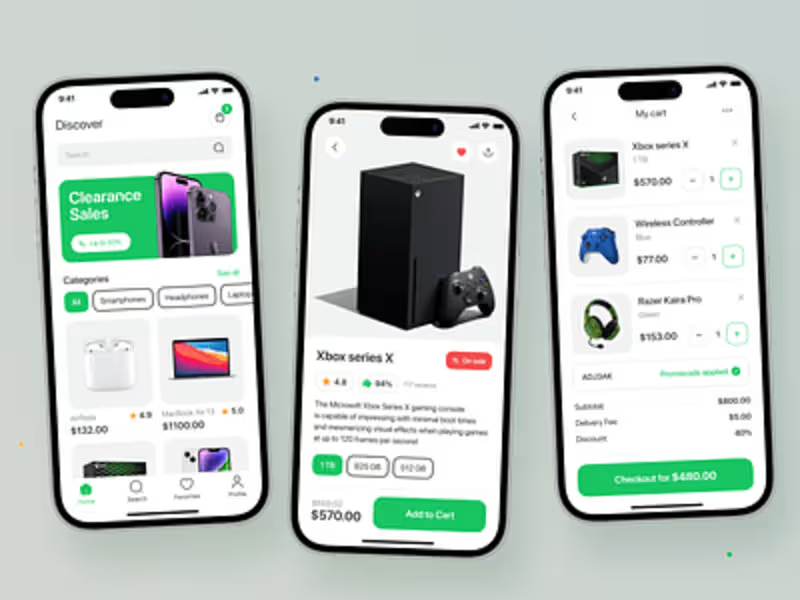
E-commerce Mobile App
0
10
0
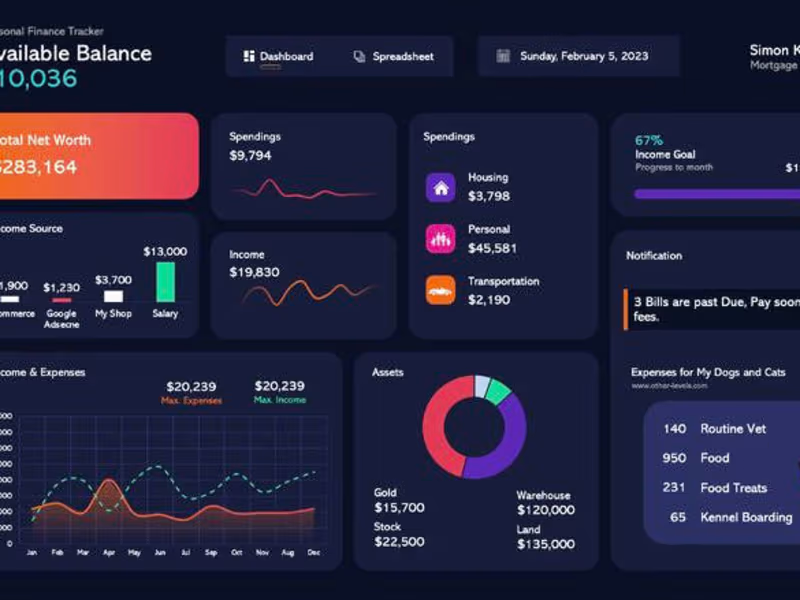
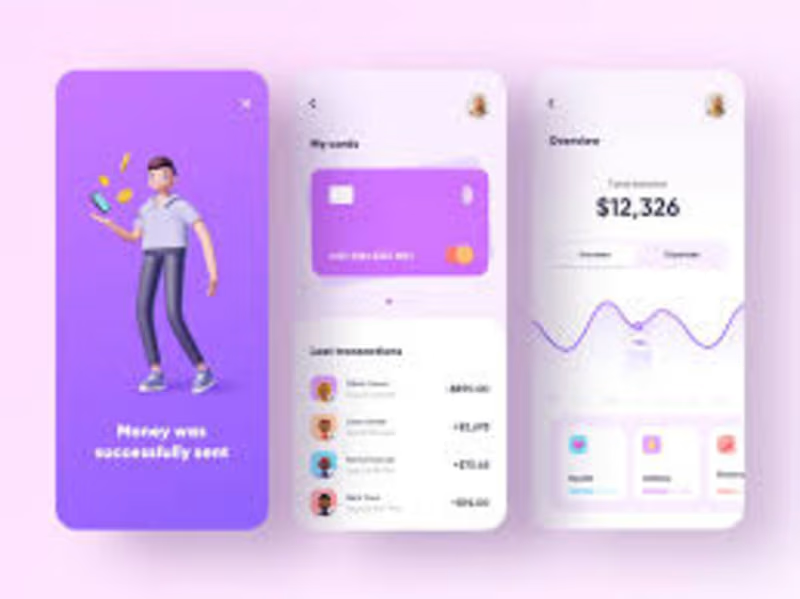
Personal Finance Tracker
0
8
View more β
Node.js
(1)
Follow
Message
Explore people