Freelancers using Quickbooks in Chennai
Freelancers using Quickbooks in Chennai
Sign Up
Post a job
Sign Up
Log In
Filters
2
Projects
People
Murugeshwari S.
Chennai, India
Construction & MEP Finances Strategist Businesses.
7
Followers
Follow
Message
Construction & MEP Finances Strategist Businesses.
0
It was a Friday afternoon, right as I was wrapping up the week’s books. A construction client called me, looking at his bank account in confusion. Their bank balance shows I have $50,000, but my accounting software says I only have $42,000. Where did $8,000 go? He was worried a payment had bounced or that money was missing. Instead of panicking, we did what every bookkeeper loves doing: A clean bank reconciliation. Here is what we found after digging through the transactions: The Ghost Deposit: A client paid an invoice via ACH late Thursday, which hit the bank balance immediately but hadn't been matched to the open invoice in the software yet. The Uncleared Check: A vendor check written two weeks ago for direct materials was still sitting in the owner's drawer, waiting to be cashed. Once we reconciled every line item matching bank statements to the general ledger the $8,000 difference vanished into thin air. His books were completely balanced, his job costs were accurate, and he could enjoy his weekend without worrying about missing cash. Why Bank Reconciliation is Your Weekly Business Health Check In construction and trade accounting, a bank balance is not your real profit. Without regular reconciliation Unmatched vendor bills skew your Job Costing. Unapplied payments mess up your WIP reporting. You end up making business decisions based on phantom cash. Reconciliation is not just about matching numbers it is about giving business owners total peace of mind before they close their laptop for the weekend. Friday Reminder for Business Owners & Contractors: Have your accounts been reconciled this week? Or are you heading into the weekend guessing your true cash flow? Let’s keep those books clean so you can build with confidence! #ConstructionAccounting (https://www.linkedin.com/search/results/all/?keywords=%23constructionaccounting&origin=HASH_TAG_FROM_FEED) #BankReconciliation (https://www.linkedin.com/search/results/all/?keywords=%23bankreconciliation&origin=HASH_TAG_FROM_FEED) #JobCosting (https://www.linkedin.com/search/results/all/?keywords=%23jobcosting&origin=HASH_TAG_FROM_FEED) Activate to view larger image,
0
36
2
AIA billing looks simple on paper. In real life? It’s a math test, a paperwork fight, and a cash flow waiting game. Example: Contract value: $250,000 Work completed this month: $42,500 Retainage: 10% = $4,250 held back Stored materials: $12,000, but only if the backup is perfect One missing attachment, one mismatch in the schedule of values, one late submission = payment pushed 30 days That’s the part people don’t talk about. AIA billing is not just “sending an invoice.” It’s proving every dollar with clean backup, matching your G702 and G703, tracking retainage, and making sure your numbers don’t tell a different story than your job cost report. The real pain? You did the work, but the paperwork slows the money. You’re carrying payroll while waiting on approvals. You’re fixing billing errors that should’ve been caught before submission. You know the job is profitable, but cash flow still feels tight because the money is stuck in the system. Good AIA billing doesn’t just get you paid. It protects your margin, your schedule, and your sanity.
2
182
2
Most contractors watch revenue. The smart ones watch cost percentage and profit margin on every job. Here is a simple example: Contract amount: $100,000 Total job cost (labor, materials, subs, equipment, site costs): $85,000 Profit: $15,000 That means: Cost percentage = $85,000 ÷ $100,000 = 85% Profit margin = $15,000 ÷ $100,000 = 15% On paper, 15% looks okay. But in construction, small mistakes can easily eat that margin: Extra labor hours not booked to the job Material wastage and rework Subcontractor change orders not billed correctly Site overheads missing in the budget If margin drops from 15% to 5%, profit becomes only $5,000 on a $100,000 job. Same revenue. Very different result. That’s why clean job costing and regular review of cost percentage and profit margin are more important than just looking at total sales.
2
2
342
1
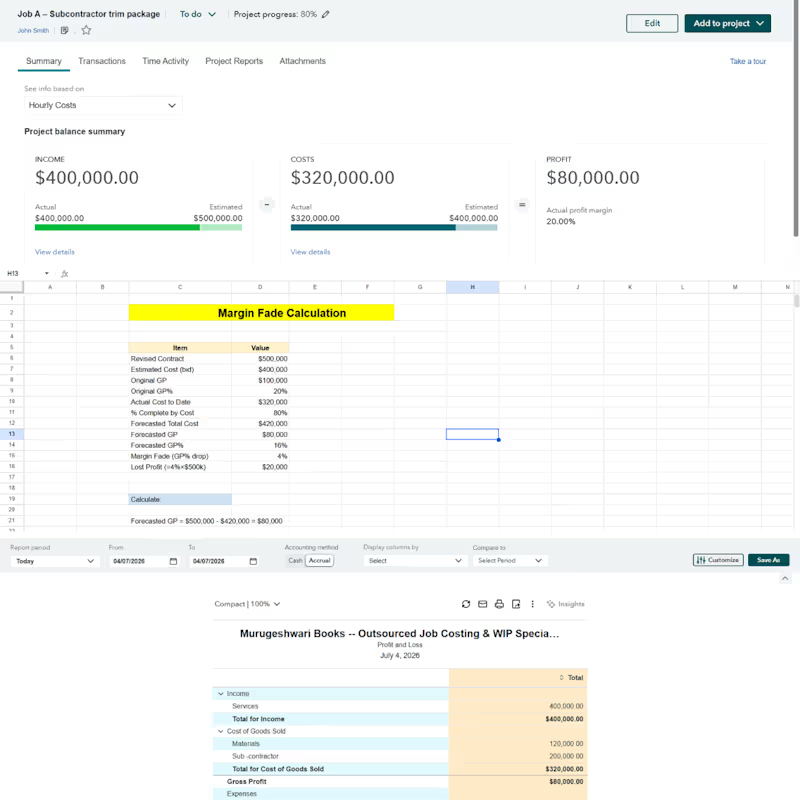
Job A Subcontractor trim package
1
7
Quickbooks
(8)
Follow
Message
Explore people