Freelancers in Chak 107/9 LFreelancers in Chak 107/9 L
UI/UX Designer | SaaS, Web & Mobile Apps | Framer expert
5.0
Rating
19
Followers
UI/UX Designer | SaaS, Web & Mobile Apps | Framer expert
Graphic designing , video editor , writing , Documentation ,

6
Followers
Graphic designing , video editor , writing , Documentation ,

Cover image for THE WAVE THAT REMEMBERS 🌊 What happens to a masterpiece whe...
THE WAVE THAT REMEMBERS 🌊 What happens to a masterpiece when there is no one left to remember it? Inspired by Hokusai’s iconic The Great Wave off Kanagawa, The Wave That Remembers imagines a world far beyond our own — a time when humanity has vanished, cities have fallen beneath the sea, and nature has reclaimed everything we once believed would last forever. At the center of the work, the wave is no longer simply a moment of danger. It becomes a witness. It has outlived the people who feared it. It has outlived the structures they built. It has outlived the civilization that tried to control the world around it. What remains is an ocean carrying the memory of a species that is no longer there. I wanted to preserve the unmistakable visual language of Hokusai’s original while transforming its meaning into something much larger: a reflection on impermanence, environmental power, human legacy, and the passage of time. The drowned traces of civilization are deliberately subtle — fragments of a world that once felt permanent, now becoming part of the landscape. The contrast between the enduring force of nature and the fragile remains of humanity is at the heart of the piece. Rather than creating a conventional futuristic reinterpretation, I wanted the image to feel like an archaeological discovery from a future that no longer has humans in it — familiar, haunting, and strangely beautiful. The wave remembers. We don't. Created for the FLORA Museum Challenge, reimagining a public-domain work from The Met through contemporary AI-assisted visual storytelling.
1
4
179
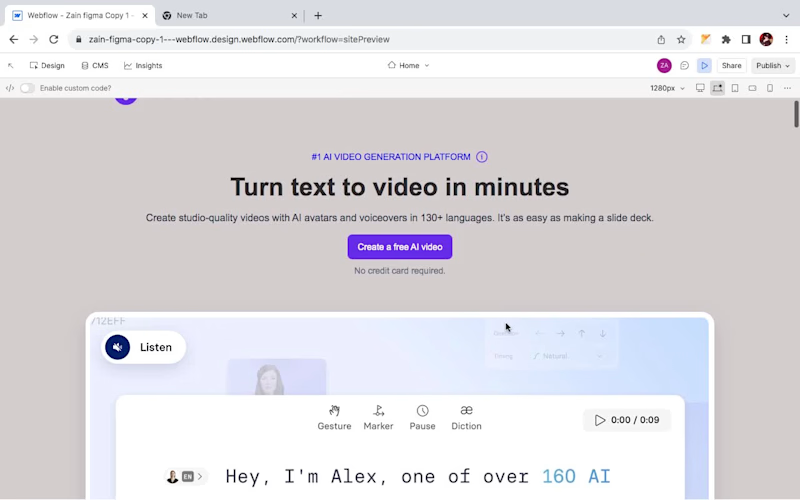
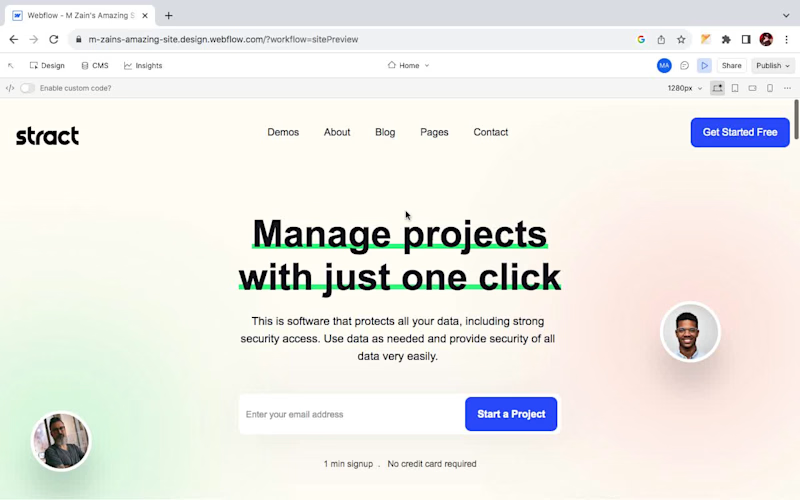
Figma & Any UI Design to Webflow Developer ⭐
New to Contra
Figma & Any UI Design to Webflow Developer ⭐
Python Backend Engineer | Django, DRF, FastAPI & WebSockets
New to Contra
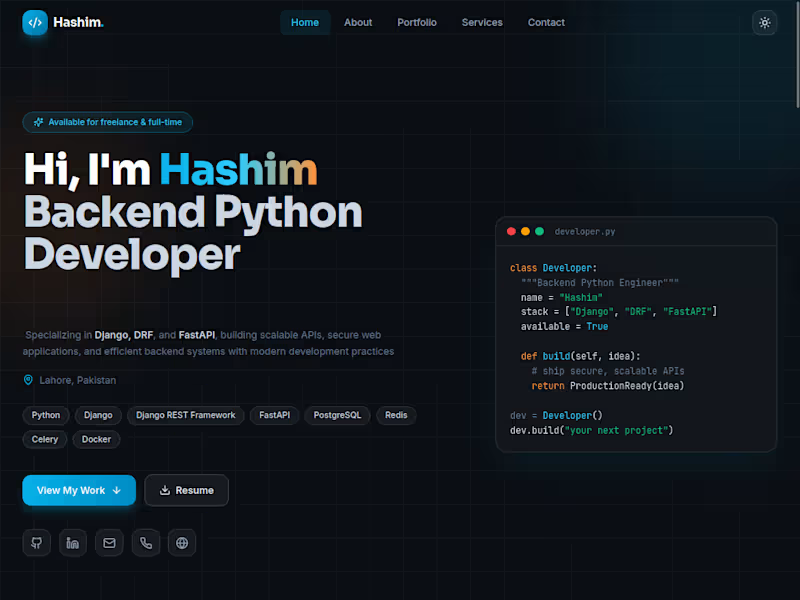
Python Backend Engineer | Django, DRF, FastAPI & WebSockets
Cover image for FinValora — Real-Time FinTech &
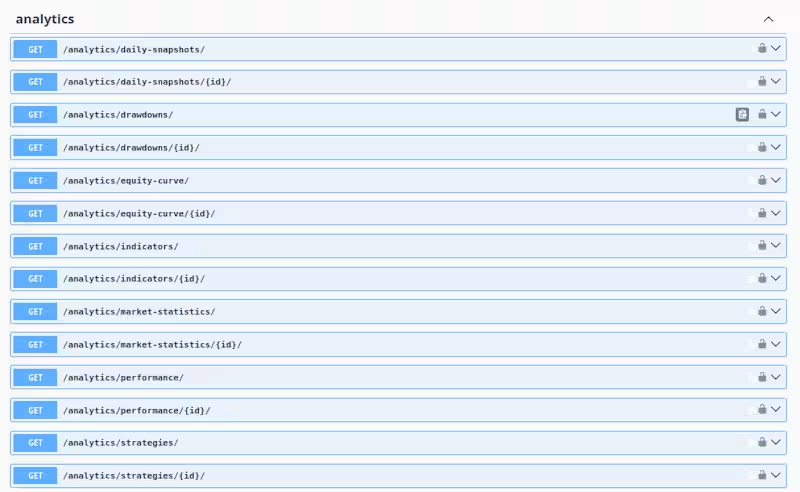
FinValora — Real-Time FinTech & Paper-Trading Engine Project Overview FinValora is a modular, high-throughput cryptocurrency paper-trading and portfolio management backend. Built to simulate high-frequency financial platforms, it pairs a transactional Django / DRF foundation for state management with FastAPI for low-latency market streaming, offloading computational workloads to Celery & Redis. Roles & Tools Roles: Backend Architect, API Engineer, System Designer Tools: Python, FastAPI, Django, Django REST Framework, WebSockets, Redis, Celery, PostgreSQL, Docker, Pytest, OpenAPI/Swagger Core Highlights & Architecture Hybrid Async Architecture Transactional API (Django/DRF): Handles secure JWT auth (SimpleJWT), user accounts, wallets, order books, and multi-asset portfolio logic. Real-Time Streaming (FastAPI + WebSockets): Dedicated async microservice for live price tickers, market data streaming, and WebSocket broadcasts over Redis Pub/Sub. High-Performance Background Processing Integrated Celery + Redis task queues to handle heavy financial math, automated portfolio snapshot calculations, equity curves, and drawdowns. Reduced core HTTP response times by ~25% by executing asynchronous alert triggers and notification pipelines in background workers. Dedicated Analytics Engine Isolated data system for trade statistics, historical indicator calculations, strategy performance evaluation, and daily snapshot tracking. Developer Experience & Quality Assurance Interactive API documentation generated dynamically via drf-spectacular (OpenAPI / Swagger UI). Unit & integration test suites validating transactional integrity, risk limits, and WebSocket handshakes. Links & Resources GitHub Repository: https://github.com/devHashim111/finvalora Here is a high-converting, concise, and interactive Contra project post structured to showcase your architectural skills without wall-of-text fluff. FinValora — Real-Time Crypto Trading & Portfolio Engine FinValora is a modular, backend-heavy financial platform built to demonstrate high-concurrency microservices, real-time data streaming, and robust financial domain modeling. Core Architecture & Stack Transactional Core: Django & Django REST Framework (DRF) + SimpleJWT Real-Time Engine: FastAPI + Async WebSockets (isolated for high throughput) Background Processing: Celery + Redis (notifications, scheduled tasks, market sync) API Specs & Docs: OpenAPI 3.0 / Swagger UI via drf-spectacular Data Layer: Relational schema optimized for PostgreSQL (SQLite for local dev) Key Technical Highlights Financial Domain Modeling: Strict relations handling assets, exchanges, order books, trades, paper-trading wallets, and positions. Separation of Concerns: Sync REST APIs handle transactional metadata, while async FastAPI pipelines stream live market feeds via WebSockets. Performance & Analytics: Dedicated analytics layer computing daily equity curves, trade stats, drawdown history, and strategy metrics. Notification System: Multi-channel queue pipeline (Email, In-App, Push) executed out-of-band via Redis & Celery workers. Which part of the architecture interests you most? Asynchronous WebSocket streaming via FastAPI & Redis Pub/Sub Database design for order books & portfolio analytics Decoupling long-running tasks with Celery background workers Drop a comment below with your pick, or check out the code repositories! Links GitHub Repository: https://github.com/devHashim111/finvalora Developer Portfolio: https://devhashim.vercel.app/
0
50