Video Editing Projects in Central Luzon
Video Editing Projects in Central Luzon
Sign Up
Post a job
Sign Up
Log In
Filters
2
Projects
People
Message
0
Clyvee Francisco
The ERG Movement
0
19
Message
3
Ruffa Sakay
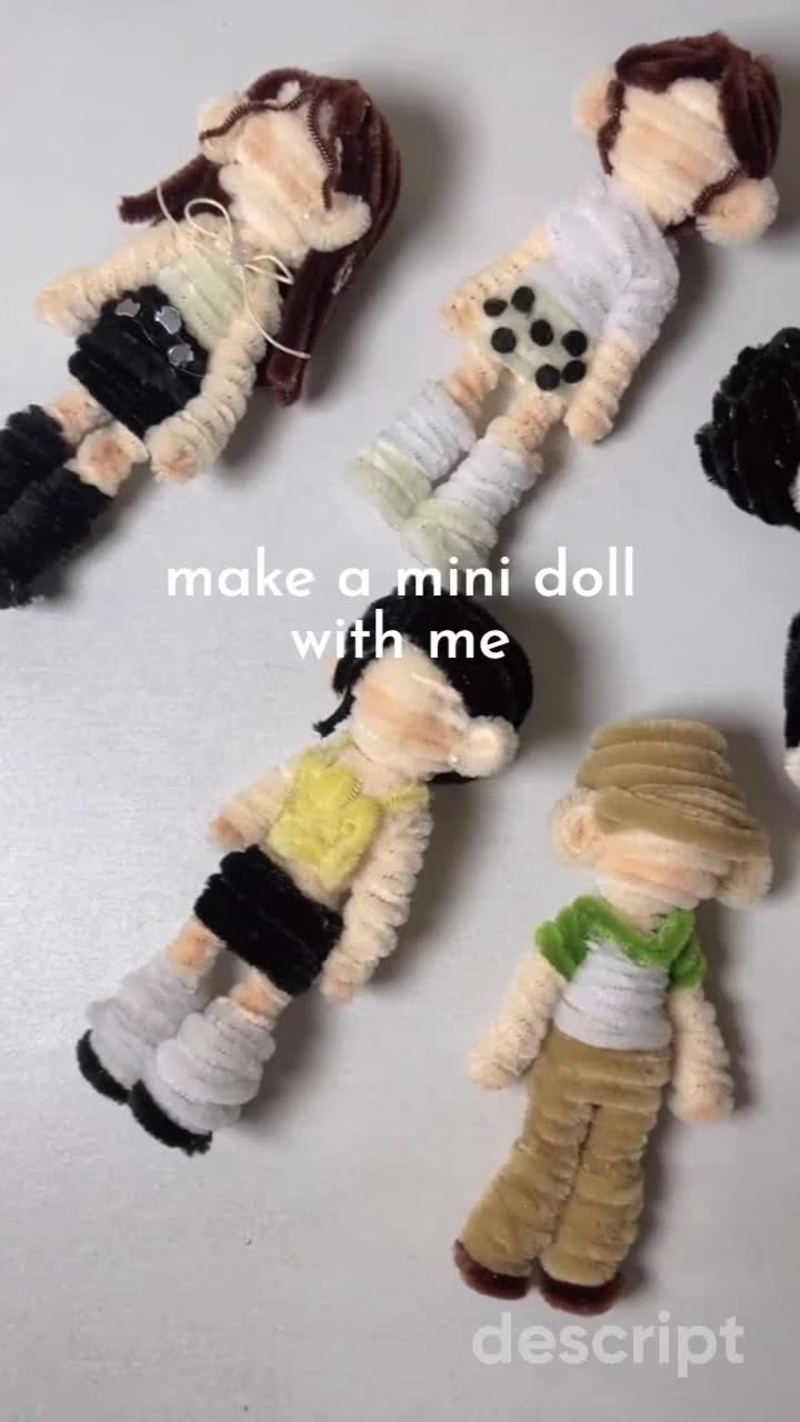
From Screen to Something I Can Hold For the Descript “Teach Us Something” Challenge, I’m sharing a simple creative practice I use whenever I need some time away from the screen: turning a reference photo into a mini doll using pipe-cleaner wire. The idea is simple, but the process has taught me something I keep coming back to: making something physical can help reset my attention, keep me motivated, and spark new creative ideas. In the video, I walk through my actual process—from building the head and body with wire, shaping the arms and legs, and finishing the head, to attaching everything together and creating the clothes, shoes, hair, and final details. I also edited the entire video in Descript. I edited and arranged the clips, edited the audio, used AI Studio Sound to improve the sound quality, added key text instead of full captions so the video of the doll wouldn’t be covered, and added background music to bring everything together. The goal wasn’t to make a Descript tutorial. Instead, I wanted to share one part of my own creative workflow: when I feel like I need a reset, I step away from the screen, work with my hands, and turn an idea into something tangible. It’s a small project, but it gives me a different way to think, create, and come back to the screen with new ideas. 🎥 Finished Video https://share.descript.com/view/rl4pd5eD4V7 🛠️ Descript Project https://web.descript.com/7738bed7-1f20-42b0-969e-93f62f531281/cae09 Created in Descript for the Teach Us Something Challenge. #DescriptChallenge #Descript #CreativeProcess #DIY #Handmade
3
426
Message
0
Aljohn Dofredo
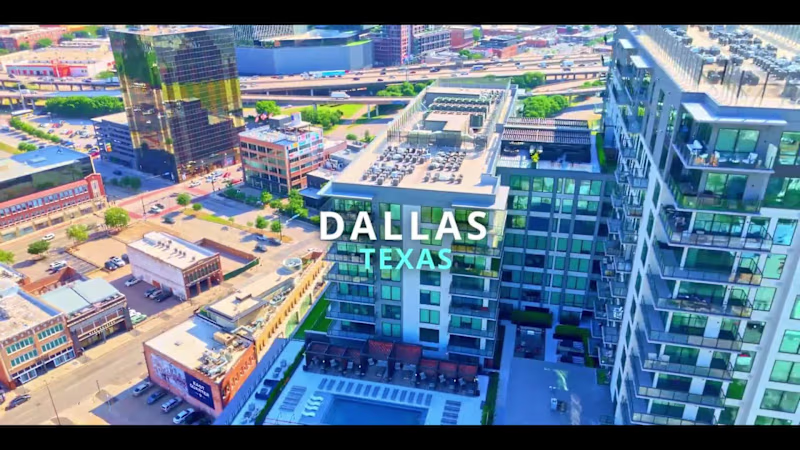
One of my previous video editing projects highlights 20 major developments and exciting projects coming to Dallas, Texas, in 2025.
0
56
Message
0
TJ Quilaneta
Video: Company Launches MLS Match Referral Network
0
9
Message
0
Karl Jude M.
Short form content | YT shorts | IG FB Reels | Tiktok Videos
0
26
Message
0
Jim Russel Zapico
Mental Fitness Coach
0
6
Message
0
Sherwin Sebastian Skip Sahagun
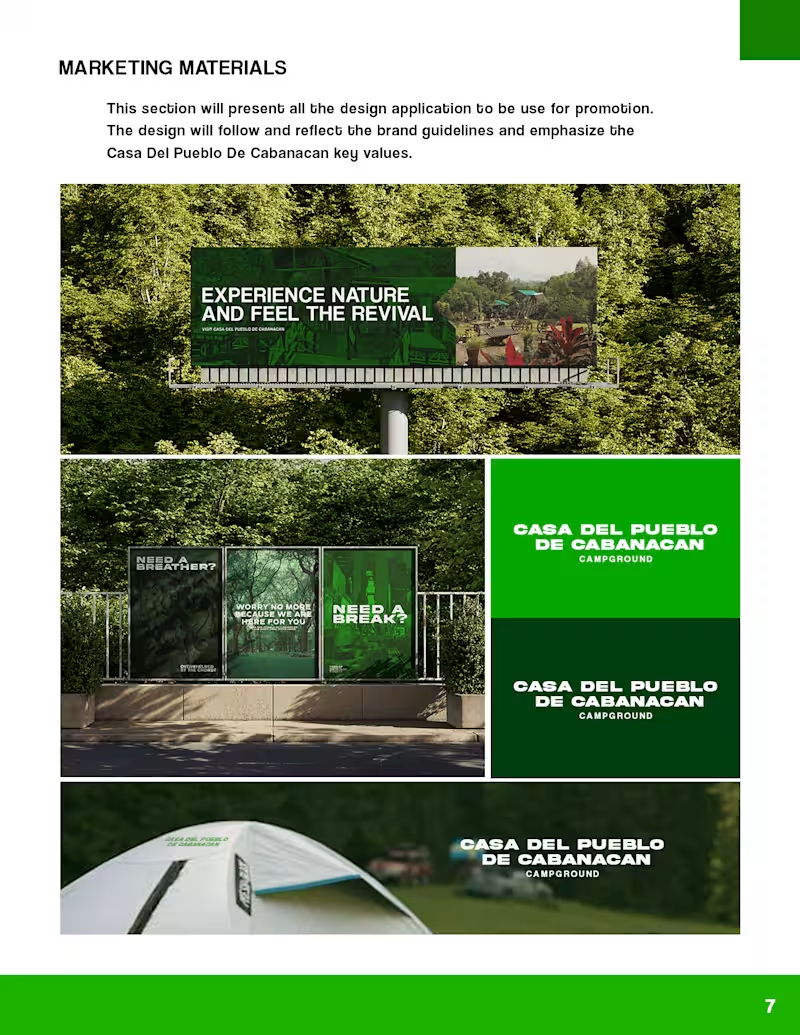
Comprehensive Digital Marketing Campaign For
0
5
Message
0
Patrick De Guzman
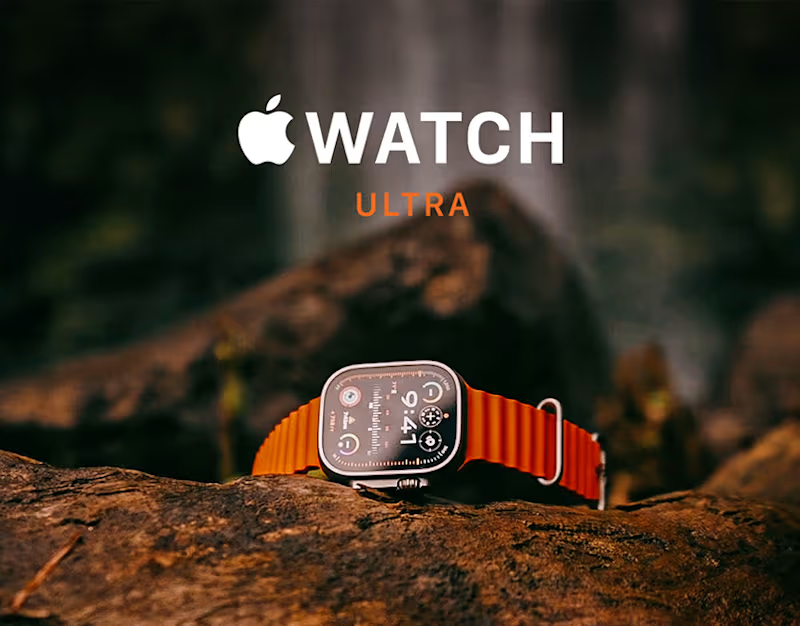
Apple Watch Ultra Spec Ad
0
7
Message
0
Rojie Gomez
Gotyme Bank Promotion Video
0
8
Message
0
Ryan Carl Garcia
Elevate Your Brand with Expert Video Editing
0
21
Message
0
Raymark Rodriguez
Avatar: The Way of Water
0
9
Message
0
Clyvee Francisco
The ERG Movement
0
39
Message
3
Ruffa Sakay
IROHA — The Closet That Remembers A mobile-first personal wardrobe app. Built without a dev background. My first makeathon. The Problem The average piece of clothing is worn fewer than ten times before it's discarded. Most people wear 20% of what they own, 80% of the time. The rest sits invisible — forgotten at the back of the wardrobe, waiting. Fast fashion produces 92 million tonnes of textile waste per year. And most of that waste begins not at the factory, but at the wardrobe: overfull, un-curated, invisible. IROHA is the quiet antidote. What IROHA is Not a shopping app. Not algorithm-driven. A deliberate, personal tool for cataloguing the clothes you already own — mixing, matching, wearing, logging, and remembering them. Four screens: Closet — A two-column masonry wardrobe grid with horizontal category tabs, colour filters, and wear counts. When an item hasn't been worn in more than 30 days, it receives an ❄ Unworn tag. Not a judgment. A reminder. That quiet surfacing — multiplied across thousands of wardrobes — is where Iroha's environmental contribution lives. Try On — A virtual canvas for layering clothing items on a full-body photo. Draggable, resizable, pinch-to-zoom on touch. Save combinations as outfits, stored with a snapshot. A Smart Filter (category, colour, weather, style) lets you pull pieces from across your closet. Log — A monthly calendar diary. Day cells fill with rose for worn, lavender for planned. Outfit snapshots, OOTD photos, and memory notes attach to each entry. A summary bar tracks monthly wear count and surfaces your most-worn piece. Profile — Stats, drag-to-reorder categories, and a Memories section: a private journal of memory notes from both wardrobe items and log entries, rendered as italic Cormorant Garamond quotes. The Name IROHA (いろは) comes from a classical Japanese poem — written around the 10th century — that uses every syllable of the Japanese syllabary exactly once. It reads, in translation: Even the blossoming flowers will eventually scatter. Who in our world is unchanging? It is a poem about impermanence. About the beauty of things that pass. Clothes are beautiful things that pass — through seasons, through bodies, through trends. IROHA asks you to slow that down. I built IROHA as a vibecoder. No traditional dev background. First makeathon. What I had was a clear problem I cared about, a guide that told me where to start, and tools that made it possible to ship something real. The ❄ Unworn tag is the feature I'm most proud of. It doesn't send notifications. It doesn't calculate carbon footprints. It just makes the invisible visible. If one person reaches for a forgotten coat instead of buying a new one, that is enough. 🔗 Live Project: https://iroha.figma.site/ (https://iroha.figma.site/)🔗 Figma Community file: https://www.figma.com/community/file/1648821052690074663 (https://www.figma.com/community/file/1648821052690074663)🔗 Social Sharing: https://www.instagram.com/reel/DZwZku-h1m7/
2
3
365
Message
0
Aljohn Dofredo
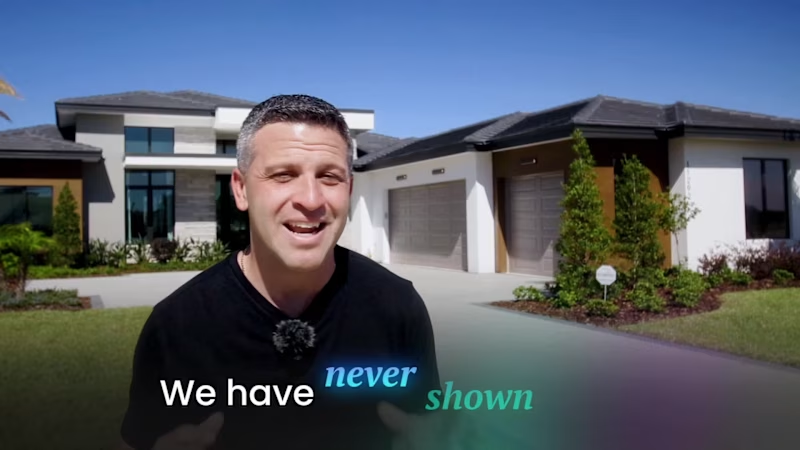
One of my previous video editing projects showcases rare custom homes for sale in Victoria Lakes, Tampa, featuring beautifully designed properties on expansive 1-acre lots.
0
66
Message
0
TJ Quilaneta
Video: Company Launches Xomio
0
7
Message
0
Jim Russel Zapico
Podcast Episode on Everyday Toxins with Dr. Yvonne Burkart
0
4
Explore projects