
SaaS & MVP Developer | Laravel, Vue, React + Native, Flutter
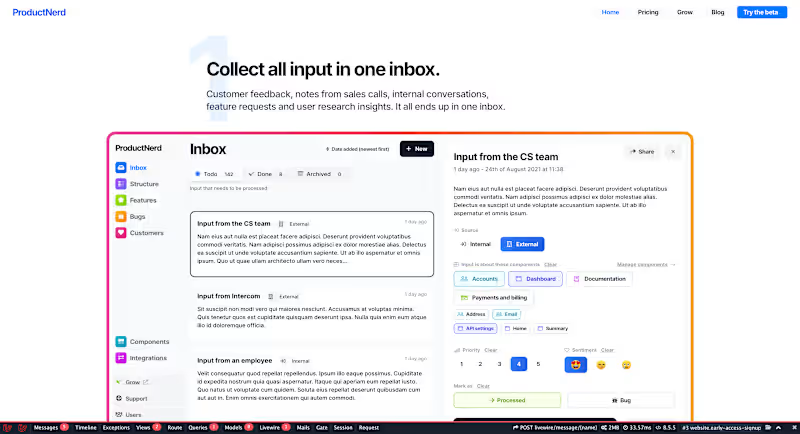
Product Nerd — SaaS Product Management Platform
Project Goals: Product Nerd is a Laravel-based SaaS platform for product management and competitor monitoring. It tracks competitors' blog posts via CSS selectors, manages customer data, handles bug/feature reporting, and provides an inbox system — all with role-based access control (Spatie permissions), Livewire UI, and Paddle payments.
My Contributions:
New feature: Built the Competitor Radar system — a scheduled command that scrapes competitor blogs for new posts using configurable CSS selectors, indexes them, and sends email/Slack notifications when fresh content is detected (CompetitorRadarCommand, FetchCompetitorBlogPosts job, event-driven notification flow)
Bug fixes: Resolved favicon rendering, toast styling for long messages, DOM diffing issues, selected inputs tab state, and fixed integration tests after code refactoring
Test suites: Wrote comprehensive Pest PHP test suites across 15+ feature tests covering Bugs, Features, Structure, Inbox, Customers, ManageComponents, Competitor Radar, User Management, Authentication, Email Verification, and multiple integration tests (API, Email, External/Internal Portal)
Impact: Transformed the project from having minimal test coverage to a fully tested codebase with structured test patterns, ensuring reliability for the competitor monitoring feature and preventing regressions across core modules.
0
116
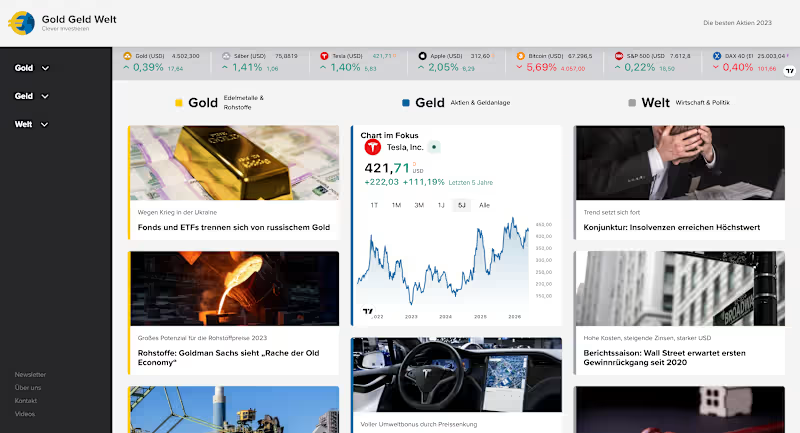
GoldGeldWelt — Financial Content Platform (Laravel + Statamic CMS)
A German-language financial news and investment content platform built with Laravel 8 and Statamic CMS.
The project features:
- Custom CMS workflow for managing articles, authors, and categories
- Multiple RSS feed systems (partner, category, Google, weekly)
- Newsletter subscription/unsubscribe flows with Mailchimp integration
- PDF generation for freebie downloads
- Dynamic author profiles
- Sitemap generation
- Captcha protection
- AJAX-powered frontend using jQuery, TailwindCSS, and AOS animations.
0
105
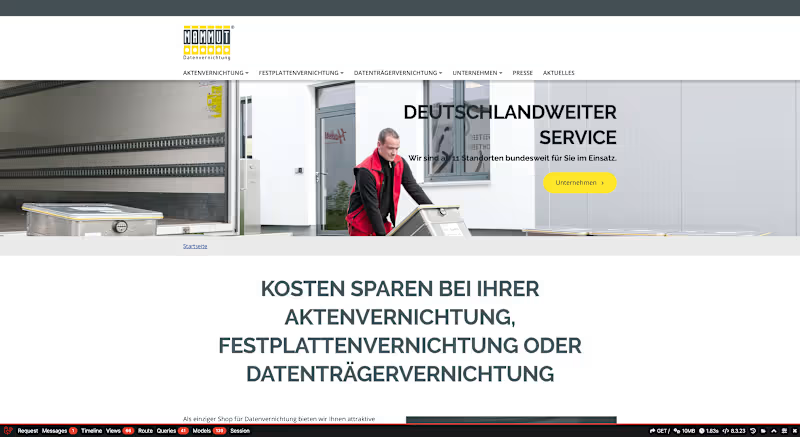
Mammut SEO Portal & E-Commerce Platform
A full-stack e-commerce and SEO-driven marketplace platform. The portal connects customers with local service partners for document destruction, data carrier disposal, and office waste management services.
Key features include:
- SEO-focused architecture generating thousands of regional landing pages
- Multi-region marketplace with partner assignment by postal code and geographic territory
- E-commerce functionality: product catalog, shopping cart, order management, and payment processing
- Dashboard built with DataTables for managing partners, products, pricing, and orders
0
138


Co-create smart apps with AI, strategy, and agile execution
Co-create smart apps with AI, strategy, and agile execution

Full-Stack Developer | Built 2x SaaS | Next.js - Node.js
Full-Stack Developer | Built 2x SaaS | Next.js - Node.js

View more →

Rails Reliability | React Native Troubleshooting

Full-stack developer — MERN/PERN, Next.js & React Native

Qodum — Custom School Management ERP System
The Starting Point
Qodum was built for a real business need — a school required a way to manage their day-to-day administrative operations without relying on scattered spreadsheets and manual processes. Rather than a generic template, the goal was a system built around how a school actually runs: fees, admissions, accounts, and inventory, all in one place.
What I Built
Qodum is a full-stack ERP system covering four core modules — fee management, admissions, accounts, and stock/inventory tracking. An admin dashboard ties it all together, giving staff a single place to manage records and daily operations instead of juggling disconnected tools. Role-based access ensures different staff members see only what's relevant to their responsibilities.
Architecture
Built with Next.js, using server components to handle backend logic directly within the framework rather than maintaining a fully separate backend service — keeping the codebase leaner and more maintainable. TypeScript is used throughout for type safety across a codebase of this size, and the project is deployed live on Vercel.
Why This Approach
Server components let me handle data-fetching and business logic close to where it's needed, reducing client-side complexity while keeping the app fast. For a system handling sensitive operational data (fees, accounts, student records), this structure also made it easier to keep backend logic contained and auditable rather than scattered across API routes.
Where It Stands
Qodum has been in active, sustained development — over 600 commits reflect continuous iteration rather than a single quick build. It's live and demonstrates a real, functioning ERP architecture: modular by design, with each core business function (fees, admissions, accounts, stock) built as its own cohesive piece within a shared system.
How I Work
This project reflects how I approach client work generally: understand the actual operational need first, then build modularly so the system can grow — new modules or features added without requiring a rewrite of what already works.
Live: qodum.vercel.app
(http://qodum.vercel.app)GitHub: jonathanadel-dev/qodum-web (https://github.com/jonathanadel-dev/qodum-web)
0
154
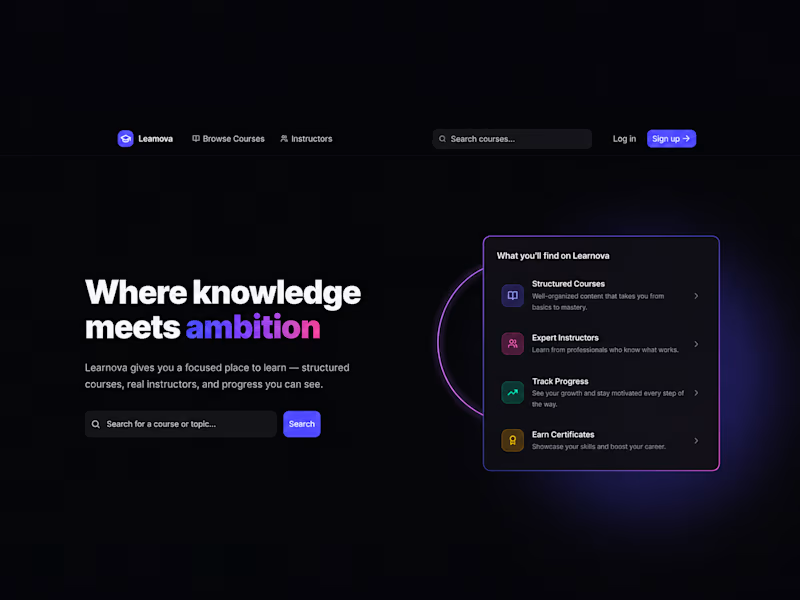
Learnova — Full-Stack Learning Management Platform
The Starting Point
I wanted to build something that went beyond a typical CRUD tutorial project — a real learning management platform with the kind of complexity actual ed-tech products deal with: authentication done right, adaptive UI based on user state, and a data layer that could support real course structures, not just placeholder content.
What I Built
Learnova is a full-stack LMS where users can browse structured courses, follow instructors, and track their own progress toward completion. The core experience revolves around three things: discoverability (search and browse courses by topic), structure (courses broken into organized, sequential content), and visibility (users can actually see their own progress, not just consume content passively).
Tech Stack
Next.js 16 (App Router), React 19, TypeScript, Tailwind CSS v4, PostgreSQL (Neon), Prisma ORM, deployed on Vercel.
Architecture Decisions Worth Calling Out
Prisma + PostgreSQL for a relational structure that fits course/instructor/progress relationships more naturally than a document store would.
Server-first data fetching using Next.js App Router conventions, keeping client bundles lean.
A fallback email provider chain (Resend → Brevo/Nodemailer) instead of a single point of failure for critical auth emails.
Where It Stands
Learnova is actively in development, with core auth, course browsing, and instructor/progress systems in place. It's built as both a functioning product and a demonstration of how I approach full-stack architecture — clean separation of concerns, resilience in critical paths like auth/email, and attention to the details that make software feel genuinely finished.
How I Work
I take a similar approach on client projects — thinking through failure points (like email delivery) before they become production issues, and caring as much about the small UI details as the big architectural decisions.
1
3
318
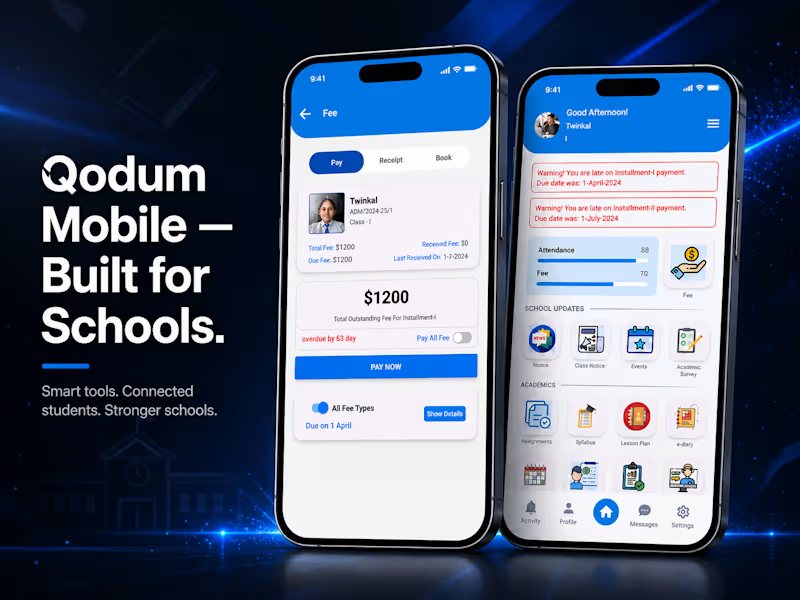
Qodum Mobile — School Management App for Teachers, Students & Staff
A React Native school management app with multi-role support, assignment workflows, push notifications, and fee payments.
The Starting Point
The web version of Qodum handled school operations from an admin/staff perspective — but teachers, students, and parents needed their own dedicated way to interact with the system day-to-day, from wherever they were. That's what the mobile app was built to solve.
What I Built
Qodum's mobile app supports three distinct user types — teachers, students, and staff — each with their own relevant experience within the same app. Core functionality includes an assignment system where teachers can create and review assignments, students can view and submit answers, and teachers can give feedback directly on submissions. The app also includes a notice/notification system, with real-time push notifications powered by Firebase Cloud Messaging, plus an integrated payment gateway so students can pay school fees directly from the app.
Tech Stack
Built with React Native, with Firebase handling messaging and push notifications, and a dedicated payment gateway integration for fee collection.
Why Multi-Role Matters Here
Rather than building separate apps per user type, Qodum's mobile app handles teachers, students, and staff within a single codebase — each seeing a tailored experience based on their role, which keeps the app maintainable while still serving genuinely different workflows.
How I Work
This mirrors my approach on client mobile projects — one codebase, role-based experiences, and integrations (like payments and push notifications) that actually work reliably in production, not just in a demo.
GitHub: https://github.com/jonathanadel-dev/qodum-app
0
134
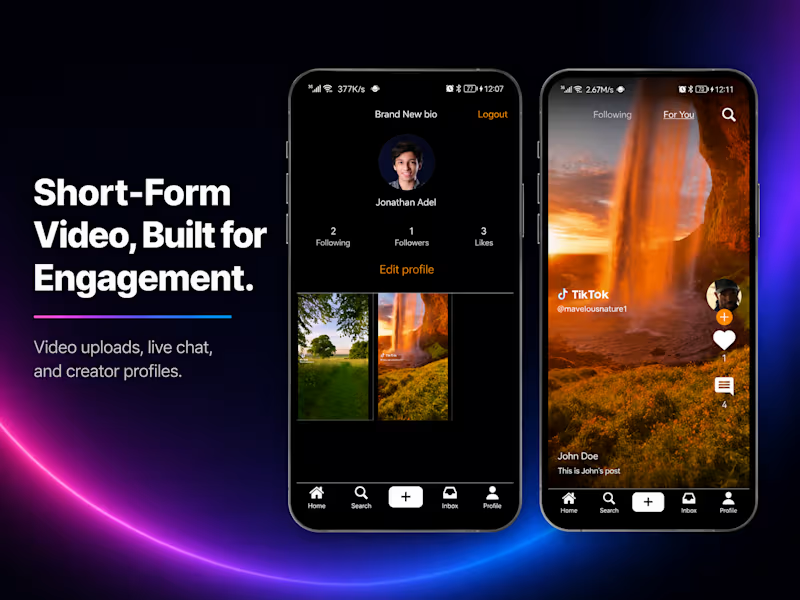
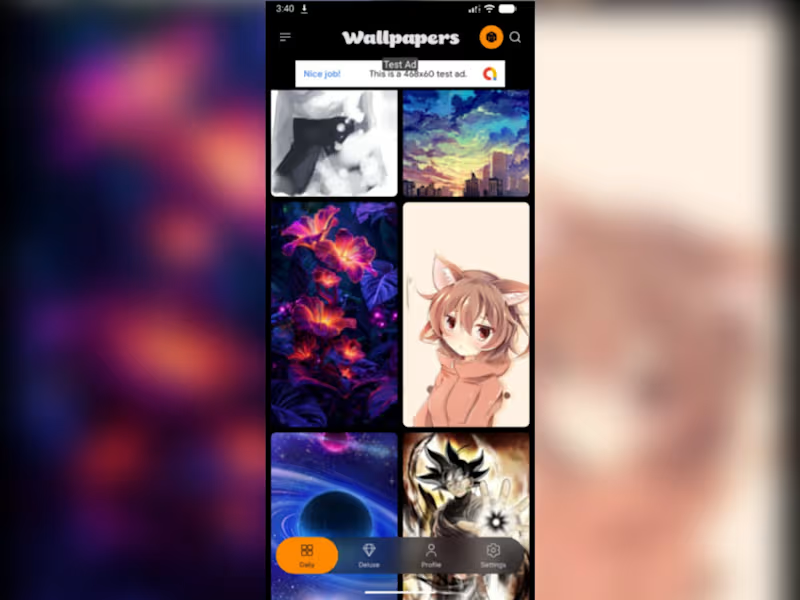
Gursha — Short-Form Video Sharing App (TikTok-Style)
A TikTok-style short-video app built with React Native — video uploads via AWS S3, live chat with Firebase, and user profiles
The Starting Point
A client came to me wanting a short-form video sharing app in the vein of TikTok — a platform where users could upload, browse, and engage with video content, with real-time social features baked in from the start.
What I Built
Gursha is a React Native mobile app centered around short-form video content. Users can upload videos, which are stored and served via AWS S3, and browse a feed of content much like TikTok's core experience. A live chat feature, powered by Firebase, lets users message each other in real time. Each user also has a profile page showing their own uploaded videos, giving the app a personal, creator-focused layer on top of the content feed.
Tech Stack
React Native for the mobile app, AWS S3 for video storage and delivery, and Firebase for real-time chat functionality.
Why This Setup
Video-heavy apps live or die on how well media is stored and served — using AWS S3 for uploads kept video handling scalable and reliable rather than trying to manage large media files through a single backend server. Firebase's real-time capabilities were a natural fit for chat, since it handles live data sync without needing custom WebSocket infrastructure built from scratch.
How I Work
This project is a good example of taking a broad, ambitious client request ("build me something like TikTok") and breaking it into concrete, buildable pieces — video storage, feed logic, real-time chat, and profiles — each solved with the right tool for the job rather than forcing one system to do everything.
GitHub: https://github.com/jonathanadel-dev/gursha-app
1
207

Full stack developer building next generation saas apps

Full stack developer building next generation saas apps
View more →


Mahmoud | Webflow Dev for Modern Responsive Websites
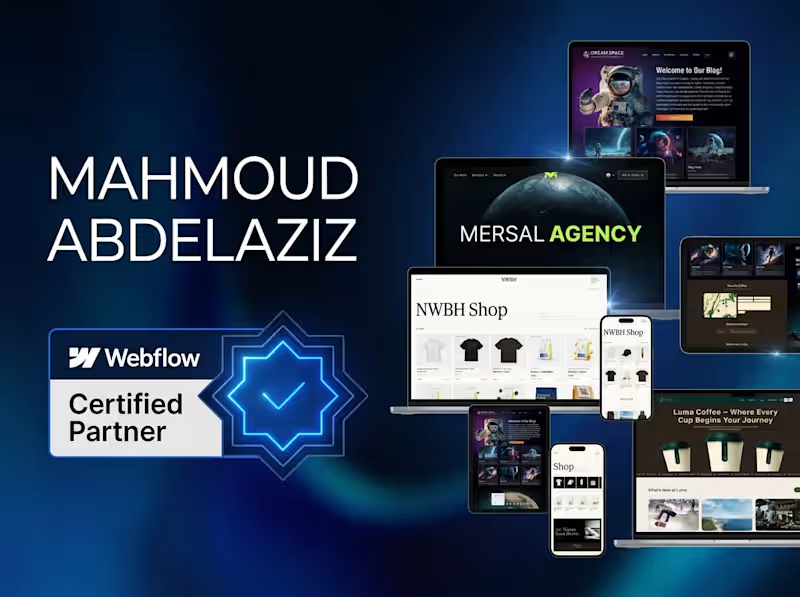
Officially a Webflow Certified Partner 🥳
Proud to join the Webflow Certified Partner program.
A big step in my journey as a UX/UI Designer & Webflow Developer, focused on building clean, high-performing, and user-centered digital experiences.
Excited for what’s next 🚀
Check my profile:
https://webflow.com/@mahmoud-abdelaziz-badr
0
110
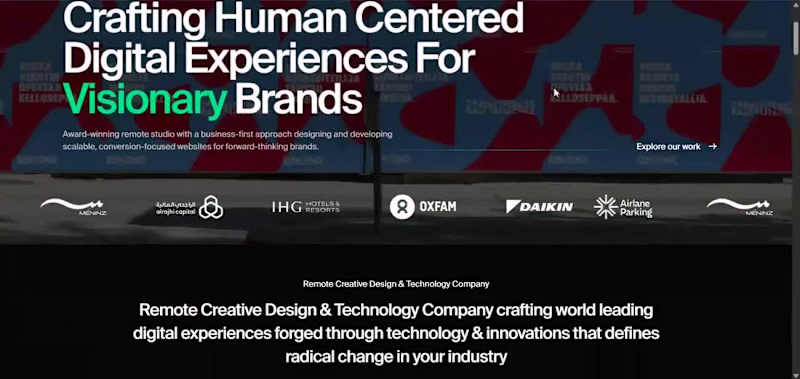
Developed the Beny Studio website, a digital agency specializing in website design and development with Webflow.
The website was built to showcase the agency's services, portfolio, and expertise while highlighting its status as a Webflow-certified partner. The focus was on creating a clean, professional, and modern user experience that reinforces credibility and helps communicate the agency's value proposition effectively.
Key contributions:
• Webflow development
• Responsive implementation
• Service-focused content structure
• Portfolio presentation
• Performance and usability optimization
The result is a polished digital presence that reflects Beny Studio's expertise and supports its positioning as a trusted Webflow partner.
0
51
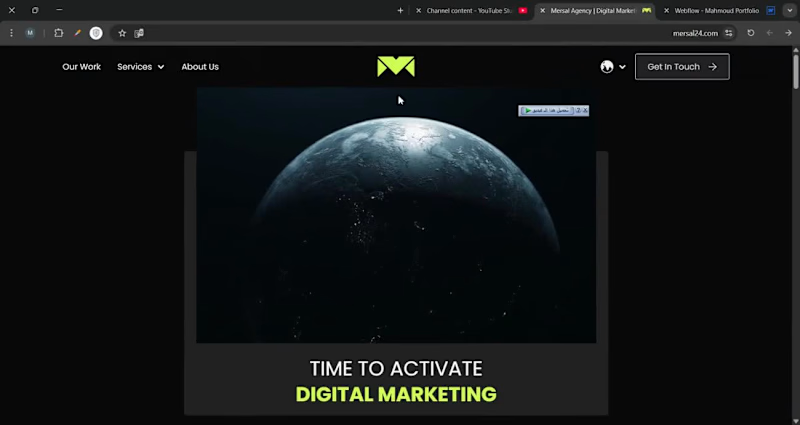
Just published a showcase video for Mersal24 🎥
I designed and developed the entire website from scratch, combining UX/UI design, Webflow development, and advanced GSAP animations to create a smooth and engaging user experience.
The project includes custom interactions, responsive layouts, and a polished frontend built with performance and scalability in mind.
Check out the video and let me know what you think!
3
1
102

Meticulous Web Dev & Design Craftswoman
Meticulous Web Dev & Design Craftswoman
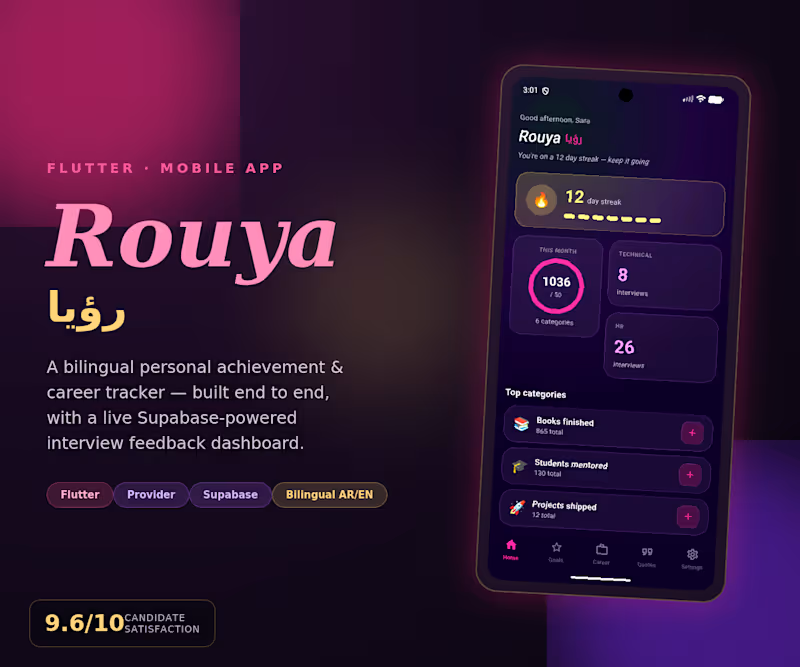
Rouya (رؤيا, "vision") is a Flutter app for professionals to track achievements, career journey, teaching, and favorite quotes in one place. It has a live dashboard with streak tracking, a custom achievement system, a career module for logging interviews with outcomes and ratings, a teaching tracker, and a quotes library with favorites. It integrates with Supabase to pull live candidate survey data from real interviews, visualizing feedback across multiple dimensions. Rouya supports two dark themes (Feminine Power and Obsidian), uses Provider for state management, and reflects real data: 865+ books finished, 130+ students mentored, 32 interviews at 9.6/10 satisfaction.
0
38
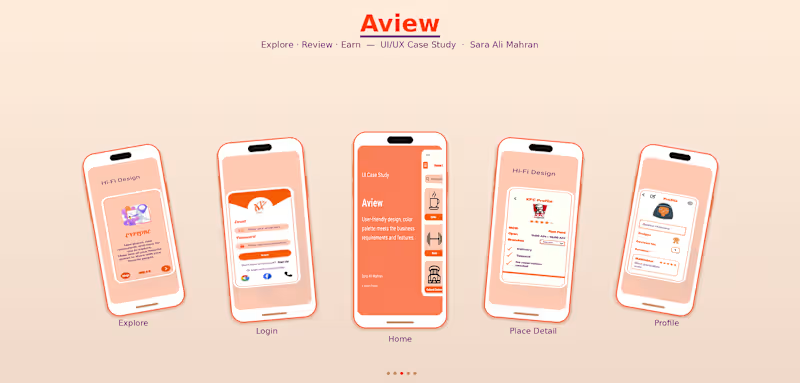
Aview is a one-stop-shop review platform for restaurants, cafés, gyms, art galleries, and co-working spaces. The 6-month project covers the full UX/UI process — research, IA, wireframing, style guide, and hi-fi prototype. Key decisions include a gamified Explore/Review/Earn system, an orange/purple palette rooted in food psychology, and a category-grid home for effortless discovery. Built with Flutter and Firebase, source code on GitHub.
0
98
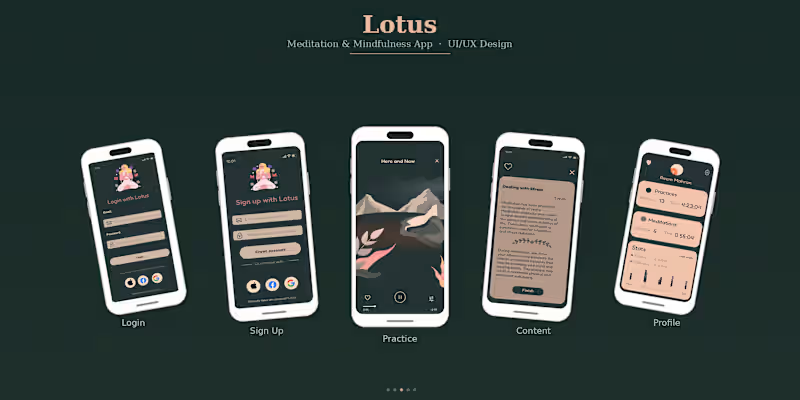
Lotus is a meditation and mindfulness iOS app designed to make mental wellness feel warm and approachable. The project covers the full UX/UI process — user research, information architecture, wireframing, and hi-fi design — resulting in a calm, earthy interface that guides users through daily meditation sessions and tracks their progress. Key screens include onboarding, guided practice player, content reading, and a gamified progress profile.
0
114