Projects in Cañada de GómezProjects in Cañada de Gómez
Cover image for RESTORE AVAILABLE: Let Some Things
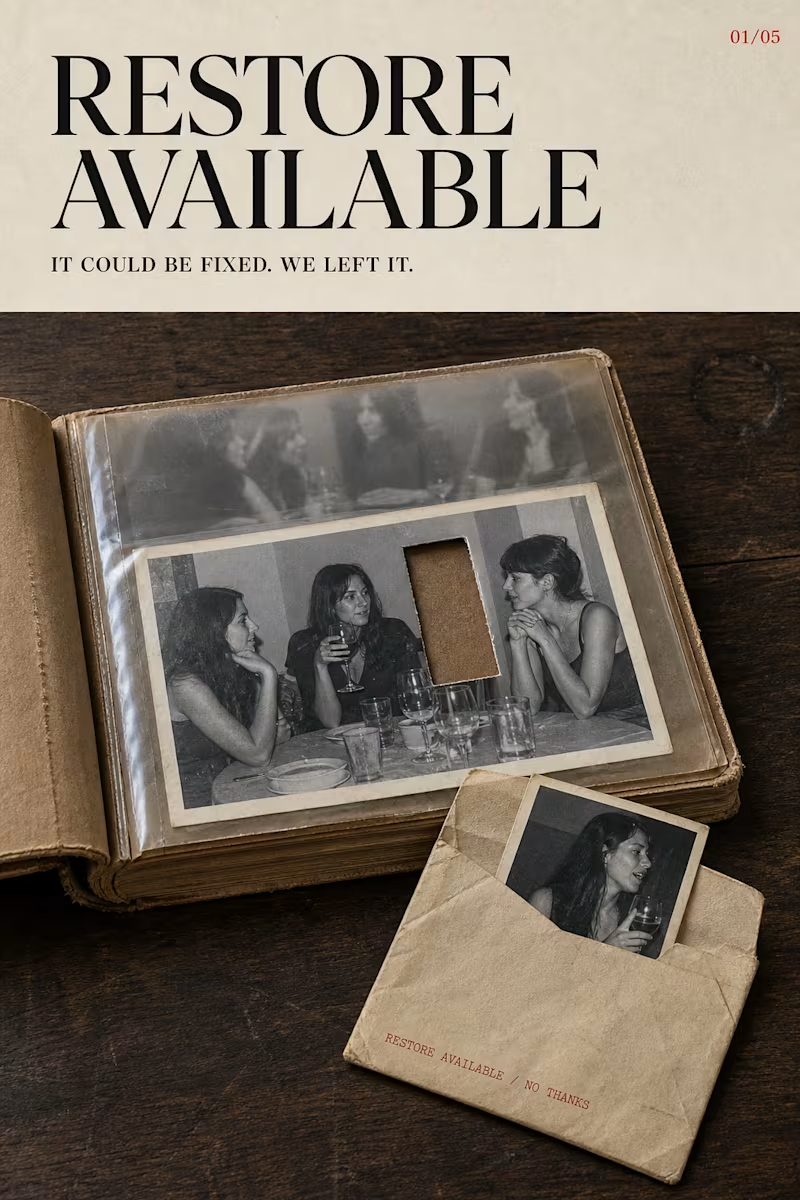
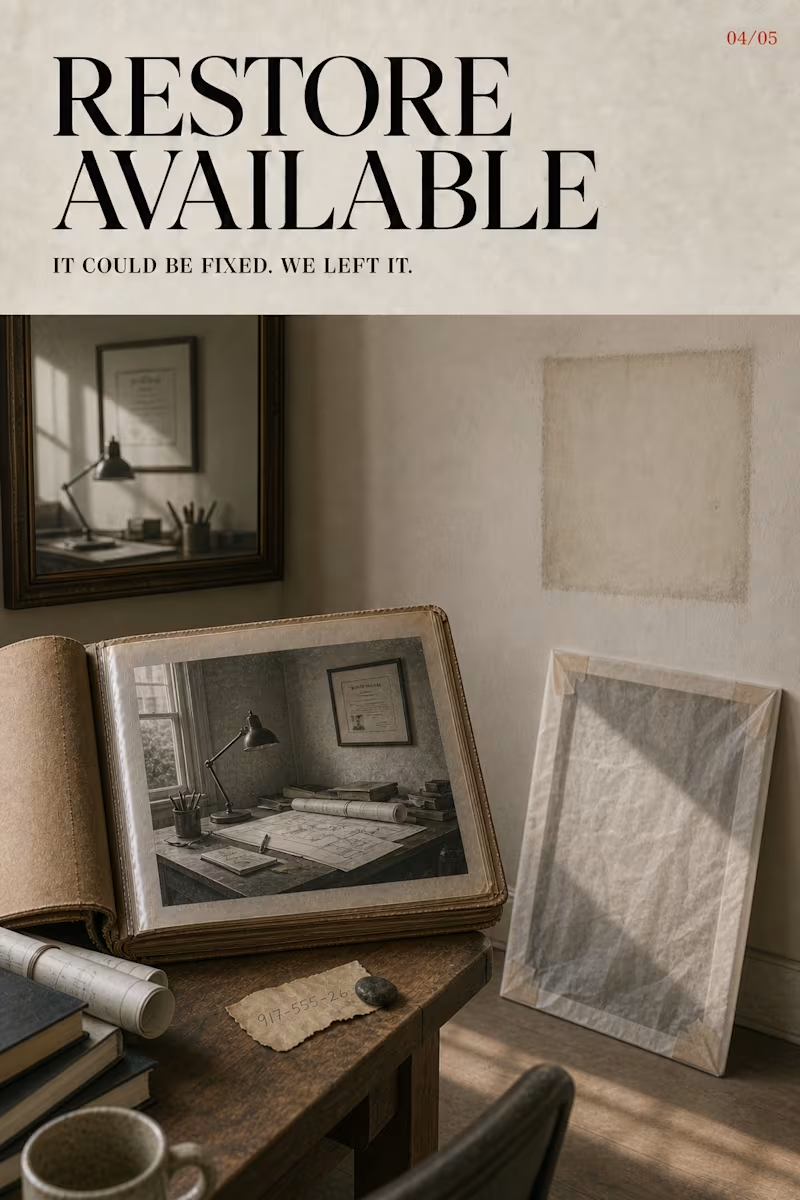
RESTORE AVAILABLE: Let Some Things Stay Lost All recent technology was built on a promise: nothing has to be lost. Backup, history, restore. Now AI does not just save, it reconstructs. But humans never worked like that: we are not archivists, we are editors. We forget, we cut, we leave things behind. RESTORE AVAILABLE explores a question that never needed to be asked before: what happens when someone can perfectly recover something, and chooses not to? Five covers of a fictional magazine, connected by the same physical album and a constant rule: in each image, a reflection shows what could be restored, never reality. In the last piece, that rule transforms: the reflection stops showing a possible alternative and instead shows what was decided to be kept. The ability to recover something does not create the obligation to recover it. 01: THE VERSION OF ME A youthful photograph, with one person removed. The fragment remains intact, kept to the side. Only in the reflection of the glass does the complete version exist. The first question of the series: who decides to stop being someone they already were? 02: THE RUPTURE A couple on the beach; only one of the two remains in the image. A nearby phone holds the complete photograph, available but switched off. Restoration is possible. The decision is not. 03: THE FRIEND Four friends at a table; one has been removed from the scene. A piece of paper with a phone number suggests the person is still alive, reachable. This absence is not about death, it is about the distance someone chose to sustain. 04: THE LIFE WE DIDN'T TAKE A desk from a profession that was never practiced. A frame, still wrapped, never got hung. The reflection shows the full wall; reality remains empty. Not everything we could have been needs to come back. 05: THE CHOICE The album, open to a blank page. Around it, the objects that have appeared throughout the series, gathered together for the first time. The reflection no longer offers an alternative: it arranges what was decided to be kept. Leave it there.
1
2
426
Cover image for FINALLY I COULD
There are things
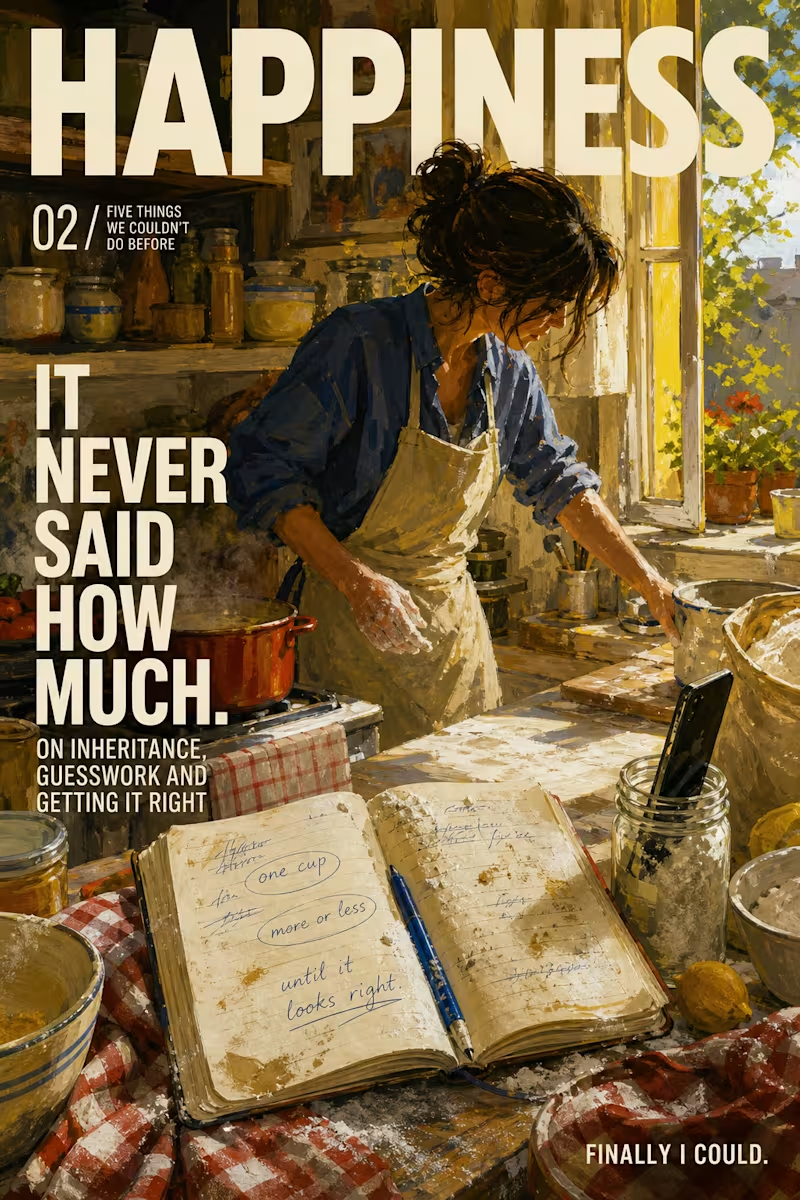
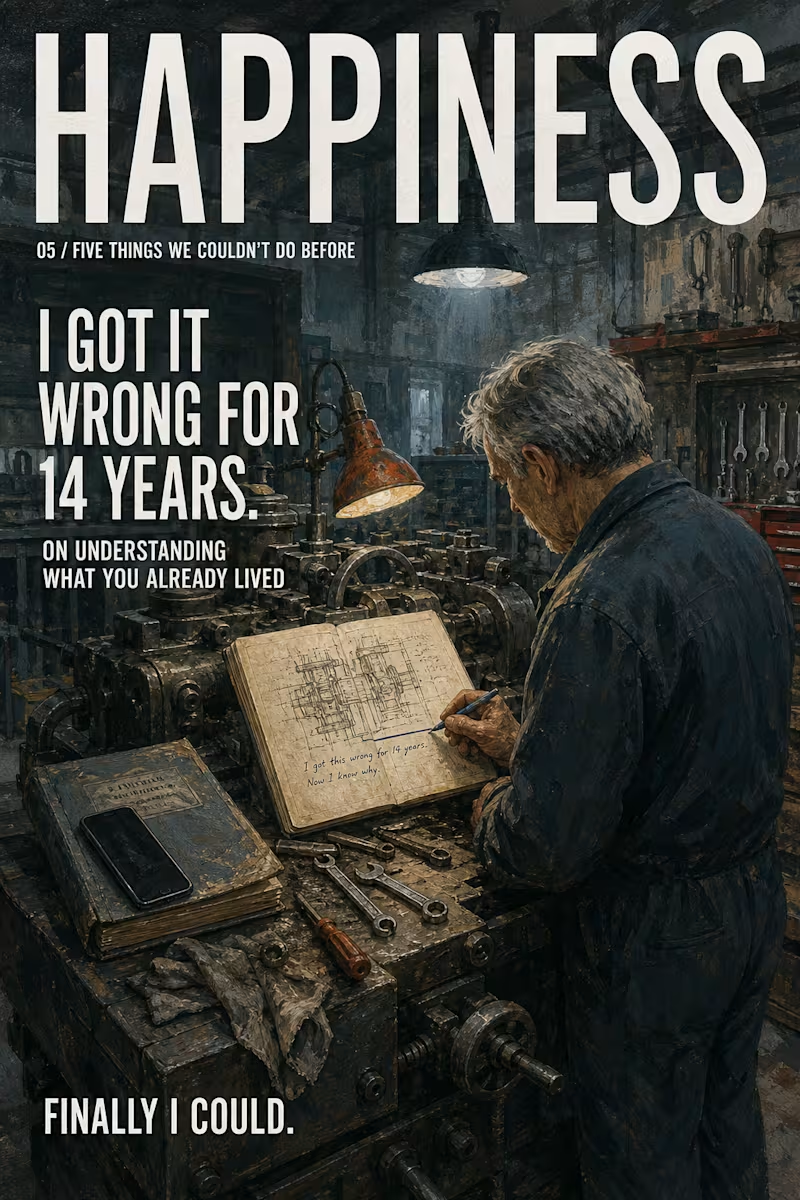
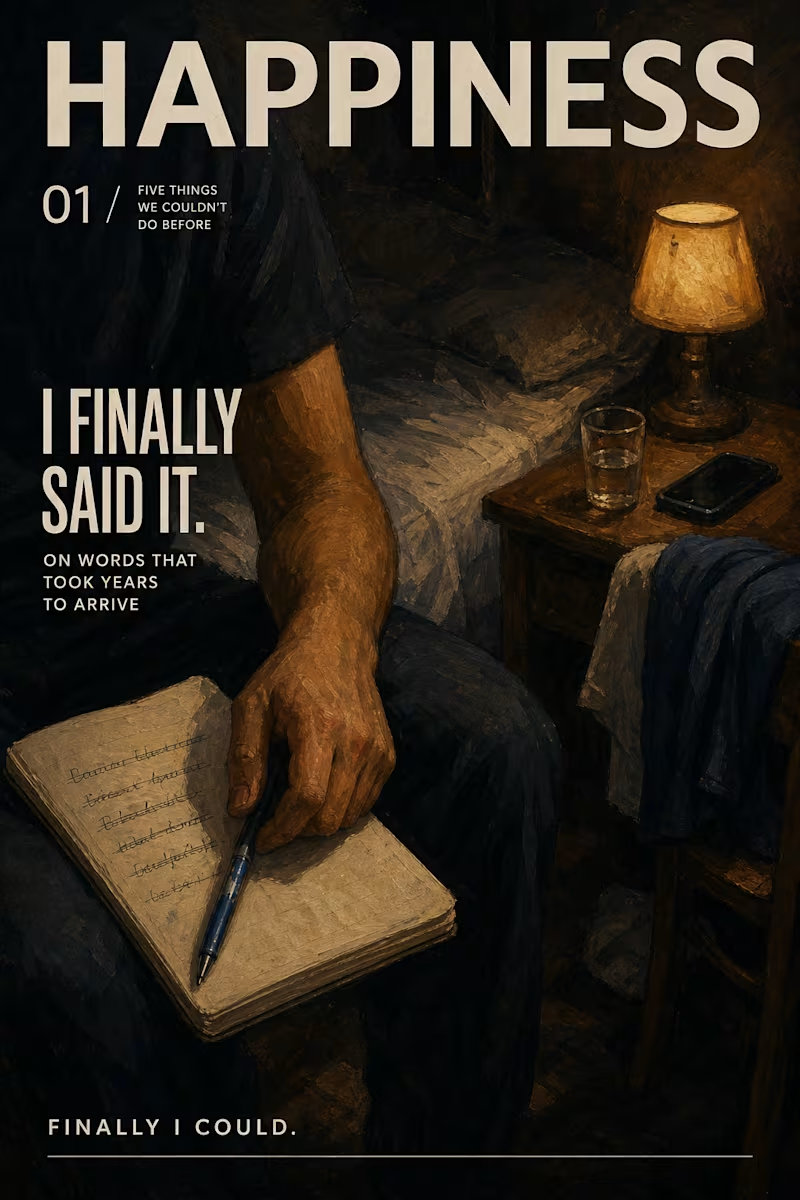
FINALLY I COULD There are things we've wanted to do for years. Say something we never found how to say. Cook a recipe we inherited, even though no one ever fully explained how. Give shape to a memory we carry inside, even if we don't know how to draw it. Talk to someone far away and finally find the words. Understand something we've been doing for years without really understanding why. They weren't big dreams. They weren't impossible. There was just something in the way. Lack of time. Lack of knowledge. Lack of skill. Lack of words. Lack of access. And many times we learned to live with that. To say someday. To leave it for later. To think that some things just weren't for us. Until a tool appeared capable of removing some of that friction. Not to do everything for us. Not to feel for us. Not to replace desire, memory, curiosity or effort. Just to clear the path. Because AI didn't invent happiness. Happiness was already there. In a letter someone needed to write. In a recipe someone wanted to bring back. In a memory someone wanted to see again. In a conversation someone wanted to have. In a question someone had been wanting to answer for years. AI just made getting there a little easier. And maybe that's one of the most human shifts of this new era: not having to wait so long to do the small things we always wanted to do. That's why this campaign doesn't celebrate what AI can do. It celebrates what we can do now that some things are no longer in the way. Because in the end, the machine can help. It can explain. It can translate. It can organize. It can draw. It can find a way. But the letter is still yours. The memory is still yours. The recipe is still yours. The conversation is still yours. The question is still yours. And the hand that picks up the pen is too. AI didn't give you happiness. It just took the waiting line away. FINALLY I COULD.
0
433
Cover image for FINALLY I COULD 2. An editorial campaign about happiness in ...
FINALLY I COULD 2. An editorial campaign about happiness in the age of AI. We usually talk about AI in terms of what it can do. I wanted to talk about what we can finally do because of it. A letter we couldn't write. A recipe we couldn't understand. A memory we couldn't draw. A conversation we couldn't have. Something we've been doing wrong for years because we never understood why. Nothing extraordinary. Just small things that had been waiting inside ordinary people for a very long time. AI didn't create the desire. It didn't create the memory. It didn't create the happiness. It simply removed some of the friction between wanting something and being able to do it. That is the difference between easy happiness and cheap happiness. Cheap happiness is when the machine does the meaningful part for you. Easy happiness is when the machine removes the obstacle that was keeping you from doing it yourself. That distinction became the visual language of the campaign. Five covers of the same fictional contemporary culture magazine, HAPPINESS. Five different lives. Five different obstacles. Five tiny moments of possibility. The same worn notebook. The same blue pen. Because no matter how intelligent the tool becomes, what remains at the end is still what a person did with it. The campaign is called: FINALLY I COULD. POR FIN PUDE. Not because AI made us extraordinary. But because sometimes happiness was never that far away. We just couldn't get to it yet. Vanesa Martinez 
2
499
Cover image for FINALLY I COULD 1.
An editorial
FINALLY I COULD 1. An editorial campaign about happiness in the age of AI. We usually talk about AI in terms of what it can do. I wanted to talk about what we can finally do because of it. A letter we couldn't write. A recipe we couldn't understand. A memory we couldn't draw. A conversation we couldn't have. Something we've been doing wrong for years because we never understood why. Nothing extraordinary. Just small things that had been waiting inside ordinary people for a very long time. AI didn't create the desire. It didn't create the memory. It didn't create the happiness. It simply removed some of the friction between wanting something and being able to do it. That is the difference between easy happiness and cheap happiness. Cheap happiness is when the machine does the meaningful part for you. Easy happiness is when the machine removes the obstacle that was keeping you from doing it yourself. That distinction became the visual language of the campaign. Five covers of the same fictional contemporary culture magazine, HAPPINESS. Five different lives. Five different obstacles. Five tiny moments of possibility. The same worn notebook. The same blue pen. Because no matter how intelligent the tool becomes, what remains at the end is still what a person did with it. The campaign is called: FINALLY I COULD. POR FIN PUDE. Not because AI made us extraordinary. But because sometimes happiness was never that far away. We just couldn't get to it yet. Vanesa Martinez 
2
1
462