Projects using Figma in BoguraProjects using Figma in BoguraMost manufacturing websites are just PDFs in disguise.
An engineer lands on your page with a real constraint: “I need a castor that holds 2 tonnes, survives a cast-iron floor, and fits a 150 mm wheel.”
Then they scroll through 40 products, open 6 datasheets, and leave to ask a competitor who answers faster.
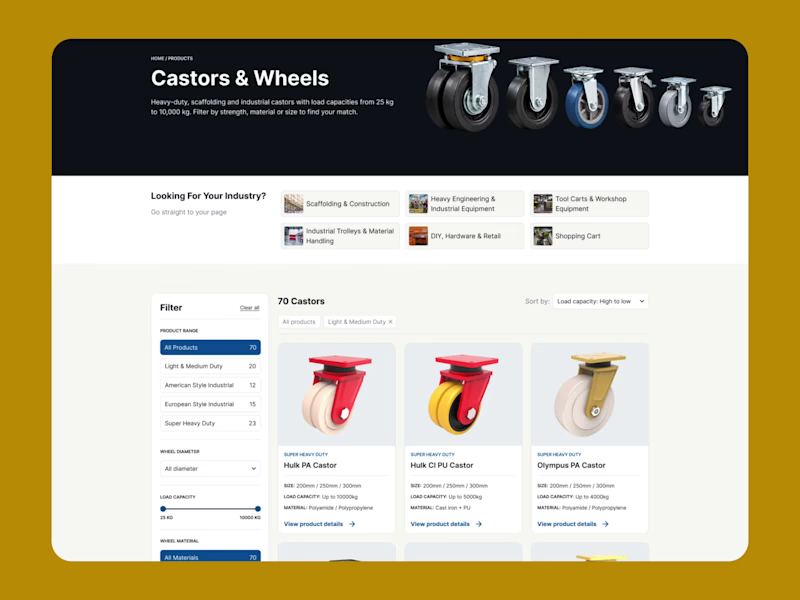
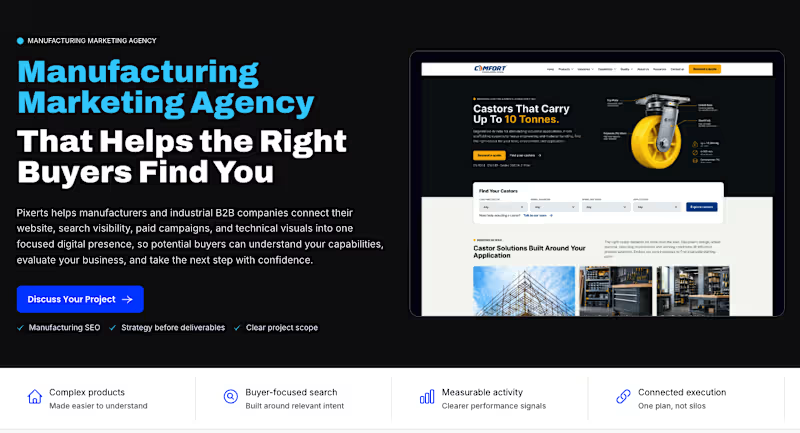
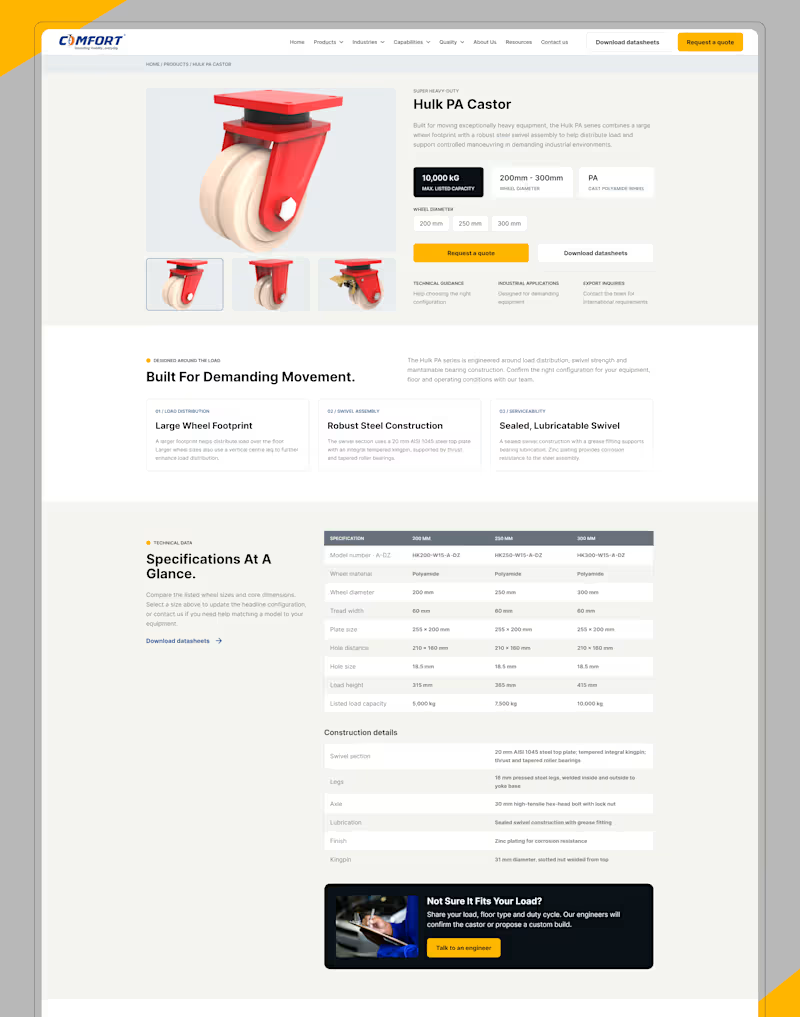
I recently designed a Castors & Wheels catalogue page for an industrial castor manufacturer, and these are the principles I’d now apply to any B2B product catalogue:
1. Let buyers search by constraint, not by product name.
Industrial buyers rarely know your model names. They know their load, their floor, their wheel size. So the filters are load capacity, wheel material, diameter and duty class.
2. Put the specs on the card.
Size, load capacity and material are visible before the click. If someone has to open a page to find out whether a product is even relevant, the page has failed.
3. Offer a second way in.
Some buyers think in products, others in industries. A “Looking for your industry?” row (scaffolding, heavy engineering, material handling) gets them to the right range in one click.
4. Let them sort by what matters.
Defaulting to load capacity, high to low, matches how this buyer actually narrows things down.
5. Treat “we didn’t list it” as a lead.
Most manufacturers can build custom, but the page never says so. A “Didn’t find your castor?” block turns a dead end into a quote request.
6. Make the enquiry form ask the right questions.
Industry and application go in the form, so sales starts the first call already knowing what the buyer needs.
7. Design for export from day one.
Language options, a separate export contact and a clear route to a quote matter when your buyers sit in a dozen countries.
A catalogue page isn’t there to show everything you make.
It’s there to get the right buyer to the right product faster than your competitor can.
👇 If you’re a manufacturer, what’s the one thing buyers keep asking your sales team that your website should already answer?
And if you’re a buyer, what makes you close a supplier’s tab?