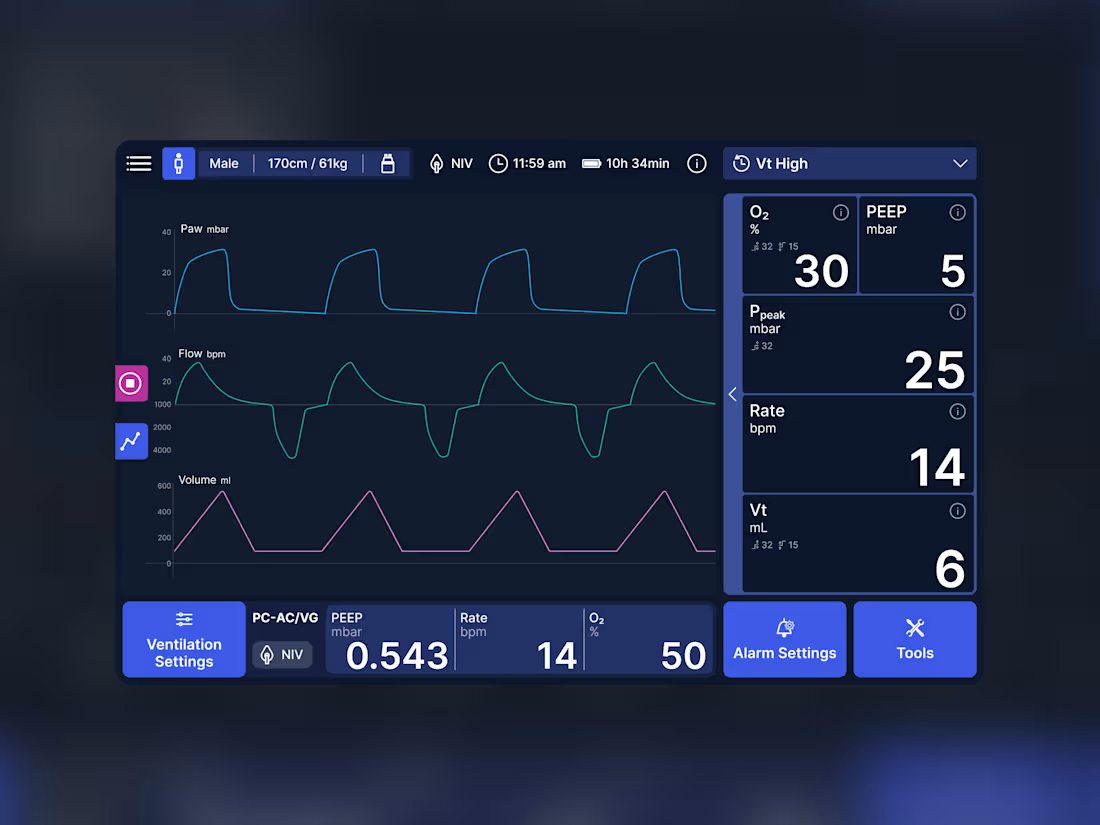
Digital Accessibility Projects in BarcelonaDigital Accessibility Projects in BarcelonaThis project covered the UX/UI design of two medical devices for respiratory care: a hospital mechanical ventilator for ICU clinical staff, and the Alveo lung simulator, a training tool for healthcare professionals. Both interfaces needed to support monitoring, alert response, and real-time decision-making under time pressure, in environments with real-world constraints.
The UI had to comply with the clinical standard governing alarm hierarchy, color coding, and priority levels in hospital settings. Every decision, from typography to interaction patterns, was validated alongside medical experts and reviewed against certification requirements.
I worked as UX/UI Designer within a multidisciplinary team, building a component library of 170+ components and 700+ variants that served both products. The system was delivered in under 1.5 years and received outstanding feedback at industry trade shows, with both devices recognized as among the most innovative solutions in the market.
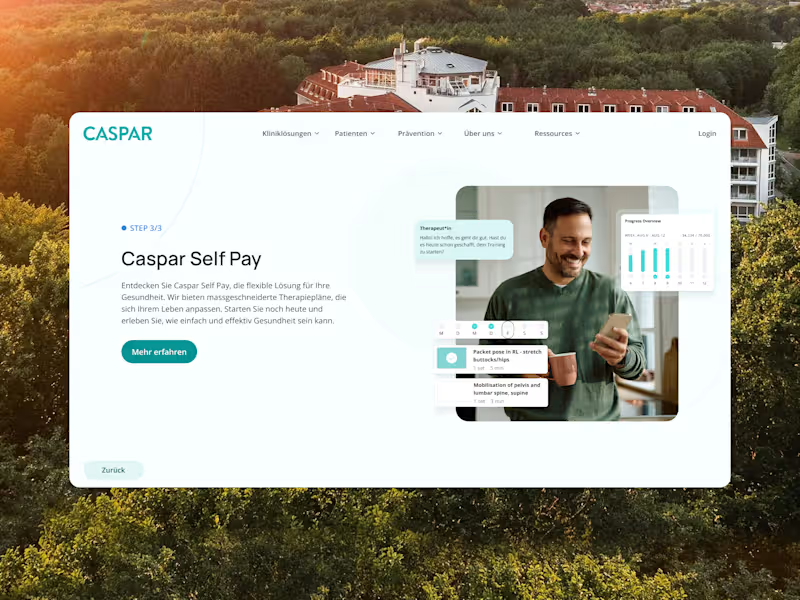
Deliverables: UI Design · Interaction Design · Design System · Component Library · Accessibility · High-Fidelity Prototyping · Development Handoff Caspar Health is a German digital rehabilitation platform connecting clinics, doctors, therapists, and patients through certified aftercare programs. Trusted by 260+ clinics and 350,000+ patients, with 97% satisfaction — but none of that mattered if people couldn't figure out whether the platform was even for them.
At Yumeda Studio, we worked as a team of three designers in a fast-paced, constantly changing environment on the UX end-to-end of the B2B-facing website. One of the biggest challenges was designing for four distinct audiences — clinical institutions, doctors, therapists, and patients — each arriving with different questions and different levels of digital confidence.
The platform was content-heavy by nature so managing high information density through clear hierarchy and progressive disclosure wasn't just a design choice, it was a constraint that had to be solved from the beginning.
One of the trickiest parts was eligibility. Patients often couldn't tell if they qualified for a program, which caused drop-off before they even reached intake. We introduced a guided quiz system to solve this, alongside GDPR-compliant consent flows that felt like a natural part of the journey rather than a legal hurdle.
Deliverables: UX Research · UX Design · UI Design · Information Architecture · Accessibility · Multi-Audience Strategy · Development Handoff · Q&A