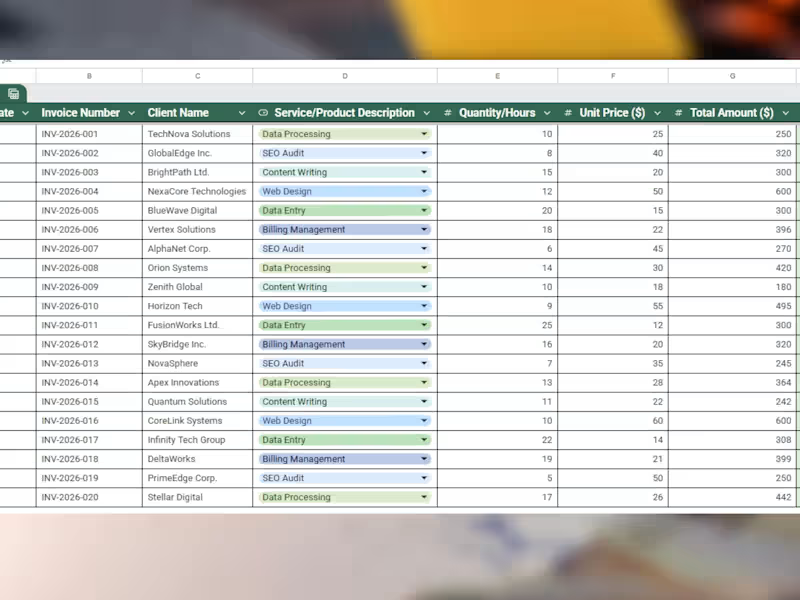
SEO Content Managment Projects in BangladeshSEO Content Managment Projects in BangladeshThis project demonstrates my ability to manage, organize, and process invoicing and billing data accurately using spreadsheet tools like Microsoft Excel and Google Sheets. The dataset includes 20 sample invoices generated over a three-month period, simulating real-world business transactions across multiple international clients.
Each record contains essential billing details such as invoice date, unique invoice number, client name, service description, quantity/hours worked, unit pricing, total amount calculation, and payment status (Paid, Pending, or Overdue).
The project highlights my skills in:
Accurate data entry and formatting
Invoice tracking and organization
Performing calculations (e.g., total amount = quantity × unit price)
Maintaining data consistency and structure
Handling financial records with attention to detail
This sample dataset reflects common tasks performed in data entry and billing roles, including managing client records, tracking payments, and ensuring data accuracy for financial reporting. For the past 6+ months, I’ve been helping a business in Manhattan, NY, USA improve its SEO. The client was already performing well in Google Search and Google Maps, but we wanted to go beyond traditional search and increase visibility across AI-powered search platforms.
Today, people are asking ChatGPT, Gemini, Perplexity, and other AI tools questions like, “What’s the best .... service in Manhattan?” Our goal was to make sure this business appeared in those AI-generated recommendations as well.
Over time, that strategy has started paying off. The business is now being mentioned across several AI search platforms, giving it additional exposure beyond Google.
I believe SEO is evolving. Ranking on Google is still essential, but being discoverable through AI search engines is becoming just as valuable. More users are relying on AI assistants to research businesses, compare services, and make purchasing decisions.
About 1.5 months ago, I began focusing more on AEO (Answer Engine Optimization). By creating and optimizing high-quality content on relevant Q&A platforms, I helped AI systems better understand the business and surface it in the right search contexts.
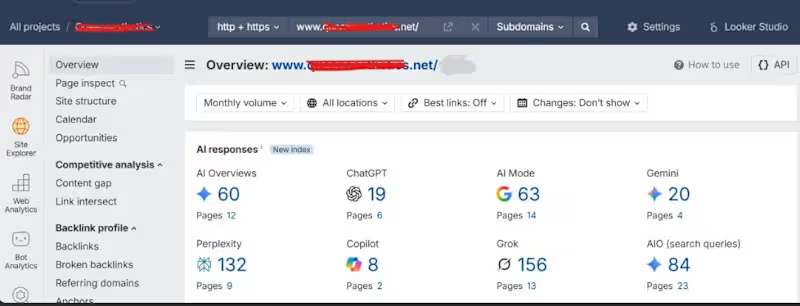
📊 Here are the latest results (Ahrefs AI Responses Index):
✨ AI Overviews — 60 mentions (11 pages)
🤖 ChatGPT — 18 mentions (6 pages)
🔍 Google AI Mode — 63 mentions (14 pages)
💎 Gemini — 20 mentions (4 pages)
🟢 Perplexity — 132 mentions (10 pages)
🔷 Copilot — 9 mentions (3 pages)
⚫ Grok — 156 mentions (13 pages)
✨ AIO Search Queries — 18 mentions (10 pages)
Considering these results were achieved in just one and a half months, the progress has been very encouraging. Now, people searching through ChatGPT, Gemini, Perplexity, and other AI platforms can also discover this business.
This clearly shows that the future of SEO goes beyond traditional Google rankings. AI search visibility is becoming an important part of a successful digital marketing strategy.
Businesses that start investing in AEO today are likely to have a significant advantage as AI-powered search continues to grow.
What do you think?
Will AI search optimization for platforms like ChatGPT, Gemini, and Perplexity become a key part of SEO in the future?
Yes or No? Your customers are asking ChatGPT for recommendations before they ever open Google.
Is your business showing up when they do?
Here's what's changing: for years, "getting found online" meant one thing — ranking on Google. That's still true. But now there's a second front opening up, and most local businesses haven't noticed yet.
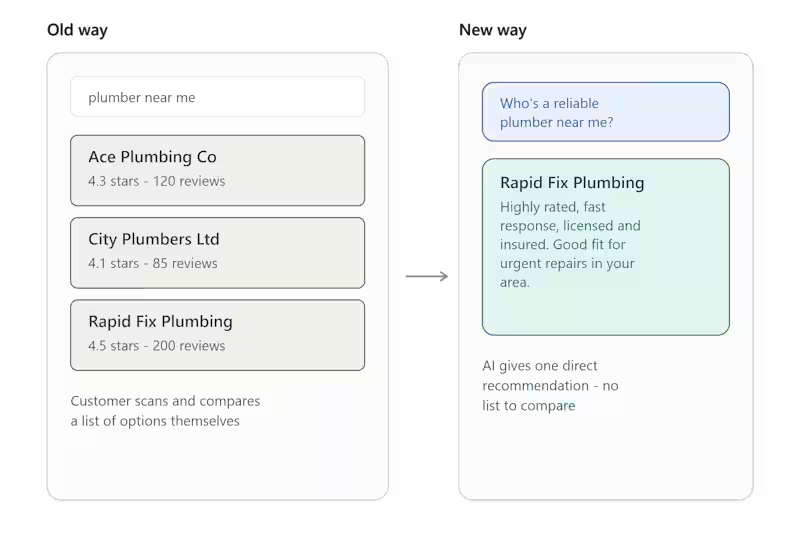
People are asking AI tools directly: "Who's a good plumber near me?" "Best roofing contractor in [London]?" "Reliable moving company for a local move?" And those tools — ChatGPT, Perplexity, Google's AI Overviews — are giving answers. Real business names. Real recommendations.
If your business isn't structured for that, you're invisible in a conversation that's actively happening about businesses like yours, right now.
This is called AEO — Answer Engine Optimization. It's not a replacement for SEO, it's the next layer on top of it. Think of it this way:
🔹 SEO gets you ranked when someone searches.
🔹 AEO gets you recommended when someone asks.
The businesses paying attention to this now are going to have a real head start. The ones that wait will be trying to catch up on a channel that already has established winners.
I've been working AEO into strategies for my clients alongside traditional SEO — structuring content, schema, and site data so AI tools have clear, accurate information to pull from when they're deciding who to recommend.
Curious if your business shows up in AI search results yet? Try asking ChatGPT or Perplexity a question a customer might ask about your industry in your city — see what comes back. I'd genuinely love to hear what you find. Drop it in the comments.
#AEO #AnswerEngineOptimization #LocalSEO #AISearch Technical SEO Audit & Issue Resolution
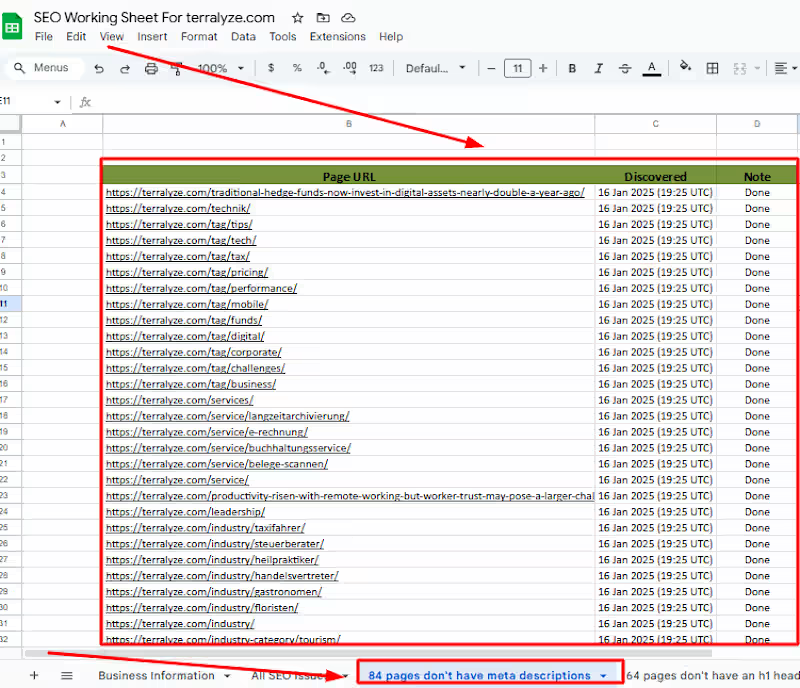
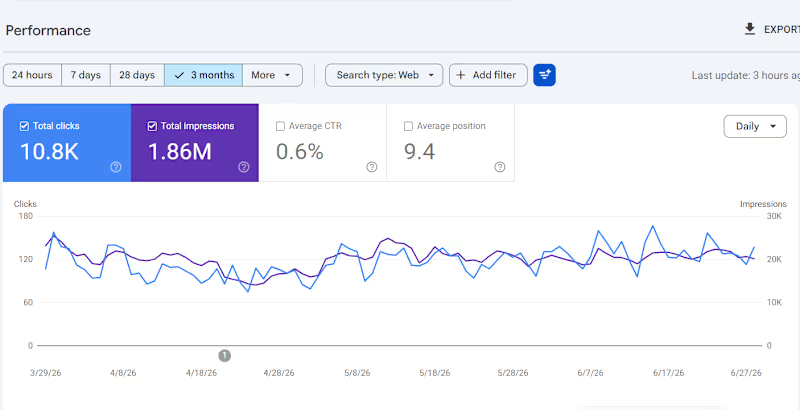
In this project, I performed a comprehensive Technical SEO audit and resolved critical issues affecting website crawling, indexing, and search visibility. Using Google Search Console and industry-standard SEO tools, I identified and fixed multiple technical problems to improve overall website performance.
Key improvements included:
• Complete Technical SEO audit and issue analysis
• Sitemap error detection and successful resolution
• Crawl optimization and indexing improvements
• Page indexing issue fixes (11,000+ URLs indexed)
• Product schema and structured data validation
• Redirect error resolution
• 404 error fixes by correcting URL structure
• Technical recommendations for long-term SEO health
Tools Used:
Google Search Console, Screaming Frog SEO Spider, Google Rich Results Test, Google Analytics, Ahrefs, SEMrush, and WordPress.
This project demonstrates my ability to identify, prioritize, and resolve complex technical SEO issues that improve website health, search engine crawlability, indexing efficiency, and organic search performance.