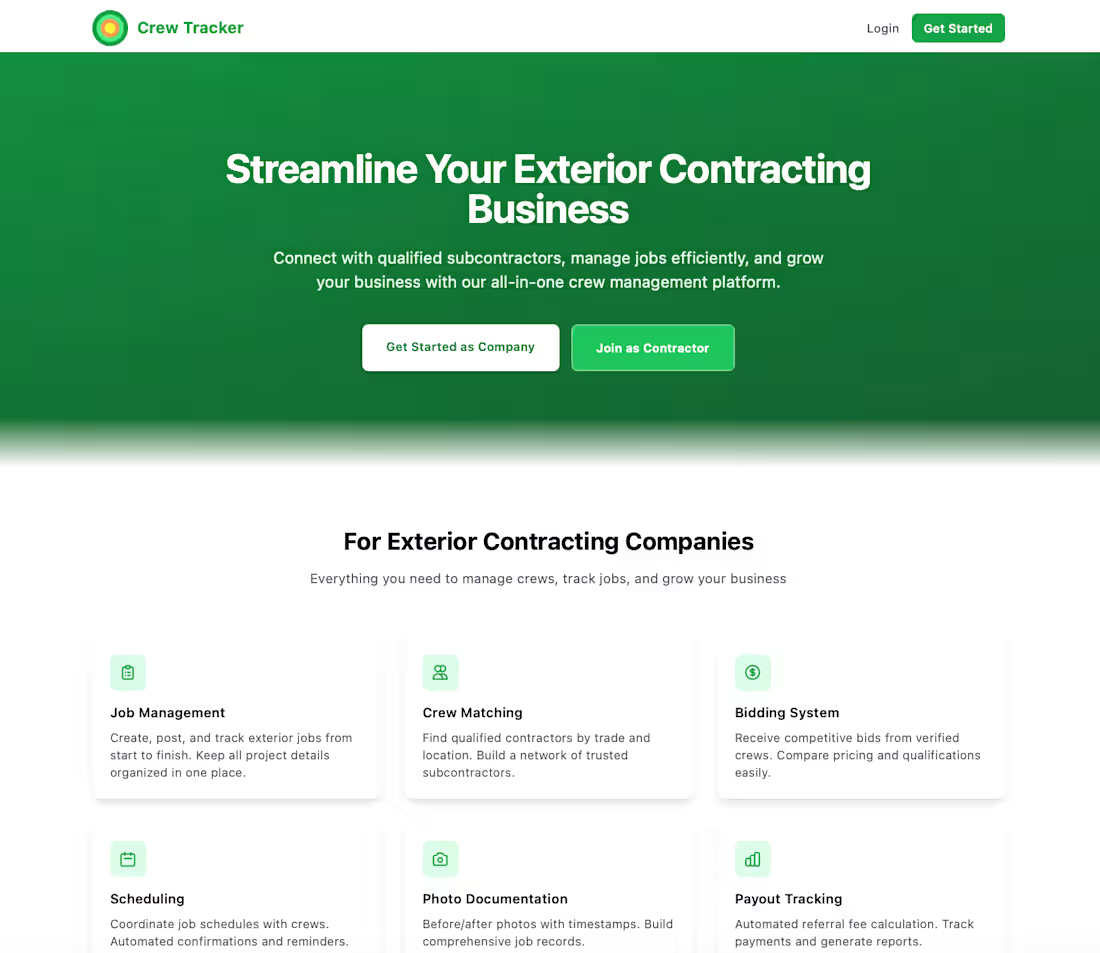
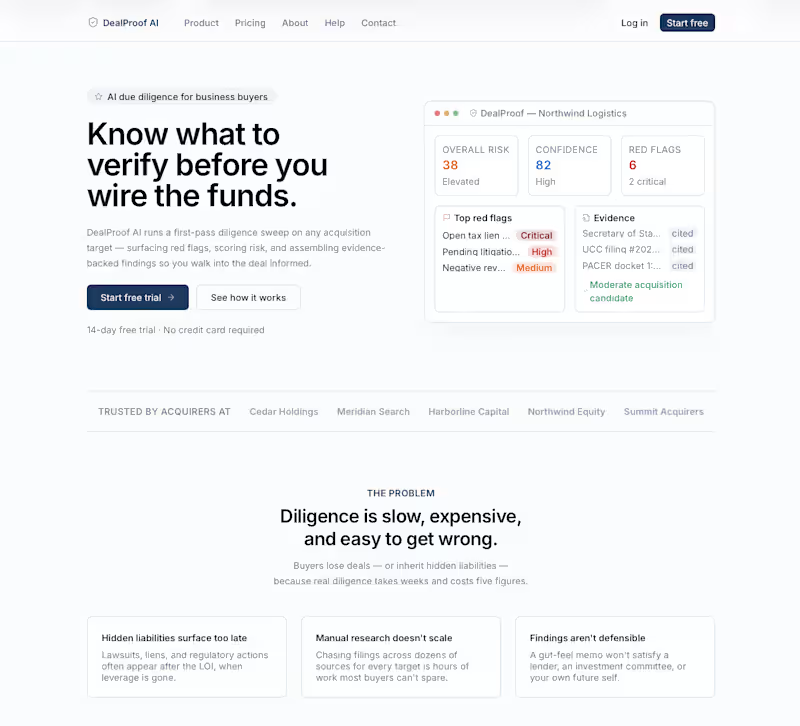
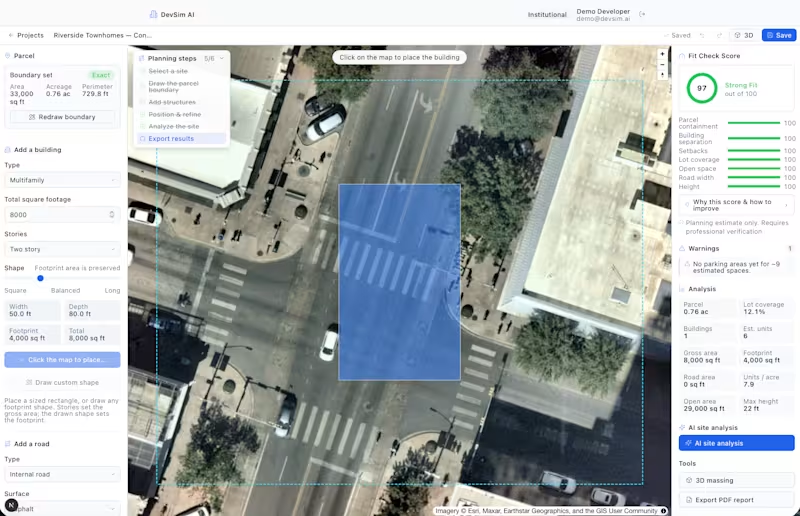
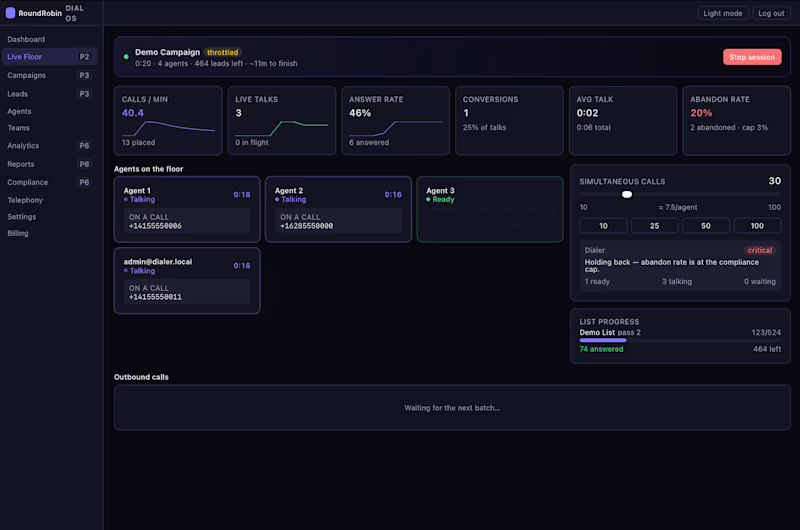
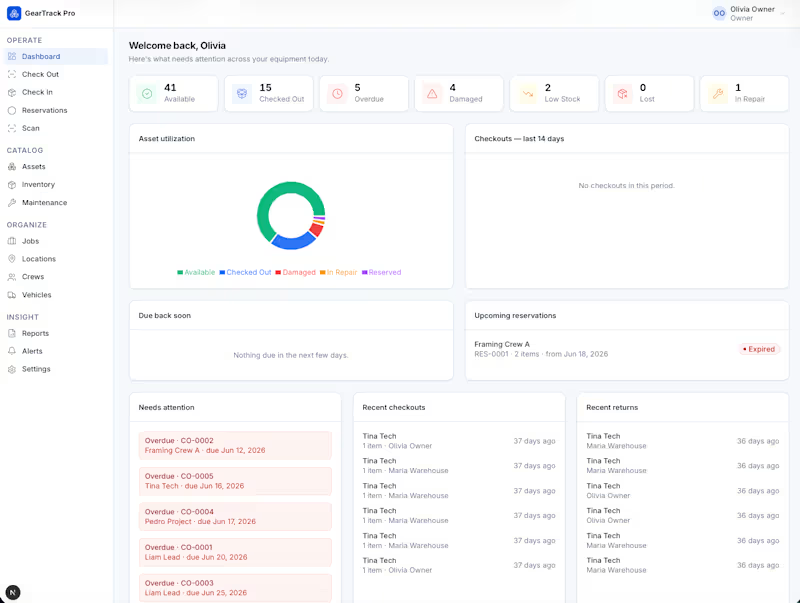
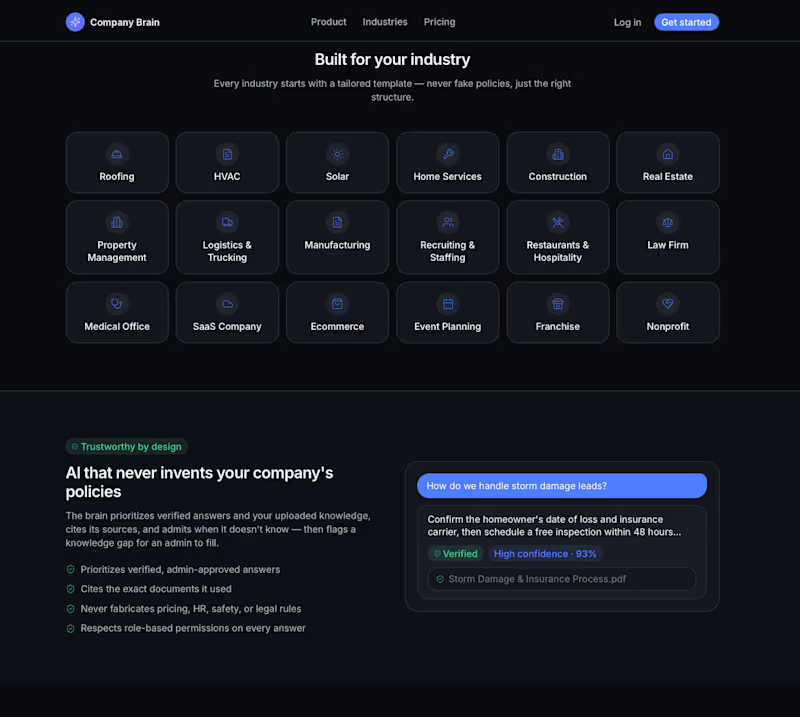
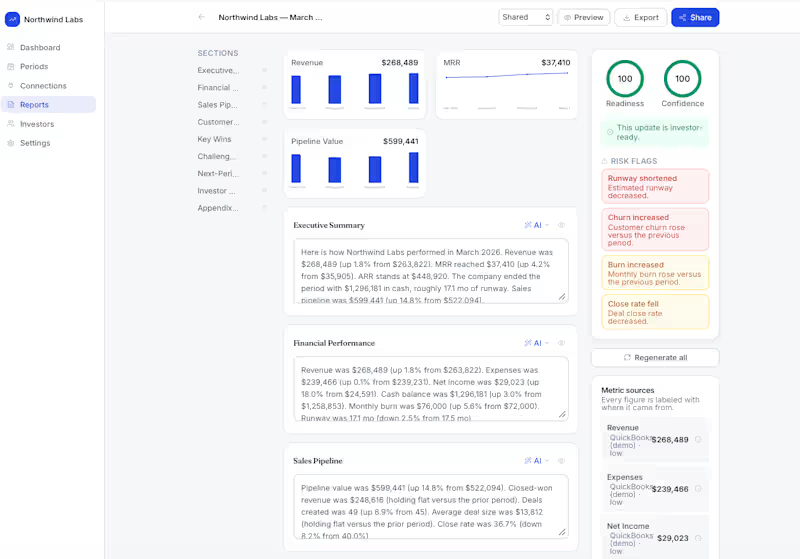
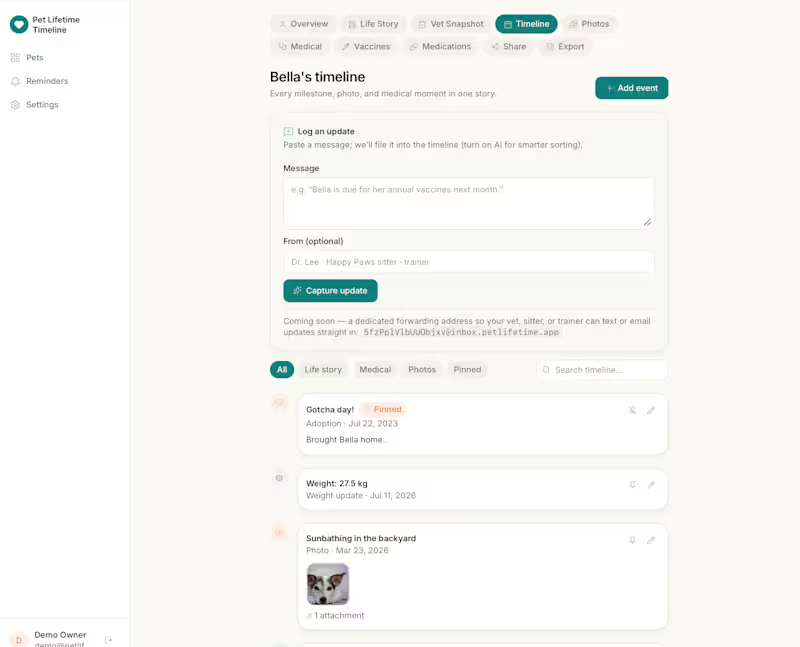
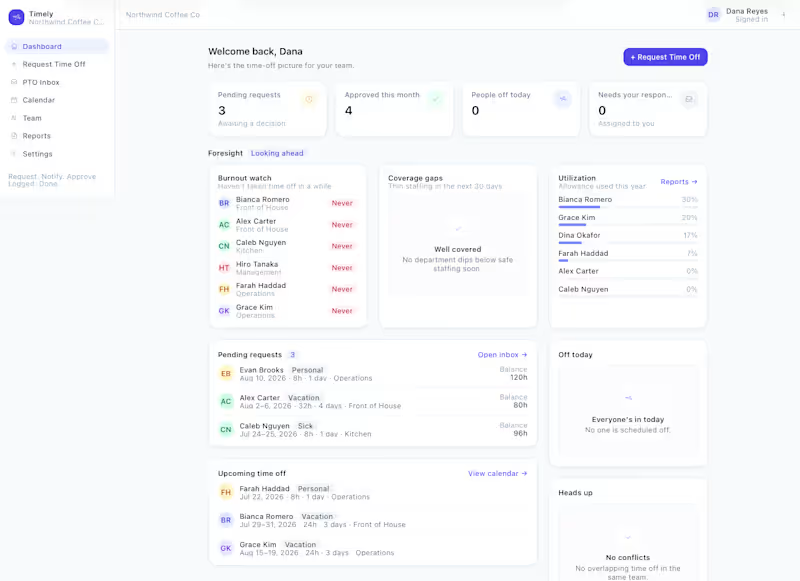
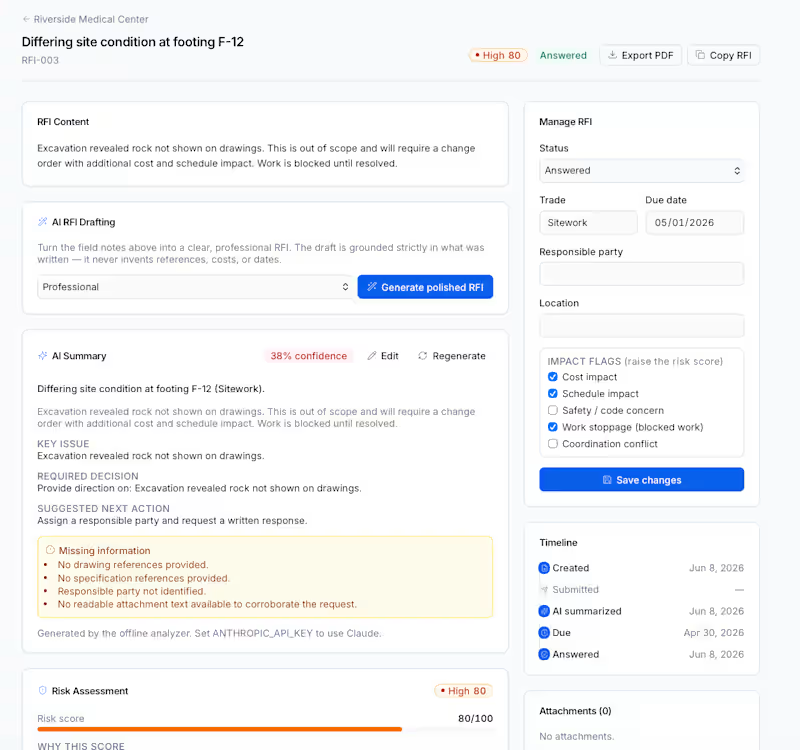
Projects using Resend in BaltimoreProjects using Resend in BaltimoreCrew Tracker is a two-sided workflow with separate portals over one backend. On the internal side, offices post jobs, review crew applications, invite eligible crews matched by trade and zip coverage, compare bids, and award work. Awarding a job automatically creates a payout record with a 3% referral fee. Crews apply and get verified, set trades and service areas, view invited and eligible jobs, submit bids, confirm schedules, upload categorized job photos, and track earnings. Internal users can export a supplement package of job photos and summary data. A user creates a deal and enters business, property, owner, or asset information. The system verifies business identity, runs modular data-source adapters across entity, legal, lien, reputation, regulatory, property, and market records, and analyzes uploaded documents. It produces normalized evidence records, a red-flag engine output with severity and confidence, an overall risk and confidence score, a diligence request list, an AI investment memo, and an exportable PDF report. It is positioned as a first-pass analyst, not a replacement for lawyers or accountants. DevSim AI lets users search a parcel, load satellite imagery, and design conceptual development layouts with accurately scaled 2D buildings, roads, driveways, parking, and green space. Buildings are generated from square footage and floor configuration, and a shape slider and rotation preserve area while changing proportions. Manual setback rules produce a buildable-area overlay and human-readable warnings, and a Fit Check Score plus an analysis dashboard report parcel usage, density, and coverage live. An optional 3D massing mode extrudes the same 2D plan, and projects support versioning, export, and an AI assistant. It is a multi-tenant SaaS with tiered plans. RoundRobin Dial OS places high-volume parallel outbound calls to opted-in leads and instantly routes every live, human-answered call to an available agent. Dial volume is a computed value — the minimum of human capacity, campaign ceilings, answer-probability budget, routing capacity, abandonment budget, provider limits, and compliance gating — never a raw admin input. Managers get a live sales-floor control tower and admins a command center for teams, campaigns, numbers, compliance, and analytics. It is compliance-aware by design with consent tracking, opt-out management, call-window rules, and audit trails. Admins add unique assets and quantity-based inventory and generate QR codes. Field workers scan or search an item, check it out, and assign it to a job, crew, vehicle, person, or location, recording condition and a due date, then check it back in with return condition. The dashboard shows what is available, checked out, overdue, damaged, lost, or low in stock, and every asset carries an immutable history timeline. It includes role-based access, alerts, reports, and CSV import/export, and stays simple enough to use from a phone in seconds. A company picks its industry, enters basic profile information, and uploads documents, website URLs, and video transcripts. The system builds a knowledge base and generates a modular company dashboard: a chatbot that answers from company knowledge with source citations and confidence, an SOP library, a training center, a company wiki, an employee help desk, verified answers, a knowledge-gap detector, and manager analytics. Role-based permissions control what each employee can see, and the AI is instructed never to invent company-specific policies. Users create a company profile, define reporting periods, and enter or connect metrics, then generate a structured investor update with executive summary, financial, sales, growth, and operating sections, key wins, risks, goals, and asks. Each metric shows current versus prior period, absolute and percentage change, trend, source, and last-synced time. A deterministic readiness score and investor-confidence score flag missing data and risks before generation, an AI narrative engine drafts and rewrites sections in a chosen tone without inventing numbers, and reports export to PDF or secure view-only share links. Manual metrics and CSV work in V1, with CRM/finance/payment connectors scaffolded. Each pet gets a lifetime profile combining an emotional memory timeline, structured medical records, and a veterinarian-ready health snapshot. Owners add pets, upload photos, and record vaccines, medications, procedures, allergies, weight, and milestones, which flow into a filterable timeline and a Vet Snapshot readable in under 30 seconds. Owners generate secure, expiring, access-logged share links at different permission levels — view-only, contributor, emergency, or family — and vets can submit updates through an owner-approval flow. Aging and wellness insights, reminders, PDF exports with QR codes, and memorial mode round out the record, framed as informational rather than diagnostic. Admins add employees, employees submit PTO requests, and each request appears in an inbox and notifies the assigned manager. Managers approve or deny in the app or through secure one-time approval links sent by email, the decision is recorded, and the employee is notified. A calendar shows who is off and when, and the app tracks simple PTO balances, conflict warnings against departments, blackout dates, and holidays, minimum-notice rules, settings, and CSV reports. It is deliberately scoped to stay a simple approval tool rather than a full HR platform. The app takes messy RFIs — PDFs, emails, documents, images, or pasted text — and produces clean summaries, extracted RFI fields, risk flags, action items, suggested responses, and executive-ready reports. RFIs live in a project workspace with a dashboard, an inbox with search and filters, and detail pages showing plain-English summaries, key issues, required decisions, and cost/schedule impact. Each RFI receives an explainable 0–100 risk score, and answered RFIs become a searchable project decision log. Reports can be exported to PDF, and the architecture is organized around organizations, projects, and provider-based integrations.
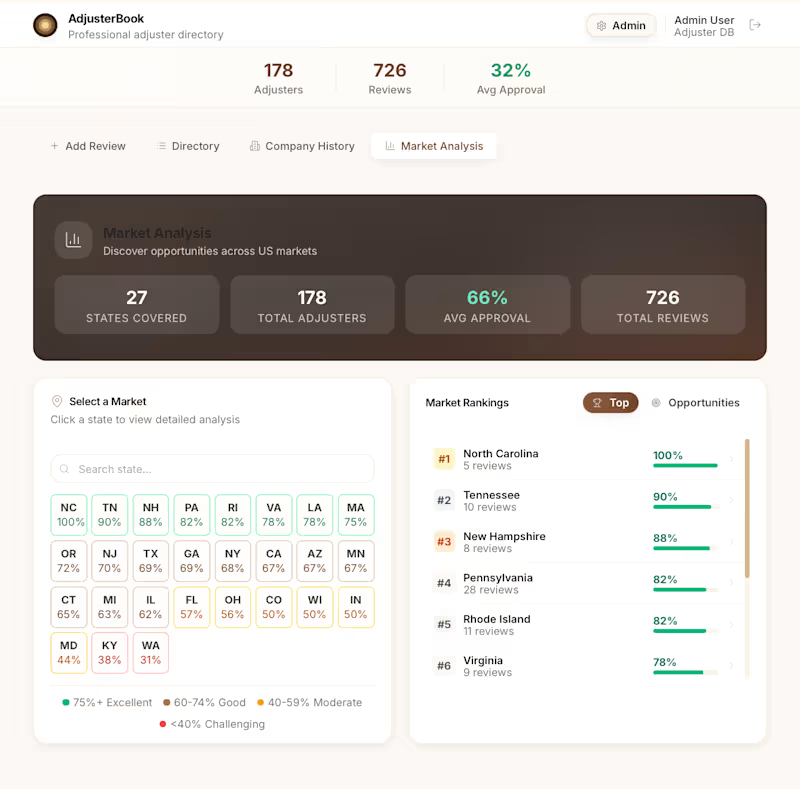
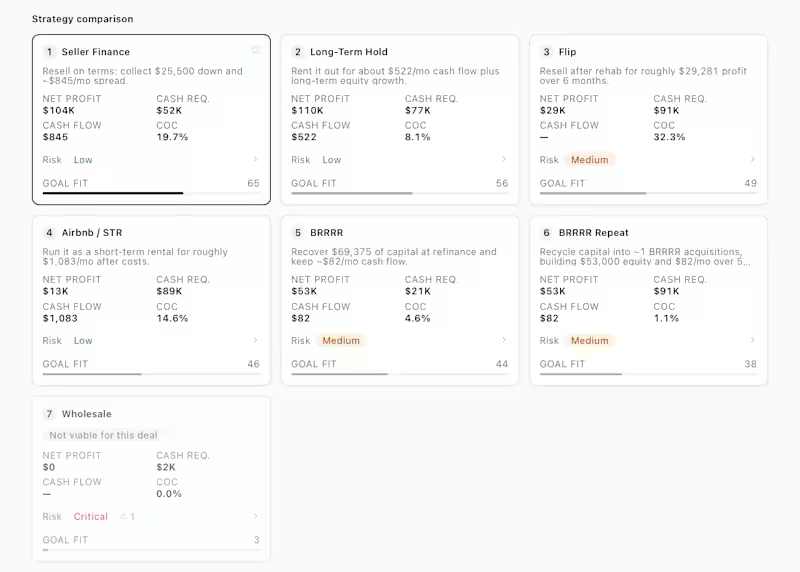
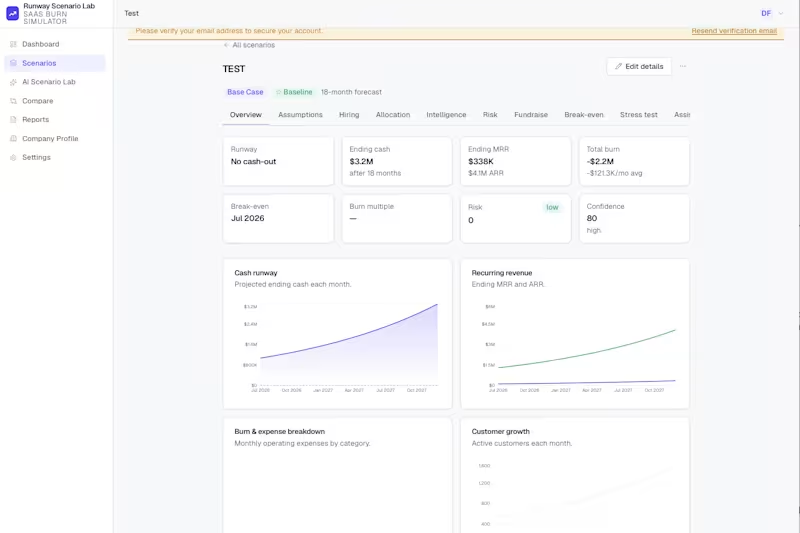
Adjuster Database is a global, community-built directory of insurance adjusters. Users search or add an adjuster and log structured claim reviews that rate responsiveness, fairness, and documentation burden. The system aggregates those reviews into approval rates, average ratings, and confidence scores, and detects likely duplicate adjuster entries. Reviews can carry file attachments, and inappropriate content is auto-flagged and routed to an admin moderation queue for approval, hiding, redaction, or deletion. The user enters one property acquisition, and the system models seven exit strategies (flip, long-term hold, Airbnb/STR, seller finance, BRRRR, BRRRR repeat, and wholesale fallback), each returning net profit, cash flow, cash required, ROI, capital recovery, risk, and a deal score. A winner engine ranks strategies against the investor's chosen goal and explains why the top strategy wins, producing a primary/backup/emergency exit stack and a 0-100 Deal DNA Score. A sensitivity simulator stress-tests assumptions live, a risk heat map grades category risks, and users can export an investor-grade report. AI explanations are grounded strictly in stored assumptions and calculated outputs. Users enter a SaaS financial baseline (cash, MRR/ARR, margin, expenses, churn, headcount) and generate baseline and custom scenarios across 12-36 month forecasts. A centralized engine computes monthly cash, MRR/ARR, burn, runway, CAC payback, LTV:CAC, burn multiple, and break-even for each scenario, with deterministic risk and confidence scores. Users adjust assumptions and hiring plans with live recalculation, compare 2-4 scenarios, run a fundraise-timing predictor, a break-even path finder, and stress-test mode, then generate editable board reports exportable to PDF or share links. An AI decision assistant explains scenarios using only calculated outputs.