The network for creativity
Join 1.25M professional creatives like you
Connect with clients, get discovered, and run your business 100% commission-free
Creatives on Contra have earned over $150M and we are just getting started
Back to feedPost

On Hopkins's Legacy for Copywriters
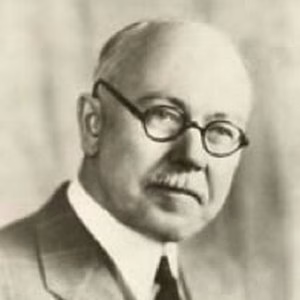
Claude Hopkins is considered the grandfather of advertising. He was one of the first to claim that a scientific account for advertising could be spelled out. This meant that advertisers no longer had to work with guesses and intuitions. Now, they could use precise principles that offer results.
He laid it all out in a book called Scientific Advertising. And now, almost a century after the publication of this small marketing book, people are still learning the fundamentals of advertising from it.
Copywriters are a target for this book, too. A copywriter, be he a beginner or a professional with lots of years, has a lot to learn from a man who made a successful career out of advertising more than one century ago.
What could a copywriter learn from Claude Hopkins? I've recently put up a list with some (if not all) of the lessons we all can learn from this man.
15 principles from Scientific Advertising
Writing the advertisement
1. Write as if you were selling to one person. Address a specific prospect and their concerns instead of speaking vaguely to a crowd.
2. Give people a reason to buy. Don't merely announce that a product exists. Explain what it can do for the customer.
3. Be specific rather than general. Replace vague claims such as “excellent quality” with concrete, verifiable facts that demonstrate quality.
4. Make your claims believable. Support important promises with demonstrations, facts, testimonials, or other relevant evidence.
5. Don't exaggerate. Grandiose claims can make prospects skeptical. Credibility is more valuable than impressive-sounding language.
6. Get to the point. Avoid unnecessary words and entertaining detours that don't contribute to the sales argument.
7. Use language your prospects understand. Clear, familiar wording usually serves the reader better than elaborate language designed to impress. Understanding and persuading customers
8. Study what people already want. Connect your product to existing desires, needs, and buying motives instead of assuming you must create new ones.
9. Emphasize benefits, not merely features. Explain what a product's characteristics mean for the buyer. A feature matters because of the value it provides.
10. Answer objections. Anticipate the questions, doubts, and perceived risks that might prevent someone from buying.
11. Give prospects reasons to trust you. Specific facts, proof, and transparent explanations are more persuasive than simply asking people to believe your claims.
12. Offer samples when they can demonstrate value. Sampling is particularly useful when firsthand experience can convince prospects more effectively than words alone. However, the cost and quality of the resulting customers matter. Testing and improving advertising
13. Measure results instead of relying on opinions. An advertisement that sounds brilliant to its creator may perform poorly in the marketplace.
14. Test alternatives systematically. Compare headlines, offers, and other elements while controlling relevant variables as much as possible. Otherwise, you may not know what caused the difference in results.
15. Track the economics, not just the response. More clicks, inquiries, or sample requests aren't necessarily better if they fail to generate profitable business.
As you can tell, these are all sound pieces of advice for any copywriter in 2026. Follow them, and you are sure to become more successful in your craft.
The network for creativity
Join 1.25M professional creatives like you
Connect with clients, get discovered, and run your business 100% commission-free
Creatives on Contra have earned over $150M and we are just getting started









Related posts

AI can write you a sales page in ten minutes.
But here's what it doesn't have.
It doesn't know which email your list ignored last month. Or what your buyers said on your last ten sales calls.
So it fills the gaps with a guess. A confident, polished guess.
And that's where it gets expensive.
Picture it. The page goes live. It reads well. Traffic comes in.
And nothing converts.
So you ask AI for a new version. Then another. Each one sounds good, and each one misses the same thing, because the missing context is still missing.
Weeks go by. Ad money goes out. And you're no closer to knowing what's actually wrong.
Here's the thing. Speed without context just gets you to the wrong answer faster.
That's why, in my client work, the context comes first.
Before anything gets drafted, I gather what the AI can't see on its own: past campaign results and real buyer feedback, plus the frameworks that have grown businesses like yours.
Then AI speeds up the build.
Because the people buying from you are human. Their doubts and reasons rarely fit inside a prompt.
So AI drafts. A human brings the context and owns the decisions.


Speed without context just gets you to the wrong answer faster is such a sharp line, Ax. The confident polished guess only works when you feed the AI the context it can't see: past results, real buyer words, actual doubts.

Good content isn't luck—it's strategic planning.
The same principle applies when creating high-end commercial video with AI. Prompting randomly yields inconsistent clips; building an end-to-end multi-tool pipeline delivers polished, client-ready output.
Instead of relying on a single tool like OPAS 5.5, I structured a multi-AI video production pipeline to create this 30-second commercial ad for "MIDNIGHT":
• ChatGPT (Concept & Narrative): Formulated the core creative concept, story arc, and overall ad breakdown.
• Claude (Shot Planning & Lighting): Developed granular, frame-by-frame shot lists, lighting directions, and precise prompt logic.
• Flow (AI Video Generation): Generated the high-fidelity video clips, macro product details, mist physics, and atmospheric visuals.
• Manual Editing & Sound Design: Assembled the timeline, adjusted pacing cut-by-cut, and synced the audio layers to tie the commercial together seamlessly.
The Result: A cinematic, commercial-grade vertical ad built through structured AI workflows and manual post-production.
Looking for high-converting product ads or dynamic vertical video content for your brand? Send a message—let’s collaborate!


How to Build Your Best Portfolio for 2027: Which Format Works Better?
Clients don't have time to dig.
Here's how to make your work easy to trust.
A potential client opens your link. You have about 10 seconds before they decide to stay or leave.
So the real question isn't ...should I have a portfolio?. It's ...which kind gets read, and which gets skipped?
Here's the breakdown.
1. PDF portfolio
Best for: sending directly to a client in a DM or email.
Strength: fast, controlled, looks exactly how you designed it.
Weakness: it's not searchable, it doesn't update itself, and it feels static.
Use it as a companion, not your main home.
2. Platform portfolio (Contra, Behance, Dribbble)
Best for: being found by clients already looking to hire.
Strength: built-in audience, reviews, and a clear way to contact you.
Weakness: you're on someone else's platform, with their layout and their rules.
This is where freelancers should start, because it puts you in front of buyers with no website to build.
3. Your own website
Best for: long-term trust and search.
Strength: you own it, control the story, and can show services, samples, and results in one place.
Weakness: it takes longer to build, and it needs traffic from somewhere else.
This is where serious clients end up after they've found you elsewhere.
4. LinkedIn profile + Featured section
Best for: B2B work, since buyers check it before they message you.
Strength: your portfolio sits next to your posts, so proof and personality are together.
Weakness: limited design space.
For B2B services, this is often the first place a client looks.
So which one wins?
None of them alone. What works best is a simple chain:
LinkedIn (get found) → Contra or your site (see the work) → PDF (close the deal).
Each one does a different job. LinkedIn brings the visitor, the portfolio page proves your skill, and the PDF makes it easy for them to forward you to their team.
What to put in any portfolio
Whatever format you choose, include these 5 things:
A one-line promise: who you help and what changes
3 strong samples, not 15 average ones
A short caption for each: the problem, what you did, why it works
One real result or testimonial, as soon as you have one
One clear next step: book a call, DM, or email
If you don't have client work yet, create sample projects and label them clearly as samples. That's honest, and buyers respect it more than a padded portfolio.
In 2027, a portfolio isn't a gallery. It's a trust tool. Keep it clean, specific, and easy to scan, and make the next step obvious.
I'm Maryam, and I ghost-write LinkedIn content for SaaS founders and help design clear, clean profiles. If you'd like help with your LinkedIn, profile, or website writing, message me on Contra or LinkedIn.

Love this! A portfolio should not just show what you do, but help potential clients understand how you can solve their problems. Trust and clarity make all the difference. 👏