The network for creativity
Join 1.25M professional creatives like you
Connect with clients, get discovered, and run your business 100% commission-free
Creatives on Contra have earned over $150M and we are just getting started
Back to feedPost

Backend .NET Developer | Healthcare & EHR Systems
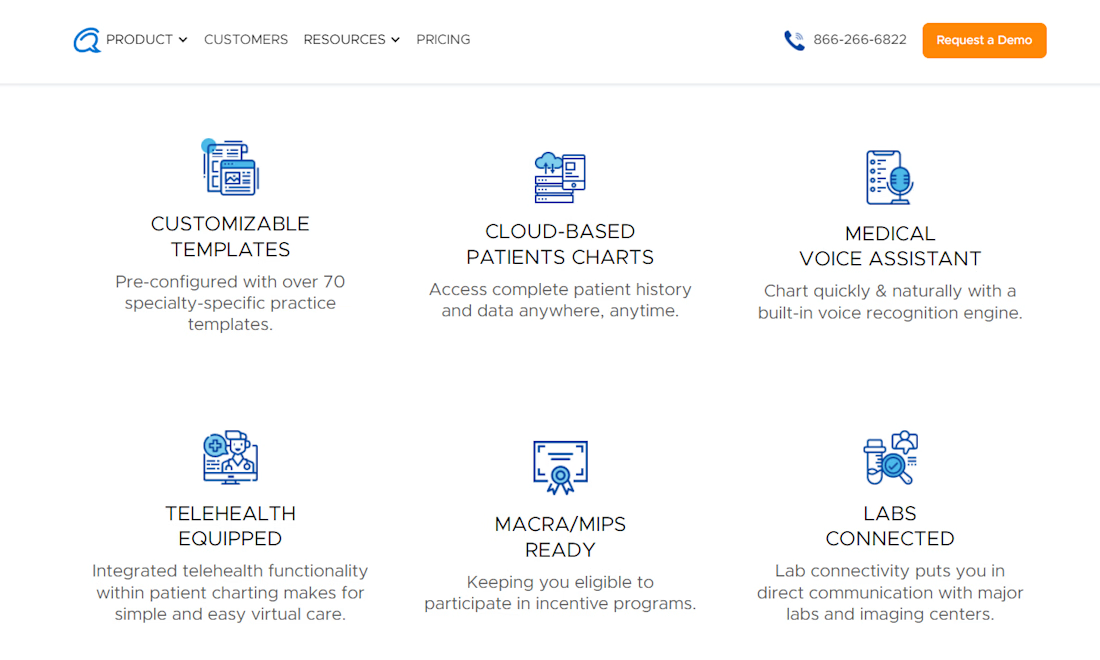
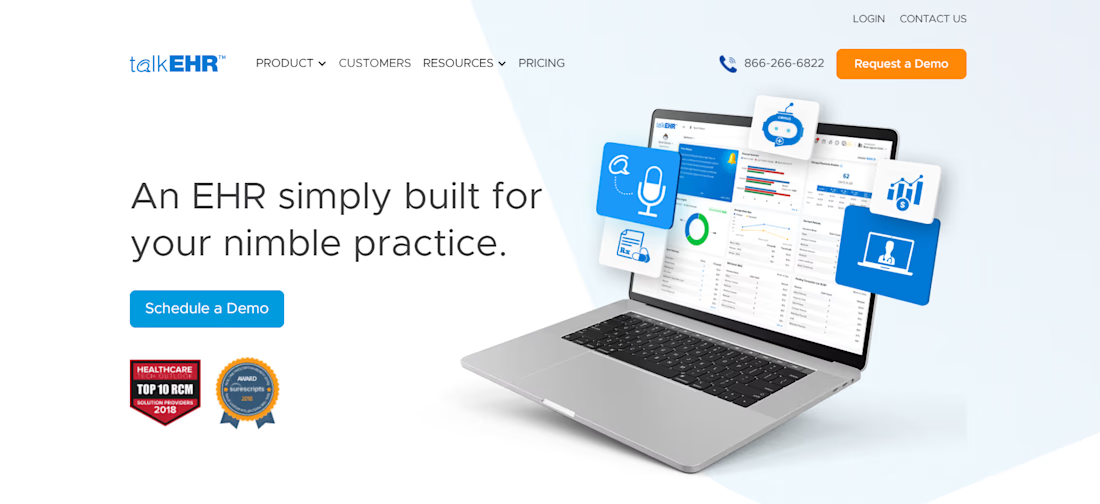
I worked on multiple modules of talkEHR, a cloud- and AI-based Electronic Health Records (EHR) platform used by medical practices across the U.S. My work included:
AI-powered patient demographics: capturing and managing patient information automatically to reduce manual data entry during registration.
Telehealth appointments: scheduling and managing virtual visits connected directly to the patient's chart.
E-prescription workflows: handling the full prescription process digitally, from the doctor's order to the pharmacy.
HL7 FHIR APIs: building standards-based APIs so patient data can be exchanged securely with labs, other EHR systems, and third-party apps.
I also contributed to other clinical and practice management features, with a strong focus on data security, performance, and healthcare interoperability.
Tech stack: .NET Core, Entity Framework Core, Dapper, SQL Server, Redis, Serilog, HL7 FHIR, Clean Architecture, SOLID principles, CI/CD, AWS, and Azure.
If you're building a healthcare product, such as an EHR, telehealth platform, patient portal, or any system that needs FHIR integration, I can help you build a secure and reliable .NET backend.

The network for creativity
Join 1.25M professional creatives like you
Connect with clients, get discovered, and run your business 100% commission-free
Creatives on Contra have earned over $150M and we are just getting started





Related posts

Healthcare AI needs to feel clear, trustworthy, and human.
Corvin explores an AI-powered healthcare landing page that combines symptom checking, conversational triage, and telemedicine in one seamless product story.
The page shows a simple flow from Symptoms to Condition to Recommendation, helping users understand how the product guides them from uncertainty to the right next step.
Soft gradients, clean cards, spacious layouts, human imagery, and telemedicine UI help balance AI-driven functionality with a sense of care and trust.
See the design:
https://dribbble.com/shots/27758271-Landing-Page-AI-Healthcare


Building AI for healthcare leaves zero room for error.
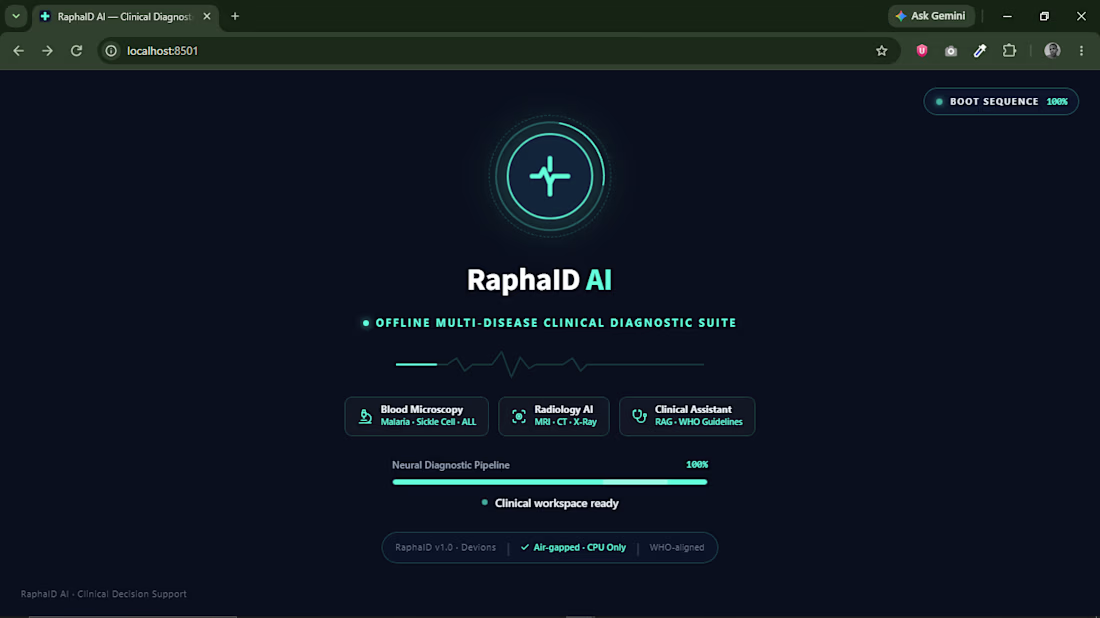
I’m currently collaborating with an incredible team on Raphald AI, a medical detection application. Building the systems for a project with stakes this high is a massive reminder that the underlying backend architecture matters just as much as the machine learning model itself.
When integrating diagnostic AI, your API endpoints cannot drop requests, and your database workflows demand absolute integrity. You aren't just passing JSON payloads; you are handling critical, real-time workflows where stability is non-negotiable.
Engineering these systems continues to shape my approach to building robust Python backends. If you are developing a product that requires reliable AI integration or rock-solid FastAPI infrastructure, check out the newly updated services on my profile. Let's build something that works when it counts.



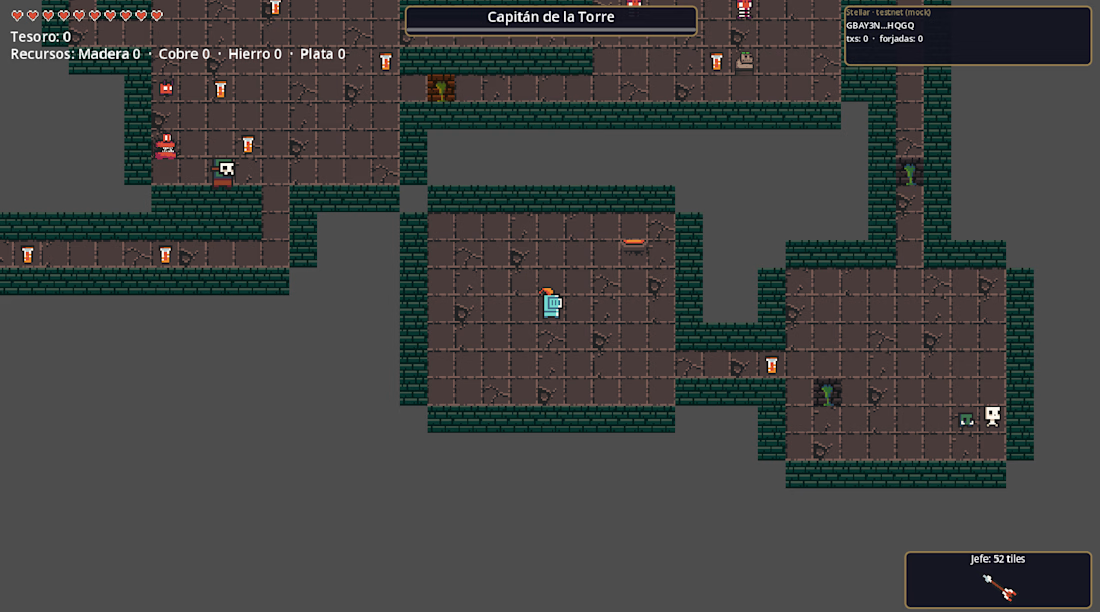
Stellar Dungeon — a 2D dungeon crawler built in Godot 4.4 for the Argentina Builder Challenge 2026, with on-chain progression over the Stellar network. I contributed the backend blockchain integration: a Node.js relay and a Rust smart contract (forge_ledger) that log mining, crafting and forging on-chain, with per-player custodial wallets and an offline sync queue.