The network for creativity
Join 1.25M professional creatives like you
Connect with clients, get discovered, and run your business 100% commission-free
Creatives on Contra have earned over $150M and we are just getting started
Back to feedPost
Running everything yourself was never meant to be permanent.
Most founders and creators start out wearing every hat by necessity (such as answering emails late at night, rebuilding the same spreadsheet, chasing a follow-up between five other things.) It works, for a while. But at some point, the constraint on growth stops being the idea and starts being the hours in the day.
The answer isn't to push harder. It's to understand the support options available because "assistant" isn't one job. It's a category, and that category has evolved.
The support systems spectrum: three roles, three purposes
Personal Assistant - Focused on your life outside of work: personal scheduling, errands, household logistics, travel for you and your family. A PA protects your personal time so you can show up fully when it's time to work.
Executive/Administrative Assistant - Typically embedded within a company, supporting a specific leader or team: calendar and inbox management, meeting prep, internal coordination, travel booking, reporting. This model has long been the backbone of in-office business support, built around proximity and structure.
Virtual Assistant - A flexible, remote evolution of both roles above. A VA can take on personal logistics, executive-level coordination, and business operations (often across time zones) on a schedule that flexes with your needs. It's not a smaller version of traditional support; it's a more adaptable structure for how businesses actually operate today.
All three sit under the same umbrella (supporting people so they can focus on what matters most.) The difference is really about structure and flexibility, not value. VAs simply reflect where the workplace has moved: digital-first, remote-friendly, and built around outcomes rather than physical presence.
Why Virtual Assistants matter more right now?
Remote work reshaped how support gets structured, and a few things make VAs an especially strong fit today:
Cost-efficiency: You pay for the hours and outcomes you need, without the overhead of a full-time in-house role.
Scalability: Need more support during a launch and less the following month? A VA relationship can flex with you.
Global talent access: You're not limited to your immediate area; you can find the right fit for the work.
Speed: Many VA engagements can start within days rather than weeks.
A quick note on misconceptions?
There's sometimes an assumption that VAs only handle simple, low-stakes tasks. In practice, many VAs today manage meaningful, high-impact work, including:
- Operations: process documentation, vendor coordination, project management across tools like Asana or Notion
- Data: cleanup, reporting, dashboard maintenance
- Customer support: client communication, onboarding, retention touchpoints
- Content & admin support: scheduling, light copywriting, community management, launch coordination
- Executive-level coordination: calendar and inbox management at the same level you'd expect from in-house support
Who this is for?
If you're a founder, creator, or professional who feels like there's more on your plate than hours in the day... you're far from alone, and it doesn't have to stay that way. Delegating isn't something you earn only after reaching a certain size. Often, it's part of how you get there.
Looking ahead
The future of work seems to be less about doing everything alone and more about building the right support around you. A Virtual Assistant isn't a replacement for what a PA or EA offers. It's simply a flexible option shaped for a remote, digital-first world.
The real question worth sitting with: what would change if you had the right support in place?
Prompt WritingChatGPTHiggsfield AIvirtualassistantexecutiveassistantPersonal AssistanceVirtual Assistance




The three-role spectrum is a useful framing because it turns a vague support need into clearer categories and outcomes. That kind of taxonomy should make the conversation around delegation much easier to navigate.

I really appreciate that perspective! Thank you for putting it that way.
That was exactly the intention behind breaking it into those three roles. A lot of people know they need support, but the lack of clear distinctions can make delegation feel more complicated than it actually...

This is such an important distinction. “Assistant” is no longer one-size-fits-all—the right support depends on the person’s needs, business stage, and how they work.
I especially agree that a VA isn’t simply about taking tasks off someone’s plate. A good VA brings organization,...
Thank you for this... and yes, you're exactly right! "One-size-fits-all" needed retiring. Support is a spectrum that should flex around how someone works, not the other way around.
Your point about organization, flexibility, and proactive support is what gets overlooked most. A...
The network for creativity
Join 1.25M professional creatives like you
Connect with clients, get discovered, and run your business 100% commission-free
Creatives on Contra have earned over $150M and we are just getting started








Related posts

Figma Football
An unofficial football concept inspired by Figma and its visual language.
The ball was created using a custom 3D generator I built in ChatGPT, with animated interface icons and graphics developed with Claude.
Part design experiment, part exploration of how custom AI-powered tools can become part of the creative process.


The interface icons translate surprisingly well into a football identity.

Brand New project🍓🍎🍒🫐
A colorful protein cereal bar brand for active young women. I designed the naming, logo, color system, packaging for five flavors, brandbook, social media posts and AI-generated product photography and video. The packaging was used as a reference in every image so the product looks exactly as designed.

That's really great motion graphics color palettes and visuals great packaging design ❤️❤️
Nice job Melina🔥

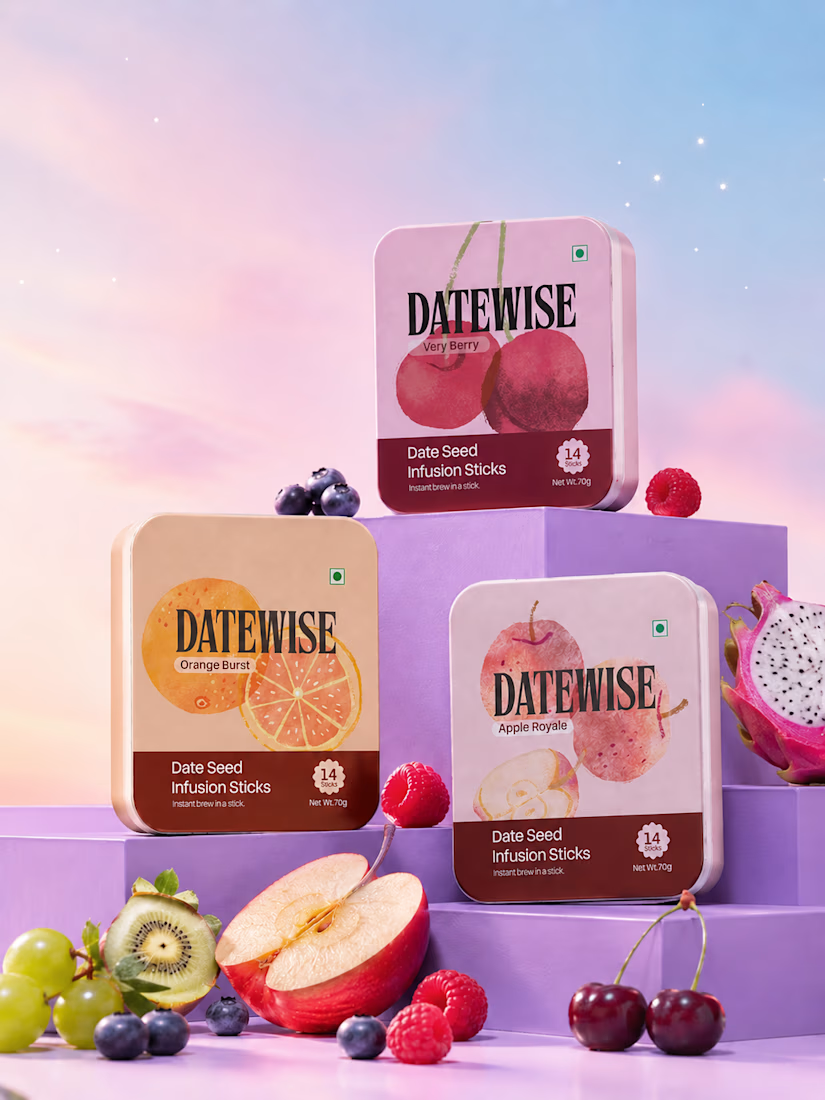
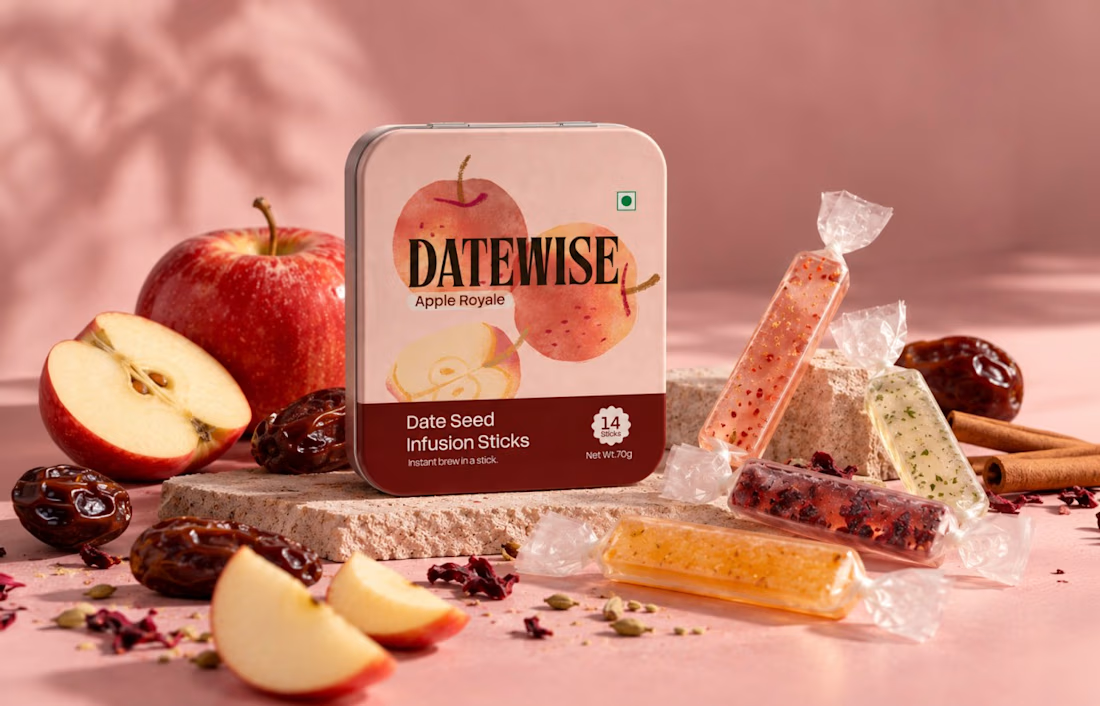
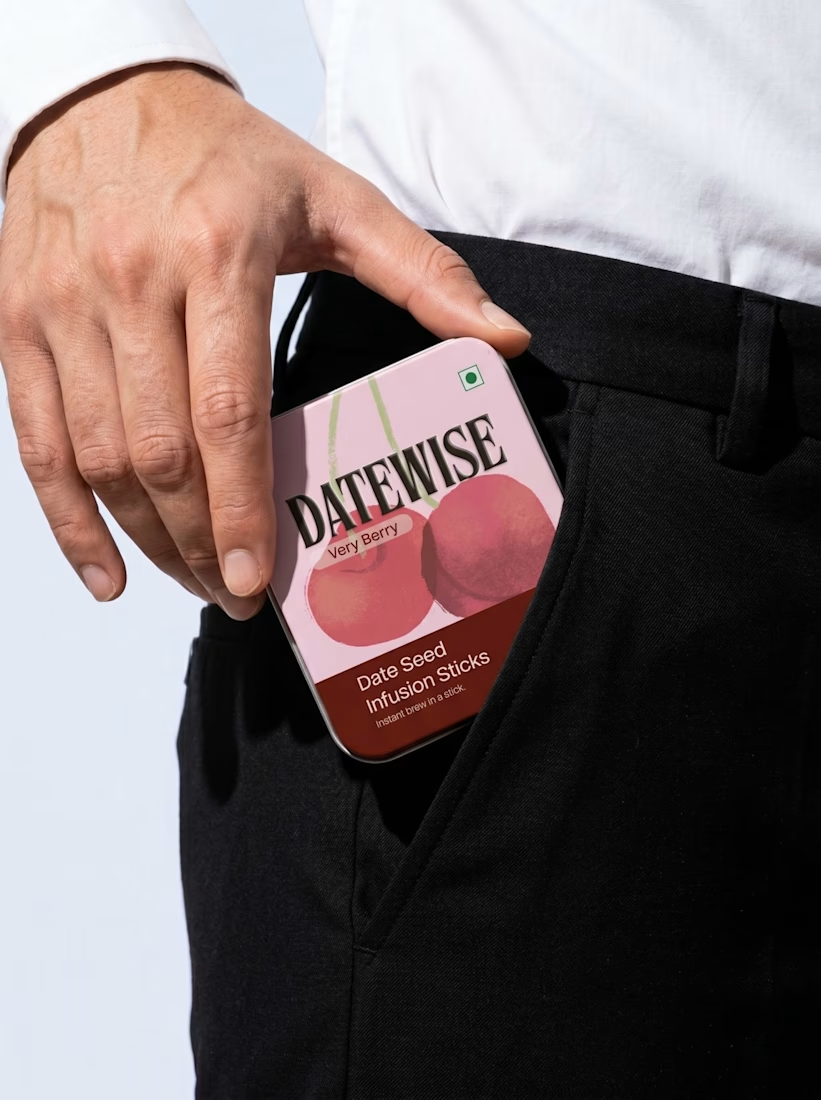
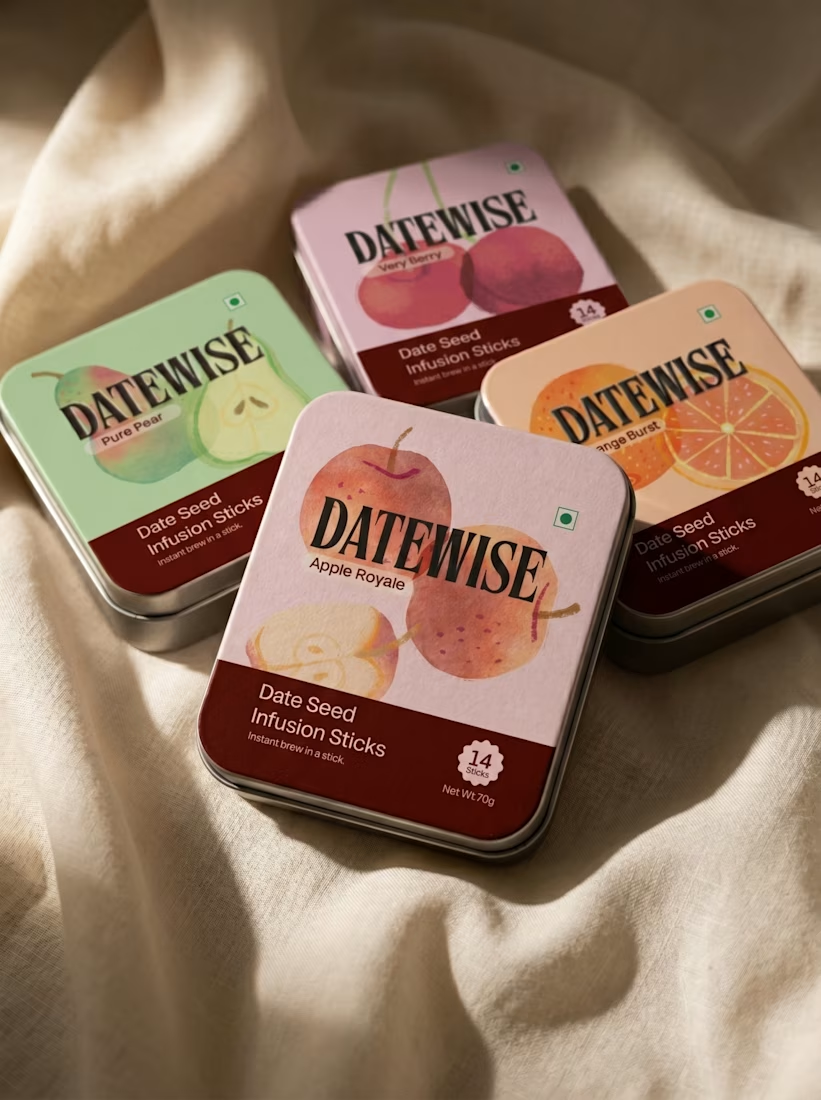
This image showcases a premium fruit-flavoured date seed infusion stick packaging design for a fictional brand called DATEWISE. The design combines modern packaging graphics, realistic 3D tin-can mockups, vibrant fruit photography, and a soft pastel environment to create a high-end commercial product presentation.
The packaging features three flavours: Very Berry, Orange Burst, and Apple Royale. Each rectangular tin has rounded corners, a pastel-coloured background, bold black serif typography, fruit illustrations, and a dark burgundy information panel at the bottom.
The products are arranged on layered purple display platforms, surrounded by fresh fruits such as apples, oranges, raspberries, blueberries, cherries, kiwi, and dragon fruit. The pink-to-blue gradient background, soft lighting, subtle shadows, and glossy surfaces create a luxurious advertising aesthetic.
Design style: Premium FMCG Packaging, 3D Product Mockup, Photorealistic Product Advertising, Pastel Colour Grading, and Editorial Art Direction.



So Good