The network for creativity
Join 1.25M professional creatives like you
Connect with clients, get discovered, and run your business 100% commission-free
Creatives on Contra have earned over $150M and we are just getting started
Back to feedPost

A Real-World SEO Stress Test
I wanted to see how resilient a website could be under extreme changes, so I decided to test it myself.
01. Build
I built a downloader website from scratch in a highly competitive niche.No paid ads.
The growth came from:
Technical SEO
Organic content
Backlinks
Social media
Search indexing
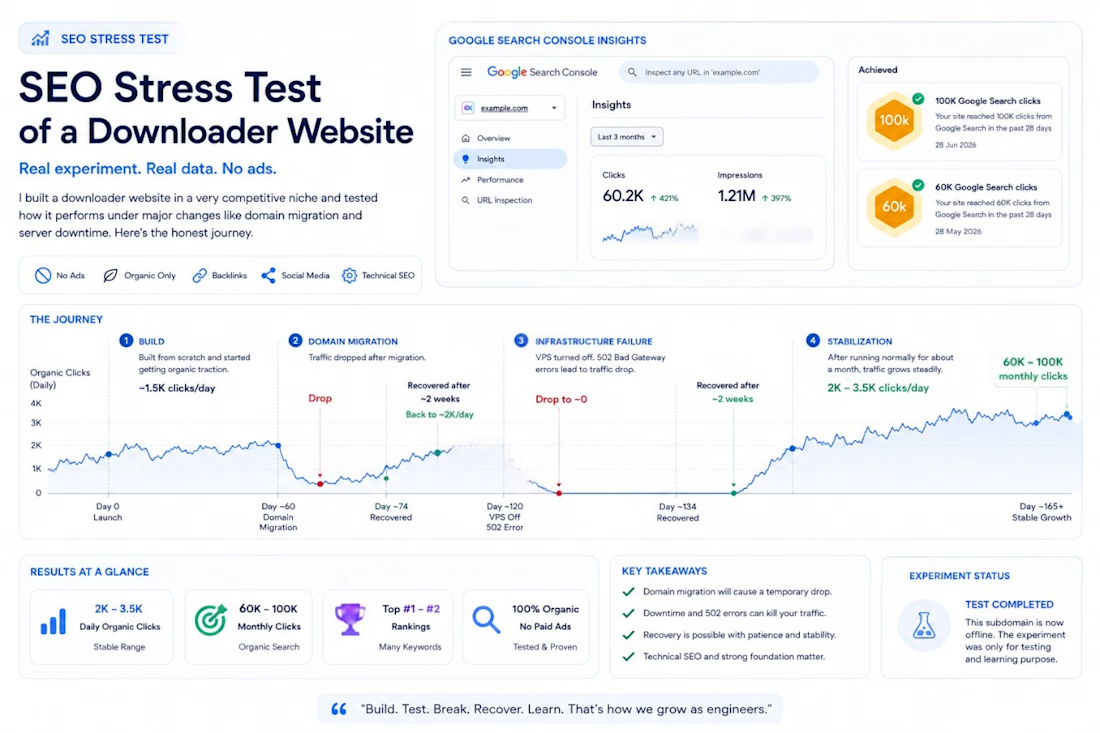
Eventually, the site reached around 1,000 organic clicks per day.
02. Domain Migration
Then I migrated the domain. The result was immediate:
Organic traffic dropped.
I waited and monitored the recovery instead of trying to artificially push the numbers.
After around 2 weeks, traffic recovered and eventually reached approximately 1,500 - 2,000 organic clicks per day.
03. Kill the Infrastructure
Then I tested something even more extreme. I shut down the VPS and intentionally allowed the site to return 502 Bad Gateway errors.
The result:
Organic traffic dropped to zero.
Once the infrastructure was restored, I monitored Google’s reprocessing and recovery.
Again, after roughly 2 weeks, organic traffic started coming back.
04. Stabilization
After running normally for about a month, the site was consistently generating approximately:
2,000 to 3,000 organic clicks per day
That translates to roughly:
60K to 80K organic clicks per month.
Some target keywords reached position #1 and #2 in Google.
And the important part:
There were no paid ads.
The experiment relied primarily on technical SEO, links, social media, and organic search.
What I Learned?
This wasn't built to become a long-term product.
The subdomain is now offline because the experiment is finished.
But the test gave me something more valuable than a traffic screenshot.
It showed me how a real website reacts to:
Domain migration → Ranking drop → Recovery
Infrastructure failure → 502 errors → Zero traffic → Recovery
Stable infrastructure → Re-indexing → Ranking growth
For me, technical SEO isn't just about getting a website to rank.
It's about understanding what happens when you break it, recover it, and measure what comes back.
Build. Break. Recover. Measure.
The network for creativity
Join 1.25M professional creatives like you
Connect with clients, get discovered, and run your business 100% commission-free
Creatives on Contra have earned over $150M and we are just getting started







Related posts

Hi, I'm Farwa Shah an SEO Specialist passionate about helping businesses grow their online presence and achieve better visibility on search engines.
My journey into SEO has been filled with challenges, learning, and personal growth. Through dedication, consistency, and a strong desire to improve, I've worked hard to develop my skills and build my place in the digital marketing world.
My expertise includes Keyword Research, On-Page SEO, Off-Page SEO, Competitor Analysis, Link Building, and Website SEO Audits.
I believe SEO is not just about rankings; it's about understanding a business, reaching the right audience, and creating long-term growth opportunities.
I'm always excited to connect with business owners, agencies, and professionals who are ready to take their online presence to the next level.
✨ Let's connect, collaborate, and grow together!




Yes SEO id very crucial

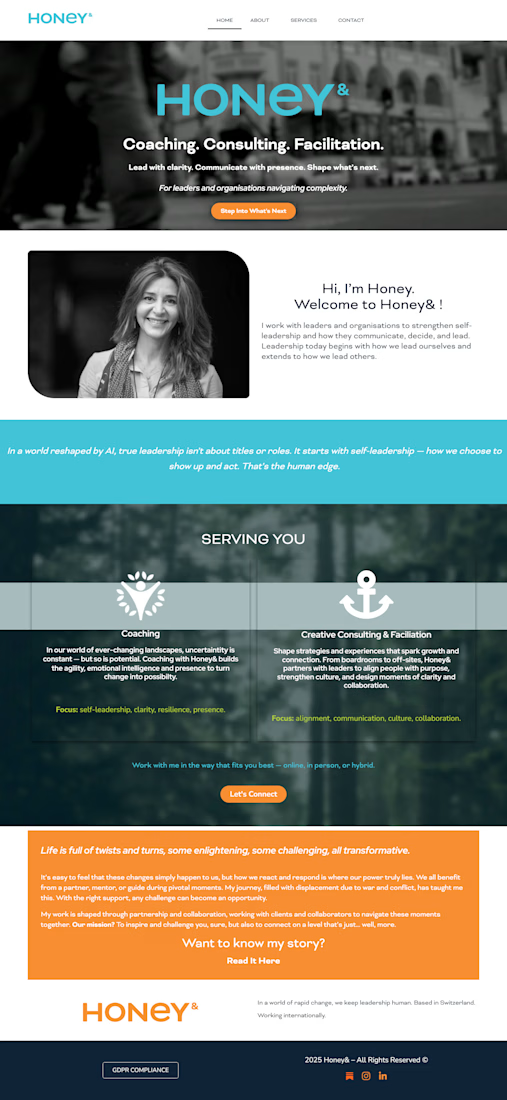
Redesigned and migrated a 7-page coaching website from an external platform to WordPress using Elementor. Rebuilt the existing brand identity into a clean, user-friendly layout while preserving the original content structure. Delivered a fully responsive website with blog integration, optimized page hierarchy, and streamlined user experience. Focused on fast turnaround, visual consistency with brand guidelines, and efficient content migration within a tight budget.


Thats lovely design!

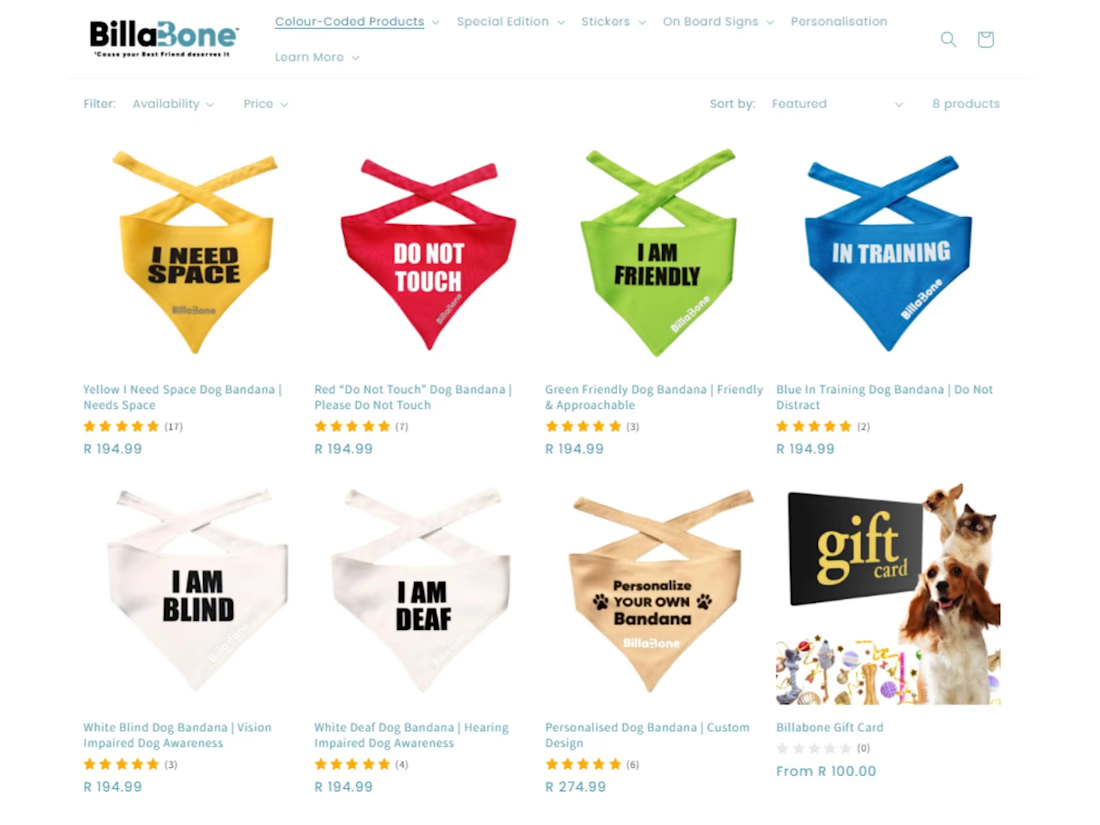
I own and manage Billabone, a South African online store specialising in dog accessories.
Through running the business, I have gained hands-on experience with Shopify store management, product listings, catalogue organisation, product presentation, inventory, website content, customer enquiries and order fulfilment.
I have also worked on product descriptions, promotional graphics and website improvements, giving me practical insight into the day-to-day needs of a small e-commerce business.



Running your own store gives you valuable real world insight into what makes e-commerce work.