The network for creativity
Join 1.25M professional creatives like you
Connect with clients, get discovered, and run your business 100% commission-free
Creatives on Contra have earned over $150M and we are just getting started
Back to feedPost

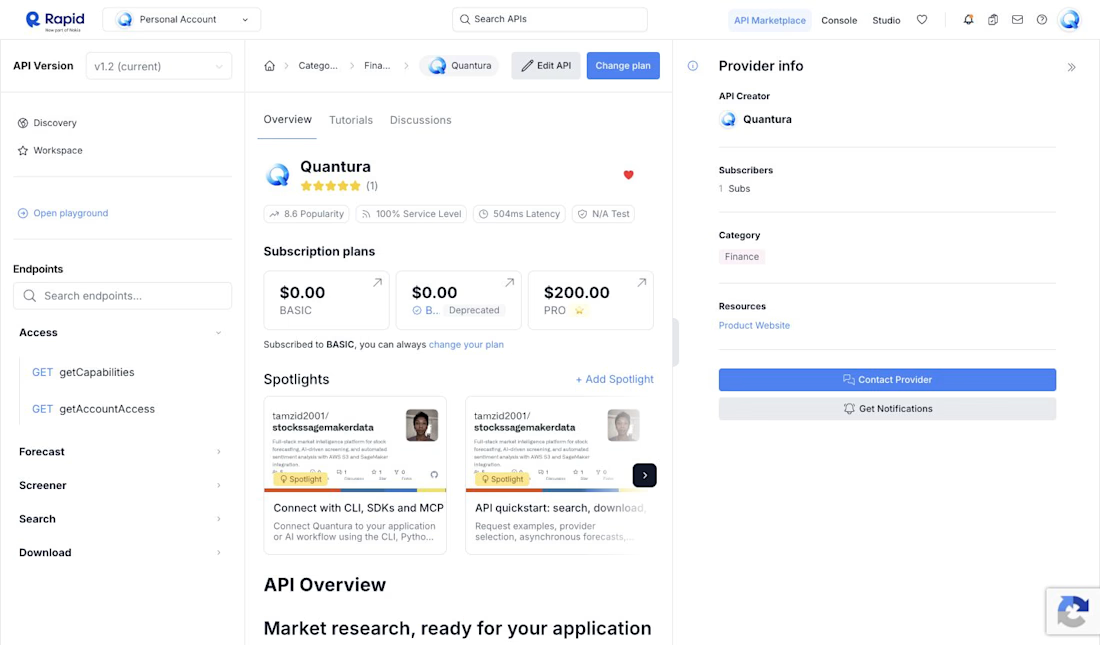
Forecast API, SDKs & OAuth MCP — Quantura
I built a shared Search → Download → Forecast API for Quantura so developers can move from a discovered market or dataset to historical observations and asynchronous forecast results.
The integration includes JSON/CSV exports, job status handling, provider and model metadata, scoped API access, and OAuth sign-in for MCP clients. Python and TypeScript SDKs plus a CLI provide reusable integration examples.
I also organized the public RapidAPI listing into clear endpoint groups, documented usage and authentication, and added examples for scheduled forecasting workflows.
This work is useful for teams connecting forecasts to their own apps, notebooks or AI tools.
Explore the API: https://rapidapi.com/tamzid2001/api/quantura2


The network for creativity
Join 1.25M professional creatives like you
Connect with clients, get discovered, and run your business 100% commission-free
Creatives on Contra have earned over $150M and we are just getting started
Related posts


We’re choosing the motion for an AI analytics product demo, and I can’t decide.
Both clips show the same flow. Someone asks a question in plain English. The agent checks permissions, plans the query, runs it past guardrails and builds the dashboard.
1. A walks you through each step as it happens.
2. B skips the steps and drops you straight onto the result.
A shows the work. B shows the speed. For a landing page I keep going back and forth.
Which one would make you trust the product more? Comment A or B, and tell me why.
3 voted
100%
0 voted
0%
3 votes
Closed

I think according to your query the output should consist on a list of clients with late invoices rather then showing charts etc,

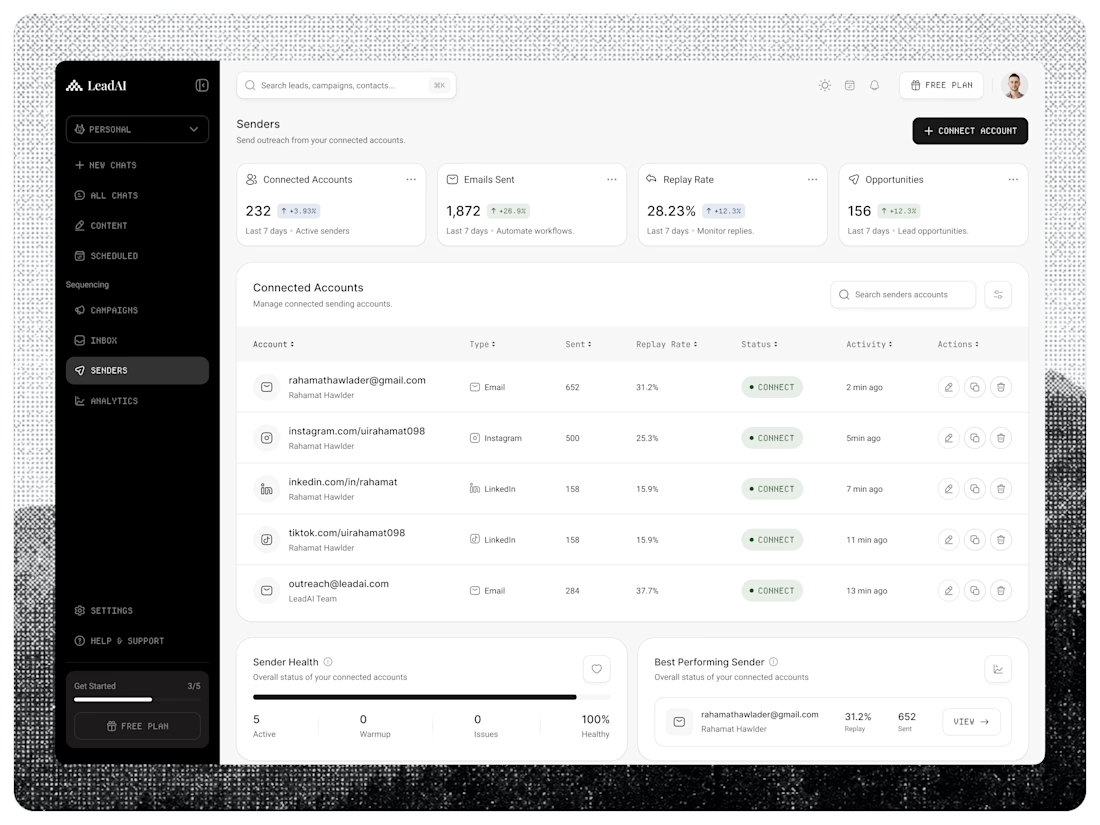
LeadAI — AI Lead Generation SaaS Dashboard
A modern AI-powered lead generation dashboard designed to simplify sales automation, schedule workflows, and help teams manage prospecting activities.
The interface combines a clean SaaS layout, automation analytics, status indicators, and an organized schedule management table.
Project Highlights:
AI Lead Generation Dashboard
Scheduled Automation Management
Sales & Prospecting Analytics
Clean SaaS Dashboard UI
Modern B2B User Experience
Available for UI/UX & AI Product Design projects. 🎯
✅ Full-Time | Contract | Remote



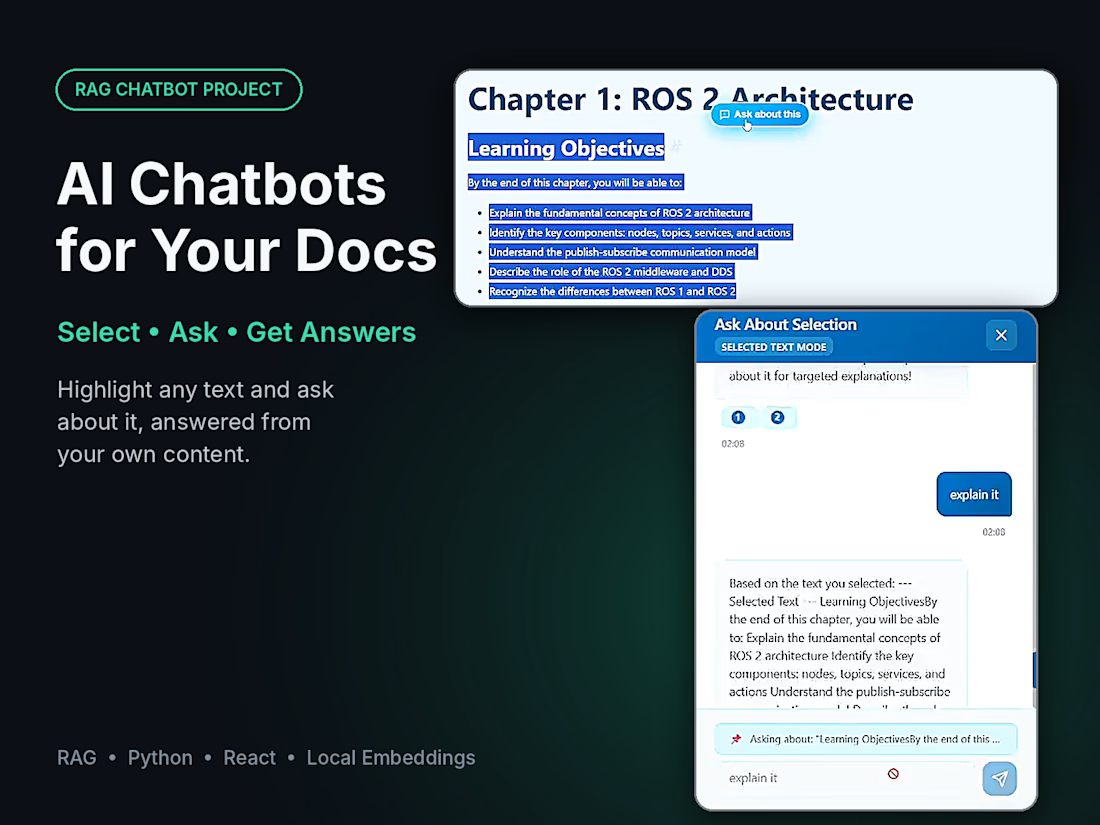
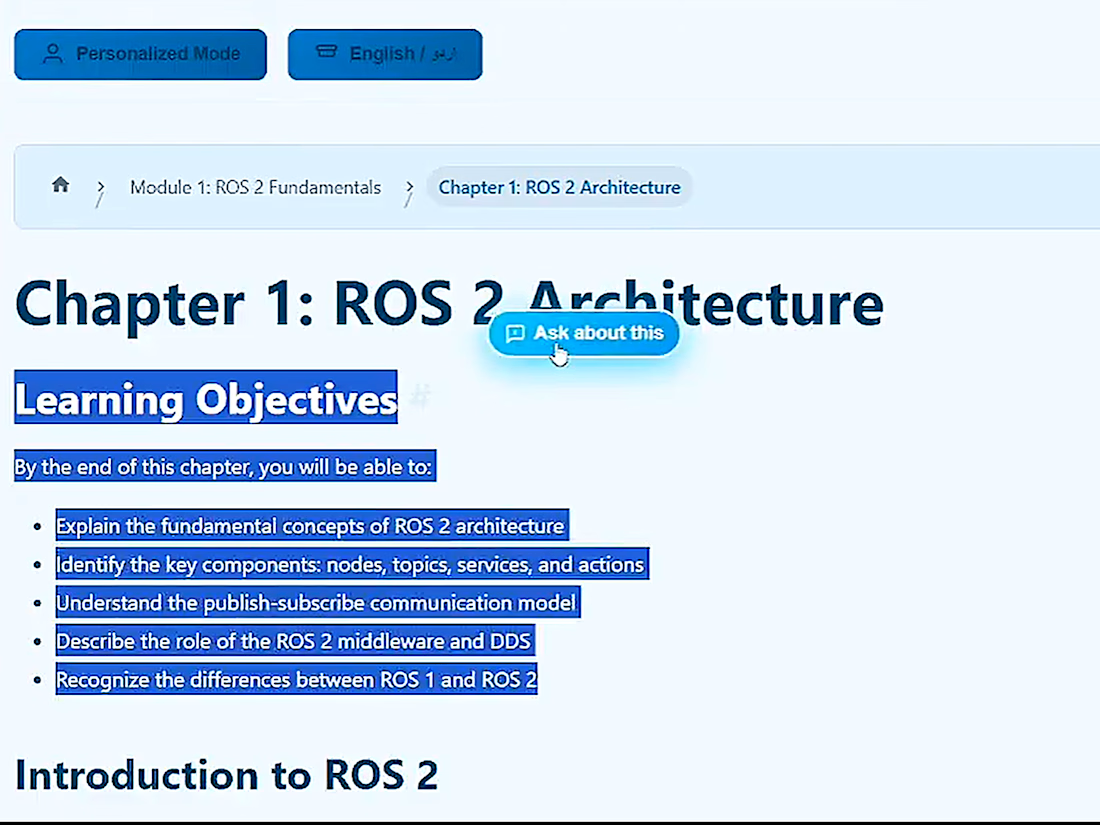
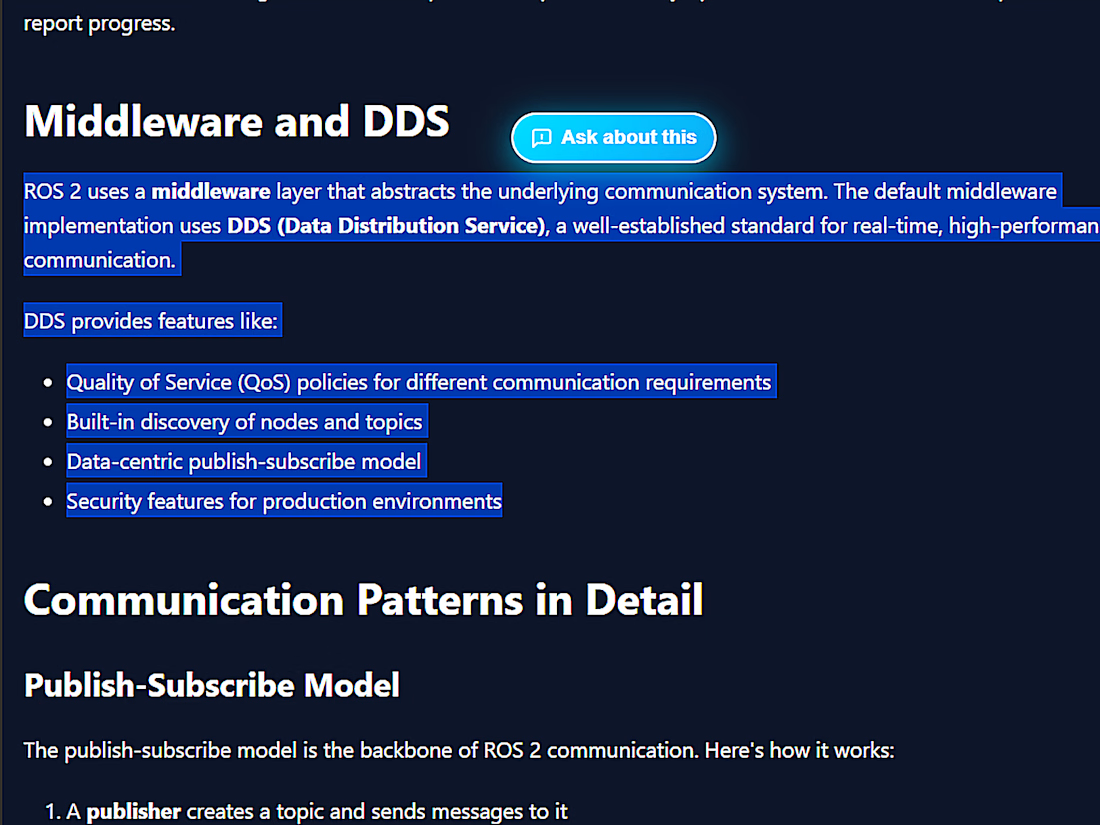
AI Textbook with RAG Chatbot
An AI-powered interactive textbook for humanoid robotics, with a built-in RAG chatbot that answers questions from the book’s own content.
Students can highlight any passage and click “Ask about this” to get an explanation of exactly that section, or open the assistant to ask general questions. Answers stream in real time and include source citations, so readers can check where each answer came from.
Key features:
RAG pipeline grounded in the textbook content
Selected-text mode: ask about any highlighted passage
Streaming answers with source citations
Light and dark mode reading experience
Budget-friendly setup with local embeddings and a free-tier LLM
Built with Python, React and a RAG pipeline with local embeddings.


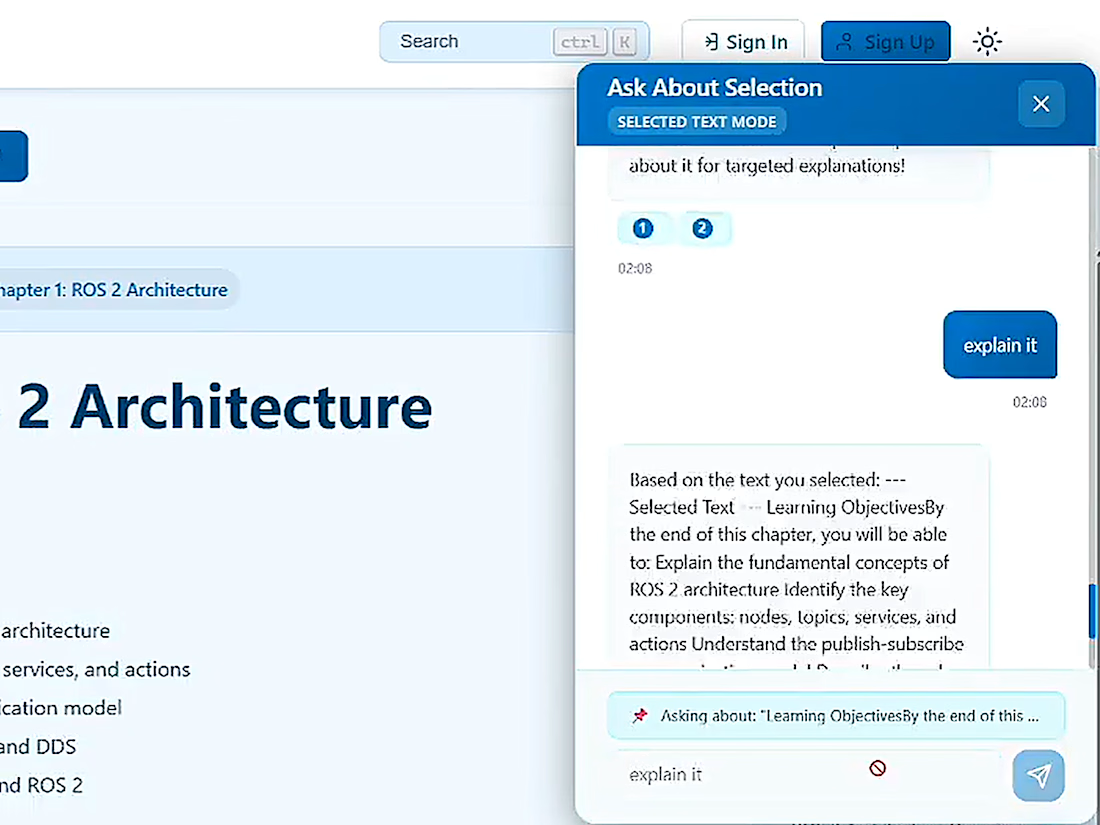

For selected-text mode, I'd keep the highlighted passage distinct from supporting passages retrieved elsewhere in the book. If a robotics equation uses a symbol defined in an earlier section, can the answer cite that definition as well as the selected equation?