The network for creativity
Join 1.25M professional creatives like you
Connect with clients, get discovered, and run your business 100% commission-free
Creatives on Contra have earned over $150M and we are just getting started
Back to feedPost

A website shouldn't need a developer every time the business has something new to say.
A new case study. An updated service. A new team member. A change to pricing or locations.
These are ordinary business updates.
Yet they can quickly turn into a series of development requests when content management hasn't been considered early enough.
And it's not simply a question of choosing a no-code platform.
There are plenty of ways to make a website manageable for the people who actually run it.
With Framer, for example, I can structure content through CMS collections and reusable page templates, allowing clients to add projects, publish articles, or update recurring content without rebuilding pages.
On-page editing offers another way to make changes directly in context, while content permissions help keep the editing process under control.
But a custom-developed website doesn't have to be any less manageable.
A website built with HTML, CSS, JavaScript, or modern frameworks can be connected to a CMS that allows clients to manage content independently.
WordPress, including custom-developed themes, can provide a familiar editing environment. Headless solutions like Sanity or Contentful offer more flexibility by separating content management from the frontend.
And for businesses with more specific requirements, a tailored admin interface can be built around the workflows their team actually needs.
Different approaches, but the same objective.
The business should be able to manage its everyday content without depending on a developer for every small change.
Of course, selecting the technology is only part of the process.
What does the team need to update regularly?
Who should be able to edit, review, and publish content?
Will they need to manage multiple languages, SEO information, reusable sections, or content shared across different pages?
And how much flexibility should the editing system provide?
Too little control, and every update becomes another request.
Too much unrestricted access, and even a small content change can compromise the visual consistency or structure of the website.
These aren't details to figure out during handover.
They influence how content is structured, how components are built, which permissions are assigned, and how much ongoing development support the website will require.
That's why I consider content management an architectural decision, not simply a feature added before launch.
The CMS or editing interface should support the way a business actually operates, rather than forcing its team to work around the limitations of the website.
And that's a decision worth making long before the first page goes live.
The network for creativity
Join 1.25M professional creatives like you
Connect with clients, get discovered, and run your business 100% commission-free
Creatives on Contra have earned over $150M and we are just getting started


Related posts

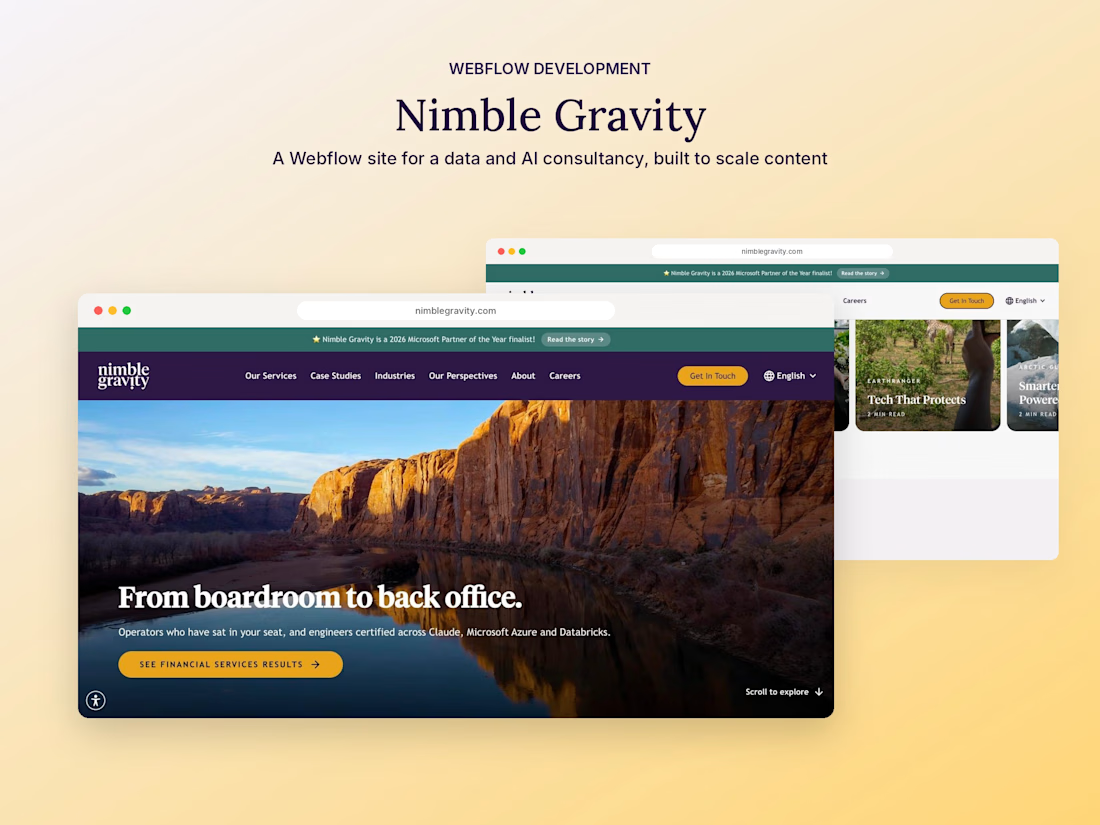
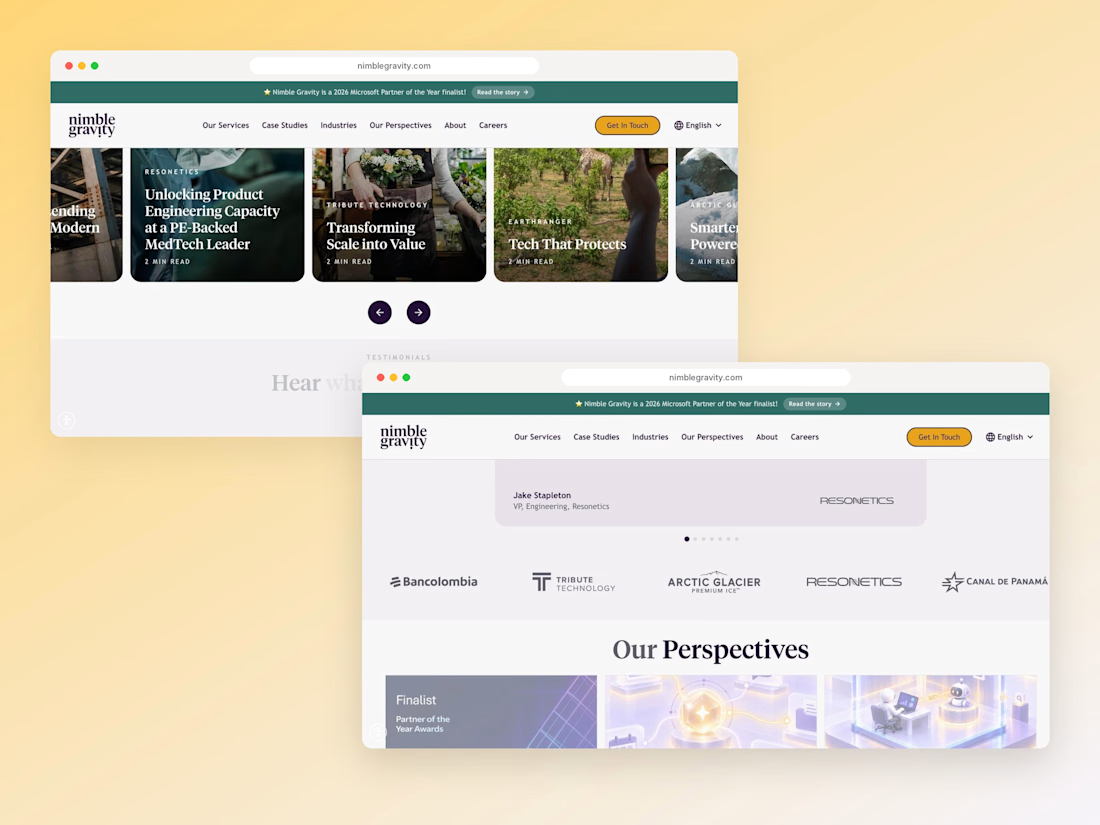
A consultancy site isn't a brochure. It's a publishing machine.
On Nimble Gravity, case studies, industry pages and articles all run on Webflow CMS with reusable cards and sliders. The team can publish new content without a developer.
If your marketing team still needs a developer to publish a case study, the build is the bottleneck, not the team.
Do you let clients edit the CMS directly, or keep it locked?


Love this!

Which 3 seconds would sell you the ring?
I built ORBIT, a launch site for a fictional titanium health ring. Everything you see is live 3D running in the browser, not renders or pre-made video.
Left: as you scroll, the ring comes apart into its five layers, each one labeled.
Right: it turns to show the sensors, pulsing in time with a live heart-rate readout.
If a launch page only had room for one of these moments, which one makes you want to buy? Vote, then tell me why in the comments. The full scroll is in the case study on my profile.

16 voted
94%
1 voted
6%
17 votes
Closed

The teardown for me. Seeing the five layers come apart shows what I'm actually paying for, the heartbeat is cool but every ring brand does a version of it 😄 Love that it's all live three.js and not a video.

What's your favourite curated inspiration website? I'll start first 💬
Godly for me 👀 And Codrops when I need WebGL ideas for a build.