The network for creativity
Join 1.25M professional creatives like you
Connect with clients, get discovered, and run your business 100% commission-free
Creatives on Contra have earned over $150M and we are just getting started
Back to feedPost

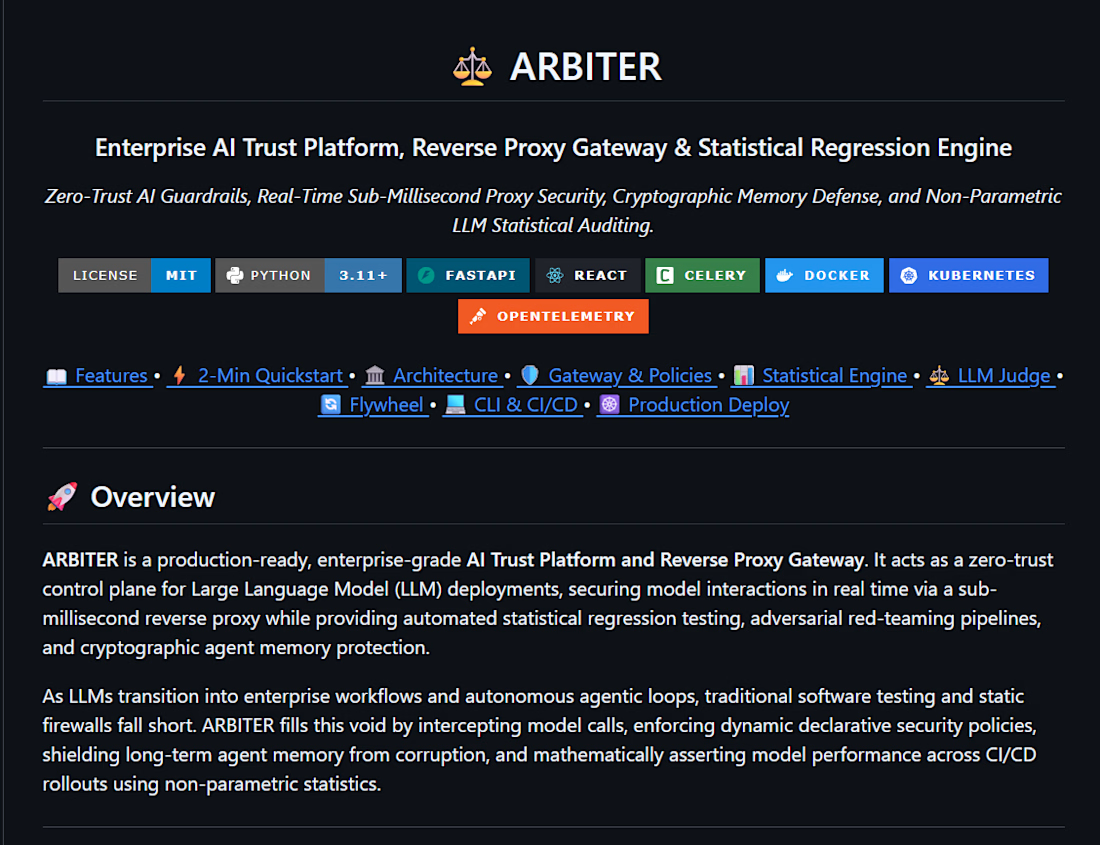
Arbiter — AI Trust & Evaluation Platform
Arbiter is an enterprise-grade AI trust and evaluation platform built to help teams test, secure, monitor, and govern LLM-powered applications before and after they reach production.
Modern AI applications can fail in ways that traditional software testing does not easily catch. A prompt change can reduce answer quality, a model upgrade can introduce regressions, an agent can expose sensitive information, or a jailbreak can bypass application-level safeguards. Arbiter provides an infrastructure layer for continuously evaluating and controlling these systems.
Core Capabilities
LLM Evaluation
Automated evaluation of LLM responses against configurable criteria.
Support for deterministic and statistical evaluation workflows.
Compare different models, prompts, and configurations.
Track quality changes across evaluation runs.
Statistical analysis using techniques such as the Mann–Whitney U test and bootstrap confidence intervals.
Adversarial Testing
Test LLM applications against jailbreaks, prompt injection, adversarial prompts, and other failure scenarios.
Create repeatable attack suites for regression testing.
Run security and reliability checks before deployment.
AI Firewall & Policy Engine
Acts as a control layer between applications and LLM providers.
Inspect prompts and model responses.
Apply configurable policies to block, modify, or flag potentially unsafe requests and responses.
Provide centralized enforcement rather than implementing safety logic independently in every application.
Memory Protection
Analyze information being written to or retrieved from AI memory.
Apply policies around sensitive information and potentially unsafe memory operations.
Reduce the risk of unintended persistence of confidential information.
CI/CD Quality Gates
Integrate AI evaluation into the software delivery pipeline.
Automatically evaluate model or prompt changes before deployment.
Fail a deployment when configurable quality, safety, or regression thresholds are not met.
Treat AI behavior as something that can be tested continuously rather than manually reviewed after deployment.
Observability
Track AI requests, responses, evaluation results, policy decisions, and failures.
Designed around OpenTelemetry for integration with existing observability infrastructure.
Provides visibility into how AI systems behave in real-world usage.
Architecture
Arbiter is designed as an infrastructure layer around existing AI applications rather than requiring teams to rebuild their applications from scratch.
Application → Arbiter Gateway → Policy & Security Layer → LLM Provider
Requests can pass through evaluation, policy enforcement, security checks, and observability before reaching the underlying model. Responses can then be evaluated and monitored before being returned to the application.
This architecture allows teams to introduce AI governance without tightly coupling their application to a specific model provider.
Engineering Focus
The project combines:
LLM evaluation
Statistical testing
Adversarial AI security
AI governance
API gateways
Policy engines
Memory security
CI/CD automation
Observability
Production AI infrastructure
The goal is to move LLM applications from “it works in a demo” toward systems that can be continuously tested, monitored, and controlled in production.

The network for creativity
Join 1.25M professional creatives like you
Connect with clients, get discovered, and run your business 100% commission-free
Creatives on Contra have earned over $150M and we are just getting started



Related posts

Your Business Doesn't Need More Tools. It Needs Better Systems.
Most businesses don't have a software problem. They have an integration problem.
Their CRM is disconnected from their database. Their spreadsheets require manual updates. Their reports take hours to prepare. Their teams waste valuable time moving information between platforms.
That's where I come in.
I'm a Full-Stack AI Engineer specializing in building connected, intelligent business systems.
What I can build for your business:
CRM & ERP Integrations — Connect business platforms, databases, and third-party services through APIs.
Workflow Automation — Eliminate repetitive processes with intelligent automation.
Custom Dashboards — Turn scattered business data into actionable insights.
Data Pipelines — Build reliable systems for collecting, processing, validating, and synchronizing data.
AI-Powered Solutions — Integrate LLMs, intelligent agents, and automation into existing workflows.
Custom Software — Build complete web applications and business platforms from architecture to deployment.
I've independently developed complex digital platforms, including government-level systems, international applications, and AI-powered products.
My approach is simple:
Understand the business problem. Design the right architecture. Build the complete solution. Make it reliable.
I'm interested in working with founders, agencies, and businesses looking to modernize their operations and build software that actually solves problems.
Have a complex workflow or an integration challenge? Let's build something that works.
#FullStackDevelopment #AIAutomation #CRMIntegration #WorkflowAutomation #SoftwareEngineering #AIEngineering #Contra
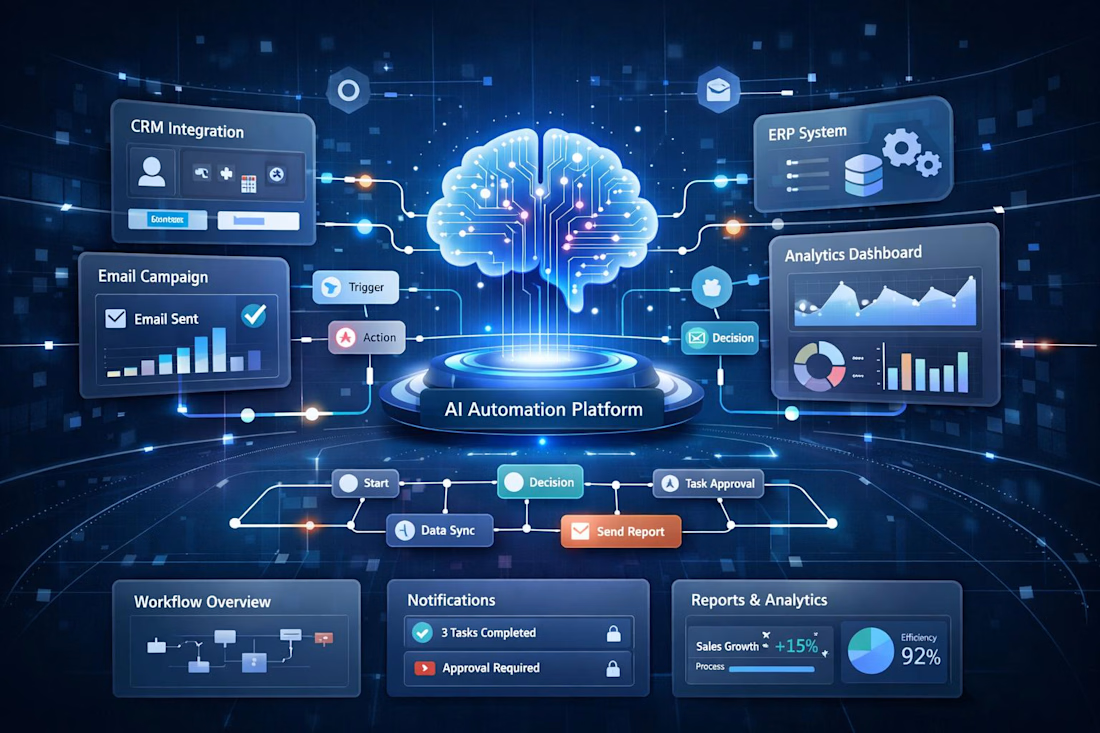

When a CRM-to-database sync fails halfway, how do you handle it: idempotent retries, or a reconciliation pass afterward? That's usually where integrations start to drift.

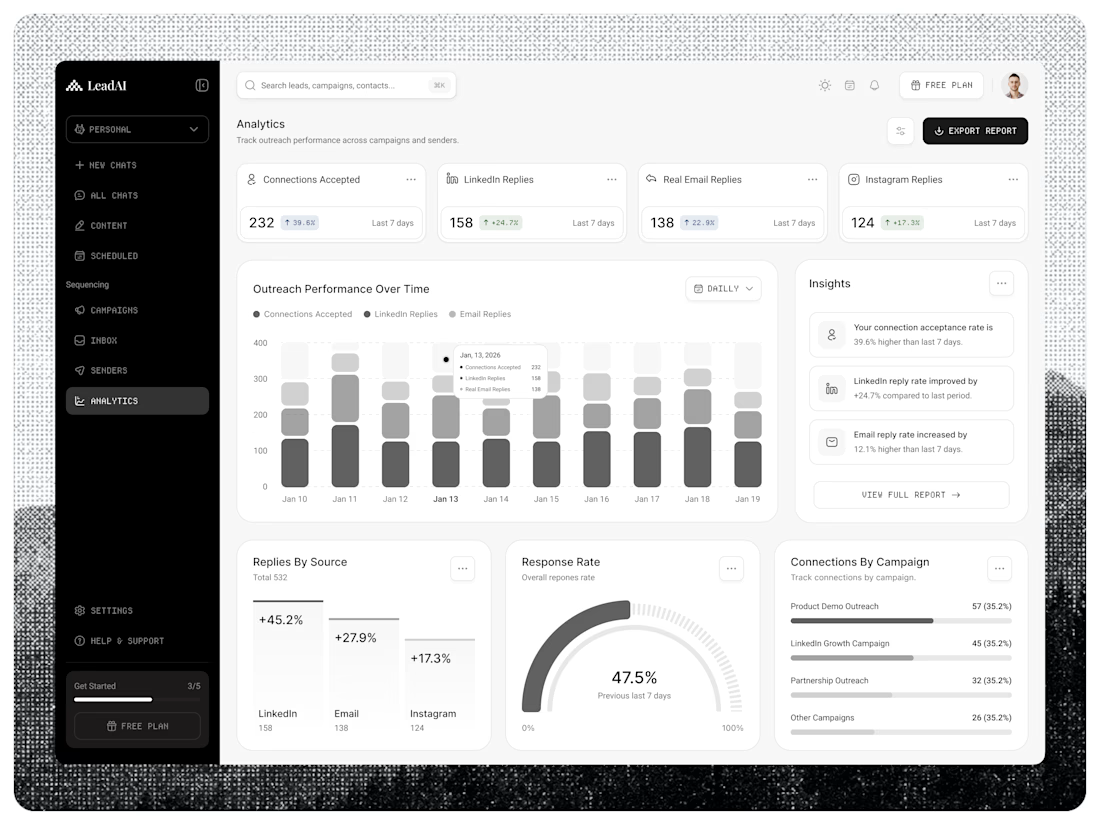
AI-Powered Prospecting SaaS Platform | Analytics Dashboard
LeadAI — AI-Powered Prospecting SaaS Platform A modern AI-powered prospecting platform designed to help sales teams discover high-quality leads, automate outreach, manage campaigns, and turn prospects into opportunities.
The experience combines AI assistance, lead generation, email & LinkedIn outreach, campaign management, analytics, and smart sales workflows into one clean, intuitive SaaS platform.
Designed for: SaaS Founders, Sales Teams, Growth Teams & B2B Businesses.
Focus: AI • Lead Generation • Sales Automation • CRM • SaaS • Dashboard • UI/UX • Product Design Designed with Figma. Interested in building a modern SaaS, AI product, CRM, dashboard, or B2B web application?
Available for UI/UX & AI Product Design projects. 🎯
✅ Full-Time | Contract | Remote



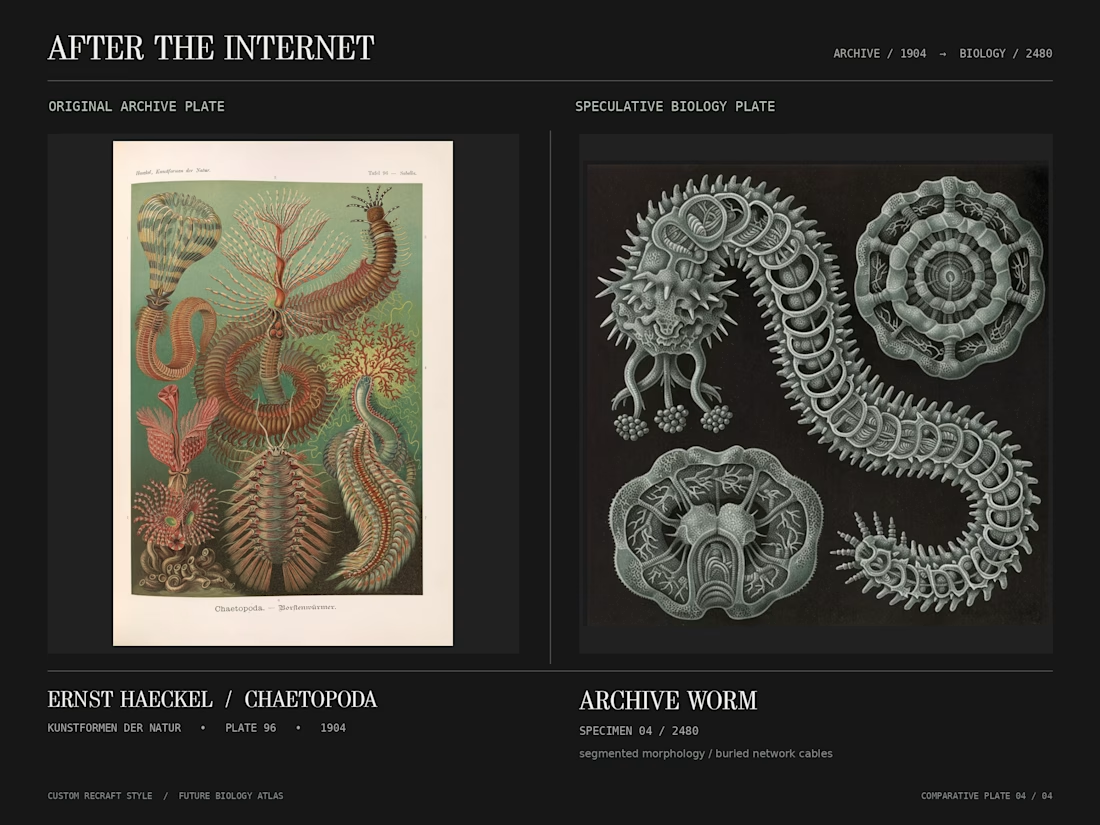
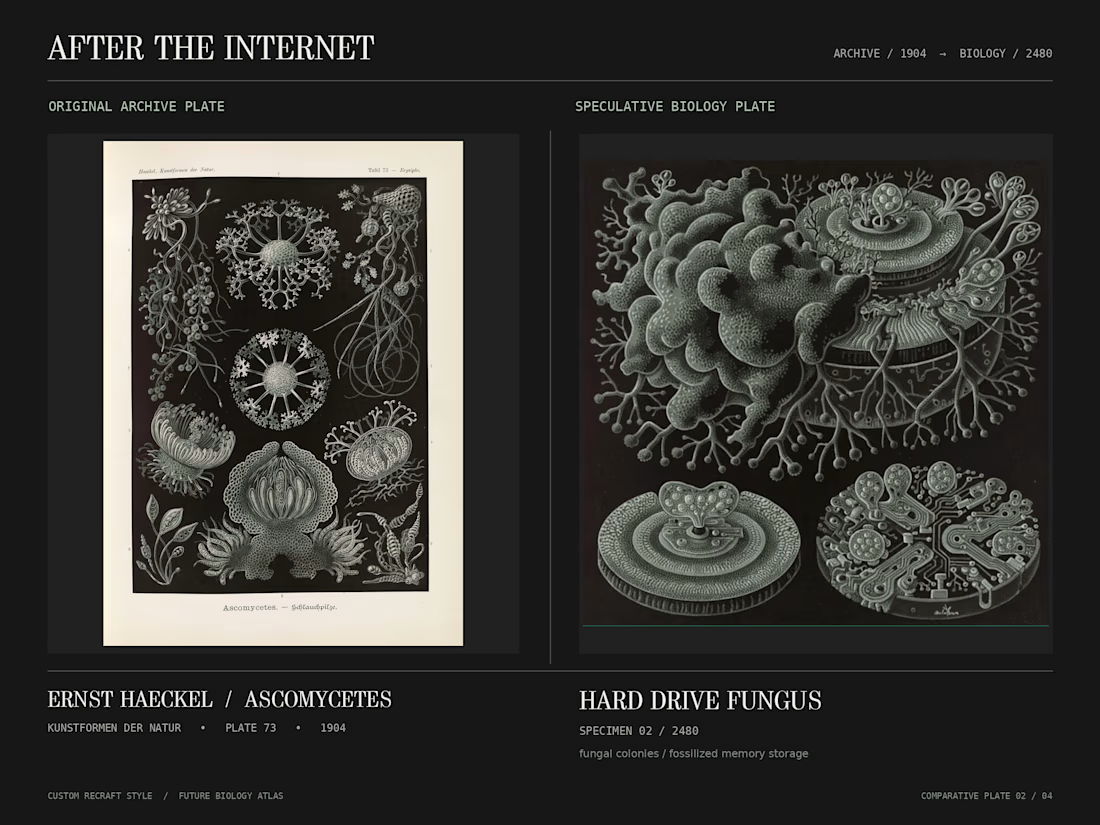
AFTER THE INTERNET / 2480
After the Internet imagines a biology atlas from the year 2480, documenting species that evolved from the remains of digital civilization.
I built a Custom Recraft Style using four historical plates from Ernst Haeckel's Kunstformen der Natur (1904), preserving their intricate linework, organic structures, and scientific compositions.
I wanted to revive the visual language of historical natural history atlases to document a world that has never existed.
Across nine illustrated plates, abandoned technology becomes biological anatomy, from primitive organisms inhabiting old hardware to post-human species and collective intelligence.
The result is a fictional evolutionary history in which technology becomes nature itself.
Technology became anatomy. Memory became tissue. Networks became living organisms.
#recraftstyleschallenge