The network for creativity
Join 1.25M professional creatives like you
Connect with clients, get discovered, and run your business 100% commission-free
Creatives on Contra have earned over $150M and we are just getting started
Back to feedPost

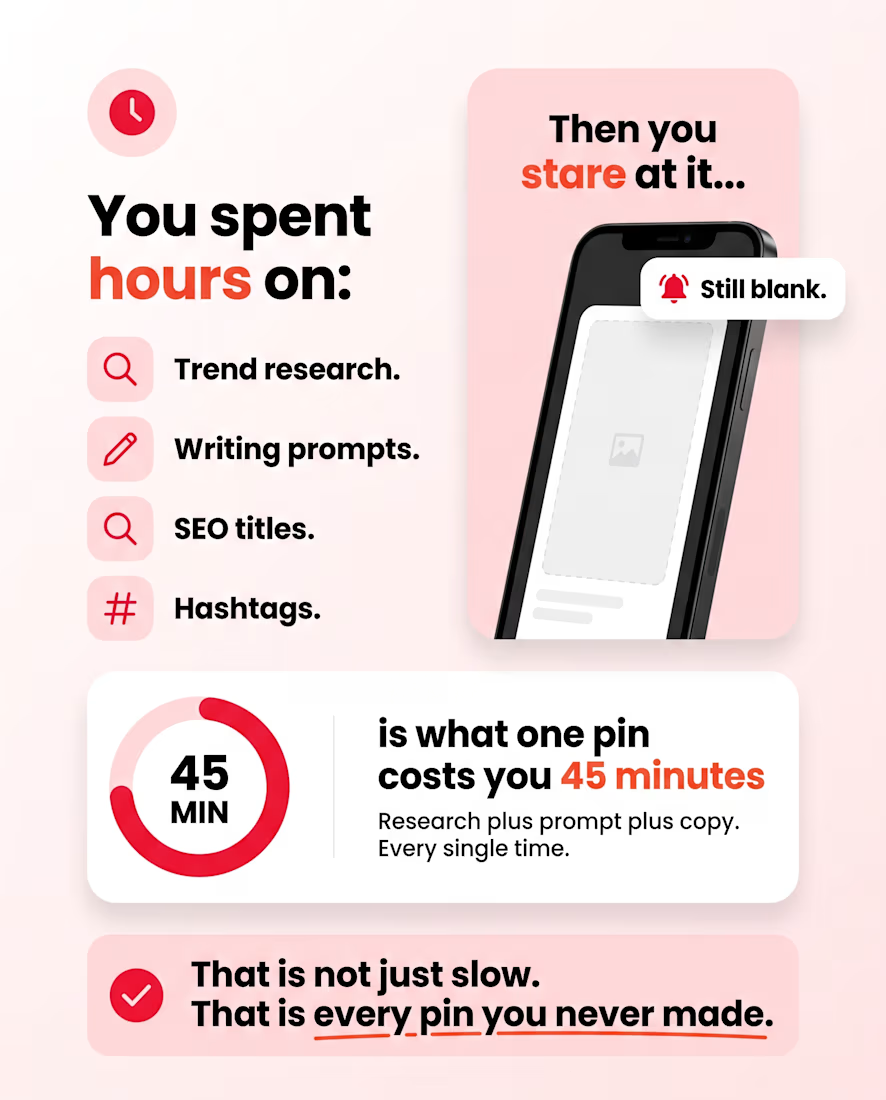
45 minutes.
That's what one good pin used to cost me. Not designing it — just deciding what it should be.
Open Pinterest. Scroll. Try to guess what's trending. Write a prompt. Rewrite the prompt. Write a title. Write a description. Hunt for hashtags.
Then do it all again for the next pin.
That's not slow. That's every pin you never made.
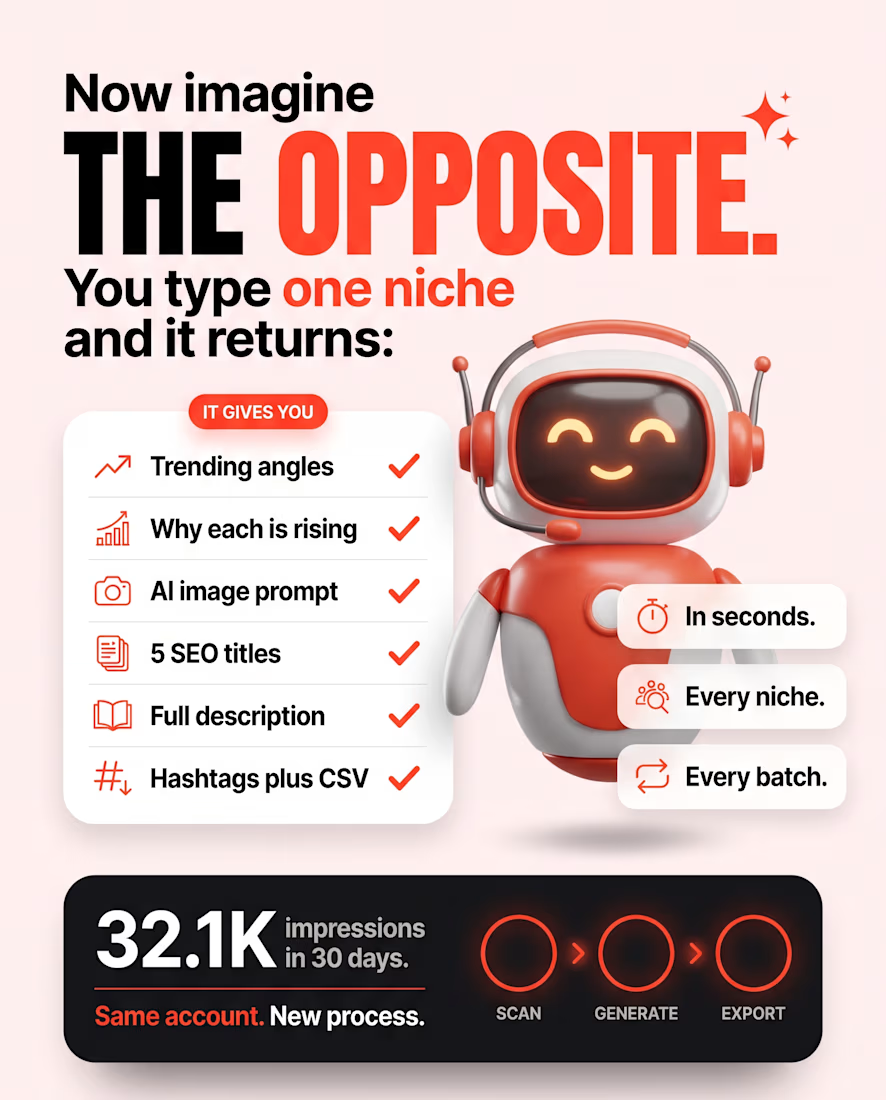
So I built the opposite.
You type one niche. It gives you back:
✅ Trend angles that are actually rising right now
✅ Why each one is working
✅ A ready-to-paste AI image prompt
✅ 5 SEO titles
✅ Full description
✅ Hashtags + CSV export
In seconds. Every niche. Every batch.
I ran it on my own account for 30 days: 32.1k impressions, up 805%. Same account, same niche — new process.
It's called Pin Trend Kit. $9, one time, no subscription.
Comment "8X" and I'll send you the link 👇
#pinterestmarketing #pinterestgrowth #pinteresttips #aitools #contentcreator #etsyseller #printondemand #socialmediamarketing #pinterestforbusiness #digitalproducts



The network for creativity
Join 1.25M professional creatives like you
Connect with clients, get discovered, and run your business 100% commission-free
Creatives on Contra have earned over $150M and we are just getting started





Related posts

Using design pages in Framer is a underrated way to ship a setup guide, prompt pack, and more with a template or project handoff.
Just open the project, and the instructions are just there, next to the pages they describe.
Here’s how it looks in my template ‘Hallam’ 👇


Framer design pages for handoff docs are underrated — buyers remember templates that teach them how to use what they bought.

All the scenes are generated by me using AI please don't use it without permission, also if you want such beautiful cinematic videos I can do it for you for just 5 dollar.


Awesome Video

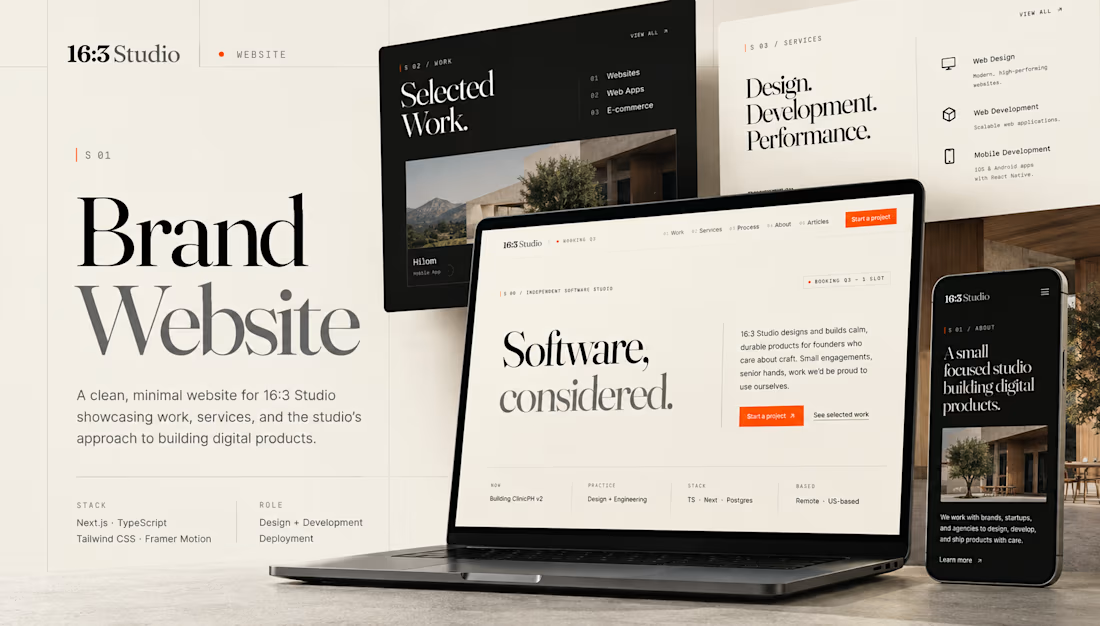
16:3 Studio is my independent software studio website, designed and developed from the ground up to showcase selected work, services, and my approach to building digital products.
The site combines an editorial-inspired visual system with a clean, structured layout, subtle interactions, and responsive design. I focused on creating a distinct studio identity while keeping the experience fast, accessible, and easy to navigate across devices.
Built with Next.js, TypeScript, Tailwind CSS, and Framer Motion, with an emphasis on reusable components, performance, responsive behavior, and polished frontend details.
My role: Design, Frontend Development & Engineering
Stack: Next.js · TypeScript · Tailwind CSS · Framer Motion



The studio site has a clear way to show both the work and how you build it. I like that you kept the motion subtle. Did you have to make any tradeoffs to keep it fast on mobile?