The network for creativity
Join 1.25M professional creatives like you
Connect with clients, get discovered, and run your business 100% commission-free
Creatives on Contra have earned over $150M and we are just getting started
Back to feedPost
This is the difference between automation and an AI agent. 🤖
A traditional automation says:
“When X happens → do A → then B → then C.”
It’s predictable, reliable, and perfect for repetitive processes. But what happens when the next step isn’t always the same? That’s where an AI agent comes in.
Instead of following one fixed path, an agent can:
→ Understand the goal
→ Analyze the situation
→ Decide what information it needs
→ Choose the right tool
→ Take an action
→ Check the result
→ Decide what to do next
For example, imagine a lead-generation workflow in n8n.
Traditional automation:
New lead → Scrape website → Find email → Add to CRM → Send email
Every lead follows the same path.
Agentic workflow:
New lead → AI Agent
The agent decides:
🔎 Does this company fit the target profile?
🌐 Should I research the website further?
📊 Is there enough information to qualify the lead?
✉️ Should I generate a personalized message?
⚠️ Is human approval needed before outreach?
The workflow becomes goal-driven instead of purely step-driven.
And this doesn't mean replacing automation.
The most powerful systems combine both:
n8n handles the reliable execution.
AI handles decisions where the path isn't always predictable.
That’s what makes an agentic workflow different from simply adding ChatGPT to an automation.
The future isn't: Automation OR AI
It's: Automation + AI agents + the right tools.

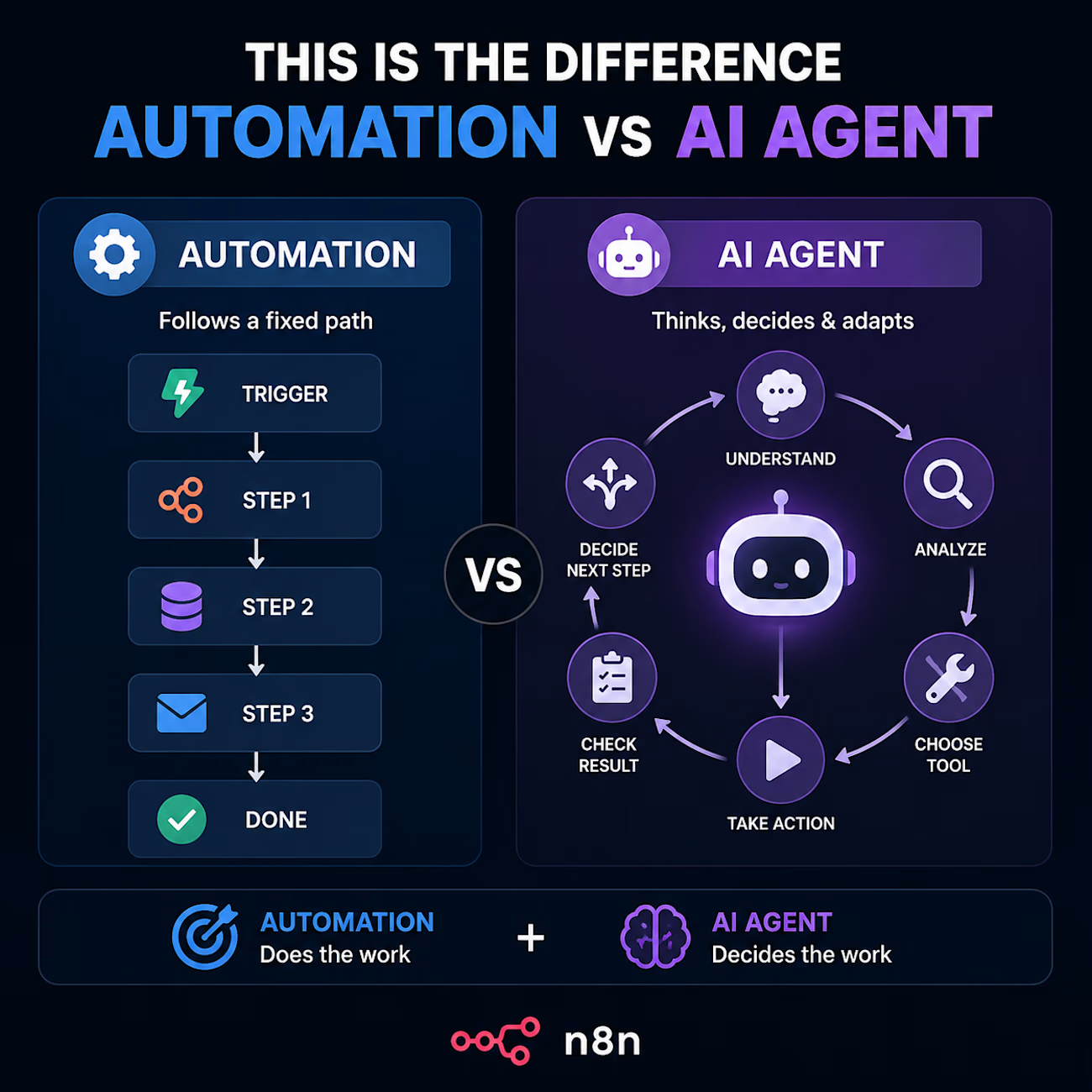

Exactly! The real power comes from combining reliable automation with AI-driven decision-making. n8n handles execution while agents handle the dynamic parts of the workflow. 🚀

Exactly! 🙌 That combination is where things get really powerful—n8n keeps the workflow reliable, while the agent adds the flexibility to handle situations that don’t fit a fixed path. Thanks for sharing your thoughts, Marko! 🚀

Automation handles the routine heavy lifting, but AI Agents bring the reasoning power when edge cases pop up. The real sweet spot is chaining both together—letting automation handle the fixed workflows and having AI agents step in when real-time decisions are needed.
Great visual summary! 👏


Great comparison.
They work best together as a team, the AI Agent acts as the brain making decisions based on incoming data, and standard Automation acts as the reliable hands carrying out the exact execution steps.
When you plug intelligent decision-making into structured,...
Great visual! "Automation does the work, AI agent decides the work" is probably the clearest way to explain this shift to clients.
The network for creativity
Join 1.25M professional creatives like you
Connect with clients, get discovered, and run your business 100% commission-free
Creatives on Contra have earned over $150M and we are just getting started








Related posts

Picture a consultant who takes 8 sales calls a week.
After each one comes the same routine: replay the recording, write notes, update the pipeline sheet, write the follow-up email. Call it 30 minutes a call. That is 4 hours a week, and on busy days the follow-up slips to tomorrow.
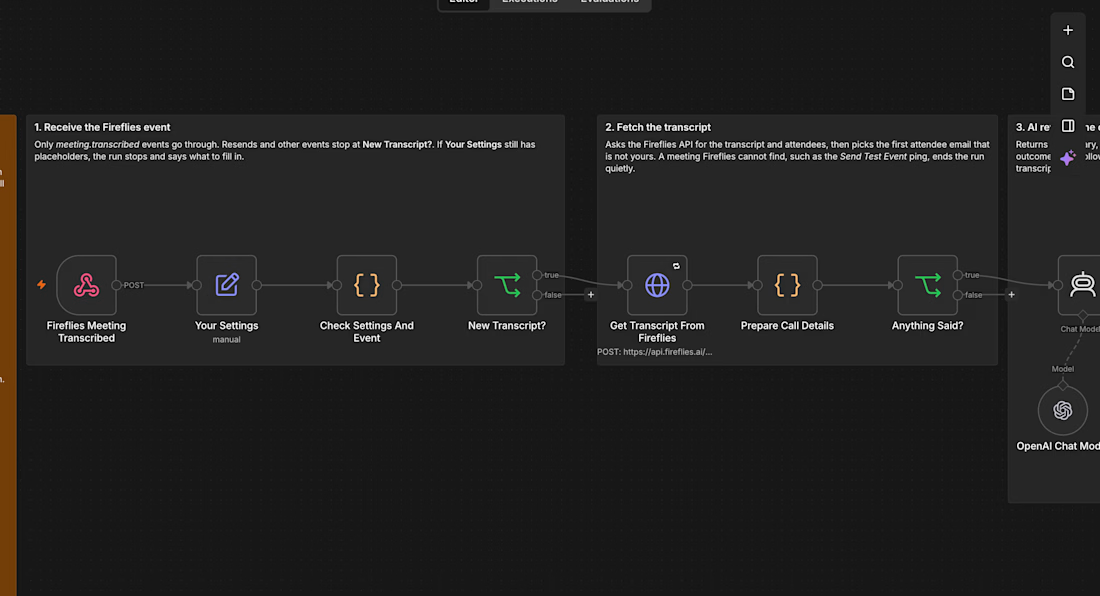
I built an n8n workflow that takes that routine away:
→ Fireflies records and transcribes the call
→ As soon as the transcript is ready, AI writes a summary, the open questions, the next step and whether the prospect is ready to go ahead
→ A follow-up email that fits that outcome is saved in Gmail drafts, addressed to the person on the call
→ The call is logged in Google Sheets and the notes land in your inbox
Nothing is sent automatically. You read the draft, change a line if you want, and press send.
For that consultant, 4 hours of admin a week turns into a few minutes of reading, and every prospect hears back the same day.
I tested it on a real recorded client call and have submitted it to the n8n template library as a free template. If you want it set up for your business, send me a message.


AI voice receptionists that answer every incoming call, resolve customer queries, and book, update, or cancel appointments. They replaced a receptionist service that cost thousands of dollars a month


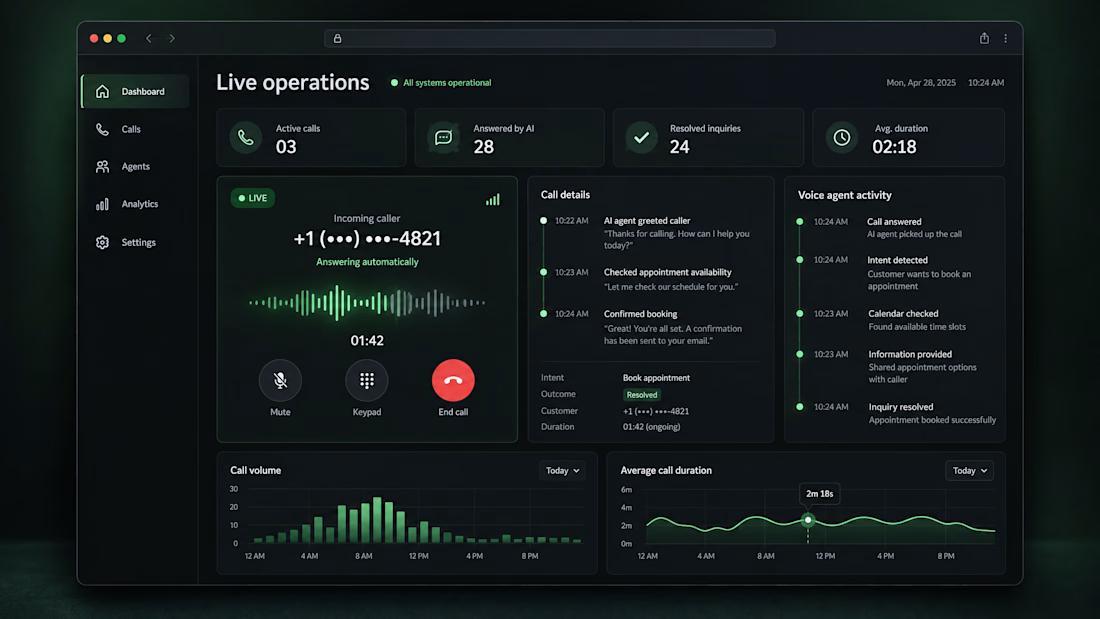

Replacing a receptionist service is where the ROI is easiest to show. How do you handle calls the agent can't resolve: live transfer to staff, or a callback?

🚀 Built a Gmail AI-Tagging + Slack Alerts System — Because Important Emails Should Never Get Missed
The problem every B2B team faces:
❌ Client emails sit unanswered for days
❌ Bank or government emails get buried in the inbox
❌ Deadlines are missed because no one flags them
❌ No daily view of what's pending vs overdue
I built a system that fixes all of this:
🎯 WHAT IT DOES:
✅ Watches Gmail inbox every 5 minutes
✅ Uses AI to classify every email into 5 categories:
• URGENT (deadlines, overdue, time-sensitive)
• BANK_GOV (banks, .gov domains, tax authorities)
• CLIENT_ACTION (awaiting response)
• FOLLOW_UP (needs follow-up)
• FYI (informational)
✅ Pushes real-time Slack alerts to the right channel:
• #urgent — for time-sensitive items
• #finance-legal — for bank/gov emails
• Assignee DM — for client action items
✅ Sends a daily 8 AM digest with:
• Overdue items
• Awaiting client action
• Pending tasks
✅ Auto-applies Gmail labels (AI/Urgent, AI/Bank-Gov, etc.)
✅ Hourly overdue scanner with automatic escalation
⚙️ TECH STACK:
n8n | Gmail API | OpenAI GPT-4o-mini | Slack API | Google Sheets
📊 RESULT:
→ Zero missed urgent emails
→ 15+ minutes saved per team member per day
→ Complete audit trail in Google Sheets
→ Full visibility into what's stuck and where
Gmail stays the primary interface. Slack becomes the reminder layer that ensures nothing slips.
Want this deployed for your team? Let's talk.
#AIAutomation #GmailAutomation #SlackIntegration #n8n #B2BSaaS #Productivity #WorkflowAutomation


Splitting BANK_GOV out on its own is smart. Those are the emails that hurt most when they get buried. When GPT-4o-mini tags one wrong, does the corrected label feed back into the prompt, or is it fixed by hand?