The network for creativity
Join 1.25M professional creatives like you
Connect with clients, get discovered, and run your business 100% commission-free
Creatives on Contra have earned over $150M and we are just getting started
Back to feedPost

Why Contracts Should Start with the Business, Not the Template
A case study: building a connected documentation framework for an AI-powered
travel platform
Industry: Travel technology and AI
Work: Platform terms, privacy and AI disclosures, commercial
documentation
Status: Ongoing
01. The context
An early-stage company was building an AI-powered platform for discovering,
planning, comparing and booking travel. On paper, the job looked simple: a Terms of Use, a Privacy Policy, booking terms, a cancellation and refund
policy, and an AI disclaimer.
But one question mattered more than the list: how can you draft meaningful documents
for a product before you understand how it actually works?
02. The problem
The real challenge was not a missing set of documents. It was turning an evolving business model into documents that agreed with each other and matched reality.
Five questions needed answers first:
What is the platform actually responsible for: discovery, recommendations, bookings, or all three?
Which third parties does it depend on, such as travel suppliers and APIs, and who is responsible for what?
What happens when a booking is cancelled, or a supplier changes a price or availability?
How should users understand AI-generated recommendations, and how far can they rely on them?
What personal data does the platform collect, and where does it go?
Generic documents would answer none of these. On paper, the job looked simple: draft a few standard policies. In reality, it required harmonizing a comprehensive 8-document
corporate compliance and tech startup suite spanning over 200+ pages of deeply interconnected operational policy ensuring absolute alignment between the Master Terms of Use, Privacy Policy, Booking Terms, AI Disclosures,
and Contractor Agreements.
03. The Approach: understand before you draft
My guiding principle was that every contractual obligation should have a business reason, and every important business risk should have a sensible contractual treatment.
I started by mapping how the platform works and how users, suppliers and technology providers relate to each other. Then I identified where responsibility was clear and where it wasn’t, especially around third-party dependencies, bookings, cancellations and refunds.
The AI disclosures were written for what this product actually does. They separate AI-generated suggestions from information that has been independently verified,
and they explain the limits of relying on either. I reviewed the privacy position against the platform’s real data flows, with reference to India’s DPDP Act, 2023 and the IT Act, 2000. Finally, I checked every document against the
others, because a platform that makes one promise in its Terms and a different one in its refund policy has a problem. The final deliverable wasn't just a handful of isolated templates; it was a fully harmonized, audit-ready compliance infrastructure across 100+ pages of legal documentation, custom-built for an AI-powered travel engine operating under India's DPDP Act,
2023 and IT Rules, 2021.
04. A Small example
A refund clause that promises instant refunds sounds customer-friendly. But if the refund depends on a supplier’s timeline, the platform has promised something it doesn’t control. The clause only works after you answer a few questions: who holds the money, who decides on refunds, what happens when a supplier changes terms, and what does the user reasonably expect?
I applied
the same questions to every clause that touches bookings, third parties and AI.
05. What the client now has
A clearer picture of what the platform is, and isn’t, responsible for. A map of its third-party dependencies. Booking, cancellation and refund terms that fit how the product really operates. AI disclosures written for this product, not copied from a template. Terms and privacy documents that agree with each other. A list of further documents needed, including a possible Privacy / Data Processing Addendum.
The work is ongoing, and where a point needs review by a qualified lawyer, I flag it.
06. The Lesson
Understand the business before you draft the paperwork.
A startup is more than a pile of agreements. It is a product, a set of commercial relationships, and a founder’s plan for what the business should become. A contract drafted without understanding the transaction can read beautifully and
still be impractical. A privacy policy written without knowing the data flows can promise things the business can’t deliver. An AI disclaimer written without understanding the product can address risks that don’t exist and miss the ones that do.
My approach
I help startups and technology businesses turn how they really operate into clear, consistent documentation. If your terms, privacy and refund policies were written separately, I’d be glad to look at how they fit together. A short call is Free.
Client details withheld. This describes documentation and advisory support, not legal advice. I’m a law graduate, not a practising lawyer.
The network for creativity
Join 1.25M professional creatives like you
Connect with clients, get discovered, and run your business 100% commission-free
Creatives on Contra have earned over $150M and we are just getting started




Related posts

I haven't posted a proper update here for a little while. I've been busy building a couple of AI applications and a healthcare workflow prototype, and writing about the work kept slipping down the list.
So, a small catch-up. :)
One project is an AI presentation builder for business teams. It starts with information about the business, its audience and the conversation they're preparing for, together with approved source material. From there, it helps create a presentation outline, a talk track, speaking notes and preparation notes.
The person using it can review the material, change it, save it and come back later to export it. That sounds fairly ordinary when written down, but those details are what make it something a team can actually work with. The connected pilot has been accepted, and I'm continuing to refine the content and develop the application.
Another project is a knowledge and planning workspace. Imagine having useful advice buried in hours of coaching transcripts. The application turns that material into a library of teachings that people can review, with links back to the sources.
It also supports a planning workflow: start with a client brief, confirm the details, then build a 90-day roadmap with check-ins and weekly updates. The knowledge foundation has been accepted; the planning workflow is on staging while the remaining integration work continues.
Alongside those, I've been working on a healthcare product prototype. This one is about showing how a complicated business process behaves: someone approves a decision, a member makes a choice, a referral moves forward, a booking happens, and someone needs help when the normal path doesn't fit.
It uses synthetic data and scripted scenarios, so the team can walk through the product without involving real patient records. Both demonstration releases were accepted, followed by a separate piece of work planning the next pilot.
I've kept the client names and interfaces private, but wanted to explain the work a little better than just saying "AI integrations" or listing frameworks.
These are the kinds of projects I'd like to do more of: useful AI features, B2B applications, and consumer products where the interface and the underlying workflow both get proper attention. I enjoy being involved in the whole thing, from figuring out what someone needs to do through to building the application that lets them do it.
I'm also updating my portfolio to make that work easier to find. You can see my public projects at https://nikocodes.com, including ReachLog and ThaiGlow.
If you're building something in this area, feel free to message me here. Happy to talk through what a sensible first version could look like.

Using synthetic data and scripted scenarios for the healthcare prototype is a smart call. Letting stakeholders walk the exception path, not just the happy path, is usually where a pilot earns its trust.

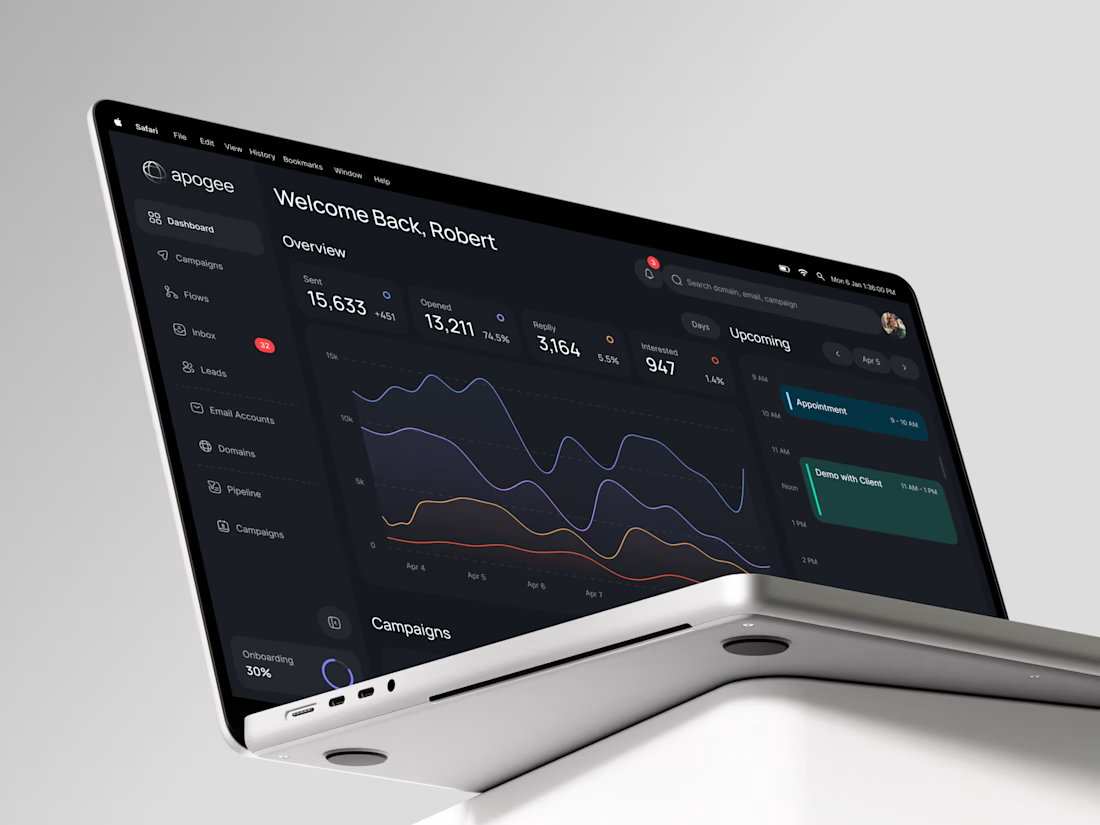
Outbound marketing from setup to booked meetings, all in one place. See the full project


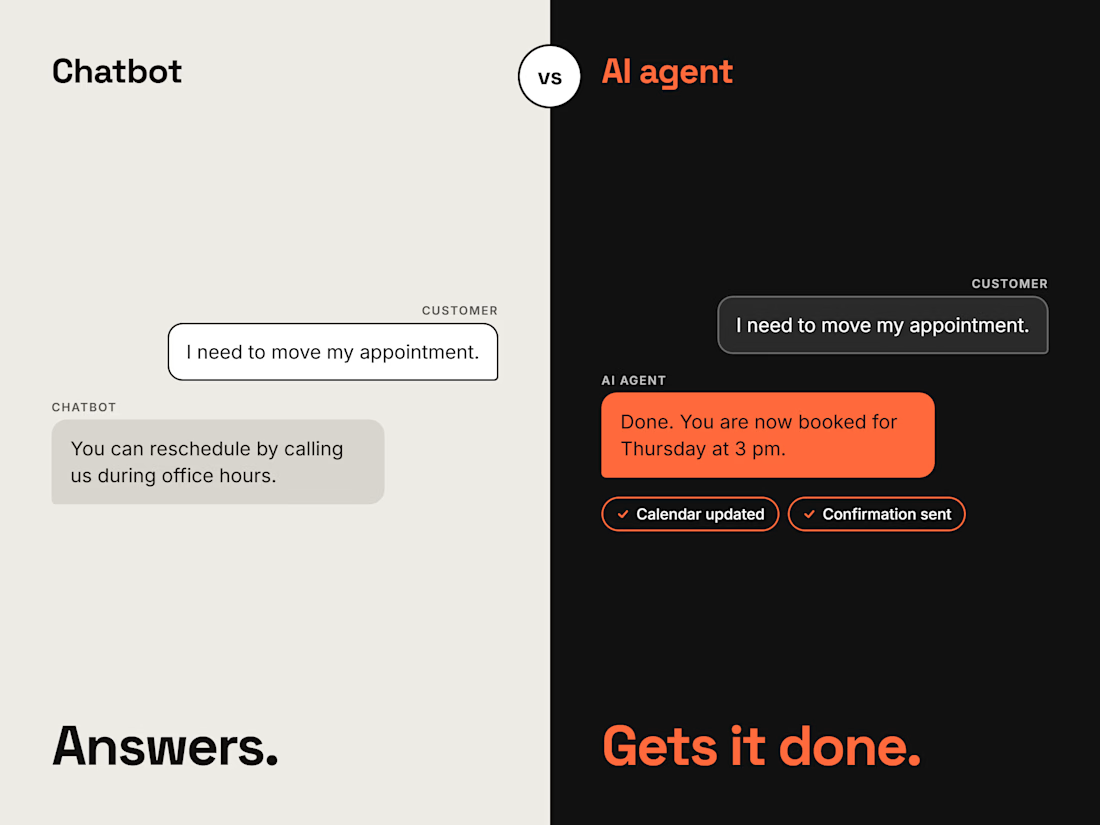
A chatbot answers. An AI agent gets it done.
Take one simple request: “I need to move my appointment.”
A chatbot tells the customer how to do it: call during office hours, wait on hold, hope someone picks up.
An AI agent does it. It checks the calendar, moves the booking, sends the confirmation, and updates the CRM. The customer is finished in ten seconds, and nobody on your team touched it.
That’s the difference I build for businesses. The agent gives the answer and also completes the task behind it.
Which task in your business still ends with “please call us”?