The network for creativity
Join 1.25M professional creatives like you
Connect with clients, get discovered, and run your business 100% commission-free
Creatives on Contra have earned over $150M and we are just getting started
Back to feedPost

🚨 Building your first app with the wrong tech stack can cost you months later.
Most founders focus on:
• UI
• Features
• Launch date
But the real long-term impact usually comes from technical decisions made in the beginning.
Your tech stack affects:
• Development speed
• Scalability
• App performance
• Maintenance cost
• Future updates
• Hiring developers later
• Overall product stability
For example:
Flutter can help launch Android + iOS apps faster using a single codebase.
Firebase can dramatically reduce backend development time for MVPs.
SwiftUI works great for high-performance native iOS experiences.
FlutterFlow can help startups validate ideas quickly before investing heavily into custom development.
But there is no “perfect stack” for every app.
The right choice depends on:
• Product complexity
• Budget
• Timeline
• Scalability goals
• Real-time features
• Long-term product vision
I’ve seen #startups spend months rebuilding products because the initial architecture decisions were rushed.
The network for creativity
Join 1.25M professional creatives like you
Connect with clients, get discovered, and run your business 100% commission-free
Creatives on Contra have earned over $150M and we are just getting started





Related posts

Adding dark mode to LoadUp, a van rental app I built with Flutter (4.5★, 5,000+ downloads).
Same booking screen, two themes. The map, pins and booking flow all have to work in both.
Which one would you use?


3 voted
33%
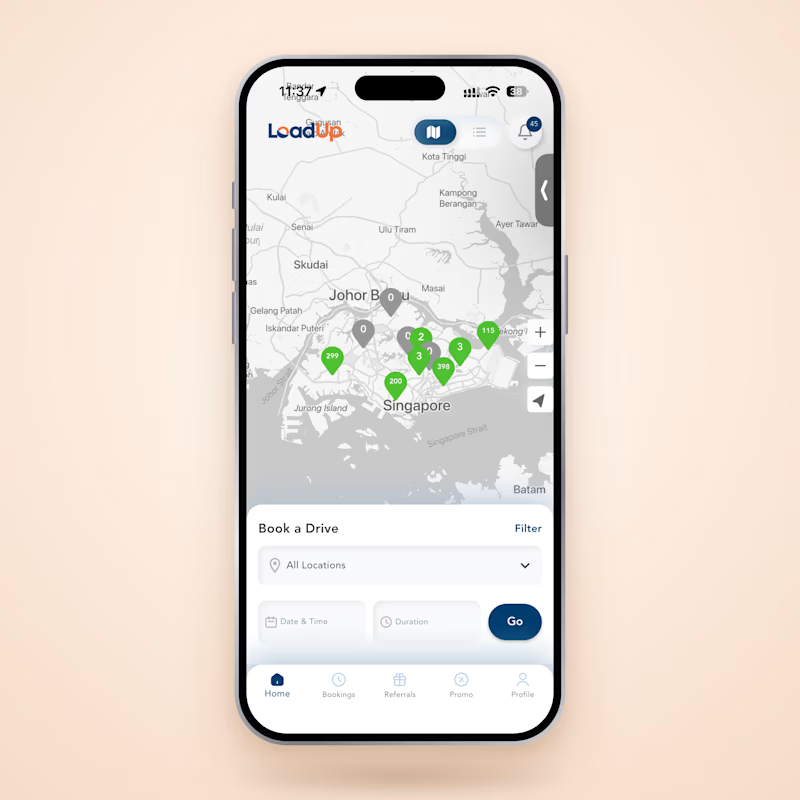
6 voted
67%
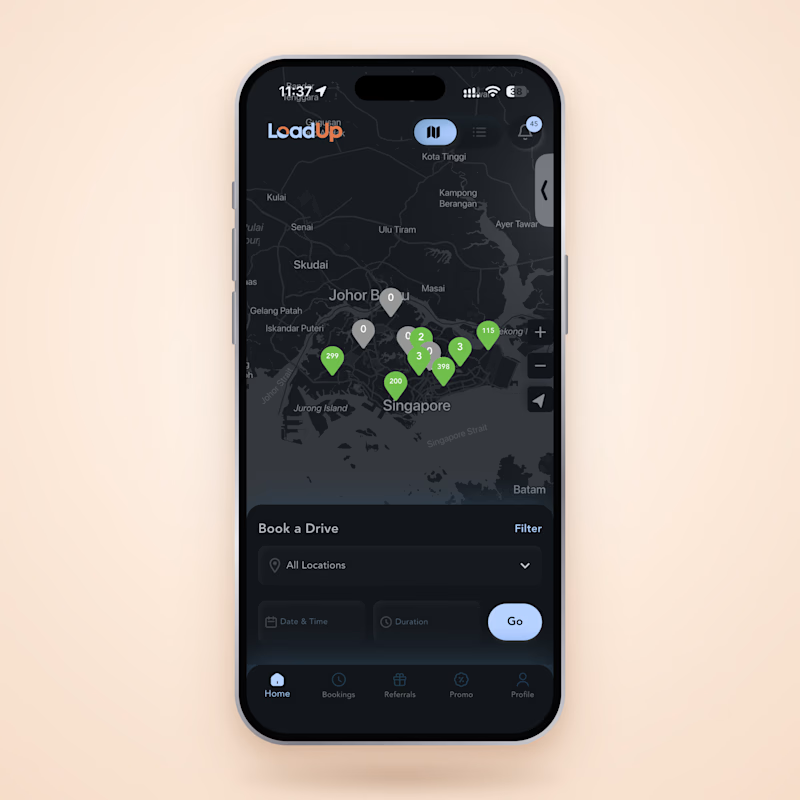
9 votes
Closed

Dark mode. Much stronger visual hierarchy and the green pins are far easier to scan at a glance.


Intellica AI, a mobile AI workspace.
Chat, generation and document analysis behind one input field, with a prompt library so nobody starts from a blank screen.


In 2024 I took over a vet telehealth app. The previous developer was gone, nothing was in version control, and it had never made it to production.
My first instinct was to start fixing bugs. Glad I didn't. I spent the first days getting it into GitHub, setting up Docker so local dev actually worked, and wiring GitHub Actions to deploy to the server. Boring work, but after that every fix could actually ship.
Then came the real features: scheduling, Stripe, Zoom calls etc.
Lesson I keep relearning: on a stuck project, get a reliable way to ship first. Nothing fancy here, just a plain nginx server and an automated deploy. The point is that every fix goes out the same way.

getting it into git and Docker before touching any bugs is the move, respect