The network for creativity
Join 1.25M professional creatives like you
Connect with clients, get discovered, and run your business 100% commission-free
Creatives on Contra have earned over $150M and we are just getting started
Back to feedPost

The Architectural Leap: Why AI Agents Need MCP Over Traditional APIs 🔌
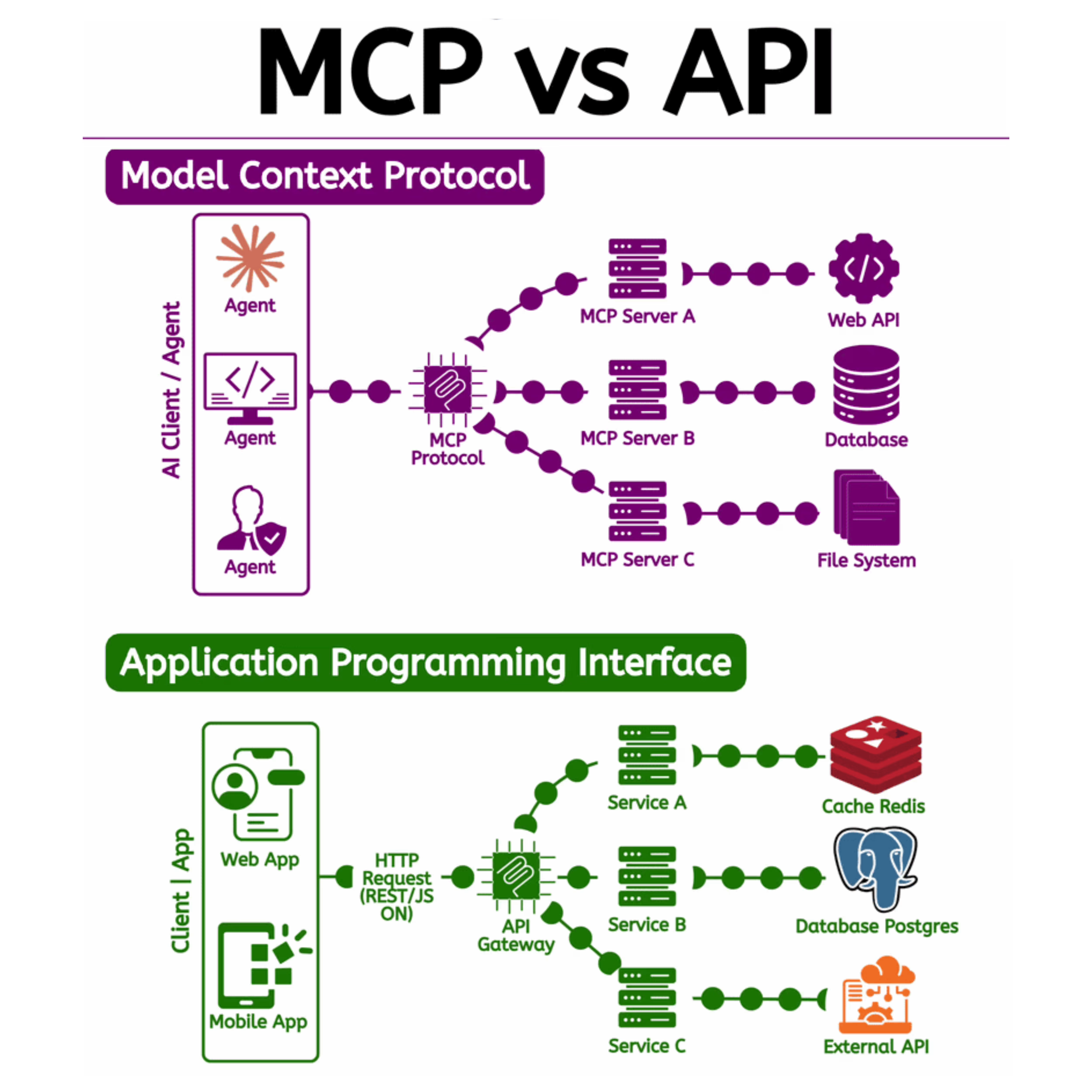
The shift from standard web applications to autonomous AI systems requires a fundamental change in how we handle connectivity. This diagram perfectly illustrates the architectural leap from traditional APIs to the Model Context Protocol (MCP).
Standard APIs rely on deterministic client apps (web or mobile) making HTTP REST/JSON requests through an API Gateway to backend services like Postgres databases or Redis caches. It works perfectly for structured, predictable user flows.
But AI agents need something different. The Model Context Protocol (MCP) redesigns this interaction specifically for AI. Instead of a web client, the AI Agent connects to dedicated MCP Servers via the MCP Protocol. These servers then act as standardized bridges to web APIs, databases, and local file systems, giving the LLM the exact context and tool access it needs to reason and act.
In my recent work building multi-agent workflows with LangGraph and local LLMs like Mistral, integrating MCP has been a game-changer. It provides a clean, standardized way for models to read data and execute actions across diverse environments without writing custom glue code for each integration.
Are you still wiring your AI agents directly to REST APIs, or have you started adopting MCP to standardize their context access? Let's discuss! 👇
The network for creativity
Join 1.25M professional creatives like you
Connect with clients, get discovered, and run your business 100% commission-free
Creatives on Contra have earned over $150M and we are just getting started





Related posts


Top-notch design.

Building AI agents is easy. Building one you can trust with a real business workflow is harder.
I built a Freelance Admin Agent to explore that problem using Strands Agents SDK and Claude Sonnet 4.5 on Amazon Bedrock.
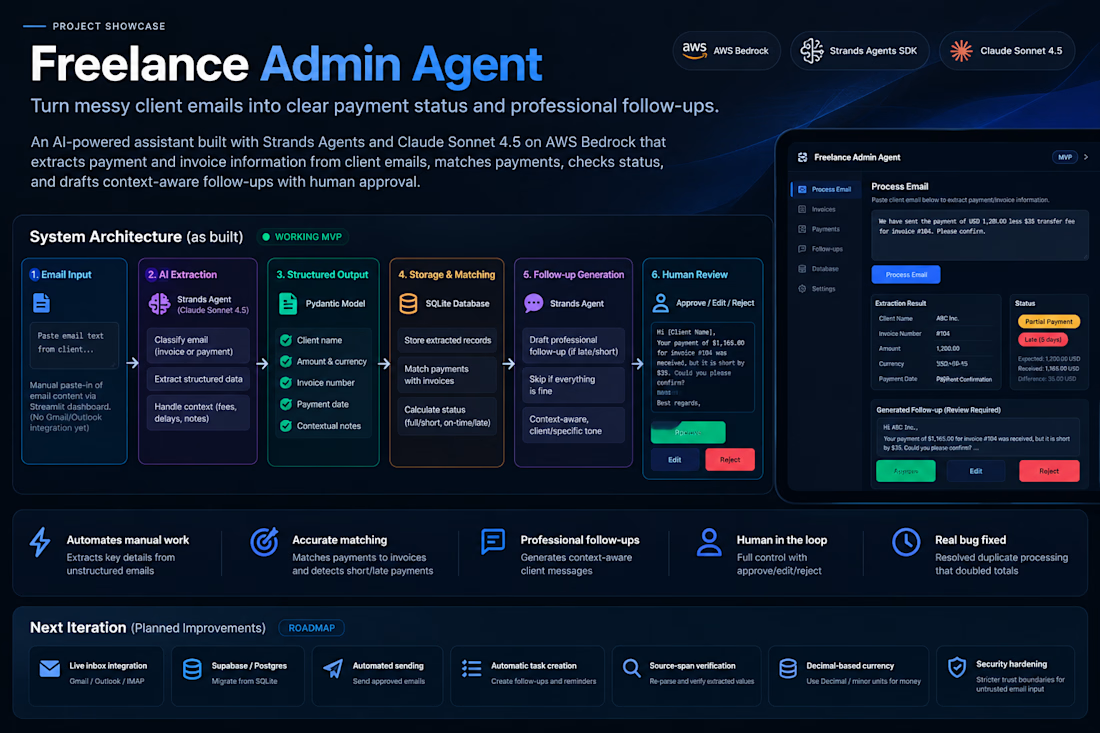
The working MVP takes manually provided client emails and turns them into a structured payment workflow:
→ Classifies invoice and payment emails
→ Extracts client, invoice, amount, currency, dates and contextual details using structured output
→ Stores and matches records in SQLite
→ Uses deterministic logic to identify full/short and on-time/late payments
→ Uses a second agent to draft a contextual follow-up only when needed
→ Keeps the final decision with the human through Approve / Edit / Reject
One of the most valuable parts wasn't adding another AI feature. It was finding a real reliability issue during testing: reprocessing the same email could duplicate records and inflate payment totals.
I reproduced it through repeat testing, traced the database behavior, and fixed it.
That reinforced something I'm increasingly applying to my AI engineering work:
A useful AI product isn't just an LLM call. It needs clear boundaries between AI reasoning, structured data, deterministic business logic, persistence, testing, and human control.
The next iteration will focus on stronger production safeguards, including source-grounded financial extraction, precise currency handling, stricter trust boundaries for untrusted input, and eventually live inbox integrations.
I'm interested in building more systems like this for startups and teams with repetitive workflows that can genuinely benefit from AI agents and automation.
Stack: Python · Strands Agents SDK · Amazon Bedrock · Claude Sonnet 4.5 · Pydantic · SQLite · Streamlit

turning client emails into admin tasks is such a real freelancer pain, nice build 🔥

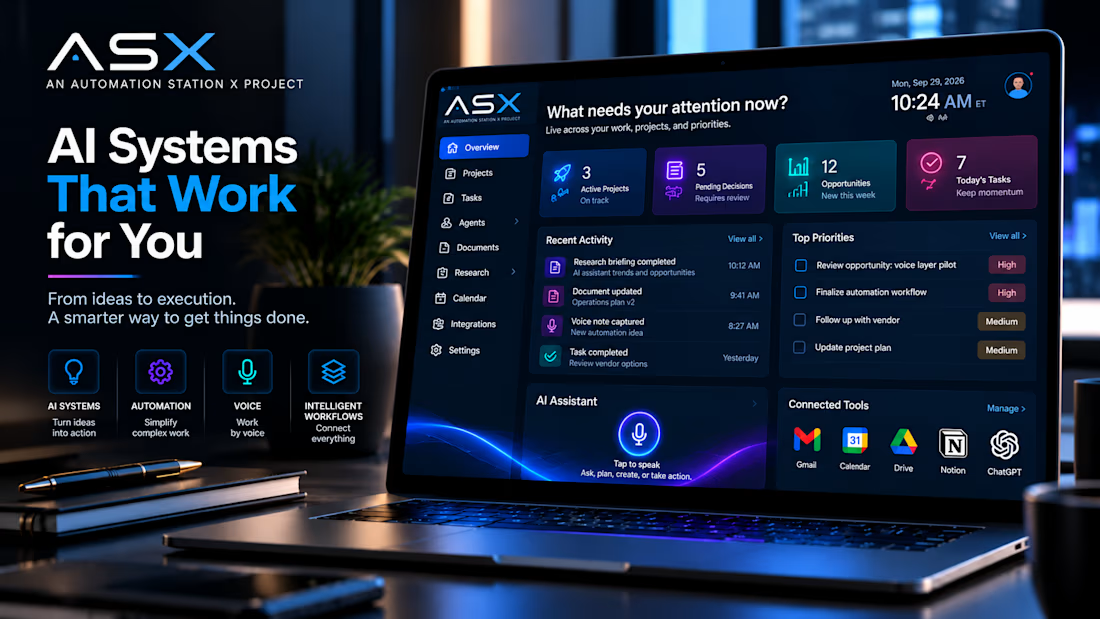
Designed and built an AI operations dashboard that brings projects, decisions, tasks, research, connected tools, and voice interaction into one clear workspace. The goal is to turn complex workflows into a simple, usable system that helps people see what matters and act faster.



James, putting decisions right next to tasks is the part I like most. Most ops tools track what got done but lose why it was decided, and that is exactly what people go looking for three weeks later. How are you using the voice side day to day?