The network for creativity
Join 1.25M professional creatives like you
Connect with clients, get discovered, and run your business 100% commission-free
Creatives on Contra have earned over $150M and we are just getting started
Back to feedPost

I built a working AI recruitment screening demo that shows how a hiring team can use AI without handing over the final decision.
The flow is simple:
A job spec goes in.
Candidate profiles are screened against a weighted guideline.
Each candidate gets a score, band, evidence quotes, and risk flags.
Then everything stops at a human review queue.
No auto-rejects. No silent ATS updates. No “AI decided this person is out”.
The system includes:
Candidate pipeline table
Evidence-based screening view
Human review queue
Approve / reject / snooze decisions
ATS deployment plan
Audit log for compliance
n8n workflow export with a human-in-the-loop Wait node
Optional live Claude screening path
The important part is the architecture: deterministic logic owns the workflow, gating, state and audit trail. The AI helps with judgement and screening, but the human owns the final decision.
Built with Next.js, TypeScript, Claude API, n8n workflow architecture, and a gated ATS sync pattern.
This is the kind of system I like building: AI that makes the work faster, but still respects the places where people need control.
Shorter Version
I built an AI recruitment screening pipeline with a human approval gate.
It screens candidates against a rubric, shows evidence quotes and risk flags, then routes every candidate into a review queue before anything reaches the ATS.
No auto-rejects. No silent updates. Human-in-the-loop by design.
Built with Next.js, TypeScript, Claude API and n8n workflow architecture.


The network for creativity
Join 1.25M professional creatives like you
Connect with clients, get discovered, and run your business 100% commission-free
Creatives on Contra have earned over $150M and we are just getting started






Related posts


Interactive Logo Animation Sketch for Okou (okou.ai)
A fun collaboration with Rudy(ru-dy.com)
Illustration by Nana Nozaki(nananozaki.com)


Fun use of Rive!

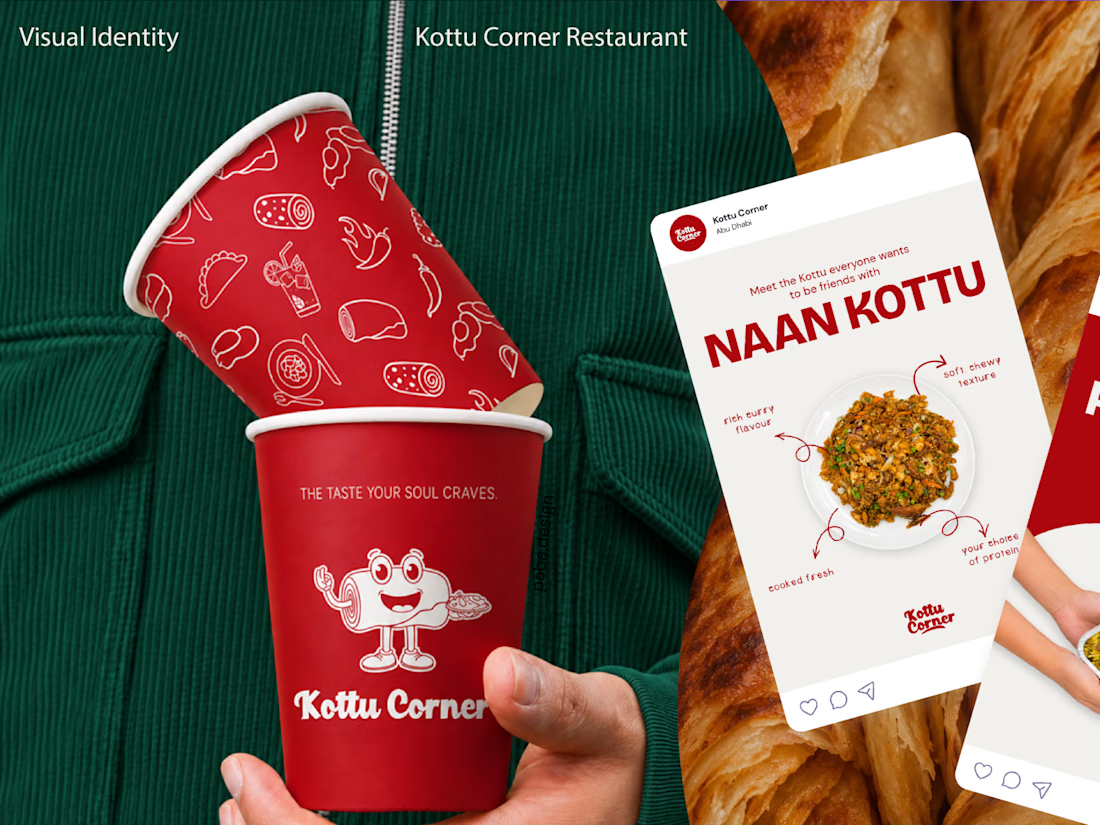
What if your business already has a logo, but nothing else that makes it recognizable as a brand?
That was the starting point for my recent branding project for Kottu Corner, a restaurant in the UAE.
They came to me with an existing logo, but without a complete visual identity to support it.
Redesigning the logo simply for the sake of change wouldn't have been a smart business decision. With the brand preparing for a major transformation, the existing logo was the one familiar element customers could still recognize. Changing it alongside everything else would risk losing that connection and making the brand feel unfamiliar to the very people who already knew and trusted it.
Instead, I focused on developing a cohesive brand identity around it, guided by the restaurant's audience, business goals, and plans for future franchise growth.
From brand strategy and visual direction to packaging, merchandise, and other brand touchpoints, the goal was to create an identity that feels recognizable, consistent, and true to the business.
Because sometimes, good branding isn't about changing what already exists. It's about building on it.
Explore the full case study! ❤️


Cool work!!


Love the direction! Feels clean and the product offering comes through nicely.